
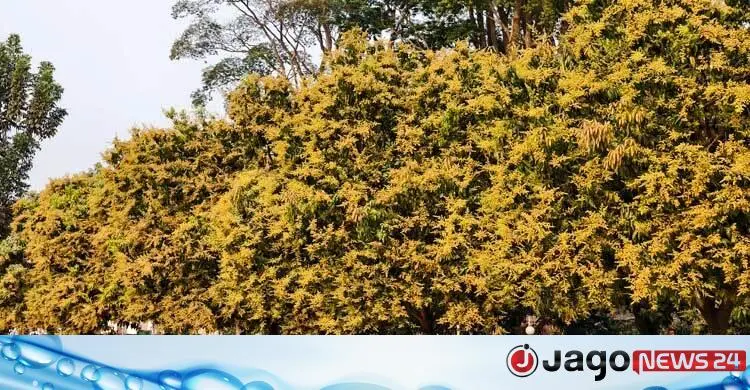
With the arrival of spring, the Rajshahi University (RU) campus is decked out in mango blossom. Branches bend under yellowish blossom and a sweet fragrance fills the air. The hum of bees and the song of birds have created a lively natural atmosphere across the campus, giving students and visitors a touch of pure spring.
Mango trees in the university's mango orchard, the transport square, the Buddhijibi square, the central mosque, the Shaheed Minar, the fine arts and agriculture faculties, the Boddhobhumi (killing field) memorial, the grounds in front of academic buildings and the yards of the residential halls are now full of blossom. The mass of yellow blossom among the green leaves looks like nature's own festival of colour.
From morning to afternoon bees are busy on the blossom-laden branches. The scent carried on the gentle breeze makes passing students stop, and the chirping of small birds deepens the spring mood, bringing a moment of calm to busy academic life.
Students expect a good crop
Students said RU's mango trees take on a new look every spring, but this year there is comparatively more blossom thanks to favourable weather, and they expect a good yield this season. Those involved also believe there could be a bumper crop on campus if the weather stays helpful.
Humaira Tabassum Saba, a student of the Department of Painting, Oriental Art and Printmaking, said the scent of mango blossom can be felt just walking on campus now. This time seems to teach one to slow down a little, and even amid busy life one can feel nature's calm touch, she said. Spring here is not only a change in nature but a sign of subtle renewal within.
Sadia Akter, a student of Mass Communication and Journalism, said she watches the mango blossom open up close every year. Trees full of yellowish blossom make the arrival of spring clear, and the scent and freshness fill the mind with a strange calm, she said.
She added that seeing the blossom brings hope that there may be plenty of mangoes this year, and everyone can enjoy sharing them. Recalling last year, she said chatting with friends under the trees, the taste of ripe mangoes and the smell of mangoes on hot afternoons had created a special feeling in campus life.
Why there is more blossom this year
Explaining the abundance, Professor Dr Mustafa Abul Kalam Azad of the Department of Botany said there was comparatively less fog this year, so less blossom was damaged. Many mango trees also naturally bear more fruit one year and rest the next, he said, and the growth of branches on trees that bear regularly is affected differently.
Professor Dr Md Giasuddin Ahmed of the Department of Agronomy and Agricultural Extension said weather plays an important role in mango blossom and yield. A gradual rise in temperature in spring and little fog create a suitable environment for blossom. Yields were low over the past two years; one reason is that after a year of heavy yield, a nutrient shortage reduces the yield the following year.
He said that when winter temperatures fall to 10 degrees Celsius or below, many harmful insects are controlled. In recent years temperatures were higher than normal, so pest attacks on the blossom increased. This year comparatively lower temperatures meant less pest infestation. And because yields were low in the previous two years, the trees were able to store enough nutrients, raising the chance of a good yield this year.
On administrative care, he said government bodies such as the agriculture directorate and the Department of Agricultural Extension regularly train farmers, but excessive use of pesticides is often harmful to the environment and soil fertility.
In the cycle of the seasons, this short-lived blossom will soon turn into small green mangoes that slowly ripen in the colours of summer. For now, the fragrant season on the RU campus stands as a quiet promise of the harvest to come.
Source: Jagonews24. First published in Bengali on The Agro News.
Comments
(0)