
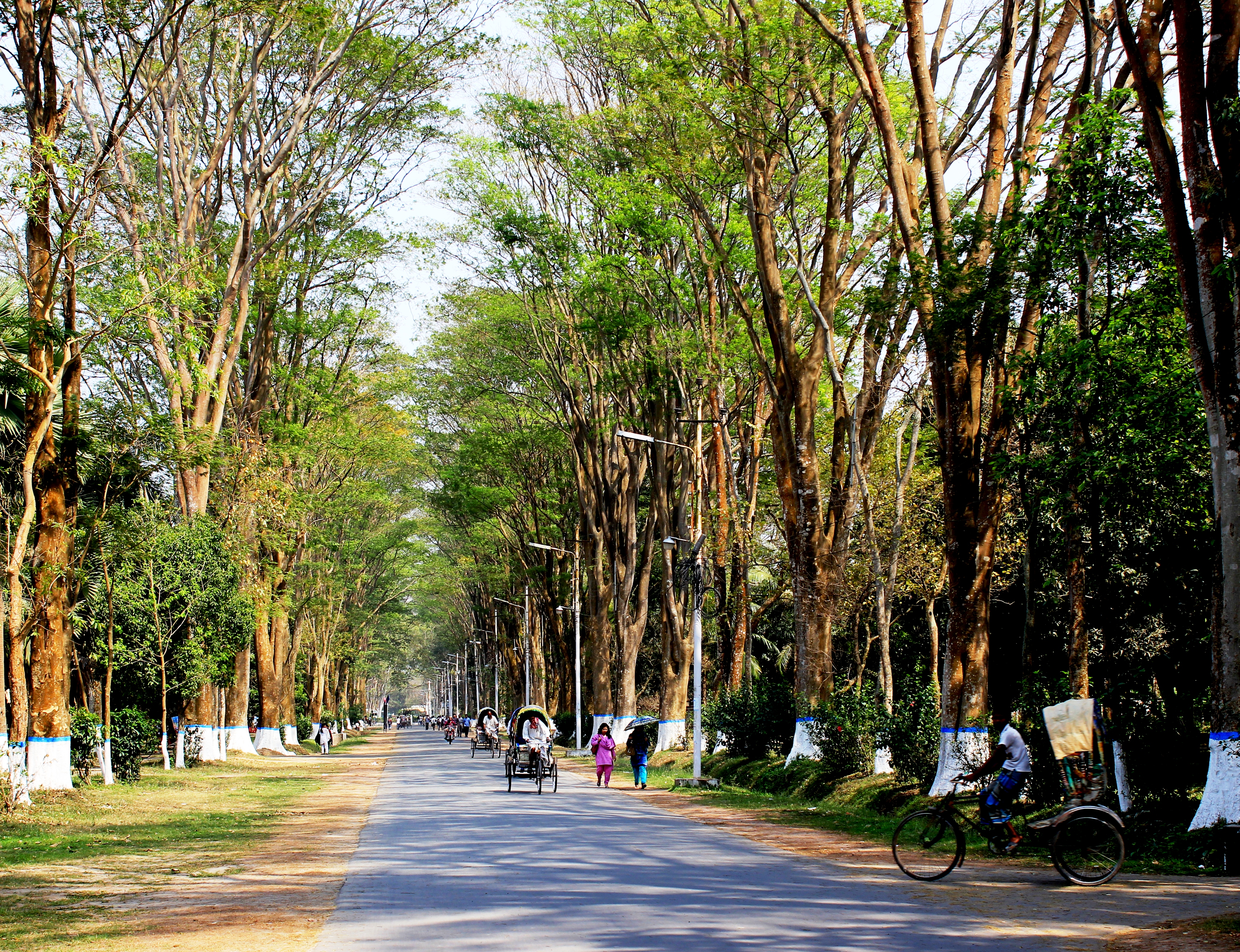
Birds that are seldom seen in the sky, and whose calls many people no longer hear, went on show at Rajshahi University (RU) on Saturday, 31 January 2026, though not alive. A day-long bird fair at the university's Buddhijibi Chattar displayed birds preserved by a chemical process, which Jagonews24's report called "mummy" birds, together with stalls of bird photographs, an awareness rally and a drawing competition for young schoolchildren.
The fair was organised by the university's Bird Conservation Club, with overall support from the Department of Zoology, Birdshahi and Valenttech Limited, under the theme "See birds, love birds, protect birds". Jagonews24 published its report that afternoon. NTV Online's photo gallery of the fair, published the same day, named the same organisers and theme and said the fair began at 9 am.
According to the report, the preserved birds were meant to show visitors the real ground between extinction and conservation. The sense of life in lifeless bodies made the fair unusual and thought-provoking, and visitors had a rare chance to look at birds closely and without fear.
A day of stalls, a rally and drawings
After the opening, a rally went round to raise public awareness of bird conservation. At the venue, a few small stalls stood in a neat space enclosed with white and blue cloth. One stall showed photographs of birds; a neighbouring stall held the exhibition of preserved birds.
The liveliest part of the fair, the report said, was a drawing competition for schoolchildren. Pupils from nursery to class five at schools near the campus took part. A class four pupil who had come with her father to see the fair and to compete said she had liked it very much: she had seen many new birds that she had never seen before, and she thought such events should be held more often.
Students of the zoology department staffed the stalls and explained the birds to visitors. Farhana Asha, a 2020-21 session student of the department, said the fair had many rare birds that are not usually seen, and that white egrets, skeletons, rare ducks and pigeons, among other species, were on show. There had been a crowd at the stall since the morning, she said, and visitors were being told how the birds had been preserved and what scientific process lay behind it.
Professor Dr A M Saleh Reza of the zoology department, convener of the Bird Conservation Club, said there are many birds in Bangladesh that many of us do not know about. The club organised the fair, he said, to introduce students to these birds, to build affection for birds among them and to make everyone aware of the need to conserve them.
The university and its campus
Rajshahi University, according to Banglapedia, was established in 1953 and began its work on 6 July that year. It stands about five kilometres east of Rajshahi city and is described there as the second largest university in Bangladesh. For its campus, 298.20 hectares of land were acquired in the Motihar area, which is known as the Motihar green. Banglapedia puts the number of faculties at nine and of departments at 59 in the 2018-19 session; the Department of Zoology, whose students and former students ran the stalls at the fair, is one of them.
The campus has many ponds and water bodies, and the university also has a second campus at Narikelbaria. Prothom Alo reported in January 2024 that migratory birds are usually seen at the pond beside Rahmatunnesa Hall, the pond next to the mulberry garden, two ponds inside the teachers' quarters in the western part of the campus, the pond beside Shamsuzzoha Hall and the water bodies next to the agriculture faculty building. A senior university official told the paper that a notable number of migratory birds come to the Narikelbaria campus every year and that a suitable environment had been created for them there.
What the "mummy" birds are
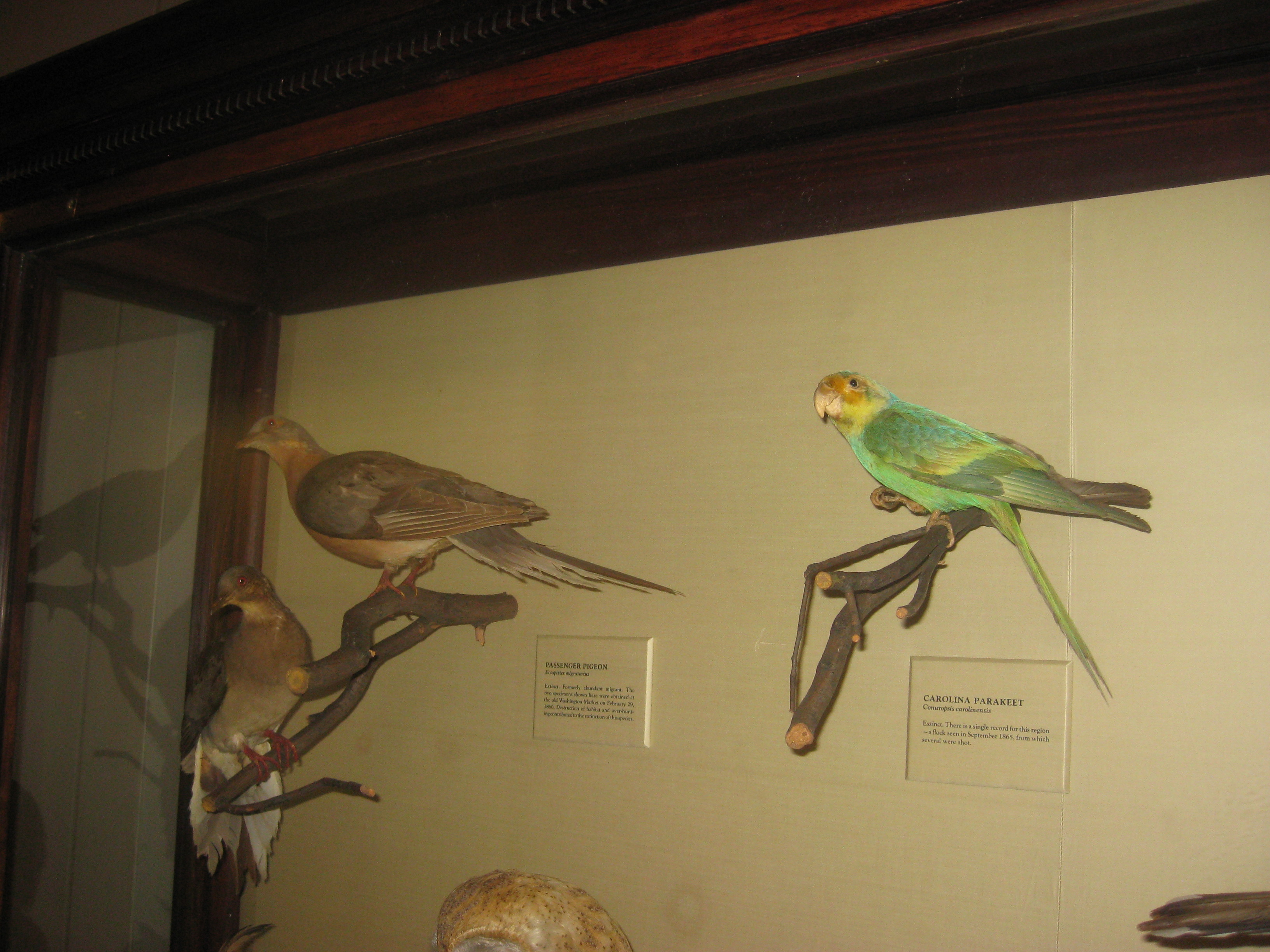
The "mummies" were not mummies in the Egyptian sense but taxidermy specimens: birds whose skins have been preserved and mounted so that they keep their shape and plumage. Md Delowar Hossain, a former student of RU's zoology department and a gazetted taxidermist at the Armed Forces Medical College, was at the fair to explain the work. He said his interest in preservation grew when he saw animals that had died in different parts of the country being left to rot, and that this interest led him to start working in taxidermy.
Taxidermy is the art of preserving an animal's body by mounting it over an armature or by stuffing it, for display or for study; the word comes from Greek roots meaning "arrangement of skin". In the usual method the animal is first skinned. Depending on the kind of skin, the skin is then treated with preserving chemicals or tanned, and it is fitted over a mannequin or a polyurethane form, with glass eyes set in clay. In freeze-drying, a newer method, the animal is posed, frozen and dried in a vacuum chamber after its internal organs are removed; such mounts are especially open to insect damage.
Museums use two kinds of preparation. Mounts are made to look alive and are meant for display, like the birds arranged in rows in Rajshahi. Study skins are minimal preparations with no imitation eyes, stored flat in drawers, and their sole purpose is to preserve data. Large collections of study skins let researchers compare physical features across many individuals, DNA can later be extracted from them, and museums use both kinds to keep a record of species, including extinct and threatened ones.
The craft has a long history in science. René-Antoine Ferchault de Réaumur published the earliest methods of preserving birds for natural history cabinets in 1748. Jean-Baptiste Bécœur's work in the eighteenth century made taxidermy more systematic, and Louis Dufresne published Bécœur's process, which used arsenical soap, in 1803 and 1804. The lifelike stuffed birds that John Hancock showed at the Great Exhibition in London in 1851 helped begin what is called the Victorian golden age of taxidermy.
The birds in the photographs
The photographs, the report said, included the chokhachokhi, pigeon, parrot, night heron, gobre shalik and bamun shalik, as well as a black-backed gull, Pallas's gull, the Siberian stonechat, the nil chotok, Wilson's storm petrel, the red-naped ibis, the Eurasian spoonbill, the booted eagle, the pheasant-tailed jacana and the white-breasted waterhen. Many visitors were surprised just to hear the names, and some took photographs on their phones to keep as a memory.
Pallas's gull (Ichthyaetus ichthyaetus), also called the great black-headed gull, is among the largest gulls, about 55 to 72 centimetres long with a wingspan of 142 to 170 centimetres. It nests in colonies on marshes and islands from southern Russia to Mongolia and winters in the eastern Mediterranean, Arabia and India. In summer the adult's black hood makes it unmistakable, since no other gull of its size has one.
Wilson's storm petrel (Oceanites oceanicus) is a small seabird, 16 to 18.5 centimetres long, that breeds on Antarctic coasts and nearby islands in the southern summer and spends the rest of the year at sea, moving into northern oceans during the southern winter. It is known for pattering on the water surface as it picks plankton, and it is counted among the most abundant bird species in the world.
The red-naped ibis (Pseudibis papillosa), also called the Indian black ibis, is widespread on the plains of the Indian subcontinent. It is mostly black, with a long down-curved bill, a white shoulder patch and a patch of bright red warty skin on the crown, and it forages mainly in dry fields for earthworms, insects, frogs and grain. The Eurasian spoonbill (Platalea leucorodia) is named for its broad, flattened bill; it feeds by sweeping the bill from side to side to filter out small fish and shrimps, and northern breeders winter in warmer parts of Asia, Africa and south-western Europe.
The booted eagle (Hieraaetus pennatus) is a small eagle about 40 centimetres long that breeds in southern Europe, North Africa and across Asia. Northern birds migrate south from about November to February and winter in sub-Saharan Africa and South Asia. It occurs in a pale form and a dark form and hunts small mammals, reptiles and birds.
The pheasant-tailed jacana (Hydrophasianus chirurgus), the jol moyur of Bengali, walks over floating plants on very long toes and nails; the breeding male's long central tail feathers give the bird its name. The female builds the nest on floating vegetation and may lay several clutches in a season, each raised by a different male. The Siberian stonechat (Saxicola maurus) breeds across temperate Asia from Siberia south to the Himalayas and winters as far south as Thailand and India. The white-breasted waterhen (Amaurornis phoenicurus), the dahuk, is a medium-sized bird of the rail family found in Bangladesh, India and other countries of South and South-East Asia.
Familiar birds in the preserved collection
The preserved collection held birds that most people in Bangladesh know by sight. Arranged in rows were cormorants and jolkak, parakeets, a barn owl (lokkhi pencha), an eagle-owl (hutom pencha), a stork-billed kingfisher (goriyal machhranga), night herons, a house crow, quail and the cotton pygmy goose (bali hans), along with a squirrel. Seeing them up close, the report said, many visitors understood how real the danger of their disappearing from nature is.
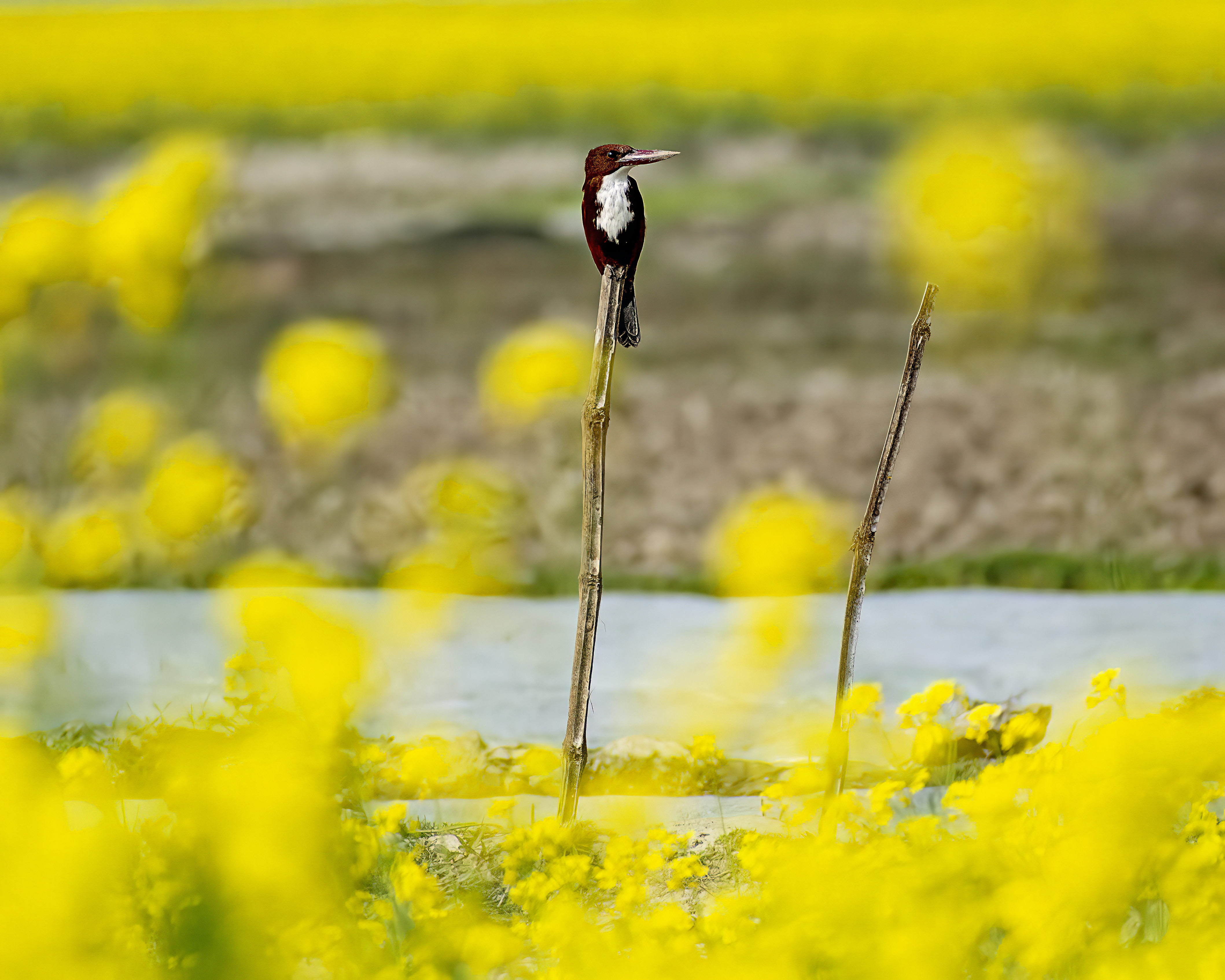
The stork-billed kingfisher (Pelargopsis capensis) is a very large kingfisher, about 35 centimetres long, with a green back, blue wings and tail, an olive-brown head and buff underparts, and a large bright red bill and red legs. It lives in well-wooded country near lakes, rivers and coasts, mostly by lowland streams and ponds with tree cover, and eats fish, frogs, crabs, rodents and young birds.
The barn owl has a large heart-shaped face and does not hoot but gives a piercing screech. It is mostly nocturnal and relies on very sharp hearing to hunt in complete darkness. Nearly all of its food is small mammals, which is why it is regarded as a natural controller of rodents; in Israel and Jordan barn owls have been used in a joint project to reduce reliance on pesticides for rodent control.
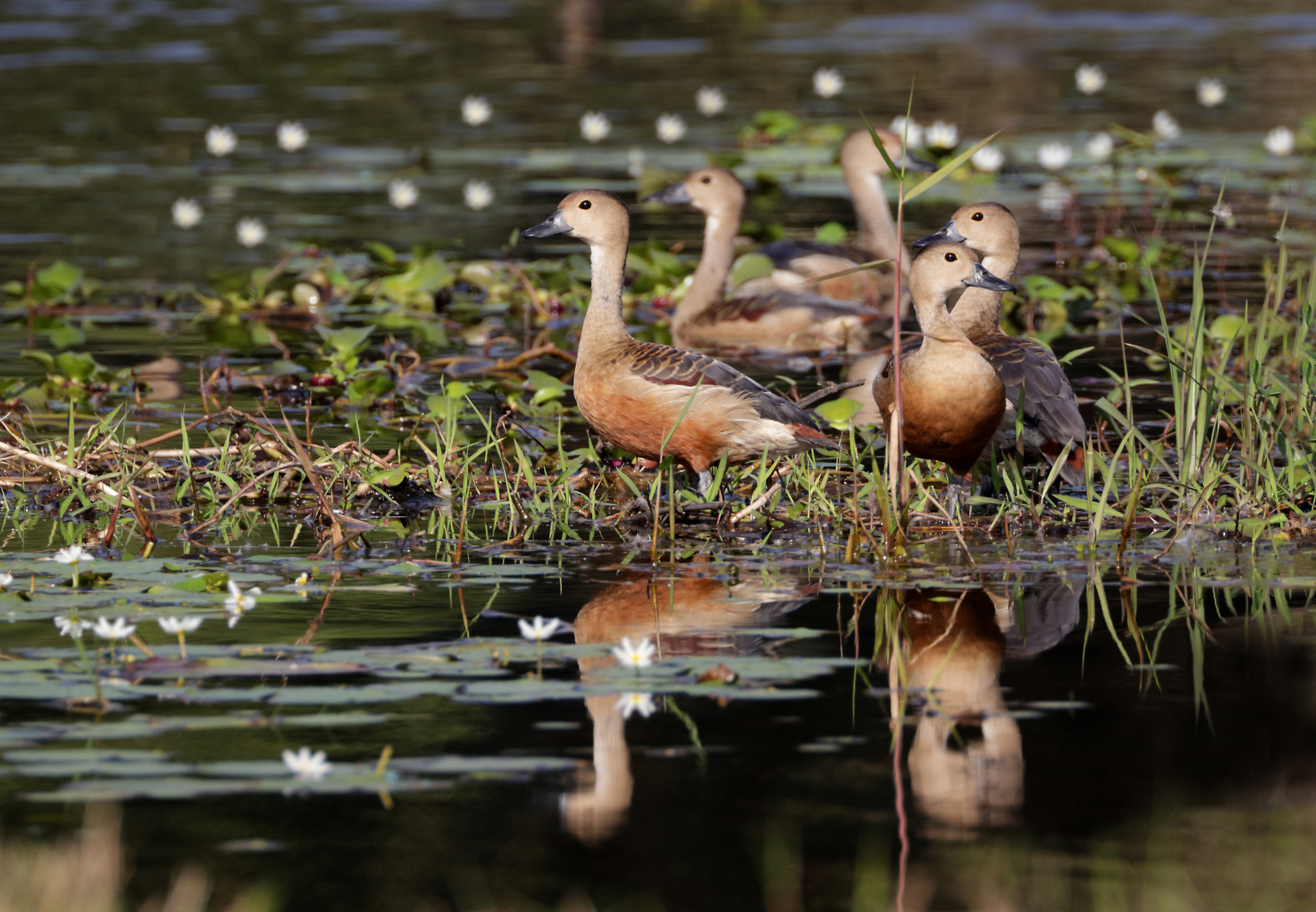
The cotton pygmy goose (Nettapus coromandelianus) is one of the smallest waterfowl in the world, about 26 centimetres long and as light as 160 grams. It favours lakes and ponds with plenty of floating plants such as water lilies, feeds at the surface on small fish, molluscs, crustaceans, insect larvae and plants, and nests mainly in natural tree hollows. Cormorants, panakouri in Bengali, belong to a group of about 40 species worldwide; black dominates the plumage of all of them, and all are very good swimmers.
Migratory birds on the campus
Saleh Reza used the fair to appeal for the migratory birds that winter at the university. He said that at the start of every winter large numbers of migratory birds gather at the university pond and at the Narikelbaria campus, and that people must be conscious of protecting them. If the birds are not given a suitable place to stay and are instead disturbed by people throwing stones, he said, they will panic and go elsewhere; birds and other wildlife must not be treated badly.
In November 2025, Bonik Barta reported that most of the winter visitors to the campus were ducks. The lesser whistling duck (chhoto sarali) was the most numerous, and the fulvous whistling duck (boro sarali), northern pintail, northern shoveler and tufted duck were also there; peregrine falcons had visited for several years, staying about five months. The birds gathered at the ponds behind the Khaleda Zia, Tapasi Rabeya, Rahmatunnesa and Rokeya halls and at the water body beside Shamsuzzoha Hall. Saleh Reza told the paper there were more birds that year than the year before, and that people throwing stones and photographing birds in flight disturb them; without a sanctuary, he said, the birds would stop coming. The university's proctor told the paper that killing birds on the campus is prohibited.
Earlier reports had warned of the pressure on these waters. In January 2024 Prothom Alo reported that migratory birds, which usually arrive in November, had been scarce on the campus that winter. Bird and environment specialists it quoted blamed building work under the university's physical infrastructure development project, the filling of ponds, loud noise and fishing in the water bodies, most of which were leased out for fish farming; a pond behind three halls was being filled to build a new hall. Saleh Reza, who the paper said had been researching birds since 2005, said migratory birds had come that year too, but that without regular monitoring or surveys it was hard to say whether their number was lower or higher, although fewer birds were seen than in the past.
The same report explained why the birds come. Every year from September to late October bitter cold sets in north of the Himalayas, and birds that cannot bear it fly to warmer temperate regions, thousands of them reaching Bangladesh. On the RU campus ducks are usually the most common, the lesser whistling duck above all, with the northern pintail, northern shoveler, ferruginous duck and fulvous whistling duck among the others.
Bird fairs on Bangladesh's campuses
Delowar Hossain said that in Bangladesh such bird fairs are held regularly mainly in two places, Jahangirnagar University and Rajshahi University. Their main aim, he said, is to raise awareness of birds among students and the public, to give them a chance to learn about birds and to show how birds are preserved scientifically. The Rajshahi event, he said, is held every year on the initiative of the university's zoology department.
The Jahangirnagar fair is the older of the two. Bangla Tribune reported in October 2022 that it was first held in 2001 at the initiative of a bird club: the first two fairs were organised by the Bangladesh Bird Club, and the university's zoology department has organised it since, every year under the slogan "Birds are the country's jewels; let us all take care of them". The fair's convener told the paper that it gives a Conservation Media Award for reporting that helps protect birds and biodiversity, a Big Bird Award for photographing and identifying new bird species, and a Scientific Publication Award for published research on birds.
According to Jahangirnagar's zoology department, as quoted in the same report, migratory birds have come to the lakes on that campus since 1986, and 204 bird species had been recorded there, 126 of them native and 78 from abroad. The Daily Star Bangla reported that the 2023 fair at Jahangirnagar, "Pakhi Mela 2023", was held on 3 February 2023, like every year, to build public awareness of bird conservation.
Bangladesh's birds in numbers
Banglapedia's entry on birds counts 628 species in Bangladesh, from 16 orders and 67 families, of which 388 are resident and 240 migratory. Most migrants come in winter, and the larger flocks keep to coastal areas, estuaries, chars, beels, baors and haors. The entry notes that 41 of the resident species are threatened in the country, 19 of them critically endangered, 18 endangered and 4 vulnerable, and that the pink-headed duck, the comb duck, the common peafowl and the Burmese peafowl have virtually disappeared from Bangladesh.
The national Red List prepared by IUCN Bangladesh in 2015 gives birds a volume of their own, its third. Reporting the list in June 2016, the Dhaka Tribune said 1,619 species had been assessed across all groups, and that 31 species were considered extinct from the country, including 19 birds, 11 mammals and one reptile. Of all the species assessed, 3 per cent were critically endangered, 11 per cent endangered, 9 per cent vulnerable and 6 per cent near threatened.
What the law said in January 2026
On the day of the fair, wildlife in Bangladesh was protected under the Wildlife (Conservation and Security) Ordinance 2026, in force from 7 January 2026, which took the place of the Wildlife (Conservation and Security) Act 2012. Its definition of hunting includes killing, catching or poisoning a wild animal, injuring one, taking any part of it, and collecting or destroying the nests or eggs of wild birds.
Section 10 says that no person may rear or keep a wild animal, or possess, buy, sell or transport a wild animal, a trophy or an incomplete trophy, without a licence, a possession certificate or a permit, as the case may be. It declares all wild animals, their body parts, meat, trophies and incomplete trophies to be the property of the government, and it makes cruelty to a wild animal a punishable offence; its explanation of cruelty includes beating, harassing, frightening and needlessly confining a wild animal.
Sections 41 and 42 bar the hunting of the animals listed in the law's first and second schedules, and forbid anyone to collect, possess, buy, sell or transport their trophies, incomplete trophies, meat or body parts without a permit under section 26. Section 29 provides that licences and possession certificates are issued by the chief wildlife warden or an officer he empowers, and are valid for one year.
Photo: Grambangla / Wikimedia Commons (CC BY-SA 4.0)
Sources: Jagonews24, NTV Online, Bonik Barta, Prothom Alo, Bangla Tribune, The Daily Star Bangla, Dhaka Tribune, Banglapedia, Wildlife (Conservation and Security) Ordinance 2026 (official text, bdlaws), Wikipedia (Taxidermy; Pallas's gull; Wilson's storm petrel; Red-naped ibis; Eurasian spoonbill; Booted eagle; Pheasant-tailed jacana; Siberian stonechat; Stork-billed kingfisher; Western barn owl; Cotton pygmy goose)



Comments
(0)