
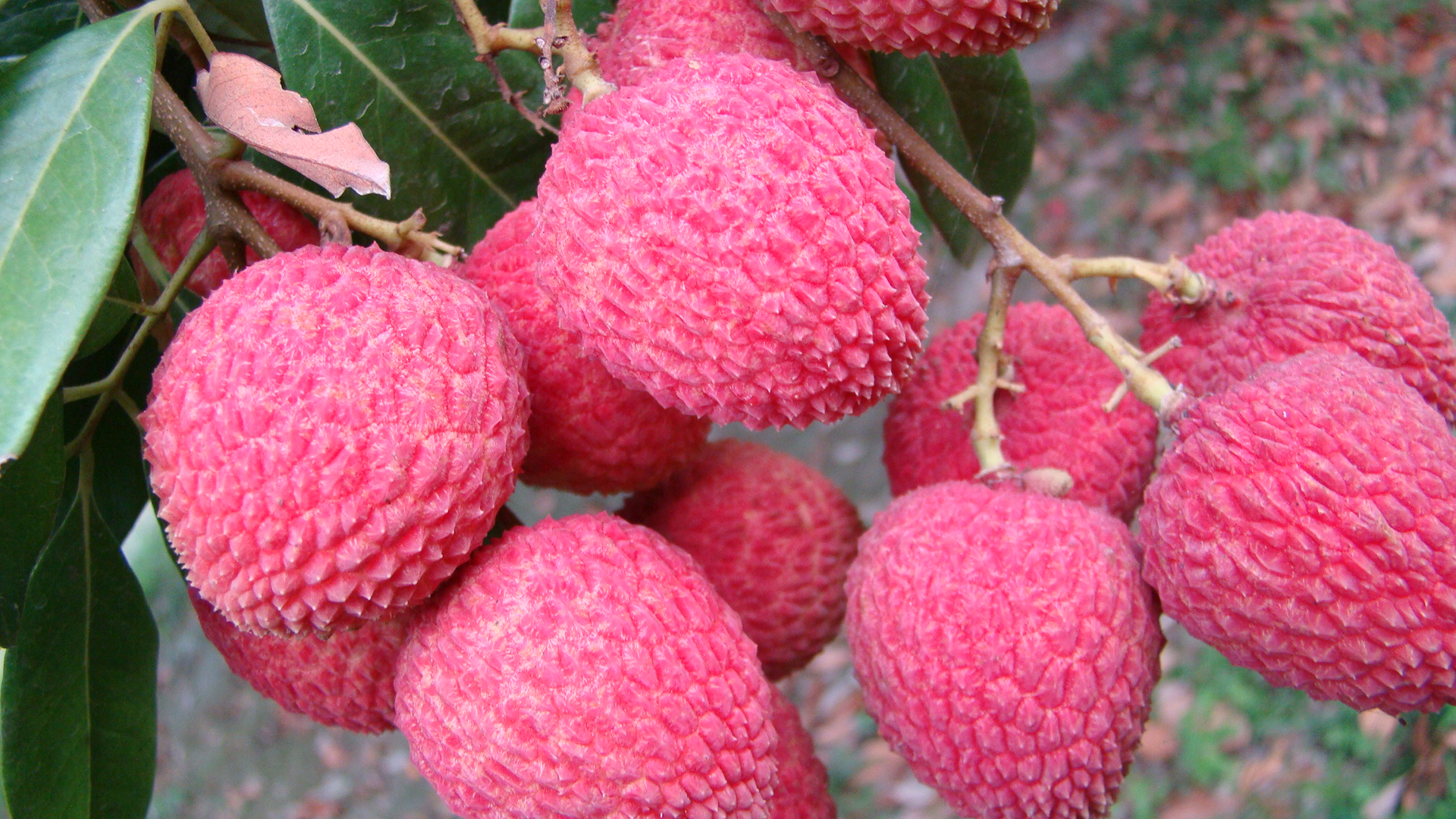
Litchis picked from the trees of Bijoy-24 Hall at Rajshahi University (RU) were packed and delivered to every room of the hall on Friday, 1 May 2026. Leaders of the hall's student union took the fruit from room to room at midday, Jagonews24 reported that day. About 5,000 litchis were collected and shared equally among 135 rooms, including the hall's PhD block, and among the hall's officers and staff; each room received 25 to 30 fresh litchis. The hall's provost, Professor Dr Md Jamirul Islam, was present during the distribution.
How the hall shared its litchis
According to hall sources quoted by Jagonews24, the litchis were gathered from the trees in the hall's grounds, counted out into packets and distributed in equal shares. The packets went to the 135 resident rooms, the PhD block among them, and to the people who work in the hall: its officers and its other staff. The figure of 25 to 30 fruits per room came from the same hall sources.
Russel Mia, vice-president of the Bijoy-24 Hall union, told Jagonews24 that the hall had done the same a year earlier. "Last year too we distributed the fruit of every litchi tree in Bijoy-24 Hall among the students," he said. "Continuing that, this year the litchis were again collected from the trees with the students' help and then distributed to the students in every room."
The provost, Professor Jamirul Islam, described the harvest as the product of a single heavily laden tree. "One litchi tree in the hall bore a lot of fruit this year. We wanted to distribute it all among the students," he said. "The litchis were collected and delivered to every room, and the officers and staff were given some too. We all enjoyed it in a festive atmosphere." The hall sources spoke of the hall's trees in the plural, while the provost spoke of one tree; the report carried both accounts.
The distribution came early in the litchi season. In Rajshahi the first local litchis usually reach the market at the end of April: on 29 April 2025, the state news agency BSS found local litchis on sale at Saheb Bazar in the city at Tk 500 for a hundred, and a seller there said the early local fruit was somewhat sour and that sweeter fruit would follow a few days later.
The hall and its student union
Bijoy-24 Hall is one of the residential halls of Rajshahi University. Until 2025 it carried the name Bangabandhu Sheikh Mujibur Rahman Hall. On 5 February 2025 protesting students hung a banner renaming it "Bijoy-24 Hall", and on the night of Thursday, 22 May 2025 the university's 539th syndicate meeting formally adopted the name as part of a decision to rename or newly name 12 university buildings and sites, Prothom Alo reported the next day. The university's acting registrar, Iftikharul Alam Masud, confirmed the decision. The same report noted that some students criticised the renaming on social media.
The hall union whose leaders carried the fruit is one of the elected student bodies that returned to the university in 2025. On 16 October 2025 Rajshahi University held elections to the Rajshahi University Central Students' Union (RUCSU), to 17 hall unions and to five student seats on the university senate, the first such vote in 35 years, BSS reported. According to the election commission, 903 candidates contested: 248 for the 23 central posts, 597 for the 17 hall unions and 58 for the senate seats. Each voter chose 15 posts in his or her own hall union in addition to the central union and senate ballots. Of 28,901 eligible voters, 20,187 cast their votes, and the chief election commissioner, Professor F. Nazrul Islam, handed the gazette of results to the vice-chancellor on 22 October 2025.
A campus of 30,000 trees
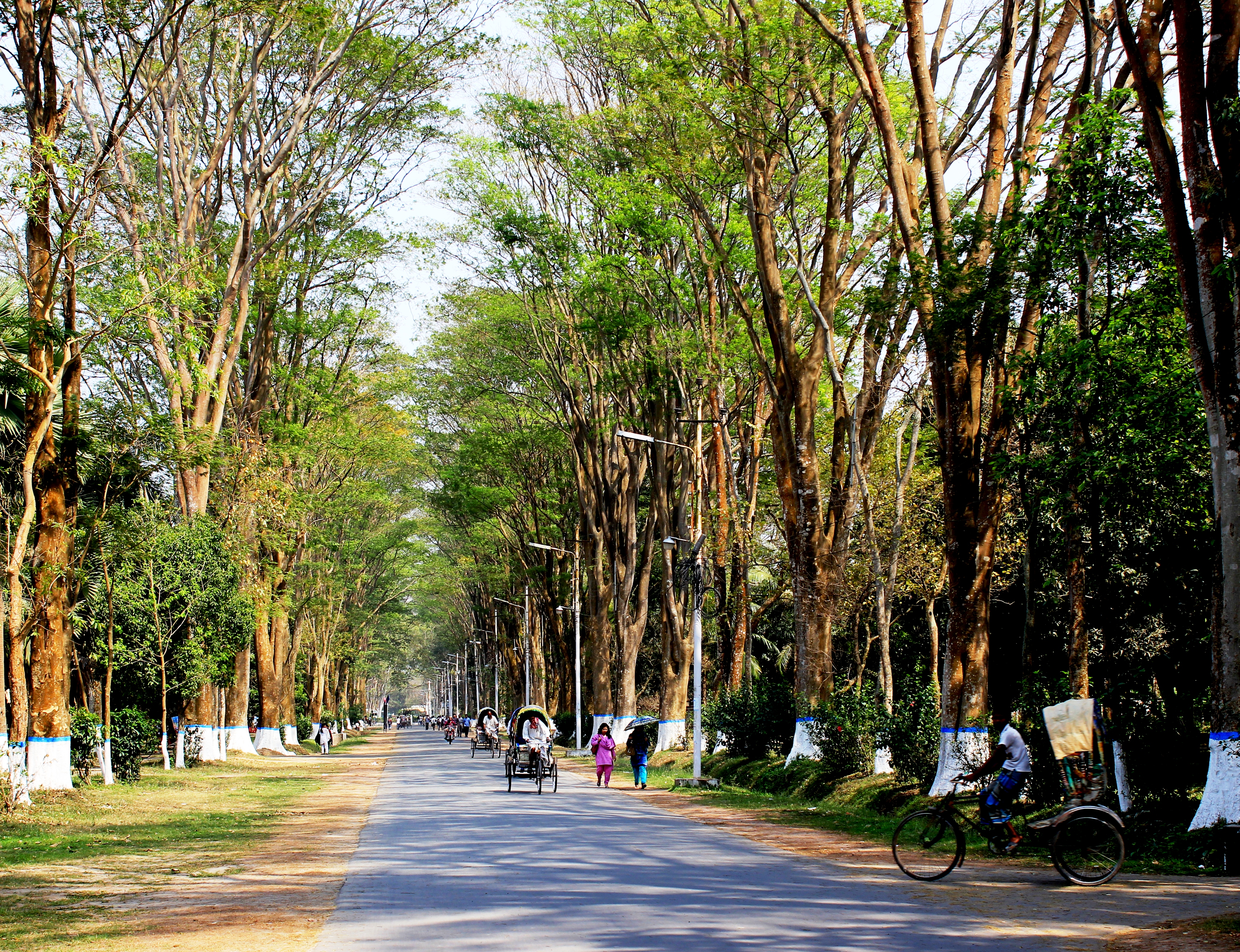
The litchi trees of Bijoy-24 Hall stand on a large and heavily planted campus. Rajshahi University was founded under the Rajshahi University Act 1953, published in the gazette on 16 June 1953, and its present campus at Motihar occupies 298.2 hectares acquired for the purpose; construction of the campus began in 1958, according to Banglapedia, the national encyclopedia of Bangladesh. Banglapedia describes it as the second largest university in the country, with nine faculties and 59 departments in the 2018-19 session, and gives its strength as 1,150 teachers and 38,291 students.
The university counted its trees for the first time in May 2020. The census, run by the university's agriculture project from 3 to 14 May 2020, divided the campus into nine areas and 38 sub-zones, and found 30,191 trees, Jagonews24 reported on 7 February 2021. They included 10,325 mahogany trees, 3,415 mango trees, 1,023 coconut palms, 934 jam (black plum) trees, 786 jackfruit trees and 165 litchi trees, with 13,543 trees of many other species, from jarul and krishnachura to amloki, haritaki, lotkon, kamranga and malta.
The then pro-vice-chancellor, Professor Ananda Kumar Saha, who chaired the agriculture project's advisory committee and initiated the count, said shrubs and herbs were left out and that species with very few trees were grouped with the others. The report added that the university's 50-year master plan set out to plant four kinds of trees: timber trees, fruit trees, medicinal plants and flowering ornamental trees. Professor Sabrina Naz of the Department of Botany told the newspaper that a census made it possible to check whether the trees planted on the campus were surviving and growing.
Rajshahi's litchi orchards and the 2026 season
Litchi is grown in nearly every part of Rajshahi district. In April 2025 the Department of Agricultural Extension (DAE) in Rajshahi told BSS that litchi was grown on 530 hectares in the district's nine upazilas and the metropolitan area, with a production target of 3,800 tonnes for that year. Bagmara upazila had the largest area, 115 hectares, with a target of 825 tonnes. It was followed by Puthia with 78 hectares, Paba 75, Durgapur 70, Mohanpur 52, Charghat 45, Tanore 30 and Bagha 28 hectares. Motihar, where the university campus lies, had 20 hectares, Godagari 19 hectares and the city itself 10 hectares.
Besides local litchis, the DAE said, growers in Rajshahi were planting the high-yielding China-3 variety along with Bombai and Madraji, and some people in the district had started growing litchi at home. The DAE's deputy director in Rajshahi at the time, Umme Salma, told BSS that the area under litchi was growing every year because the crop was profitable.
By the 2026 season the figures had changed little. According to the DAE in Rajshahi, cited by Ajker Patrika on 23 April 2026, the district's 530 hectares of orchards had produced 3,768 tonnes of litchi in 2025. In 2026 the orchard area had fallen slightly to 528 hectares, while the production target had been set a little higher than the previous year's output.
That April, however, the weather worried growers. Mild to moderate heat waves had gripped Rajshahi since the start of the month. On Wednesday, 22 April 2026 the temperature reached 40 degrees Celsius, the highest of the season, after 39.5 degrees the day before, Shahidul Islam, a senior observer at the Rajshahi weather observatory, told Ajker Patrika. Between the hot spells came short bursts of rain: 6.6 millimetres fell on the Sunday before, and small amounts had been recorded on 8, 9 and 10 April.
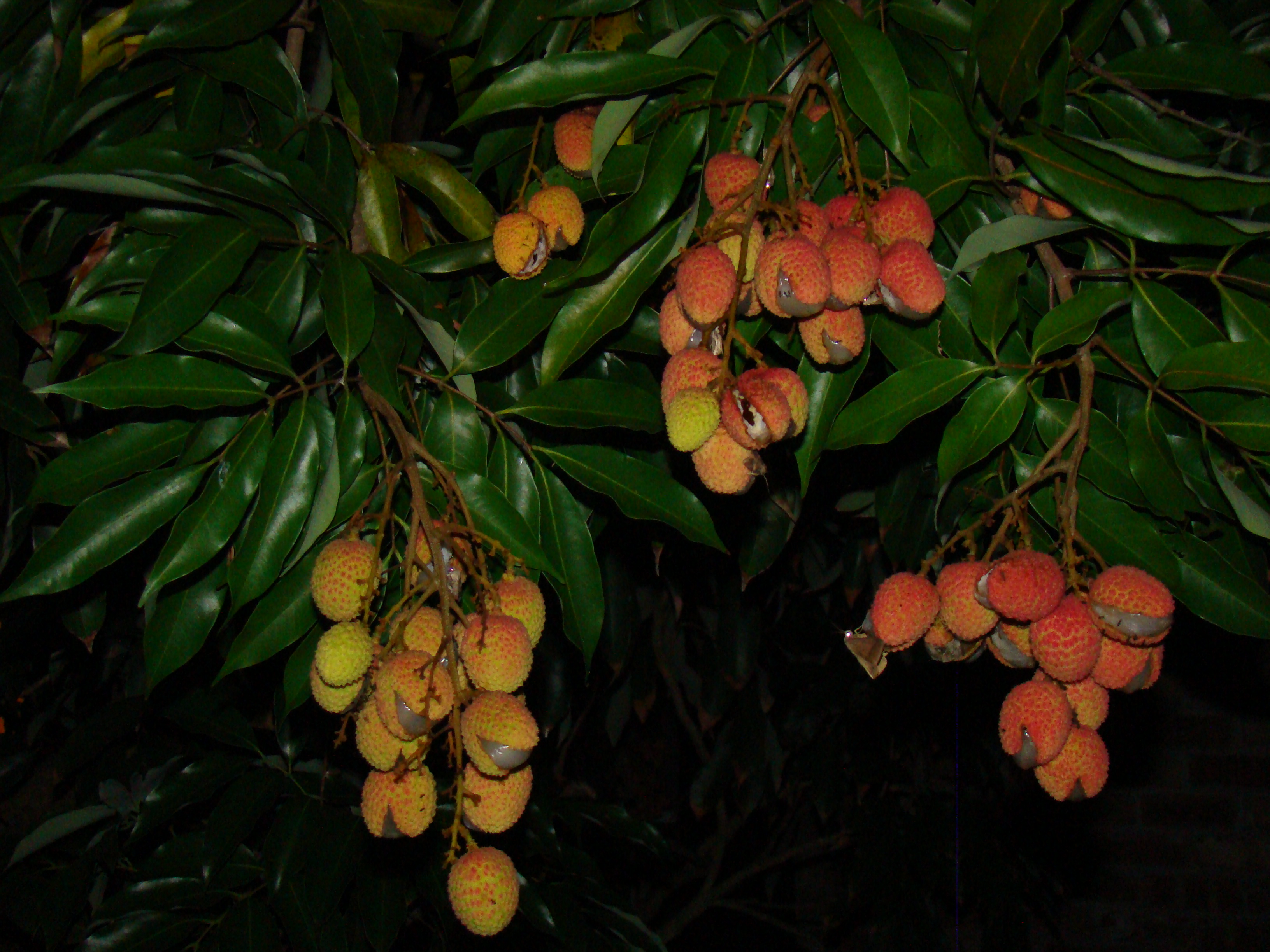
In orchards at Chandipur, in the compound of the public health engineering office, and at Raipara in the city, the newspaper found one or two fruits split in nearly every bunch of litchis that were days away from ripening, some fruits marked with black and brown patches, and small fruits lying fallen on the ground. Rafiqul Islam, an orchardist at Raipara, said some fruit drop and splitting in hot weather was nothing new, but that this year it was unusually severe and he expected a smaller harvest.
Why litchis split in the heat
Mohammad Nasir Uddin, the DAE's deputy director in Rajshahi, gave Ajker Patrika the reason. When rain falls suddenly after a long spell of intense heat, he said, the inside of the litchi swells quickly but the skin cannot bear the pressure and bursts; field staff had reported the problem from across the district. To protect the trees, he advised watering regularly at the base of the trees during dry spells and spraying the trees with water if needed, and said that applying hormones, boron or zinc could give some relief. He did not give doses, and growers who wish to use such products should take advice from their upazila agriculture officer.
The explanation matches the reference literature on the crop. In Fruits of Warm Climates (1987), the botanist Julia F. Morton wrote that hot, dry, strong winds cause the flowers to shed and the fruit skin to split, and that splitting also occurs during spells of alternating rain and hot, dry weather, especially on the sunny side of the tree. Banglapedia likewise notes that the litchi tree needs a warm, humid climate and that dry, hot air is injurious to the fruit.
A Bangladesh country paper presented to a 2001 expert consultation of the Food and Agriculture Organization of the United Nations (FAO) and published by FAO in 2002 described the same stress. Supplementary irrigation is needed in Bangladesh during flowering, fruit set and fruit development, it said, because soil moisture and humidity stay very low in those months and temperatures rise after flowering. Most bearing trees received no extra water, so prolonged drought reduced yields through fruit drop. Few growers could irrigate during fruiting because water went first to the Boro rice crop, and falling groundwater left shallow tubewells idle.
Varieties, ripening and picking
The litchi, Litchi chinensis, belongs to the soapberry family, Sapindaceae. It is native to southern China and was carried to Burma and India by the end of the 17th century, according to Banglapedia. The tree is evergreen, much branched and round-topped and grows 12 to 15 metres tall. Litchi can be grown in every district of Bangladesh and is the country's second tree fruit in production after mango; Banglapedia names Rajshahi first among the main growing areas, followed by Rangpur, Dinajpur, Jessore, Kushtia, Mymensingh and Narayanganj.
The FAO paper, written by S. B. M. Abu Baker Siddiqui of the Integrated Horticulture and Nutrition Development Project, said that litchi is believed to have come to Bangladesh from Burma in the early 19th century, and that Chinese varieties and Indian cultivars such as Muzaffarpuri and Bombai were brought from West Bengal in the early 20th century. It listed the cultivars then grown: Bombai, the oldest high-yielding variety, along with Rajshahi, Madrajie, Mongalbari, Kadmi, Kalipuri, Muzaffarpuri, Bedana and China-3. Bombai and Muzaffarpuri mature in the second week of May; Bedana, considered the best but the poorest yielder and confined to Dinajpur, in the second week of June; and China-3, a late variety, in the last week of June.
Rajshahi has a place in litchi breeding as well. The Bangladesh Agricultural Research Institute (BARI) released BARI Lichu-1 from its Binodpur station in Rajshahi in September 1996, the FAO paper recorded. It was described as high-yielding, a regular bearer and exceptionally early, with an edible portion of 67 to 73 per cent, a yield of 85 to 97 kilograms per tree a year and fruits of about 19.5 grams, and it was recommended for the Rajshahi region. BARI Lichu-2 and BARI Lichu-3 came from its Akbarpur station in Sylhet for the eastern regions.
On picking, the FAO paper stressed that litchi does not improve in quality after harvest, unlike mango, so it should be picked only when properly ripe. Maturity is judged by the colour changing from greenish to pinkish red, by the flattening of the small bumps on the skin and by the skin becoming smoother. Fruits are generally ready 55 to 60 days after fruit set, depending on variety and weather. Because the fruits on one tree do not ripen together, the clusters are picked several times, and they are cut in bunches with a few leaves. Bats and birds do serious damage at the ripening stage, which is one reason many growers sold their trees to middlemen before the fruit matured.
A litchi tree starts bearing at about five years, its yield increases until it is 20 to 30 years old, and in Bangladesh trees 60 to 70 years old were found still to give satisfactory crops, the paper said. A good Bombai tree of 15 to 20 years could bear 7,000 to 8,000 fruits.
Keeping litchis fresh after picking
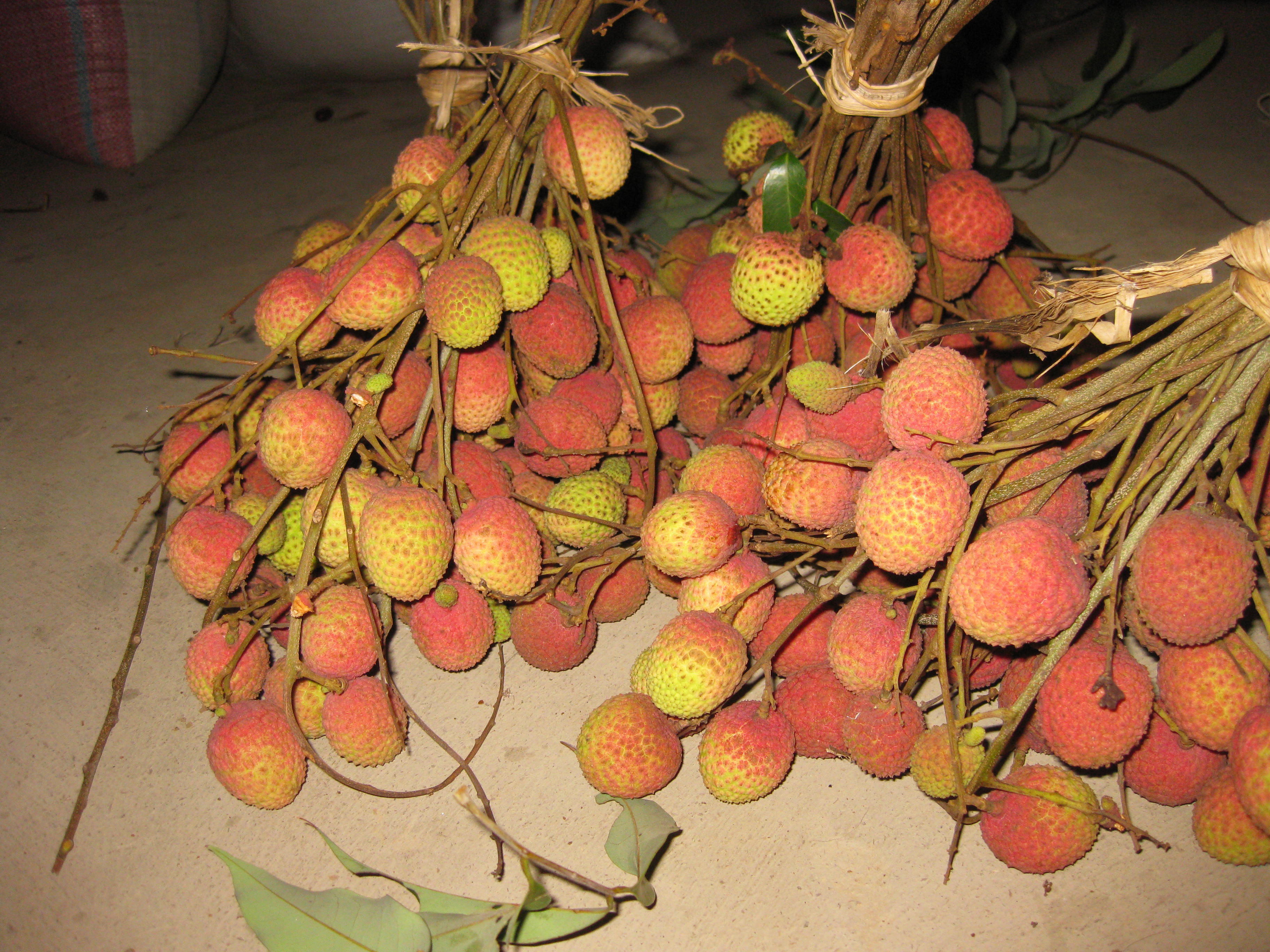
Litchi spoils quickly once it is picked. Morton wrote that freshly picked litchis keep their colour and quality for only three to five days at room temperature. Clusters are usually clipped with a piece of stem and a few leaves attached to prolong freshness, because pulling single fruits tends to tear the skin and the fruit then spoils fast; picking is never done right after rain, because wet fruit is very perishable.
In Bangladesh, the FAO paper noted, high-quality litchis bound for city markets travel in bamboo baskets lined with litchi leaves, in which the loosely packed fruit stays fresh for about 48 hours. For distant markets the fruit is picked in the afternoon, when it has just begun to turn red, packed in the field and taken overnight to the wholesale market. Morton added that, in China and India, litchis are packed in baskets or crates lined with leaves or other cushioning, and that the pack should not be too tight.
What a litchi contains, and what research has found
The edible part of the litchi, the white aril around the seed, makes up 50 to 75 per cent of the fruit's weight, Banglapedia says, and contains mainly sugars along with protein, fat, vitamins B and C, calcium and iron. Analyses from China, India and the Philippines compiled by Morton put 100 grams of fresh litchi flesh at 63 to 64 calories, with 81.9 to 84.8 per cent water, 13.3 to 16.4 grams of carbohydrate, 170 milligrams of potassium and 24 to 60 milligrams of vitamin C.
Litchi growing areas in South Asia have also been studied for a seasonal illness in children. In 2012 an outbreak of acute encephalitis syndrome in a litchi-growing community in northern Bangladesh affected 14 children, 13 of whom died. A study of that outbreak published in the American Journal of Tropical Medicine and Hygiene in 2017 linked it to exposure to litchi orchards where pesticides, some of them banned in Bangladesh, were routinely used; eating litchis was not associated with illness in its case-control study.
In Muzaffarpur, India's largest litchi-growing region, a 2014 investigation published in The Lancet Global Health in 2017 recorded 390 child patients, 122 of whom died, and associated the illness with eating litchis together with missing an evening meal, and with the natural toxins hypoglycin A and methylenecyclopropylglycine (MCPG). For that region the investigators recommended minimising litchi consumption among children, making sure children receive an evening meal, and rapidly correcting low blood glucose in suspected cases. These findings concern particular outbreaks; anyone who falls ill after eating fruit should see a doctor.
Photo: Nakib Ahmed / Wikimedia Commons (CC BY 3.0)
Sources: Jagonews24, Prothom Alo, Bangladesh Sangbad Sangstha (BSS), Ajker Patrika, Banglapedia, Food and Agriculture Organization of the United Nations (FAO), Purdue University Center for New Crops and Plant Products (J. F. Morton, Fruits of Warm Climates), American Journal of Tropical Medicine and Hygiene, The Lancet Global Health
Comments
(0)