

A mobile court in Rajshahi sentenced a man to three days in jail on Tuesday, 28 January 2025, for hunting migratory birds on the chars, the sandbars of the Padma river. Jagonews24 reported that he was caught that morning in a joint drive by the wildlife inspector of the Rajshahi Forest Department and the river police, with four dead birds in his possession. An assistant commissioner of the Rajshahi district administration, acting as executive magistrate, conducted the court. The man, named in the report as Liton Hossain, lives in the Sreerampur area of Rajshahi.
The birds were common teal, a small migratory duck that is among the wild animals the Wildlife (Conservation and Security) Act 2012 protects in Bangladesh. About 300 metres of current net, a fishing net banned in the country, was seized with them and later burnt.
A tip-off, a dawn drive and a court on the spot
According to the Forest Department's wildlife inspector, the drive found four dead common teal, which Bengali speakers call pati tilihans, and about 300 metres of current net with the man. The inspector told Jagonews24 that his team often carried out drives on the Padma chars in Rajshahi and kept finding the carcasses of migratory birds there.
He said the arrest came from a tip-off. Because the government had announced rewards for informants, someone told the team that poison bait had been laid on Monday evening, 27 January. Acting on that information, the team went out on Tuesday morning and caught the man with the birds. The Forest Department then informed the district administration, which sent an executive magistrate, and the magistrate conducted a mobile court.
The assistant commissioner who conducted the court confirmed to the paper that the man had been given three days in jail through the mobile court and that the seized illegal net had been burnt. The report did not say whether a fine was also imposed, and it carried no statement from the man himself.
The case was small in scale, four birds and one man, but the inspector's account touched on several things at once: the yearly arrival of migratory waterbirds on the Padma, the use of poison to kill them, the legal protection these birds have, and the way wildlife staff, the river police and the district administration share the work of enforcing that protection.
What the Wildlife Act 2012 says about birds
On the date of this case the law that governed wild animals in Bangladesh was the Wildlife (Conservation and Security) Act 2012, Act No. 30 of 2012, dated 10 July 2012. Its preamble ties it to Article 18A of the Constitution, under which the state undertakes to conserve and protect biodiversity, forests and wildlife.
The Act defines hunting broadly. Under section 2(37), hunting means killing, catching or poisoning any wild animal, or any similar attempt; driving a wild animal for any of those purposes; or injuring or harming a wild animal, taking any part of it, or collecting or destroying the nest or eggs of a wild bird or reptile. Poisoning is therefore named in the definition itself. Section 2(22) defines migratory species as wild animals that cross the borders of one or more countries and come and go at a particular time of year.
Section 6(1) says that no one may hunt any wild animal without a licence or, as the case may be, a permit under the Act. Section 6(2) lets the government, by gazette notification, ban the hunting of particular or all wild animals in a particular forest or area, or in the whole country, for a set period.
The penalty that applies specifically to birds is in section 38. Under section 38(1), a person who kills any bird or migratory bird listed in Schedules 1 and 2 commits an offence and can be punished with imprisonment of up to one year, or a fine of up to one lakh taka, or both. For a repeat of the same offence, the maximum is two years in prison, or a fine of up to two lakh taka, or both.
Section 38(2) covers what happens after the kill. A person who collects, possesses, buys, sells or transports a trophy or incomplete trophy, the meat or a body part of any bird or migratory bird listed in Schedules 1 and 2 can be jailed for up to six months, fined up to 30,000 taka, or both. For a repeat offence, the maximum is one year in prison or a fine of up to 50,000 taka, or both. A separate provision, section 39, sets the punishment for breaking section 6 or sections 10 to 12: up to one year in prison or a fine of up to 50,000 taka, or both, and up to two years or one lakh taka, or both, for a repeat.
Schedule 1 of the Act, the list of protected animals published in the Bangladesh Gazette on 10 July 2012, includes the Eurasian teal, Anas crecca, under its Bengali name pati tilihans, among the ducks and geese of the family Anatidae. Under section 2(44), the animals in Schedules 1 and 2 are the Act's protected wildlife.
Other provisions describe how such cases move. Section 32 lets an authorised officer seize wild animals hunted or held without a licence, their meat and body parts, and the weapons, objects and equipment used in an offence, all of which can be confiscated by the government. Under section 43, offences under the Act other than those in section 36, which deals with tigers and elephants, are non-cognisable, bailable and compoundable subject to compensation. Section 44 says that courts take up offences under the Act on the written complaint of an authorised officer or an affected person, and that they are tried by a first-class judicial magistrate or a metropolitan magistrate, or by a special magistrate empowered under the Code of Criminal Procedure.
How a mobile court works
The sentence in Rajshahi was passed by a mobile court, the system set up by the Mobile Court Act 2009, Act No. 59 of 2009. Section 4 of that Act describes the mobile court as a roving operation, run anywhere in the country, in any district or metropolitan area, so that certain offences can be taken up on the spot and limited punishments imposed, in the interest of maintaining law and order and preventing crime.
Section 6(1) gives an executive magistrate empowered under the Act, or a district magistrate, the power to take cognisance on the spot of an offence under one of the laws listed in the Act's schedule, if it is committed or discovered in his or her presence, and to convict the accused on the basis of a confession and impose the punishment fixed by law. Section 6(4) says that if the magistrate thinks the offence is so serious that the mobile court's punishment would not be adequate, he or she must arrange for a regular case to be filed instead.
Section 7 sets the procedure:
- the magistrate frames a short written charge and reads and explains it to the accused, then asks whether the accused admits it;
- if the accused admits the charge, the admission is recorded and signed or thumb-printed by the accused and by two witnesses present, and the magistrate then gives a signed written order with the punishment he or she considers appropriate;
- if the accused denies the charge and the explanation is satisfactory, the accused is released;
- if the explanation is not satisfactory, the magistrate sends the complaint to the court that has jurisdiction to try it.
Under section 8, a mobile court cannot impose a prison term of more than two years, whatever the law for the offence provides, but it may impose any fine within the limits set by that law. Section 13 gives a person punished by a mobile court the right to appeal to the district magistrate of the area.
The common teal, the bird at the centre of the case
The common teal or Eurasian teal, Anas crecca, was first named by Carl Linnaeus in his Systema Naturae of 1758. It is one of the smallest dabbling ducks, 34 to 43 centimetres long with a wingspan of 53 to 59 centimetres; drakes average about 360 grams and hens about 340 grams. The International Union for Conservation of Nature (IUCN) lists it worldwide as Least Concern, but in Bangladesh it is a protected animal under Schedule 1 of the Wildlife Act.
The male in breeding plumage has a chestnut head and upper neck with a broad, iridescent dark green patch around the eye, a horizontal white stripe along the flanks and a buff breast with small brown spots. The female is yellowish brown, darker on the back and wings, with dense streaking. The species breeds in sheltered freshwater wetlands with tall vegetation, such as bog pools in the northern forests and reed-fringed ponds, and in winter also uses brackish waters, inlets and lagoons. In the breeding season it feeds mainly on aquatic invertebrates; in winter it eats the seeds of aquatic plants and grasses, including sedges and grain.
Banglapedia, the national encyclopedia of Bangladesh, says the country has nearly a dozen duck species of the genus Anas and that all but one of them are migratory, the resident exception being the spot-billed duck. The common teal is one of those winter visitors.

The movements of common teal in this region had been studied with satellite tags before the Rajshahi case. The Daily Star reported in January 2020 that the Wildbird Monitoring Program, set up in 2019, had been fitting wild ducks with GPS-enabled satellite tags. One tagged common teal weighed 310 grams and travelled nearly 10 kilometres on its first day and 13.5 kilometres on the second. A researcher quoted by the paper said the team had observed that the bird travelled to paddy fields, especially during the nights.
The Padma chars of Rajshahi, a winter home for waterbirds
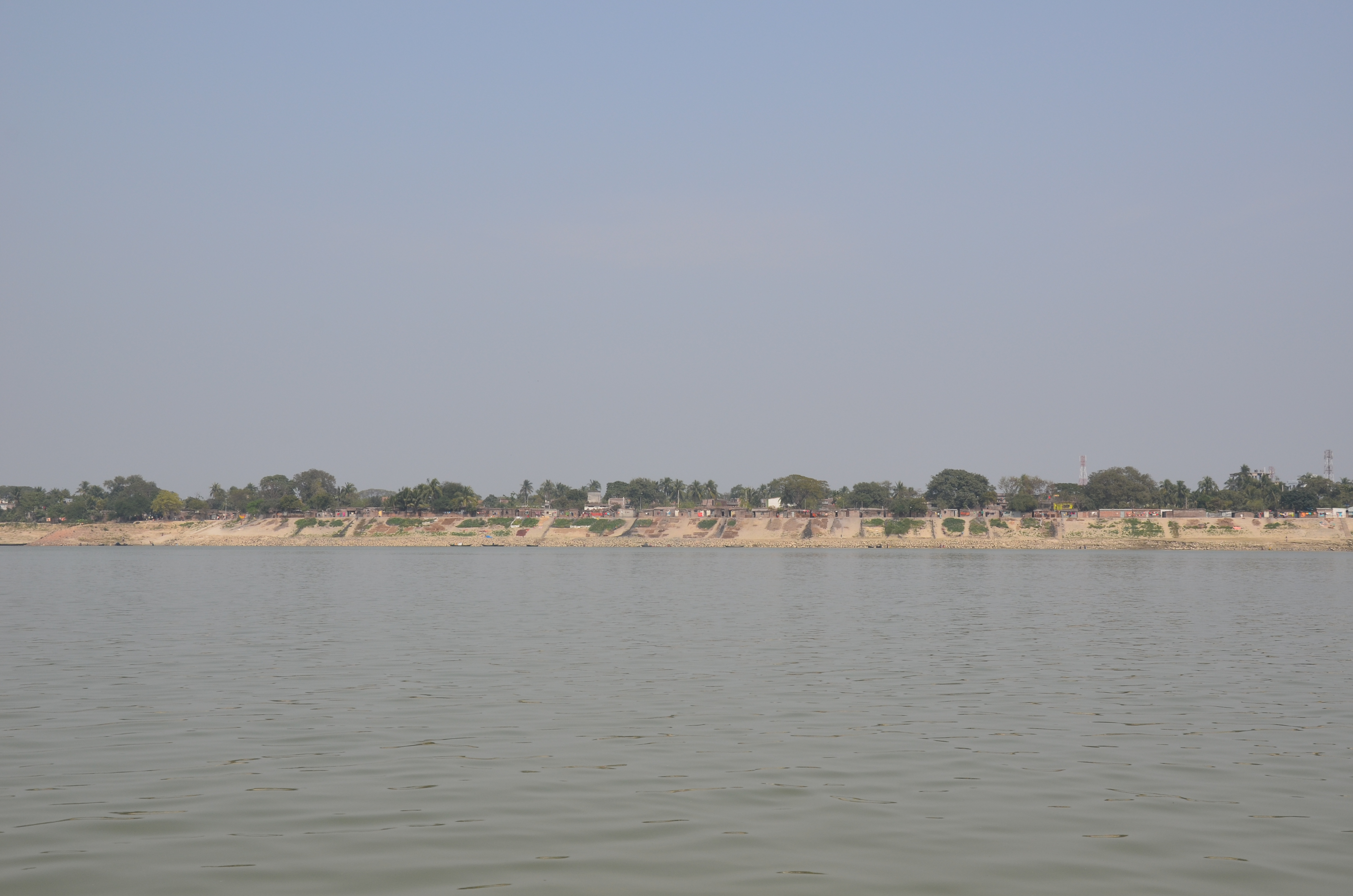
Rajshahi district covers 2,425.37 square kilometres in the north-west of Bangladesh. Banglapedia describes it as made up of the Barind tract, diara land and char land, with the Padma, Mahananda and Shiba as its main rivers. The Ganges is popularly known as the Padma from the point where it enters Bangladesh in Shibganj upazila of Chapai Nawabganj, so the broad river that runs along Rajshahi city is the Padma in common speech. The district was established in 1772.
A short communication published in the Jahangirnagar University Journal of Biological Sciences (vol. 3, no. 2, 2014) by A. M. Saleh Reza and Selina Parween of the University of Rajshahi's Department of Zoology described these chars as a seasonal product of the river: sandbars of sand, silt and small pebbles that emerge as islands or attach to the bank, with water pockets and channels, grassland, farmland and plantations. The authors watched birds on the chars from Premtali in Godagari upazila to Sardah in Charghat upazila, a stretch of about 60 kilometres, from 2008.
They identified 141 bird species on the chars, of which 58 were migratory to Bangladesh, and 47 of those migrants were waterbirds. Two of the waterbirds, the tufted pochard and the Asian dowitcher, were listed as Near Threatened. The authors noted that during winter a number of migratory birds come to the Padma chars and that some people hunt them to earn money. They also wrote that migratory birds help control insect and rodent pests in croplands, add nutrients to the soil through their droppings and disperse seeds. Ducks seen in the main channel were too far away to be photographed, but a birdwatcher reported teal, wigeon, garganey, shoveler, common shelduck and mallard on the Padma chars.
The first organised waterbird census on this stretch took place on 5 January 2020. The Daily Star reported that conservationists, birdwatchers and foresters counted 4,025 birds of 37 waterbird species in one day on the sandbars and shallow lagoons of the Padma in Rajshahi division, 27 of them migratory, and that this was the first time the Bangladesh Forest Department and other official bodies had taken part in such a census in the division. The gadwall was the most numerous species, with 1,100 birds, followed by Temminck's stint with 330, and a rare Baikal teal was also seen. The paper noted that Rajshahi division lies on the Central Asian Flyway, a route on which migratory birds stop to rest and refuel.
A year later, Prothom Alo reported on 5 January 2021, citing the national news agency BSS, that a team under IUCN's Bangladesh Wild Bird Monitoring Programme, supported by the Bangladesh Bird Club, the Rajshahi Bird Club and the forest department, had counted 2,709 birds of 41 species along a 39-kilometre stretch of the Padma in Rajshahi, 28 of them migratory. Most species were seen at Char Khanpur, Char Khidirpur, Char Number 10, part of Charghat and a mid-river char. A member of the Rajshahi Bird Club called for the Padma riverbed to be declared a sanctuary for birds, and the report again noted that some people hunt the migratory birds that visit the chars in winter.
Earlier cases on the same chars
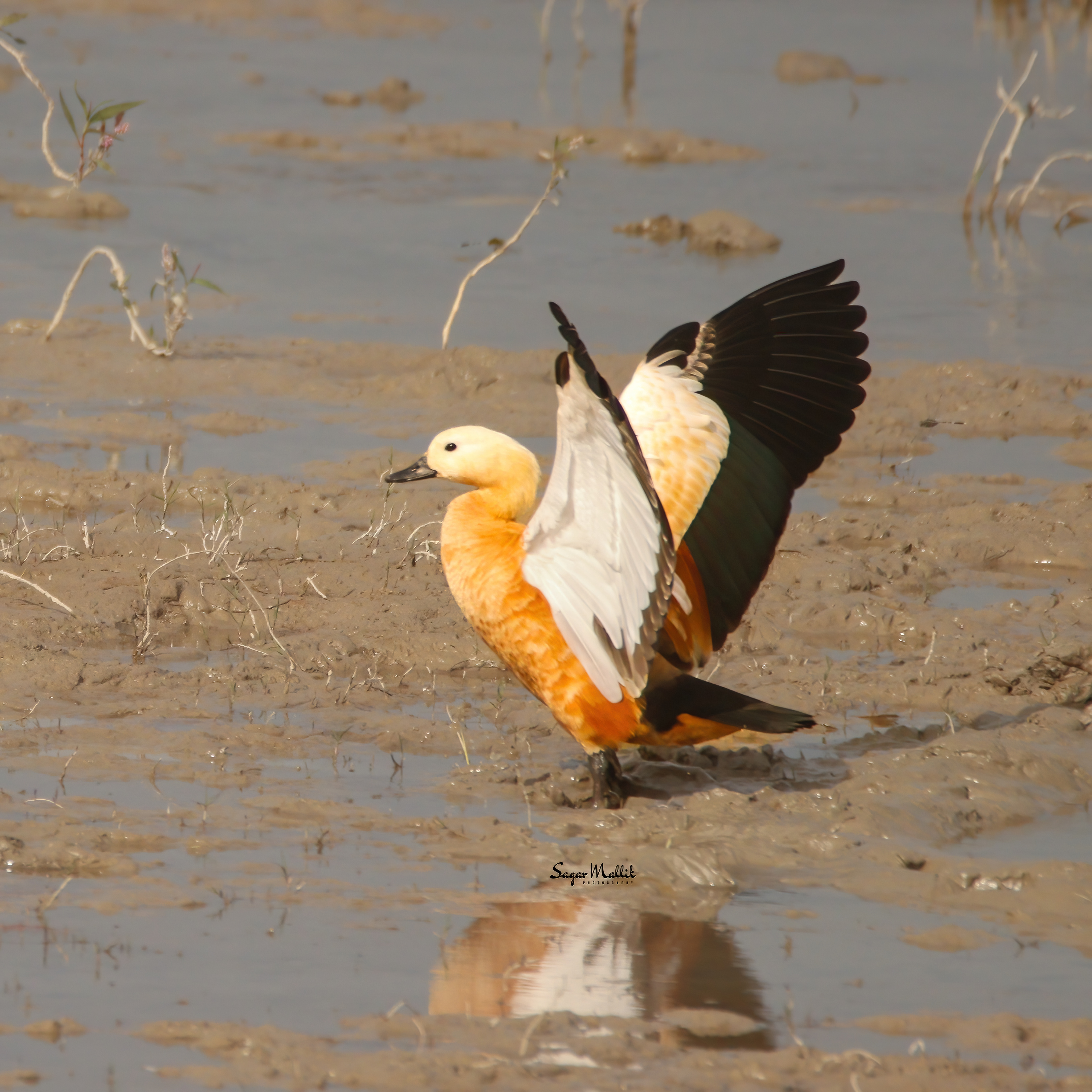
The 28 January case was not the first time wildlife staff had found hunted birds on the Rajshahi chars. The Business Standard reported on 22 January 2020 that a team from the Wildlife Management and Nature Conservation Division, led by a junior wildlife scout, rescued 29 wounded ruddy shelducks, known locally as chokha-chokhi, during a drive on the Padma char next to Gahmabona and Haripur villages in Paba upazila. The team could not catch the hunters: a man carrying two sacks ran away and left the sacks, which held the birds. The ducks were sent to the Wildlife Rescue and Rehabilitation Centre in Rajshahi, to be released once they could fly again.
Section 30 of the Wildlife Act allows the government to set up rescue centres to give treatment, food, shelter and security to injured, seized, confiscated, abandoned or donated wild animals, and to make guidelines for releasing them back into nature.
Poison had been reported in bird hunting elsewhere in Bangladesh long before. The Daily Star reported on 18 March 2013 that some poachers were using poison traps to catch resident and migratory birds on remote coastal islands and in reserve forests of Patuakhali district, and that local people had caught one man on 2 January that year over the alleged killing of more than 200 birds in the Gangamoti reserve forest. A farmer told the paper that poisoned birds fell sick and lost the ability to fly within minutes, after which hunters collected them and sold them locally and to restaurants. A police officer in Rangabali said bird hunting was a punishable offence.
The current net and why it was burnt
The second item seized in Rajshahi was about 300 metres of current net, known in Bengali as current jal. A Daily Star law column of 29 January 2018 explained that current jal is a fishing net made of monofilament synthetic nylon fibre, and that a 2002 amendment to the Protection and Conservation of Fish Act 1950 placed an outright ban on these nets. The column said the law made carrying, transporting, owning, possessing and using current jal punishable, and covered manufacturing, fabricating, importing, marketing and storing as well.
Government agencies in Bangladesh have for years confiscated and burnt current nets after seizing them, the column noted, and it argued that the cycle of use and burning was harming poor fishermen while failing to stop the nets. The burning of the net seized on the Padma char followed that practice. The forest inspector did not say how the net had been used, and the Jagonews24 report described it only as illegal net seized from the man.

Bangladesh's migratory birds in numbers
Banglapedia records 628 bird species for Bangladesh, in 16 orders and 67 families. Of these, 388 are resident and 240 are migratory, spread over 10 orders and 33 families. It lists 41 of the resident species as threatened in Bangladesh, 19 of them critically endangered, 18 endangered and 4 vulnerable.
Counts differ between sources. Reza and Parween, citing Siddiquee and others (2008), gave the number of migratory species in Bangladesh as 171, of which 160 are winter visitors, six are summer visitors and ten are passage migrants or spring visitors. Whichever list is used, the large majority of the country's migrants are winter visitors, the group to which the common teal, the gadwall and the ruddy shelduck belong.
Banglapedia adds that most of the country's pochards are widely distributed through the estuaries of the south and the beels of the north-east, and that large flocks of ruddy shelduck could be seen on the charlands of the former Barisal, Noakhali and Chittagong districts. The Rajshahi counts of January 2020 and January 2021 were both made in the first week of January, in the middle of the winter season, and the reports of 2014, 2020, 2021 and January 2025 describe the same pattern on the Padma: large numbers of ducks and waders on the chars each winter, and some people who hunt them.
Photo: Koshy Koshy / Wikimedia Commons (CC BY 2.0)
Sources: Jagonews24, Wildlife (Conservation and Security) Act 2012 and its Schedule (bdlaws, Legislative and Parliamentary Affairs Division), Mobile Court Act 2009 (bdlaws), Banglapedia, A. M. Saleh Reza and Selina Parween, Jahangirnagar University Journal of Biological Sciences (2014), The Daily Star, Prothom Alo (with BSS), The Business Standard, Wikipedia


Comments
(0)