
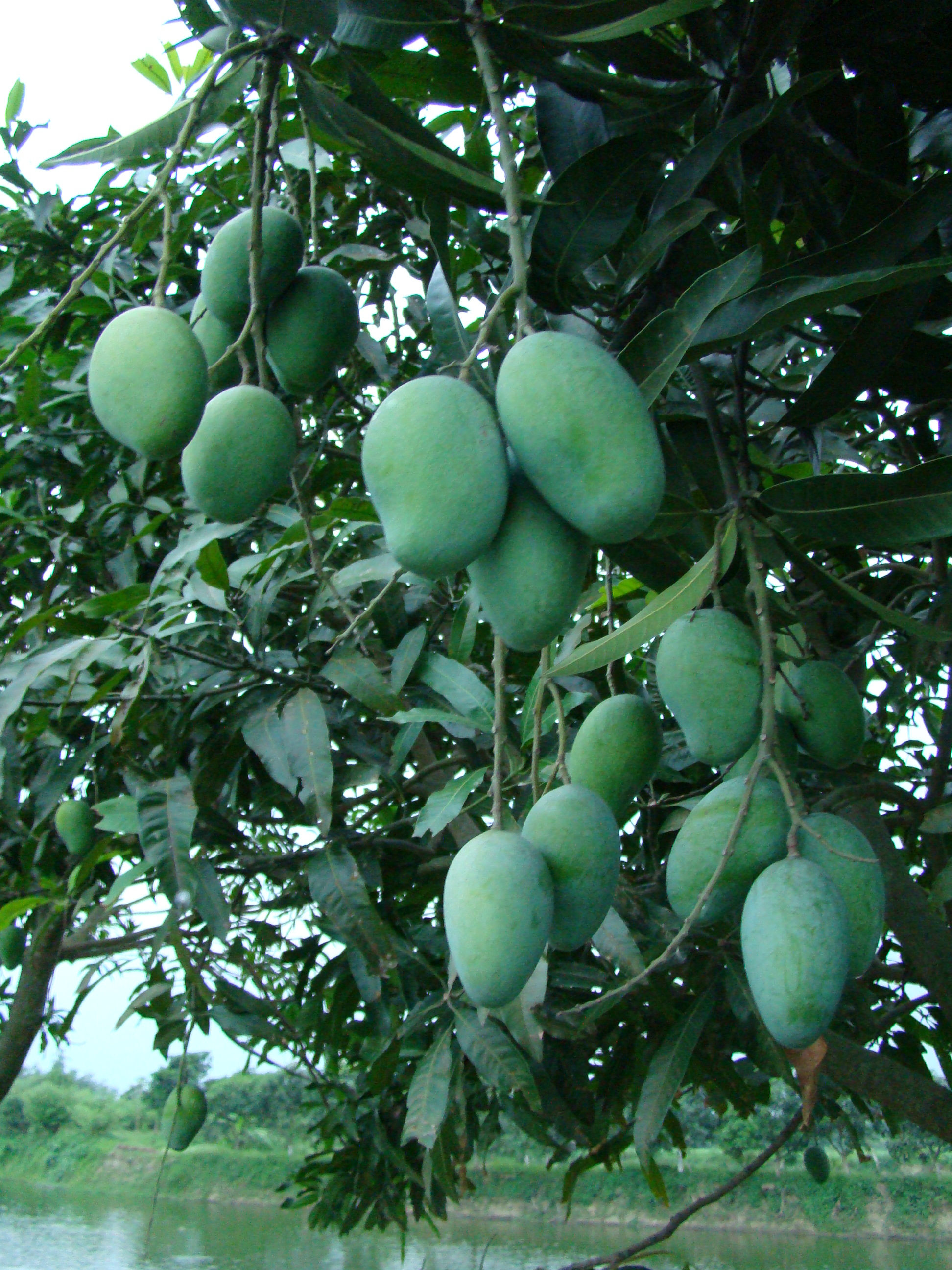
Mango picking and marketing began in Rajshahi district on Thursday 15 May 2025, the first day allowed under the season's mango calendar. Farmers and traders started by bringing down guti mangoes, the local seedling types, and on that first day guti mangoes were selling at Tk 1,300 to 1,500 a maund, the Bengali news site Jagonews24 reported that morning from Rajshahi.
Growers hoped for good prices, and the Department of Agricultural Extension (DAE) in Rajshahi said the district's mangoes could bring in about Tk 1,500 to 1,600 crore that season. The DAE put the district's mango area at 19,603 hectares and its production target at 260,006 tonnes.
This report sets out what Jagonews24 found on the first day and adds background from sources published up to 15 May 2025: how the 2025 calendar was set and what it allowed, the season's flowering and weather, the district's figures and earlier seasons, the varieties named in the calendar, Rajshahi's mango country around Puthia and Baneshwar, and the national picture for production and exports.
First day in the orchards
On the first morning, Jagonews24's correspondent saw farmers bringing mangoes down from a number of trees. They began the year's harvest with local guti mangoes.
One of them was Nazir Udin, a grower in the Puthia area of Rajshahi. He told the paper that he had leased an orchard of four and a half bighas that season, that it had two guti mango trees, and that he had started picking from those two trees that morning. Buyers had responded well in the orchard itself on the first day, he said, and the mangoes were selling for Tk 1,300 to 1,500 a maund depending on their size.
He said the yield was very good that year, and that if no natural disaster struck he expected to make a good profit.
Umme Salma, deputy director of the DAE in Rajshahi, told Jagonews24 that the marketing of Rajshahi's mangoes had begun that day and that farmers could now pick, but only guti mangoes for the time being. The yield was good that year, she said, and judging by the target, Rajshahi's farmers would earn Tk 1,500 to 1,600 crore from mangoes.
The 2025 mango calendar
The schedule that set 15 May as the opening day was fixed by the Rajshahi district administration a week earlier. According to the Daily Ittefaq, it was agreed at a meeting on the transport, marketing and collection of mangoes held at about 11:30 am on Wednesday 7 May 2025 in the conference room of the Rajshahi deputy commissioner's office. The deputy commissioner chaired it, and the DAE's deputy director, agriculture officers, mango farmers, traders and people from the transport business took part.
The meeting banned the marketing of mangoes before 15 May that year. The calendar was issued, the paper said, to help make sure that mangoes reaching the market were safe, free of harmful pesticide residues and properly ripe. It also kept one exception: if a natural disaster struck, farmers could pick earlier with the permission of their upazila nirbahi officer (UNO), the government's chief executive in each upazila.
As Jagonews24 reported it on 15 May, the calendar gave these first picking dates for 2025:
- Guti (local seedling) mangoes: from 15 May
- Gopalbhog: from 22 May
- Lakhna (Lakshmanbhog) and Ranipasand: from 25 May
- Himsagar, also called Khirsapat: from 30 May
- Langra and Banana Mango: from 10 June
- Amrapali and Fazli: from 15 June
- BARI Aam-4: from 5 July
- Ashwina: from 10 July
- Gourmati: from 15 July
- Katimon and BARI Aam-11: at any time of the year
The Daily Ittefaq's report of 8 May 2025 gave the Gopalbhog date as 20 May, while Jagonews24 gave 22 May; neither report explained the difference. Langra and Banana Mango, and Amrapali and Fazli, are separate varieties that share an opening date; Himsagar and Khirsapat are two names for the same mango, as are Lakhna and Lakshmanbhog.
Area, production target and expected earnings
According to the DAE, mangoes were being grown on 19,603 hectares in Rajshahi district in 2025, and the production target was 260,006 tonnes. The Ittefaq report on the 7 May meeting gave the same area and target, with an expected average yield of 13.26 tonnes per hectare and a target sales value of Tk 1,695 crore 85 lakh 75,620, which the paper's 8 May report rounded to about Tk 1,700 crore.
The DAE's own spokespeople used rounder figures. Jagonews24 quoted the department as saying the crop would earn Tk 1,600 crore, and the deputy director as putting farmers' earnings at Tk 1,500 to 1,600 crore.
For the previous season, the DAE told Jagonews24 that mangoes had been grown on 19,602 hectares in the district. The figure announced before that season was lower: when the 2024 calendar was set, the state news agency BSS reported on 14 May 2024 that the target was about 2.15 lakh tonnes from 18,515 hectares of orchards. The sources do not explain the difference between the two area figures.
A heavy bloom and a dry spring
The 2025 season had begun with promise. On 5 April 2025 the Daily Ittefaq reported from Rajshahi that it was an 'on year', a high-yield year in the mango's natural cycle. Winter had ended early, more than 90 percent of trees had flowered, and because there had been little dense fog, the flowers had suffered little damage.
The same report described the risk. A drought and a mild heatwave that had begun about a week before Eid-ul-Fitr were drying out young fruit and making it drop, and growers and traders were worried. Light showers on 17, 20 and 21 March had washed dust off the leaves and fruitlets and had been expected to reduce fruit drop, but the dry spell that followed had undone much of that benefit. Farmers in Chapainawabganj, Naogaon and Rajshahi were irrigating their orchards and spraying against harmful insects on the advice of experienced growers and agriculture officers. All small and medium grafted trees had flowers and fruitlets, while most large trees carried fewer.
The DAE's figures quoted in that report covered the whole mango belt. About 93,000 hectares of orchards in eight districts were in flower or fruit: 87,604 hectares in Chapainawabganj, Naogaon and Rajshahi, and 5,396 hectares in Joypurhat, Natore, Bogura, Pabna and Sirajganj. The target for the region was about 11 lakh tonnes of mangoes and sales worth about Tk 10,000 crore.
Officials quoted by the paper explained the season's prospects. The DAE's additional director for the Rajshahi region said high-yield and low-yield years come naturally in turn; in the previous year a long winter had delayed flowering and cut output, while the short winter of 2025 had brought early flowering, which pointed to a higher yield. The chief scientific officer of the fruit research institute in Rajshahi advised irrigation alongside pest control to stop fruit drop. Umme Salma, the DAE's deputy director in Rajshahi, said that without a major disaster the crop would be a bumper one.
From guti to Langra: the early and mid-season varieties
The mango, Mangifera indica, is believed to be native to the eastern part of the Indian subcontinent, including Bangladesh, Assam and Myanmar, according to Banglapedia, the national encyclopedia of Bangladesh. The country has nearly 100 cultivars. Trees grown from seed are known locally as deshi or guti am; the better varieties are grafted so that the young tree keeps the qualities of its parent. Banglapedia says superior varieties are grown mainly in Rajshahi, Nawabganj (now Chapainawabganj) and Dinajpur, and it names among them Fazli, Langra, Gopalbhog, Himsagar, Khirsapat, Ashwina and Lakshmanbhog.
Guti mangoes, the kind Nazir Udin was selling on 15 May, open the calendar. Gopalbhog, the first of the named grafted varieties in the calendar, follows a week later, and Lakhna (Lakshmanbhog) and Ranipasand come after it in the last week of May.
Himsagar, also known as Khirsapat, follows on 30 May. Khirsapat from Chapainawabganj, the neighbouring district, became Bangladesh's third registered geographical indication (GI) product in January 2019, after hilsa fish and Jamdani, The Daily Star reported at the time; the Bangladesh Agricultural Research Institute (BARI) had applied for it in February 2017 on behalf of the district's growers, and the registration was made by the Department of Patents, Designs and Trademarks (DPDT) under the industries ministry. The Financial Express reported in January 2019 that Khirsapat made up 20 to 25 percent of the country's mango production and was the top mango variety for export, going mainly to Europe and the Middle East.
Langra follows in June. Langra and Ashwina mangoes of Chapainawabganj received their GI certificates on 25 June 2023, according to The Daily Star's Bangla edition, after the DPDT published them and no objection was received; bdnews24 had reported in April 2023 that both applications were made in 2017 by the district's agricultural research institute.
Fazli, Ashwina and the late varieties
Fazli and Amrapali open on 15 June. Fazli is a large, late-maturing mango whose fruit can weigh up to about a kilogram and which is widely used for jams and pickles, according to the encyclopedia entry on the variety. Both Rajshahi and Chapainawabganj claimed its GI, and after hearings the DPDT recognised the Fazli jointly in the names of both districts, bdnews24 reported in April 2023.
Amrapali is a hybrid of the Indian varieties Dasheri and Neelum, developed at the Indian Agricultural Research Institute in Delhi and released in 1971. The tree is a dwarf that bears regularly, and the fruit has deep orange-red flesh.
The July dates belong to late varieties. BARI Aam-4, a variety released by BARI, is a late mango that, as a DAE official told The Daily Star's Bangla edition in September 2023, begins its season after July. Ashwina, Chapainawabganj's other GI mango, opens on 10 July.
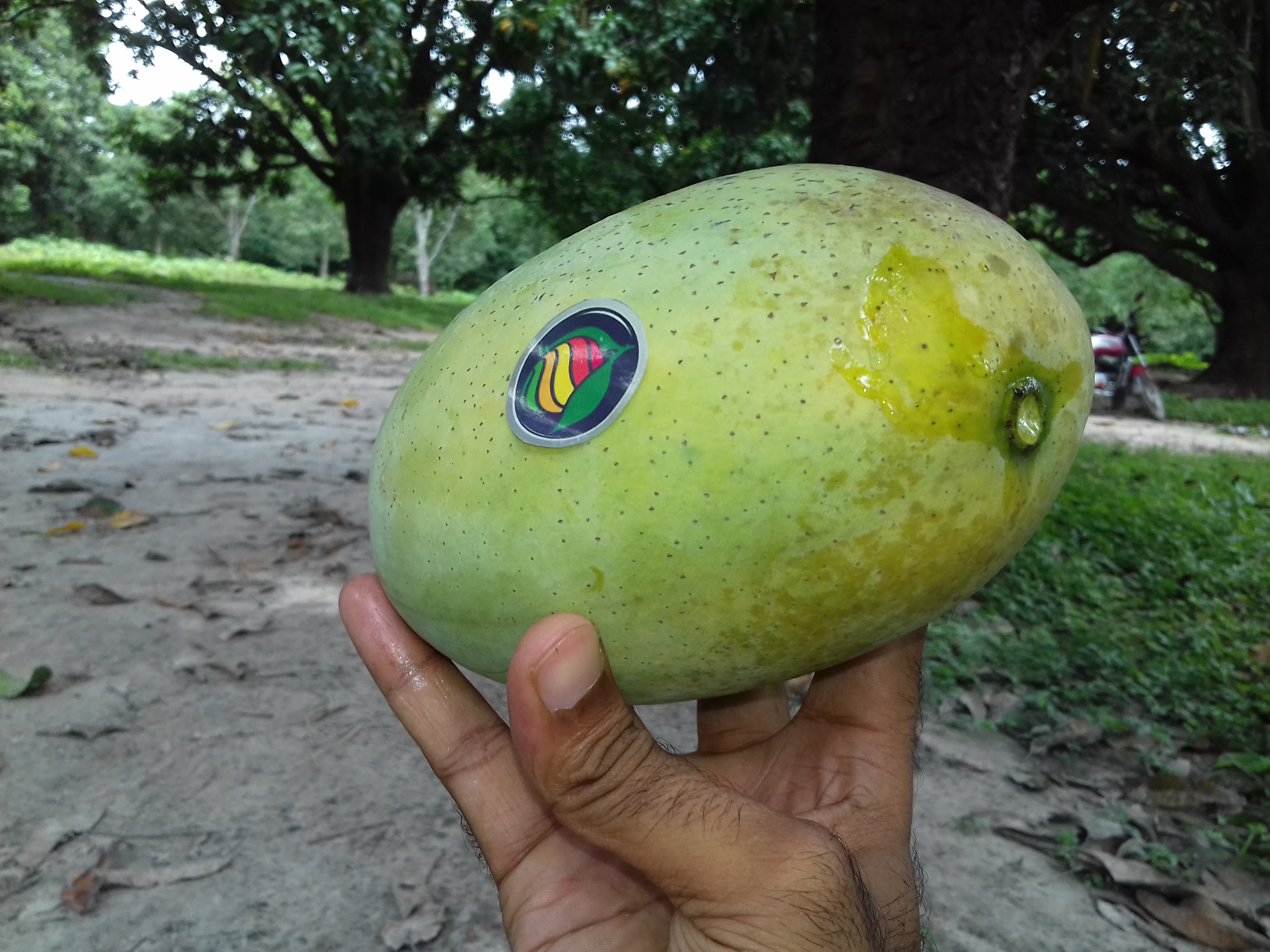
Gourmati, the last fixed date in the calendar, is a late variety first found growing naturally in Shibganj upazila of Chapainawabganj in 2012. BARI named it BARI Aam-12, but it is better known as Gourmati. The DAE's deputy director in Chapainawabganj described it to The Daily Star's Bangla edition in September 2023 as a natural cross of Langra and Ashwina. It was then sold for about a month, from mid-August to mid-September, at much higher prices than ordinary mangoes: about Tk 6,000 a maund at the start of its season, rising to Tk 16,000 to 17,000 by the end, against Tk 1,200 to 3,000 for common mangoes. It is grown mainly in Naogaon, Chapainawabganj, Rajshahi and Natore, and needs bagging, which adds to its cost.
The calendar set no date for Katimon and BARI Aam-11, which could be picked at any time of the year. In Sharsha upazila of Jashore, an upazila agriculture officer told bdnews24 in March 2023 that BARI-4, BARI-11 and Katimon could give three crops a year, and that because they ripen out of season they fetch good prices; a grower there was then selling BARI-11 at Tk 400 a kilogram from his orchard.
Rajshahi, Puthia and the Baneshwar mango market
Rajshahi district covers 2,425.37 square kilometres in north-western Bangladesh, according to Banglapedia, which describes it as bounded by Naogaon on the north, Natore on the east, Nawabganj (Chapainawabganj) on the west, and the Indian state of West Bengal, Kushtia and the Ganges, known in Bangladesh as the Padma, on the south. It has nine upazilas: Godagari, Charghat, Tanore, Durgapur, Paba, Puthia, Baghmara, Bagha and Mohanpur. Its main rivers are the Padma, the Mahananda and the Shiba, and the district is made up of Barind Tract, diara and char land. Agriculture is the largest source of income.
Much of the district lies on the Barind Tract, the largest Pleistocene upland of the Bengal Basin, covering about 7,770 square kilometres between the Karatoya, the Mahananda and the Ganges. Its reddish-brown Barind clay stands above the surrounding floodplains, so the tract is largely free from monsoon flooding, but it is drought-prone and is considered semi-arid, Banglapedia says; summer temperatures at some sites in the Rajshahi region can reach about 45 degrees Celsius. Groundwater irrigation, begun under the Barind Integrated Area Development Project in the mid-1980s and later run by the Barind Multipurpose Development Authority (BMDA), turned what had been single-crop land into a food-surplus area.
Puthia, where Nazir Udin leased his orchard, is an upazila of 192.63 square kilometres in the east of the district, bordering Natore Sadar. Banglapedia lists its six unions as Jeopara, Puthia, Baneshwar, Belpukuria, Bhalukgachhi and Silmaria, and names mango first among its main fruits, followed by jackfruit, litchi, banana, papaya and guava. The upazila is also known for the temples and palace of the Puthia Raj family.
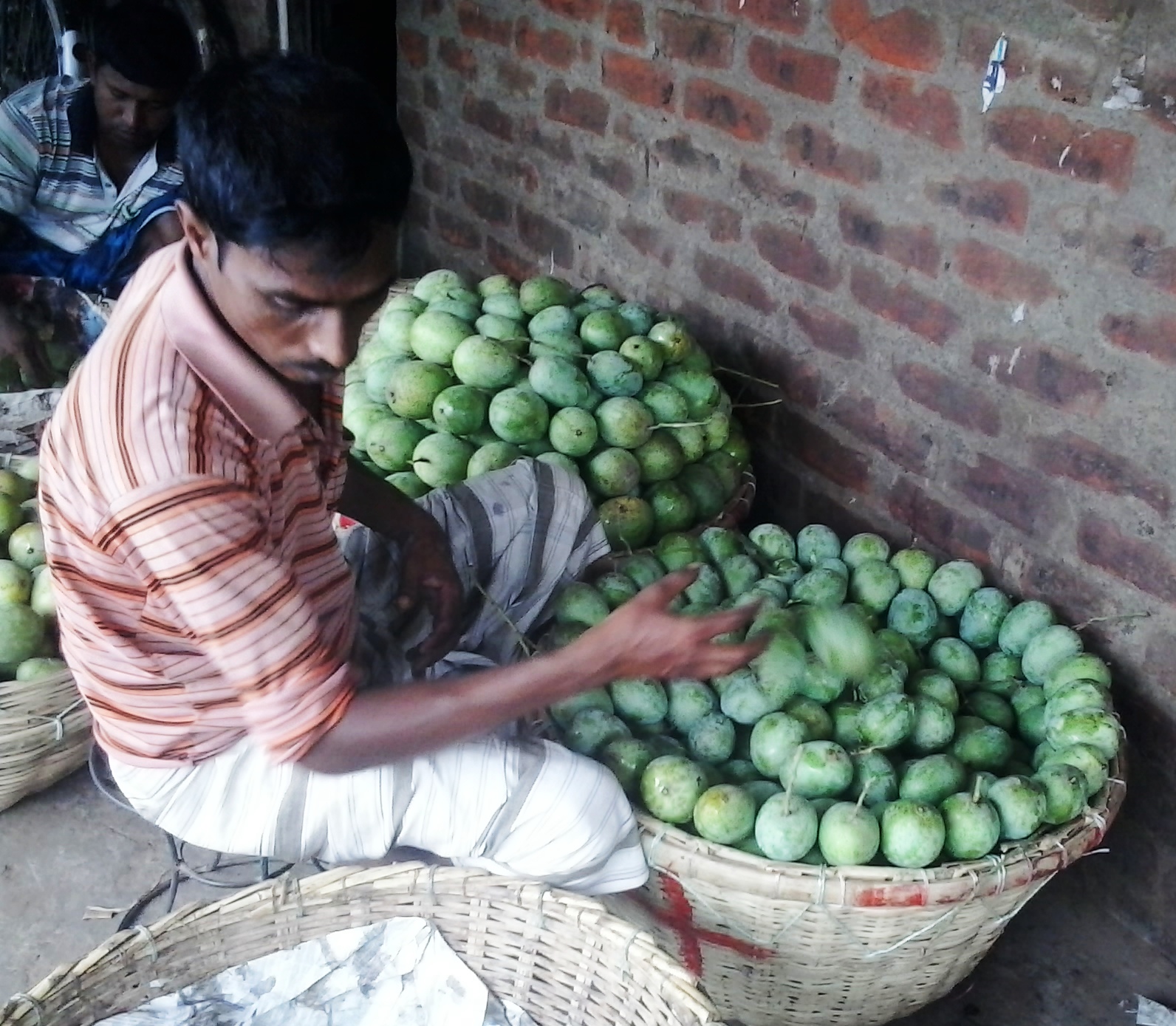
Baneshwar in Puthia upazila is home to Rajshahi's largest mango market, the news site Dhaka Times reported in May 2020, when it described mangoes brought in baskets and crates on vans to be sold there. That year the market opened on 29 May, at least 15 days later than the year before, because the fruit had ripened late and because some traders held back during the COVID-19 pandemic; storm and rain brought by Cyclone Amphan had knocked down many mangoes, causing farmers an estimated loss of Tk 120 crore, and a nor'wester on the night of 26 May brought down more.
How the calendar began and how earlier seasons opened
Rajshahi has fixed a mango calendar every year since 2015 to stop the sale of immature and adulterated mangoes, The Daily Star's Bangla edition reported on 12 May 2024. That year the deputy commissioner told the meeting that officials would monitor orchards and markets and that anyone breaking the calendar would face legal action. The meeting had followed a discussion with agricultural scientists, fruit researchers, mango farmers and traders.
The opening date has varied from year to year. The Daily Ittefaq listed the dates on which guti mangoes could first be marketed as 13 May in 2022, 4 May in 2023 and 15 May in 2024. In 2020, Dhaka Times reported, guti mangoes could be picked from 15 May once ripe, Gopalbhog from 20 May, Ranipasand and Lakshmanbhog from 25 May, Himsagar and Khirsapat from 28 May, Langra from 6 June, Amrapali and Fazli from 15 June, and Ashwina and BARI-4 from 10 July.
The 2024 calendar, BSS reported, let local varieties be picked from 15 May, Gopalbhog, Ranipasand and Lakhna from 25 May, Himsagar (Khirsapat) from 30 May, Langra from 10 June, Amrapali and Fazli from 15 June, BARI Aam-4 from 5 July, Ashwina from 10 July, Gourmati from 15 July and Ilamati from 20 August. Picking began on the morning of 15 May 2024. At the time, BSS noted that the bagging of fruit was spreading in the district, and that bagging reduced the need for pesticides to control the fruit fly.
Moving the crop to buyers is part of each season's planning. For 2024 Bangladesh Railway's West Zone announced a special mango train from Chapainawabganj to Dhaka via Rajshahi from 10 June, the fifth year in a row, BSS reported on 14 May 2024. It was scheduled to leave Rohanpur station at 4 pm and reach Dhaka at 2:15 am by way of the Padma Bridge with 14 stops, with six luggage vans able to carry 172.98 tonnes; the fare was Tk 1.43 a kilogram from Rajshahi to Dhaka and Tk 1.48 from Chapainawabganj. In the four years since 2020 the service had carried 39,95,798 kilograms of mangoes.
Mango production and exports in Bangladesh
Mango trees in Bangladesh flower from January to March, and fog, rain or cloud at that time harms fruit set, Banglapedia says. A grafted tree starts bearing in about its fourth year and stays productive until about its 45th, while a seedling tree takes longer to bear but can keep fruiting for 60 years or more. About three dozen insect pests attack the crop, the most serious being mango hoppers, fruit weevils, stem and shoot borers and the mango fruit fly, and fungal diseases include anthracnose, sooty mould and powdery mildew.
Nationally, a BSS report carried by The Business Standard on 27 April 2025 gave the DAE's figures: 23,50,499 tonnes of mangoes from 2,02,968 hectares in fiscal year 2020-21, 27,07,459 tonnes in 2022-23, and 25,08,973 tonnes from 2,05,034 hectares in 2023-24. For the 2025 season the target was 27 lakh tonnes, which the report described as a record. Mangoes were then grown in 15 districts, and the national harvest was to open with Gopalbhog in Satkhira on 5 May.
Exports were far smaller. The same report gave export volumes of 309 tonnes in 2016-17, 1,757 tonnes in 2021-22, 3,100 tonnes in 2022-23 and 1,321 tonnes in 2023-24, and an export target of about 5,000 tonnes for 2025, to about 38 countries. The director of the government's exportable mango production project said he hoped exports to China would begin in June 2025. In August 2023 UNB, citing the agriculture ministry, reported that the United Kingdom had taken the largest share of that season's exports, 1,256 tonnes, followed by Italy, Saudi Arabia, Kuwait, the United Arab Emirates and Qatar.
The Business Standard reported in July 2024 that Bangladeshi mangoes kept for only three to four days, against seven to ten for Indian and Pakistani fruit, that air freight costs had risen sharply, and that the country had few orchards certified under good agricultural practices (GAP) and a single quarantine centre. The DAE's exportable mango production project, with a budget of Tk 47 crore, was due to run until June 2027.
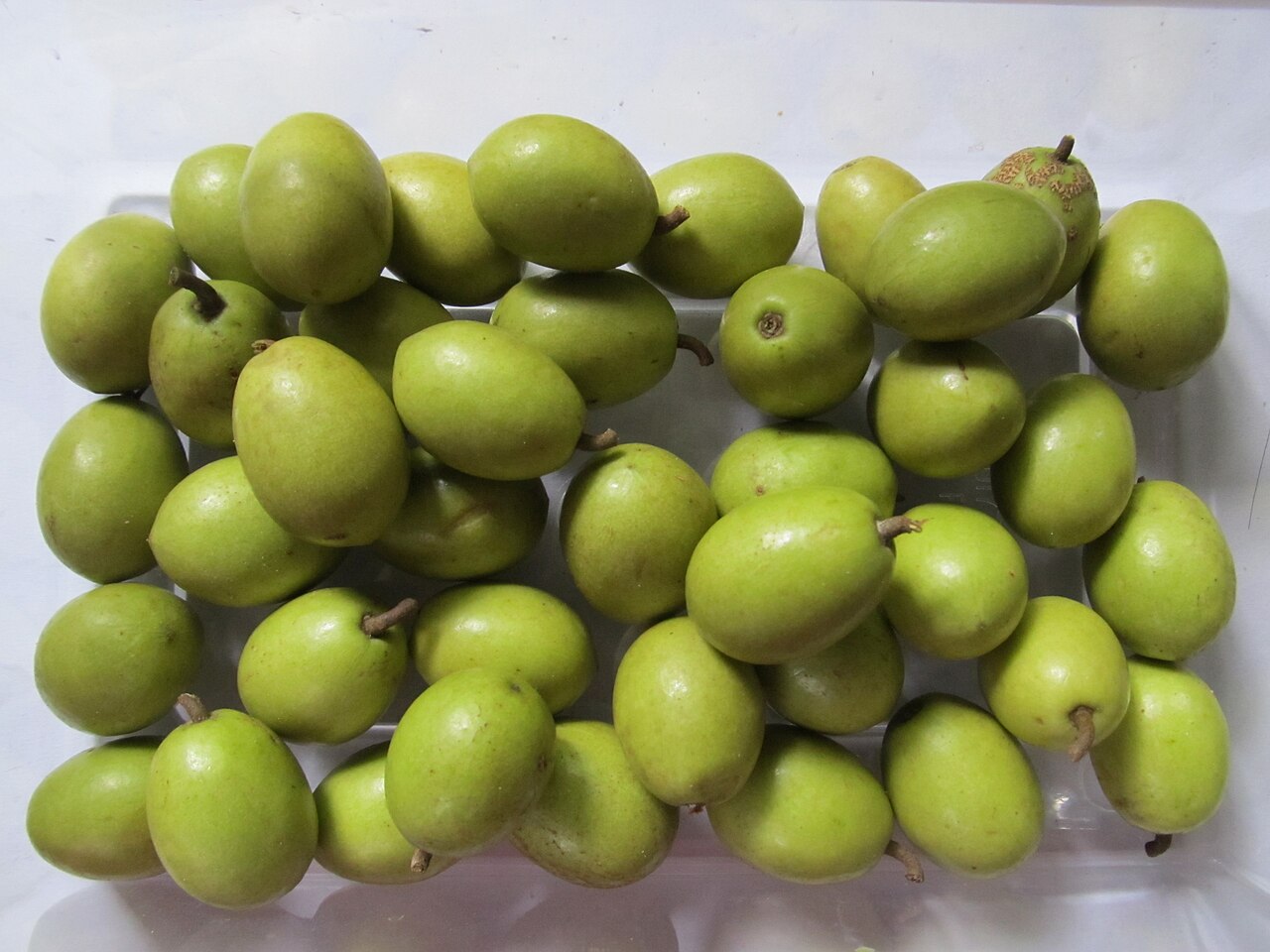
Photo: Shahnoor Habib Munmun / Wikimedia Commons (CC BY 3.0). The top picture shows green mangoes on a tree in Bangladesh, as background; where it was taken is not stated, and it is not the Puthia orchard in this report.
Sources: Jagonews24, The Daily Ittefaq, Bangladesh Sangbad Sangstha (BSS), The Business Standard, The Daily Star, The Daily Star Bangla, The Financial Express, bdnews24.com, UNB, Dhaka Times, Banglapedia, Wikipedia (Amrapali and Fazli mango entries)
Comments
(0)