
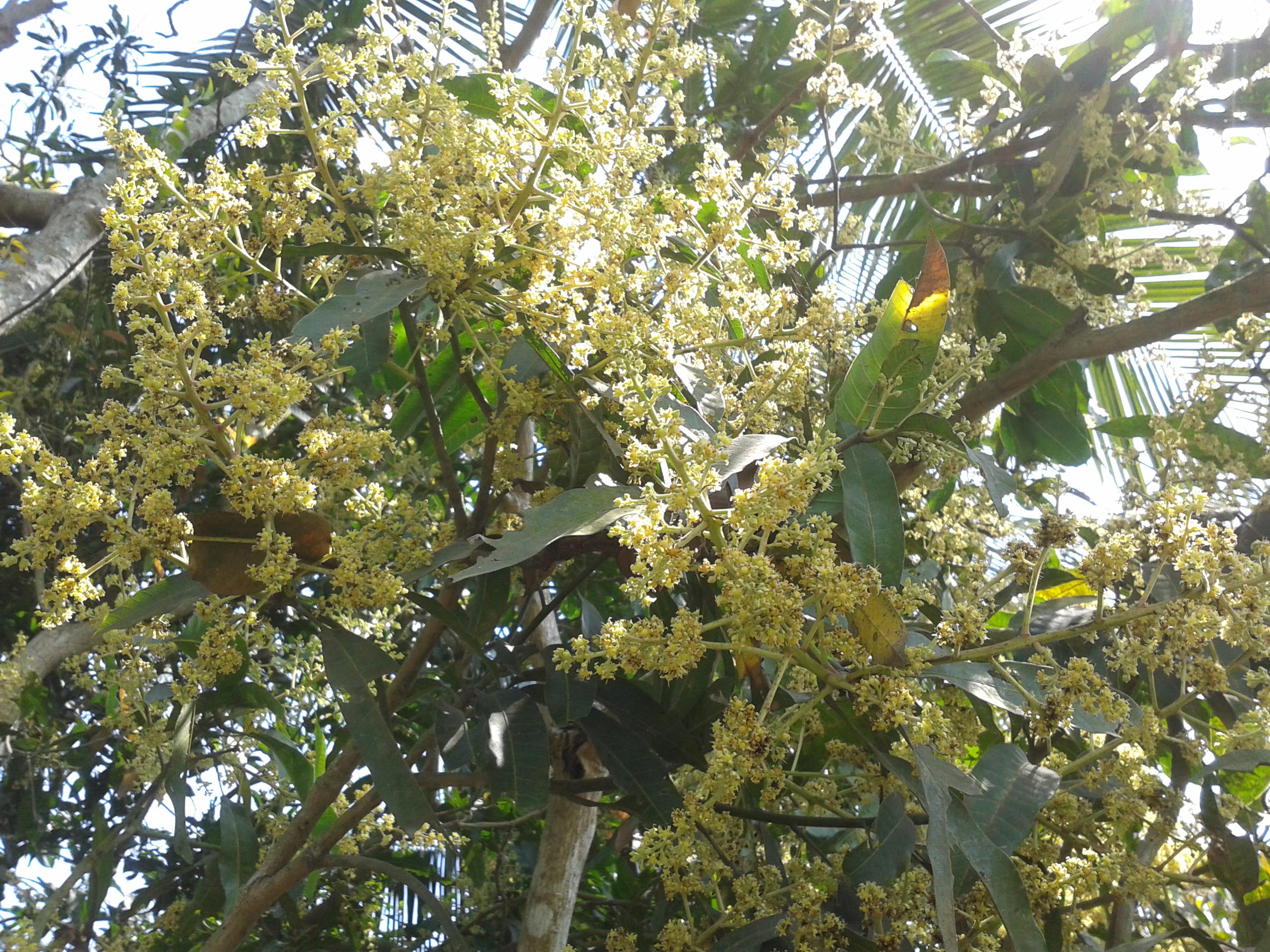
Early blossom began to appear on mango trees in Rajshahi in late December 2025, about two months before the orchards were expected to flower in full, Jagonews24 reported on 28 December. Growers in several upazilas of the district were spraying their trees, digging around the roots and watering them. They told the paper they hoped for a good crop because the cold and fog of this winter had, so far, been less severe than those of the winter before.
What farmers were doing in the orchards
A reporter who visited orchards in several upazilas found farmers spraying their trees with water mixed with pesticide and giving them extra care. Because of the fog of the preceding few days, growers were also using fungicide sprays to protect the new blossom from fungal attack.
Amirul Islam, a mango farmer in Paba upazila, said early blossom had started to appear this year and that growers were digging around the base of the trees, watering them and spraying. He said the long spells of cold and the intensity of the fog were much lower than the year before, so he hoped for a good yield.
Mahtab Ali, a mango farmer in the Charghat area, said that because growers now looked after their trees all year round, a good yield came every year. He was caring for his trees again, he said, and blossom had already shown on one or two of them. He warned, however, that the yield could fall if hoppers, the sucking insects that attack mango, were not controlled at the right time.
What the scientist and the extension officer said
Shafiqul Islam, chief scientific officer of the Rajshahi Fruit Research Station, said the district's orchards had not yet received enough blossom and that full flowering would come around February and March. Good care of the trees from now on, along with work to control disease, would bring good blossom, he said. Because the weather had been better than the previous season's, he hoped the trees would bear a good quantity of mangoes.
Nasir Uddin, deputy director of the Department of Agricultural Extension (DAE) in Rajshahi, said the department was giving farmers the advice they needed for good production and that its assistant and sub-assistant agriculture officers were working in the field. A tree needed pesticide twice a year for a good yield, he said.
The district's mango in figures
According to the DAE in Rajshahi, mango was grown on 19,603 hectares of the district in the 2024-25 fiscal year and production was 249,952 tonnes. For 2025-26 the cultivation target was again 19,603 hectares and the production target 246,000 tonnes. Nasir Uddin put last year's yield at 12.75 tonnes per hectare and this year's target at 12.8 tonnes, and said that on this basis production would be good.
Earlier reports show how the figures had moved. In February 2023 the DAE in Rajshahi told Prothom Alo that mango covered 19,578 hectares that season, up from 18,515 hectares the year before, when production was 206,156 tonnes; it expected 225,912 tonnes in 2023. In May 2025 the department gave the area as 19,603 hectares and the production target as 260,000 tonnes.
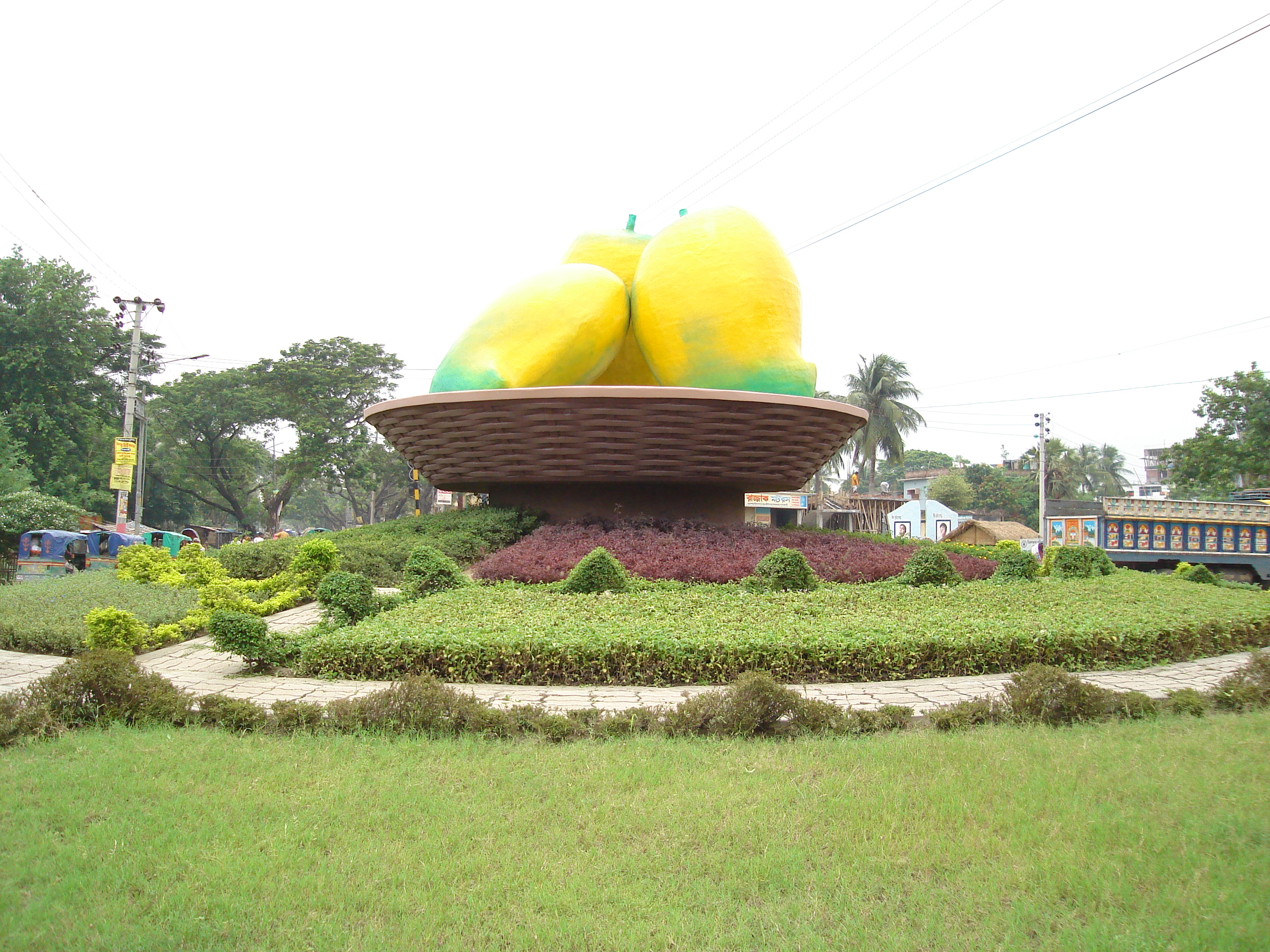
Prothom Alo reported in May 2025 that the Bagha and Charghat upazilas together account for more than half of the district's mango cultivation. Rajshahi, Chapainawabganj and Naogaon are the division's known mango districts, each with large markets, and Rajshahi's largest market sits at Baneshwar in Puthia upazila.
Nationally, DAE figures quoted by Prothom Alo in May 2024 put mango output in 2022-23 at more than 2.7 million tonnes, about 400,000 tonnes above the previous year. In June 2025 the director of the agriculture ministry's Exportable Mango Production Project told The Daily Star that Bangladesh produced 2.4 to 2.5 million tonnes a year, feeding a domestic market worth around Tk 13,000 crore to Tk 14,000 crore, with 72 varieties in production and exports to 38 countries.
Where Rajshahi's orchards grow
Rajshahi district covers 2,425.37 square kilometres and has nine upazilas, according to Banglapedia, the national encyclopedia. Its rivers include the Padma, the Mahananda and the Shiba, and its landforms are the Barind Tract, diara and char lands. Agriculture is the largest source of income.
The upazilas named in the reports all lie on the Padma. Bagha, about 185 square kilometres, lists mango among its main fruits and exports. Charghat, about 164 square kilometres, has the Padma and the Baral as its rivers and exports mango and litchi. Paba, about 340 square kilometres, has the Padma and the Shiba, with mango again among its fruits and exports.
Banglapedia says superior mango varieties are grown mainly in Rajshahi, Nawabganj and Dinajpur, and that some of the best orchards are on the deep alluvial loam of the Ganges floodplain. Nearly any soil suits the tree, it says, except soil less than a metre deep, soil over rock, and sticky clay; the best pH is 5.5 to 7.5. The Barind Tract, by contrast, is floored with sticky, compact reddish-brown clay. It is described as semi-arid and drought-prone, with average temperatures of 9 to 15 degrees Celsius in the coolest season and rainfall of about 1,971 millimetres a year, most of it in the monsoon.
Bangladesh has nearly 100 mango cultivars, Banglapedia says, falling into two groups: elite varieties raised by grafting, such as Fazli, Langra, Gopalbhog, Himsagar and Khirsapat, and local seedling trees known as deshi or guti, whose quality is unreliable. The Bangladesh Agricultural Research Institute has research stations at Rajshahi, Nawabganj and Joydebpur.
Why the timing of blossom matters
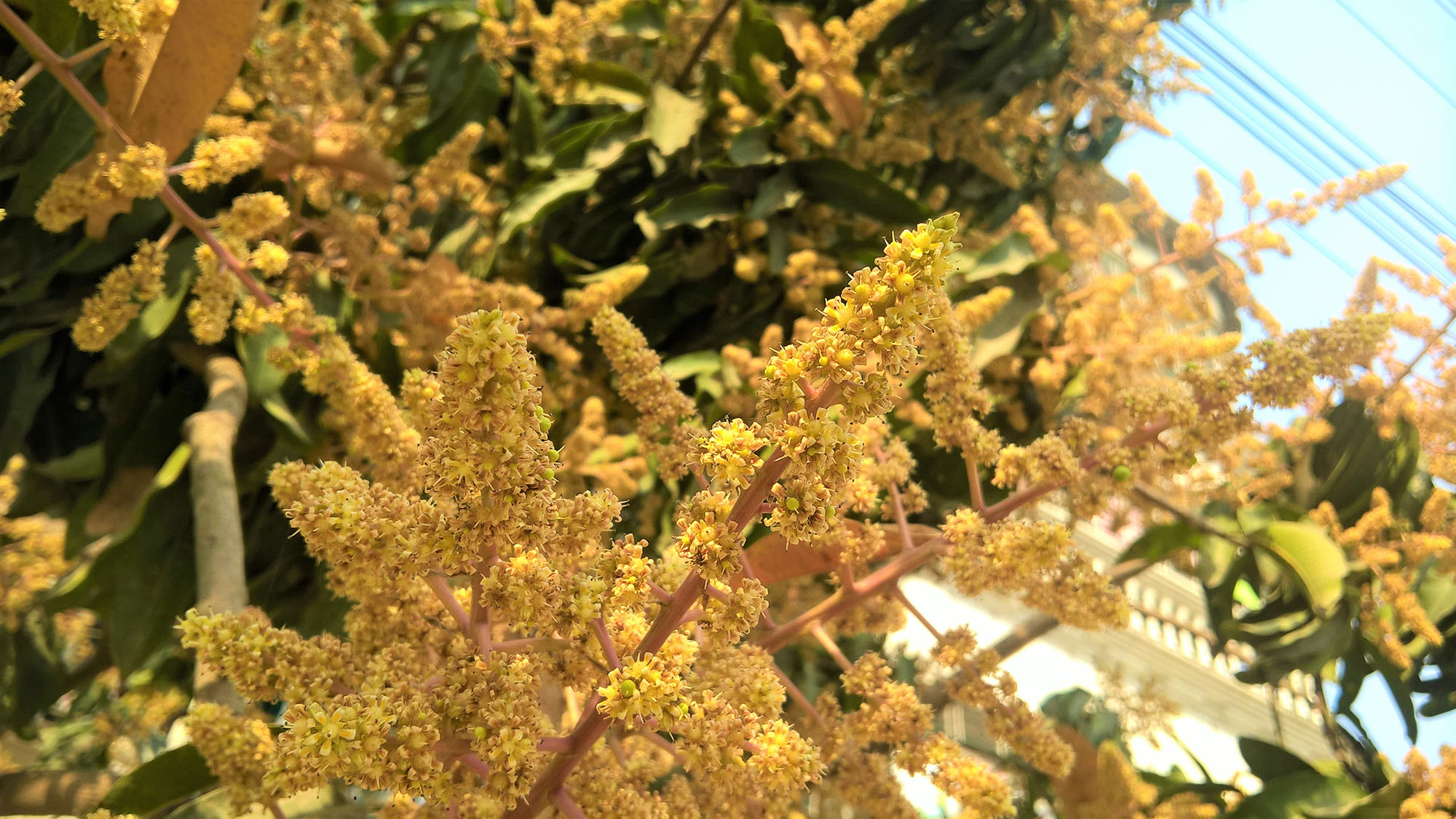
Mango trees in Bangladesh flower from January to March, according to Banglapedia, so blossom in December comes ahead of the usual season. The encyclopedia says fog, rain or cloudy weather during flowering reduces fruit set, and that the tree needs a well-defined dry season after rain has moistened the soil deeply.
A panicle may look full of promise, but little of it becomes fruit. The University of Hawaii's College of Tropical Agriculture and Human Resources notes that most flowers on a panicle are male and bear no fruit. Banglapedia says only about one or two flowers in a thousand may become mature fruit, and that two or three fruits on a panicle are often enough for a satisfactory crop.
Rajshahi's own seasons show what the weather can do. In February 2023 Prothom Alo reported the most blossom in several years. The founder of a local agricultural information library, who had kept daily weather notes for about 20 years, said fruit forms from blossom between 15 and 27 February and that fog in that period harms fruit set; there had been seven days of fog in that window, against five the year before and four the year before that. He also said warm nights followed by cold mornings were harmful. A Charghat grower said fog had damaged some of the early blossom, while the later blossom was fine.
The 2024 season went the other way. Growers in Chapainawabganj told Prothom Alo that blossom they usually saw from early February came only at the end of the month or in the first week of March; a two-day rain in mid-March rotted much of it, and the heat of April hindered fruit set in the rest. Agriculture officers in Rajshahi said blossom had come late and in smaller quantity, that March rain had destroyed some of it and that a long drought had made fruit drop.
Agriculturists also pointed that year to the "off year". Mango tends to bear well one year and poorly the next, and Prothom Alo described this as alternate bearing. A 2023 paper in Frontiers in Genetics says many mango cultivars tend to bear fruit biennially because of irregular flowering.
Not all out-of-season blossom is of this kind. Katimon, a variety sold as off-season fruit, was described by Prothom Alo on 12 December 2025 in a Naogaon orchard where some trees carried blossom, others young fruit and others ripe mangoes. Rajshahi's harvest calendar lets Katimon and BARI Mango-11 be picked all year.
Cold and fog that week
The farmers' comparison with the previous winter was their own, and the Jagonews24 report gave no measurements for Rajshahi. National reports of the time give some context. On 26 December 2025 the Bangladesh Meteorological Department recorded the country's lowest temperature, 9 degrees Celsius, in Jashore, and 13.5 degrees in Dhaka. Its forecast for the following five days said temperatures could fall further and the cold could intensify, with fog continuing, and it attributed the cold to the subcontinental high-pressure belt. Moderate to dense fog was forecast from midnight to morning in places in the north and the river basins.
The winter before had its own spells of cold. On 13 December 2024 a cold wave began in at least three districts, with temperatures below 10 degrees Celsius in Panchagarh, Chuadanga and Ishwardi in Pabna. On 3 January 2025 a cold wave was reported in at least six places, and the fog of the day before had been so thick in the north that vehicles drove with headlights on in daytime.
The two threats growers named: hoppers and fungus
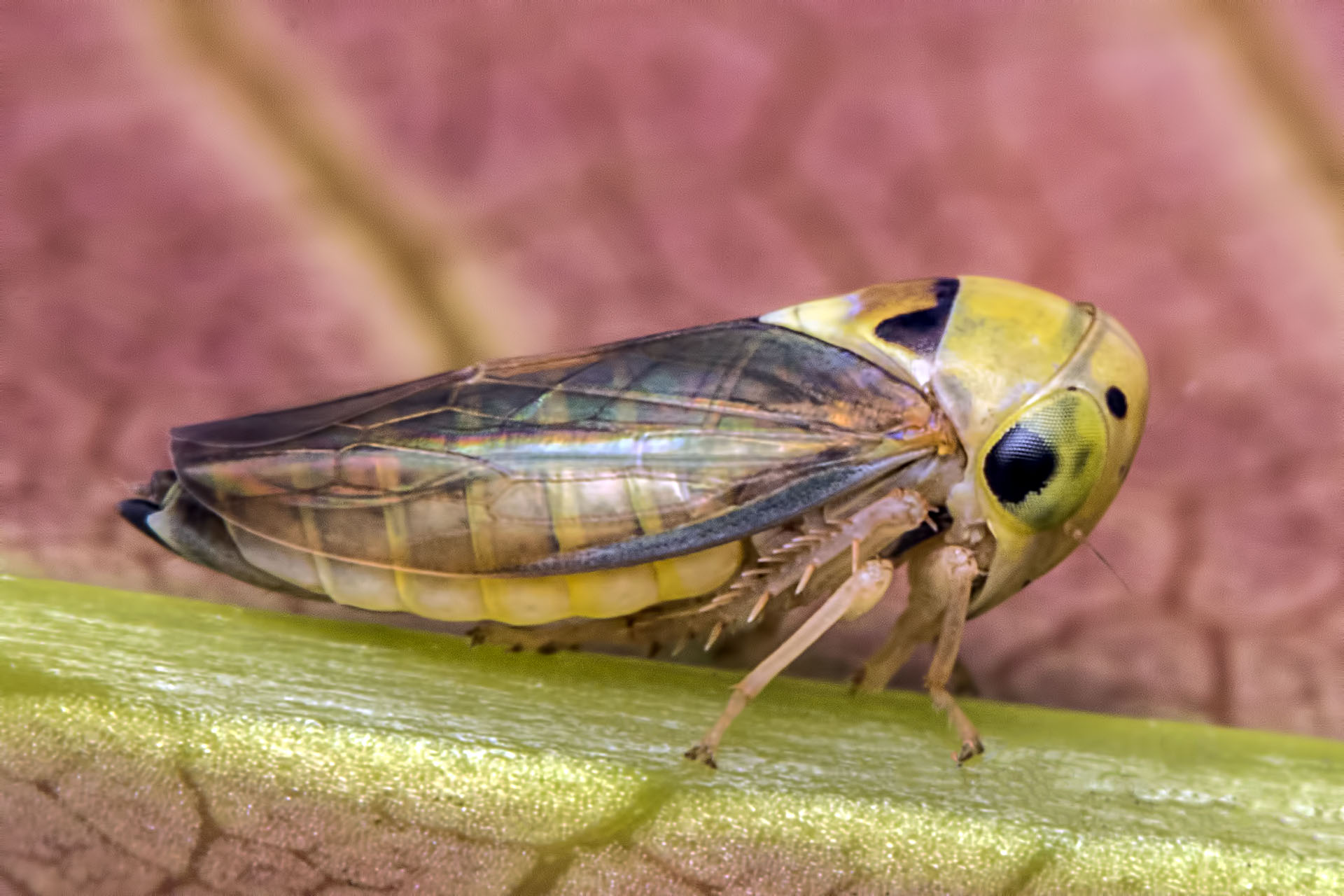
About three dozen insect pests attack mango in Bangladesh, Banglapedia says, and mango hoppers head its list of major pests. A study from Bangladesh Agricultural University published in 2014 calls the hopper Idioscopus clypealis one of the most serious and widespread pests in the country. Nymphs and adults suck sap from tender shoots, panicles and leaves, so flowers fail to set and young fruit drops. The insects also excrete honeydew, on which sooty mould grows in moist weather, and the black coating interferes with photosynthesis. On heavily infested trees, the paper says, crop losses of 50 per cent or more have been recorded.
The same study warned that careless use of toxic, persistent insecticides harms natural enemies and breeds resistance. In its 2013 field trial in Mymensingh, imidacloprid gave the highest reduction of hoppers and was less toxic to natural enemies, and neem oil, a plant product, proved comparable with cypermethrin a week after spraying.
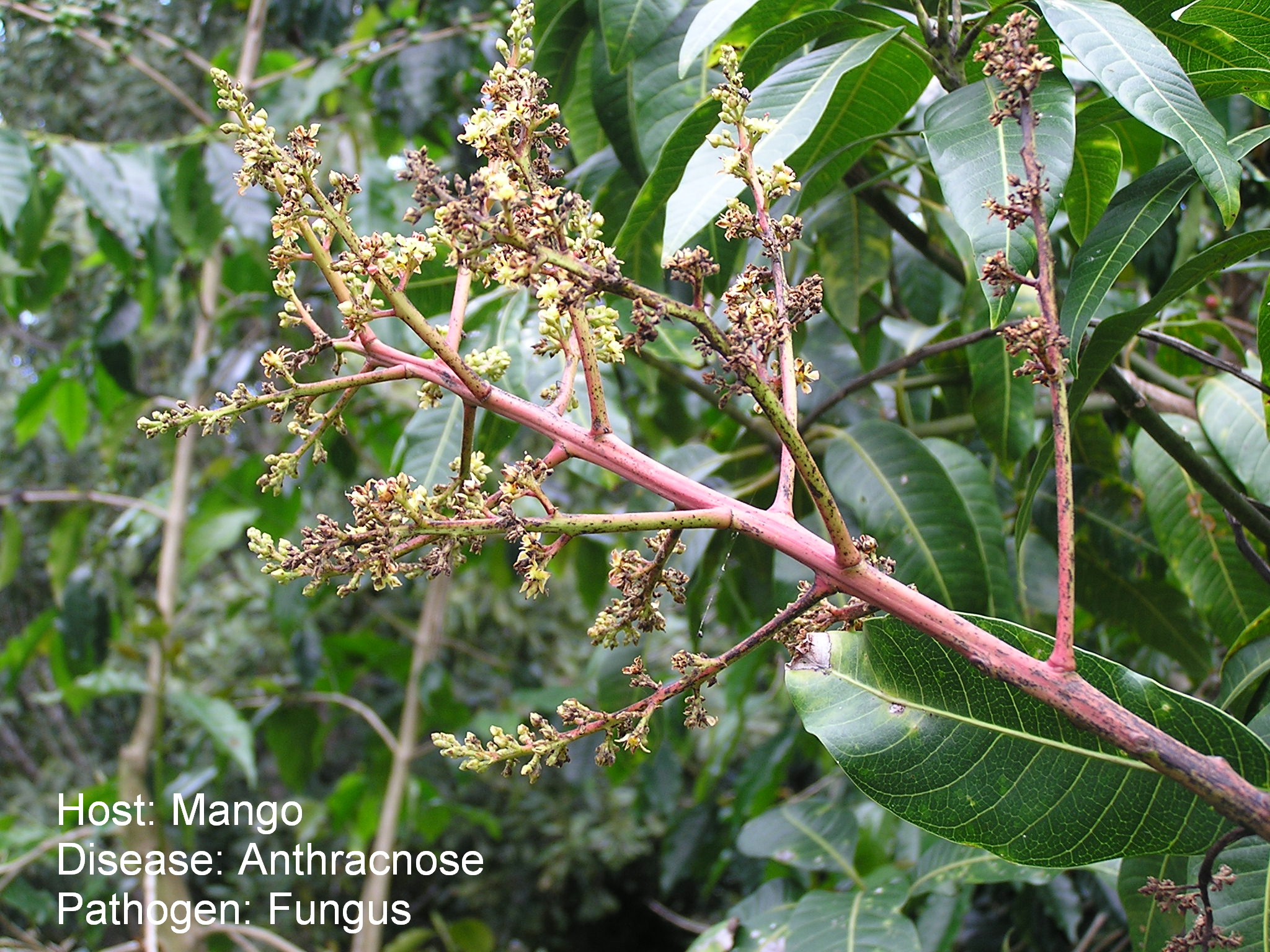
The farmers' concern about fog points to fungal disease. Anthracnose, caused by the fungus Colletotrichum gloeosporioides, is the most important and destructive mango disease worldwide, according to a 2008 University of Hawaii bulletin. On panicles it begins as small black or dark-brown spots that can enlarge, merge and kill the flowers before fruit forms. Its spores spread in splashing rain or irrigation water, and it survives between seasons on infected branch tips and mature leaves. A 2023 review in Frontiers in Microbiology says the fungus favours high humidity and temperatures of 25 to 28 degrees Celsius, and tends to lie dormant in dry conditions. All commercial mangoes are susceptible, the review says, and it estimates yield losses of up to 100 per cent in unmanaged plantations. Powdery mildew, also named by Banglapedia among mango's fungal diseases, appears as a whitish powdery coating on flowers.
What official guidance says about orchard care
An article in the government Agricultural Information Service's Krishi Katha in March 2018, by a senior scientific officer of the Regional Horticulture Research Centre in Chapainawabganj, warned that pesticide use in orchards was rising at an alarming rate and that growers were applying various products many times without realising it. It said the choice of product should come from local agriculture staff or a mango research centre rather than from the dealer, and set out these rules:
- Use the right product, the right dose, the right time and the right method.
- Give the first spray about 10 to 15 days before blossom appears and the second when the panicle is 10 to 12 centimetres long.
- Do not spray at all after the flowers open: mango is pollinated mainly by flies, and spraying can kill them and badly affect fruit set.
- To control hoppers, spray the trunk as well as the leaves.
- Change the chemical group from time to time, because repeating one product can build resistance.
- If the weather favours anthracnose or powdery mildew, use a fungicide as a precaution even if no symptoms show.
- Where possible, spray all orchards of an area at the same time.
The mango guide on the Bangladesh Agro-Meteorological Information Service, the DAE's portal, gives these rates per 10 litres of water:
- Hoppers: a cypermethrin-type insecticide (10 EC) at 10 millilitres over the whole tree, first when the panicle is 3 to 4 centimetres long and again when the fruit is pea-sized.
- Sooty mould: a sulphur-type fungicide at 40 grams, two or three times at 10-day intervals, late in the afternoon.
- Anthracnose: a mancozeb-type fungicide at 20 grams, first when the panicle is 10 to 15 centimetres long and again at pea size.
- Powdery mildew: a sulphur-type fungicide at 40 grams, two or three times at intervals of five to seven days, late in the afternoon.
The two guides differ on timing, so a grower should check with the upazila agriculture officer before spraying. Both stress safety: read the label, wear protective clothing, do not eat or smoke while spraying, and keep chemicals out of ponds and other water. The Krishi Katha article adds gloves and eye cover, locked storage away from children, and no spraying for at least two weeks before picking.
Water, soil and fertiliser for bearing trees
The same DAE guide says irrigation of bearing trees should stop three months before the panicles emerge. The tree is then watered at the end of flowering and again by the basin method when the fruit reaches pea size. In severe drought, water should be given at the base morning and evening. Soil around the base should be loosened from time to time and weeds removed, and an orchard should be ploughed at least once a year.
For a full-grown bearing tree the guide gives this yearly fertiliser rate, to be applied in two instalments, the first in Jyaistha-Ashar and the second in Ashwin:
- Cow dung: 50 kilograms
- Urea: 2 kilograms
- TSP: 1 kilogram
- MoP: 500 grams
- Gypsum: 500 grams
- Zinc sulphate: 25 grams
What the last two seasons brought growers
The hope in the orchards followed two very different seasons. On 3 June 2024, with the crop short, Himsagar sold at up to Tk 3,600 a maund at Baneshwar, and a Charghat grower said he had taken under 18 crates from four trees after getting 37 or 38 from one tree the year before.
In 2025 traders at the same market told Prothom Alo that the weather had suited mango, with more blossom, more fruit set and a better yield than usual. But the heat ripened the fruit all at once around the Eid holiday, when buyers were few. On 9 June 2025 Himsagar sold at Tk 1,000 to Tk 1,400 a maund and Langra at Tk 1,200 to Tk 1,600. By farmers' own reckoning, reported that month, a kilogram of mango cost about Tk 32 to bring to market: Tk 15 for leasing the land, Tk 6 for fertiliser and pesticide, Tk 6 for transport and packing and Tk 5 for picking. On a 48-kilogram maund, the measure used in that market despite an official instruction of 10 May 2025 to trade by the kilogram, a grower lost money below Tk 1,536.
Rajshahi's 2025 harvest calendar, announced by the district administration on 7 May, gave the dates from which each variety could be picked that season:
- Guti mangoes: from 15 May
- Gopalbhog: from 22 May
- Ranipasand and Lakshmanbhog: from 25 May
- Himsagar or Khirsapat: from 30 May
- Banana Mango and Langra: from 10 June
- Amrapali and Fazli: from 15 June
- BARI Mango-4: from 5 July
- Ashwina: from 10 July
- Gourmati: from 15 July
Photo: Hopeoflight / Wikimedia Commons (CC BY-SA 4.0). The top picture shows mango buds elsewhere in Bangladesh in March 2014, as background.
Sources: Jagonews24, Prothom Alo, The Daily Star, Agricultural Information Service (Krishi Katha), Bangladesh Agro-Meteorological Information Service (DAE), Banglapedia, University of Hawaii College of Tropical Agriculture and Human Resources, The Scientific World Journal, Frontiers in Microbiology, Frontiers in Genetics
Comments
(0)