
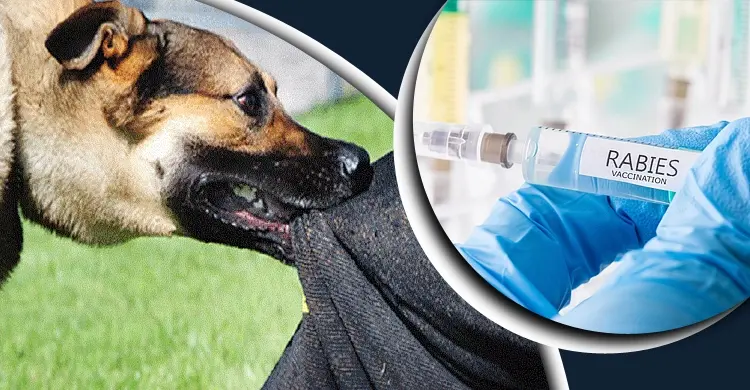
Rabies, or hydrophobia, is a deadly viral infection that usually spreads to people from domestic and wild animals. The disease is 100 per cent preventable, yet once infection sets in, death is also certain.
Statistics show that one person dies of rabies every 10 minutes worldwide, about 55,000 people a year. In Bangladesh an average of 40 to 50 people die of rabies each year, and about 25,000 cattle are also infected annually.
Experts say rabies is fully preventable if treatment is taken within 24 hours of an animal bite or scratch. But if the virus spreads through the body, the patient cannot be saved.
World Rabies Day
In line with 12 countries, Bangladesh has observed Rabies Day on 28 September since 2007. This year's theme is 'Rabies: no more deaths, coordination with all'.
According to the Zoonotic Disease Control Programme of the Communicable Disease Control (CDC) branch of the Directorate General of Health Services, 24 people died of rabies in the country up to July 2022, and 299,989 people were vaccinated after dog, cat or fox bites.
In 2020, 26 people died and 152,014 were vaccinated. In 2021, 40 died and 278,623 were vaccinated. In both 2018 and 2019, 57 people died of rabies; 253,409 were vaccinated in 2018 and 253,861 in 2019.
At the Infectious Diseases Hospital
A visit to the National Infectious Diseases Hospital found that most of those coming for vaccination had been bitten by dogs.
Ten-year-old Md Hossain, from Savar, came with his father for a vaccine a day after being scratched by a dog on Monday, 26 September. His father said he brought the boy to be safe.
Md Imamul Sarkar came to the hospital for his third day of vaccination after a neighbour's cat scratched his leg.
According to the hospital, 31 people died of rabies there up to September 2022, 10 children and 21 adults. About 62,000 people were vaccinated after attacks: 37,567 after dog bites and 24,933 after bites from other animals.
Dr Mizanur Rahman, director of the hospital, said rabies produces three symptoms: fear of water, fear of light and fear of air. Once these symptoms appear the patient cannot be saved. Patients are admitted when these symptoms appear, and most die within 24 hours.
He said symptoms can appear from nine days to three months after a bite, and in many cases even a year later, depending on where the bite is. Because the disease attacks the brain, the closer the bite is to the head, the sooner symptoms appear. So vaccination must be taken within 24 hours of the bite. At the hospital, patients are vaccinated according to category.
Treatment across the country
Dr SM Golam Kaiser, deputy programme manager of the CDC branch, told Jagonews that more than 300 rabies control and prevention centres run at district and upazila hospitals across the country. Modern rabies treatment is also provided at the Infectious Diseases Hospital in Mohakhali, Dhaka, five government medical college hospitals and the 31-bed hospital in Kamrangirchar. More than 300,000 patients bitten or scratched by animals that spread rabies receive free vaccine each year, which has greatly reduced rabies cases.
He said that under World Health Organization and Bangladesh government guidelines, a full course of rabies vaccine is now three doses, on days zero, three and seven. Giving it within a week saves patients money and time. Doctors, nurses and staff at all government hospitals at district and upazila level have been trained, and dogs, the main source of rabies, are being vaccinated on a large scale.
Through the mass dog vaccination (MDV) programme, about 2,251,000 doses of rabies vaccine have been given to dogs, he said.
Source: Jagonews24. First published in Bengali on The Agro News.


Comments
(0)