
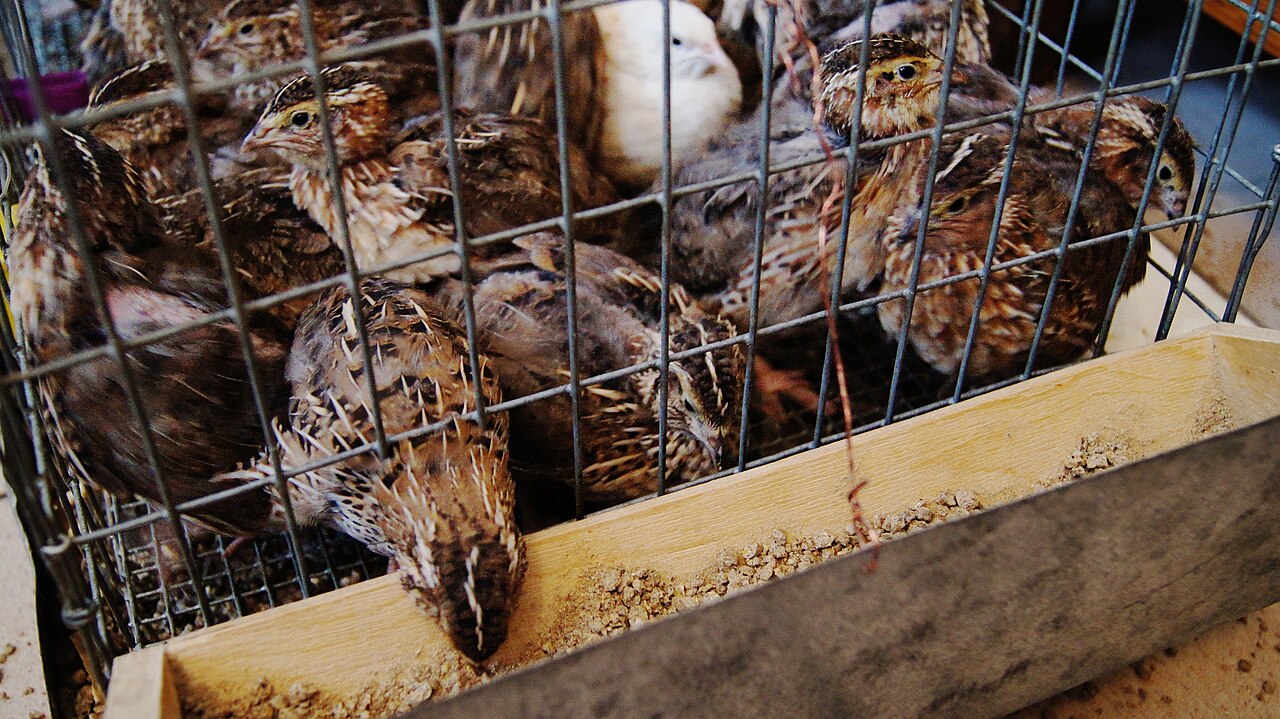
Quail are the quickest-earning birds a farm can keep. They thrive in almost any weather, and of the eleven kinds of poultry they need the least space, feed and capital.
Why quail
- They grow fast: laying begins at six to seven weeks, and a hen gives 250–260 eggs a year.
- The eggs are low in cholesterol and high in protein, and heavy for the size of the bird.
- Eight to ten quail fit in the space of one hen; eggs hatch in 17–18 days.
- Disease is rare and feed consumption tiny — small money, quick profit.
Breeds
There are 17–18 breeds in the world, some kept for meat and some for eggs. The Japanese quail is the one Bangladeshi farms know best.
Breeding
Keep cocks with hens only when you want fertile eggs; for laying alone, hens are the more profitable flock. One cock to three hens gives good fertility.
Chicks
A day-old quail weighs 5–7 grams; any lapse in warmth, feed or water in the first weeks shows later in growth, laying and survival. Brood them under a lamp, dry and draught-free.
Cages
Sixty adult birds need a cage 120 cm long, 60 cm wide and 30 cm high, with a 16–18 gauge wire floor, and a nursery cage for the first three weeks.
Feed
Layers need 2.5–3 per cent calcium in the ration, 3.5 per cent in hot weather; fill the troughs morning and evening and keep water clean.
Litter
Rice husk, sand, ash or sawdust on the floor, changed before it turns damp or foul.
Quail meat is rich in protein, vitamins and minerals; the eggs are a cheap, complete food. On a little space, with little money, the bird pays back in weeks.
Photo: Japanese quail (Coturnix japonica) — Kirill Tsukanov / Wikimedia Commons (CC0)
Comments
(0)