
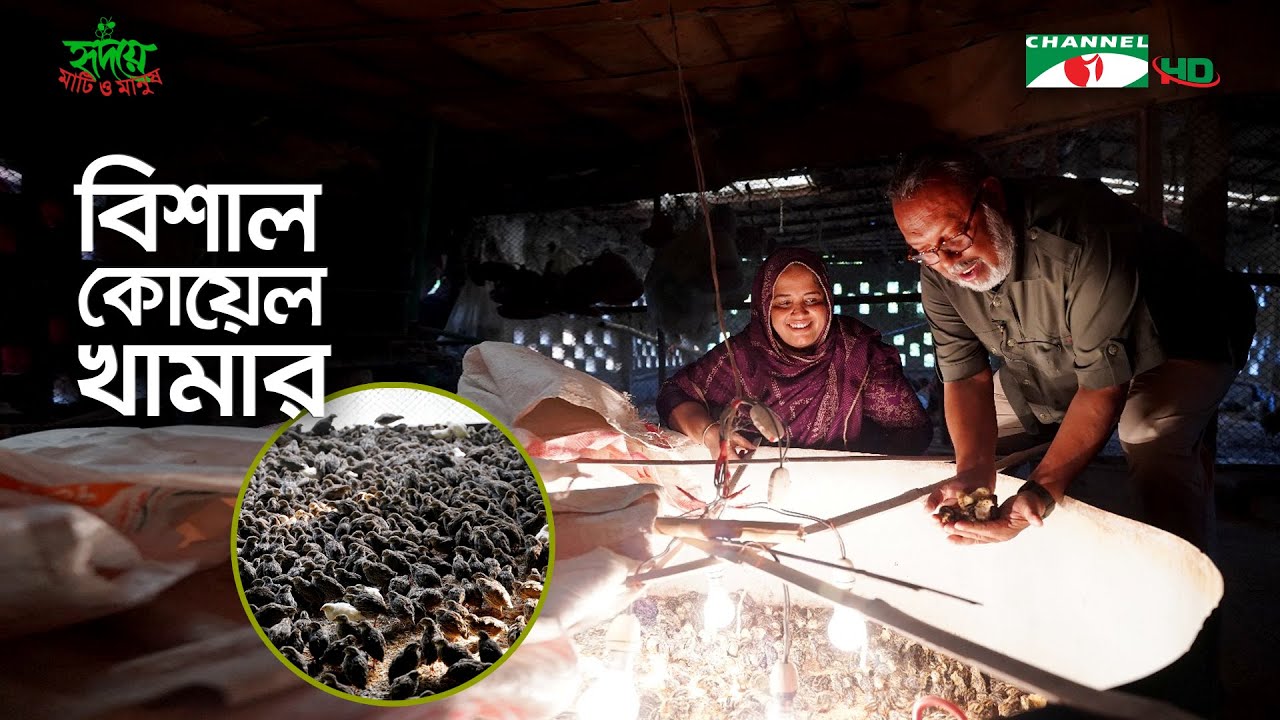
This three-storey house stands as an example of prosperity in the village. It was not always like this: there was once only a small tin-shed room. There, two quails bought as a hobby began a story of prosperity that spread through the whole village.
From two birds to a large farm
With her unusual thinking and initiative, entrepreneur Anowara Khanam Dolly has built this large quail farm step by step.
Hatching and brooding
The ground floor houses the incubation unit, where, in her words, chicks are produced from "seed eggs". Brooding takes place on the third floor.
Why quail
Japanese researchers are believed to have first found a way to domesticate quail, which later became a profitable poultry bird in Japan and other countries. Quail are comparatively cheap to raise. Because they are easily tamed, they can be kept in any corner of a house, a yard or on a roof, and Bangladesh's weather suits them well. According to Dolly, they suffer little disease, and after raising quail for a long time she and her family have learned much of the treatment themselves.
Source: Shykh Seraj, Hridoye Mati O Manush. First published in Bengali on The Agro News.

Comments
(0)