
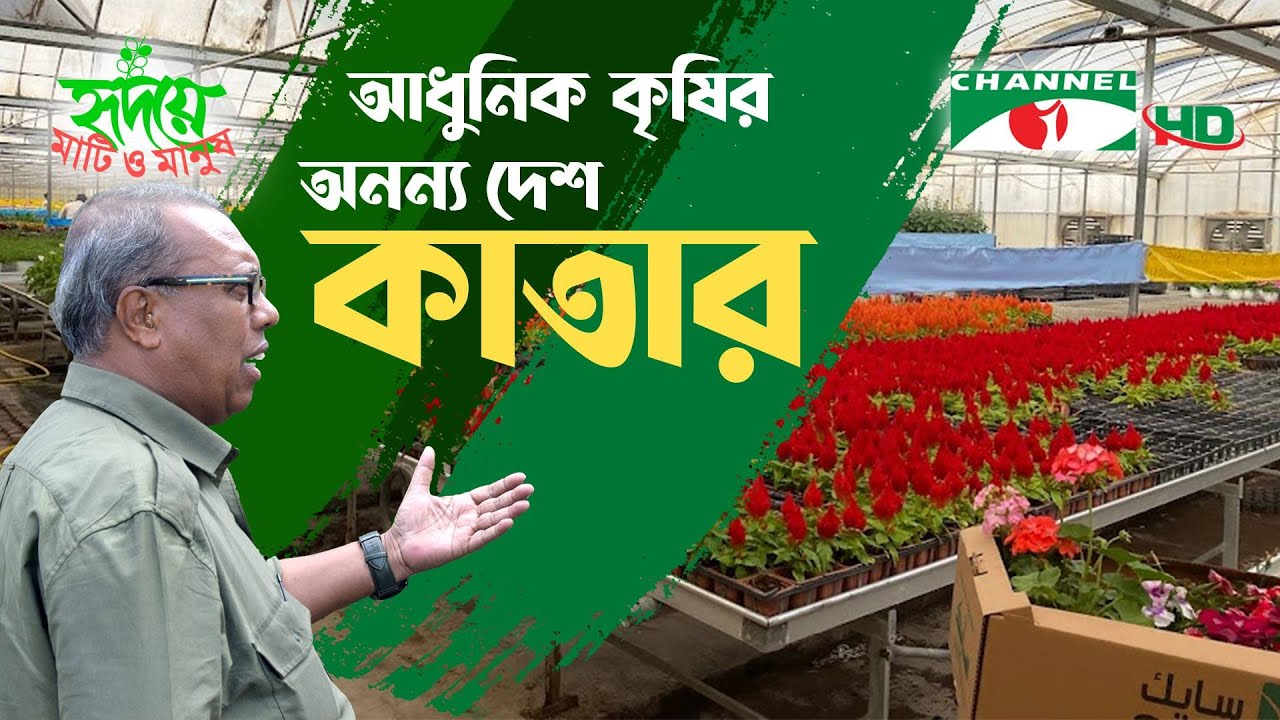
Through regular media work, Shykh Seraj has closely followed Qatar's agricultural progress. The last visit to the Al Sulaiteen agricultural and industrial complex was in February 2020, when new, large greenhouses were being built and production had grown many times over. The company now supplies most of the daily flower demand in Doha and its surroundings and is the main supplier of the city's landscaping.
Progress on food imports
Qatar is emerging from the harshness of a decade ago. Ten years ago, its policymakers dreamed of quickly ending food imports, but they have not advanced very far. Where 90 per cent of food was once imported, that has perhaps fallen a little.
Growing upward
At Al Sulaiteen, various experiments with vertical expansion, growing upward, are under way.
Source: Shykh Seraj, Hridoye Mati O Manush. First published in Bengali on The Agro News.

Comments
(0)