
A court in Taizhou, a coastal city in Zhejiang province in eastern China, has convicted three men of illegally acquiring, breeding and selling pythons protected under Chinese law, in a case that police cracked by studying household electricity use. The case was reported in June 2026 by the legal programme "Today's Law" of China's state broadcaster CCTV, and the South China Morning Post (SCMP) reported on 23 June 2026 that CCTV had described it as a case of "serious" harm to rare and endangered wildlife. According to the reports, police found 309 snakes in the flat of a man surnamed Guo, an unmarried and unemployed man who lived alone, and the whole case involved 436 pythons with a value put at more than 30 million yuan.
The Chinese reports used pseudonyms for the people involved. The names in this story are the surnames those reports used: Guo for the man who kept the snakes, and Di for the man who, police said, helped him sell them. The court's sentences were not disclosed in the reports.
A large snake at the foot of a hill
The investigation began in early March 2024. According to the CCTV report as carried by Chinese media on 16 and 17 June 2026, an elderly resident walking on a trail at the foot of a hill in Taizhou saw a large yellowish-brown snake, about as thick as an arm, lying by a ditch, and reported it to the police.
Police and the experts they consulted concluded that the snake was not a native species and was most likely a captive animal that had escaped. The reasoning given in the reports was twofold: snakes of this kind do not occur naturally in the area, and in March snakes are not normally active in the wild there. Taizhou has a humid subtropical climate with cold winters, and in Jiaojiang, the district that is the seat of the city, the average January temperature is about 6 degrees Celsius.
Guo later admitted to police, according to the Chinese report, that the snake seen by the hill was his. He said he had gone looking for it as soon as it went missing and had brought it back home.
How the electricity records pointed to a suspect
To trace the owner, the police sought the help of a professional snake keeper. He explained that pythons must be kept at a constant temperature of 20 to 30 degrees Celsius, with stable and controlled humidity, to stay healthy. Anyone keeping them in numbers in a city flat would therefore need heating and humidity equipment running day and night, and the household's electricity use should stand out.
Police then examined the electricity consumption of homes in the surrounding area. According to the Chinese report, two households showed unusually high use; one was ruled out because it was being renovated. The other was Guo's flat, and he became the main suspect.
Detectives then built up a picture of who visited the flat. A man surnamed Di came regularly and often collected parcels from courier stations, and a woman associate of the two also visited; both, the Chinese report said, were unemployed. When police asked the sellers, they learned that the parcels held live mice bought online, which are commonly used to feed reptiles. Guo's social media accounts showed pictures of snakes that looked like the one seen by the hill, and police said he appeared to be quietly offering pythons for sale.
Police also found a sale. According to the SCMP, Di had sold two pythons to another person for 1,000 yuan (about 150 US dollars); the Chinese report described the buyer as a local pet shop owner who bought two ball pythons from Di and gave the price as 1,000 yuan each. Both snakes died because the buyer could not care for them properly. The police gave the shop owner criticism and education rather than bringing charges, the report said, because of weak awareness of the law and because only two snakes had been bought. On the strength of this evidence, police moved to arrest Guo and Di.
309 snakes in a three-bedroom flat
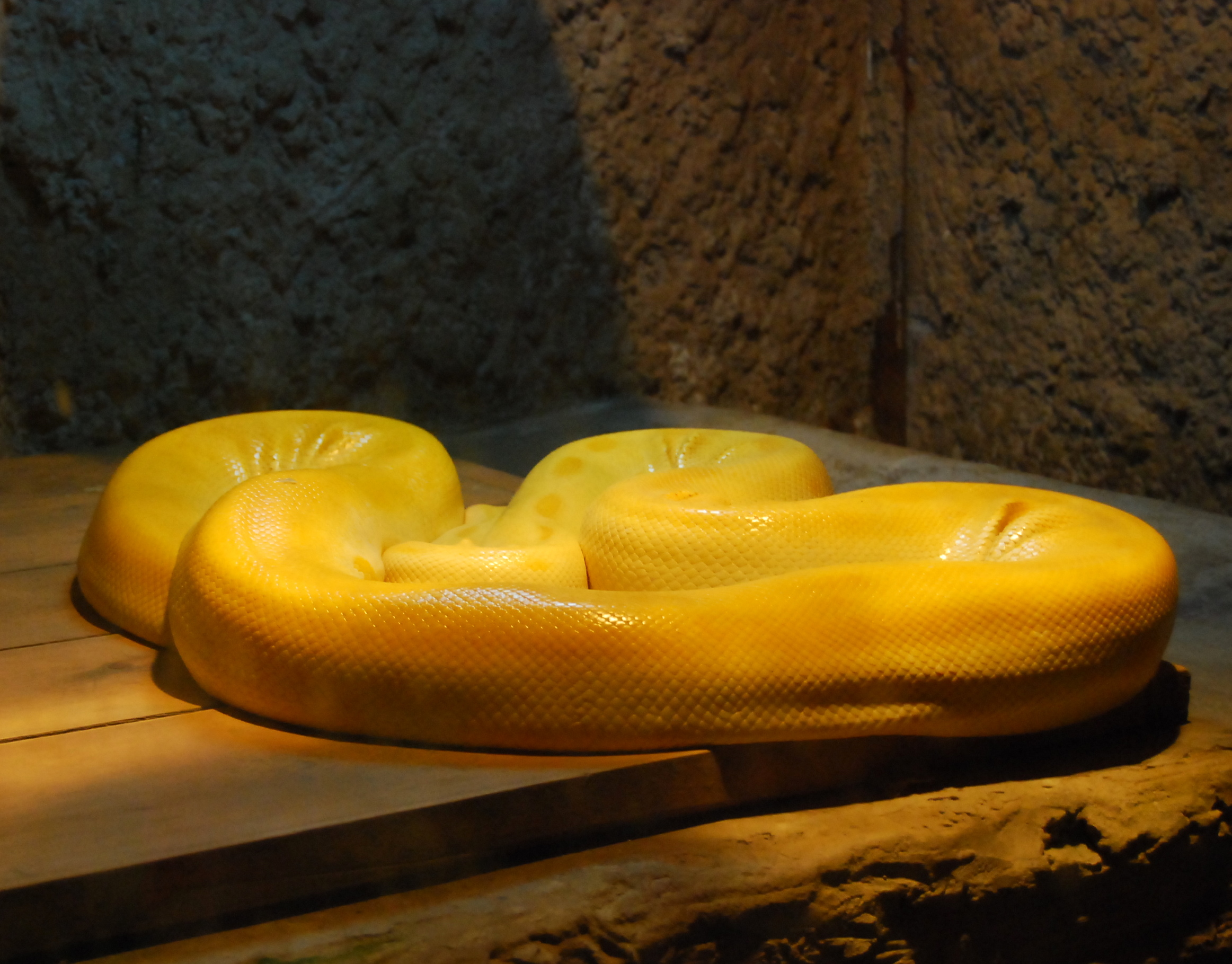
Police raided Guo's home in Taizhou in March 2024 and arrested three people there, according to the Chinese report. The flat had three bedrooms. Guo kept his furniture in one of them; the other rooms were filled with plastic boxes stacked in rows, and each box held a single python. The SCMP reported that police seized 309 pythons from the flat. Most were ball pythons, and among them was a large golden albino Burmese python.
Officers who took part described the scene of the snake round-up as bone-chilling, according to the headline of the Chinese report. Guo told police he had never been afraid of snakes, and the police described him as obsessed with them.
The seized snakes could not simply be released. The Chinese report explained that they would not survive in the wild, that the local environment did not suit them, and that releasing them would harm the local ecosystem and could lead to mass deaths. After discussions among several agencies, all the snakes were sent to Taizhou Bay Wildlife Park to be cared for. The report said the albino Burmese python had grown to about 3 metres and some 100 kilograms, that children at the park called it "Xiao Bai" (Little White), and that it had become one of the park's best-known animals.
From four snakes in 2014 to a trading chain
Guo told investigators that a friend introduced him to ball pythons in 2014. He bought four of them and began studying how to breed them, and over the years he produced snakes of different colours and patterns, the forms that keepers call morphs. "I feel like a creature creator," he told police, in the SCMP's translation.
As his collection grew, the cost of water, electricity and feed rose beyond what he could pay, and as an unemployed man his finances worsened. At first he sold snakes to pet shops through Di, but that did not cover his costs, so the two began selling online as well. Police found that Guo and Di had sold 80 pythons in all.
The investigation then went back up the chain. The seller who had sold Guo his first four ball pythons in 2014, a man in Guangzhou in southern China, was also arrested; the Chinese report said he had been paid about 160,000 yuan for the four. Police found 47 pythons at his home. He said his own supply had come from sellers overseas, a source police could no longer trace. Police told CCTV that ball pythons have no standard price: a sale happens when buyer and seller agree, and some buyers pay as much as 30,000 yuan for a single snake.
The court's ruling and China's wildlife law
The case was heard by the Jiaojiang District People's Court in Taizhou. The court found that Guo, Di and the Guangzhou seller had over a long period illegally bought, bred and sold wild animals under state key protection: 435 ball pythons and one Burmese python. The value involved in the case was put at 30 million yuan; the SCMP gave it as more than 30 million yuan (4.4 million US dollars). All three were sentenced according to law. Neither the CCTV report as carried in Chinese media nor the SCMP gave the length of the sentences.
The SCMP reported that pythons are classified as Grade Two protected animals in China, so that buying, selling, breeding or transporting them without official permission is prohibited, and that under China's Criminal Law violations involving Grade Two protected animals can bring a prison sentence of up to five years.
The protection grades come from the National List of Key Protected Wild Animals. On 5 February 2021 the National Forestry and Grassland Administration and the Ministry of Agriculture and Rural Affairs published the first major revision of the list since it was introduced in 1989. It added 517 species and brought the total to 988, with 235 species under first-class protection and 753 under second-class protection. The Burmese python was among the species whose protection level was lowered, along with the Assam macaque and the Alpine ibex, because of their stable populations and wide distribution, Sixth Tone reported at the time.
The list sits under China's Wildlife Protection Law. First made in 1988, the law was revised by the Standing Committee of the National People's Congress in December 2022, and the revised law took effect on 1 May 2023. According to China Daily's report on the revision, it explicitly bans eating wild animals under special state protection, forbids hunting, trading or transporting naturally wild terrestrial animals for meat, includes provisions on the management of artificially bred species and intensifies punishments. The introduction of any species of wild animal from abroad requires approval from the wildlife department under the State Council, according to a summary of the 2022 law by the China Justice Observer.
The ball python, the species at the centre of the case
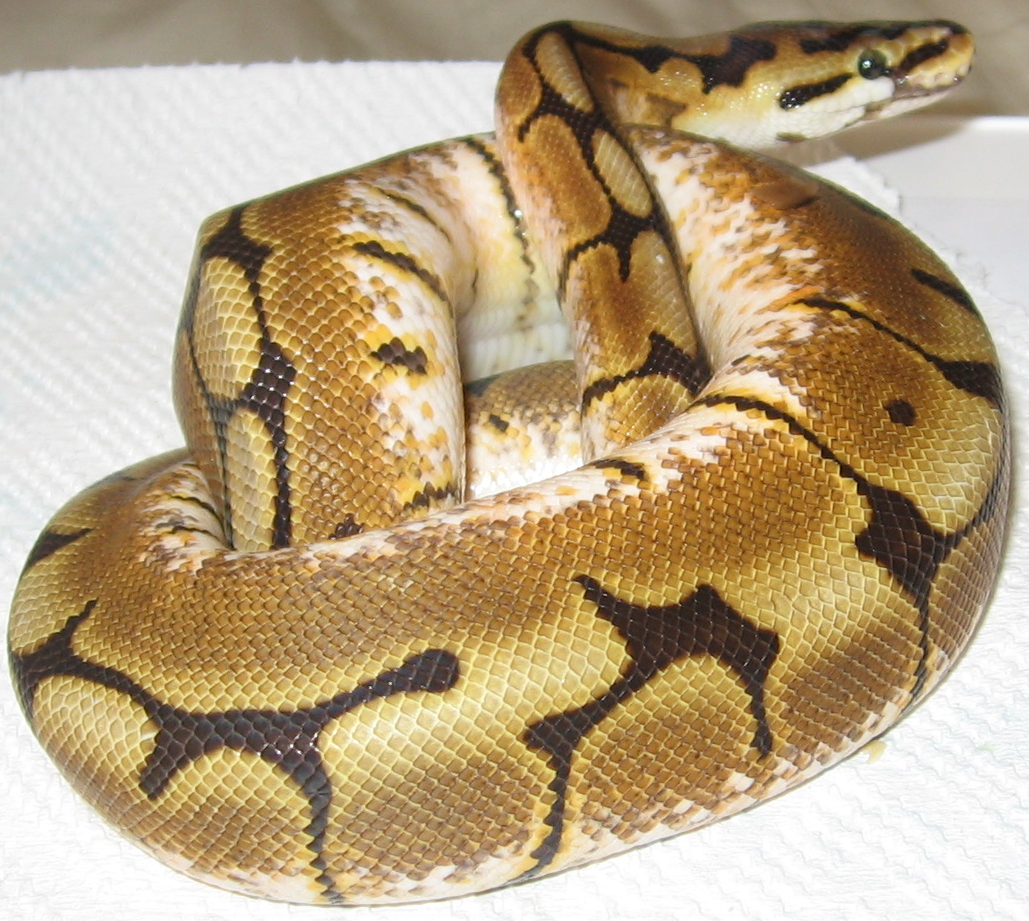
The ball python (Python regius), also called the royal python, is a non-venomous constricting snake of West and Central Africa. According to the University of Michigan's Animal Diversity Web, its range runs from Senegal through Sierra Leone and Ivory Coast to parts of Central Africa and southern Sudan, and it lives in savanna grassland and open forest, including cleared farmland, spending much of its time on or under the ground in burrows. Its name comes from its habit of curling into a tight ball, with its head tucked inside, when it is threatened.
It is a small python. Adults usually reach 1 to 1.5 metres, with a reported maximum in the wild of 1.83 metres, and females are larger than males. It feeds almost entirely on rodents and eats infrequently. Females lay 1 to 11 eggs, about seven on average, and coil around the clutch until the eggs hatch roughly two months later. In captivity ball pythons live about 20 years on average, with reported maximums of 28 to 50 years, against about 10 years in the wild.
D'Cruze and colleagues called it one of the most commonly traded reptile species in the global exotic pet industry, and Green and colleagues attributed its popularity in part to its docile nature, long lifespan and small size. A 2020 study in the journal Animals by Neil D'Cruze and colleagues described the ball python as the single most traded live animal legally exported from Africa under the Convention on International Trade in Endangered Species of Wild Fauna and Flora (CITES), with much of the trade traced to registered reptile "farms" in Benin, Togo and Ghana. A review in the same journal in 2020 by J. Green and colleagues reported that between 0.9 million and 1.6 million live ball pythons were exported from Togo alone between 1978 and 2017, 99 per cent of them for commercial purposes.
A 2021 study in PLOS ONE by Tina Hollandt and colleagues, citing CITES records, reported that 83,189 ball pythons were exported in 2018 from the three main exporting countries, Togo, Ghana and Benin, and that their main destinations were the United States (83.2 per cent), Europe (8.3 per cent) and Asia (7.8 per cent).
Colour morphs, rack systems and the welfare debate
Much of the money in ball python keeping lies in morphs. The 2020 review by Green and colleagues noted that new colour and pattern strains had become a significant driver of demand for captive-bred ball pythons, creating competition among breeders and owners for the most unusual animals, and warned that intensive selection for the gene mutations behind morphs leads to inbreeding and genetic disorders with health consequences. The prices reported in the Taizhou case, as much as 30,000 yuan for a single snake according to the police, reflect that market.
The way Guo kept his snakes, one animal to a plastic box in rows filling whole rooms, matches what researchers call a rack system. D'Cruze and colleagues described racks as multi-unit frames of plastic drawers in which individual tubs slide into the frame. Their study assessed more than 5,000 ball pythons at six exotic pet shows in North America and Europe and in 113 YouTube videos, and found that most of the housing they observed did not meet the minimum welfare recommendations of the RSPCA, the British animal welfare charity.
The PLOS ONE study by Hollandt and colleagues compared the same 35 ball pythons in a conventional rack system and in furnished terrariums. Behaviours such as basking, climbing, burrowing and bathing could be seen only in the terrariums, and abnormal behaviours that could indicate stereotypies were seen almost exclusively in the racks; the authors concluded that rack housing does not meet the requirements for animal-appropriate housing. The same paper describes why such collections use so much power: in the wild the ball python lives in savannas where temperatures range from 16 to 43 degrees Celsius and relative humidity from 60 to 95 per cent, and a German expert report on minimum requirements for keeping reptiles specifies a temperature range of 26 to 32 degrees Celsius, with a basking spot of 38 degrees. In the study's own racks, the back half of each bin was warmed by a heating cable and pad controlled by a thermostat. Holding hundreds of snakes within such a range day and night is what the snake keeper had in mind when he told the Taizhou police to look for a household with unusually high electricity use.
The Burmese python and the risk of escaped snakes
The one Burmese python (Python bivittatus) in the case belongs to a species that is native to China. It occurs across South and Southeast Asia, including eastern India, south-eastern Bangladesh, Myanmar, Thailand and Vietnam, and in southern China in Fujian, Jiangxi, Guangdong, Hainan, Guangxi and Yunnan; Zhejiang is not among the provinces listed in its native range. It is one of the largest snakes in the world, commonly growing to about 5 metres in the wild, and it is listed as Vulnerable on the IUCN Red List. Until 2009 it was treated as a subspecies of the Indian python. The golden albino form, which lacks dark pigment, is widely kept in zoos and by private keepers.
The species shows why the escape of a single snake in Taizhou worried the authorities. In the United States, the Burmese python became popular in the pet trade between 1996 and 2006, when more than 90,000 were imported, and it established itself in the Florida Everglades, where it is now an invasive species. The United States Department of the Interior banned the import of Burmese pythons in January 2012. A 2012 report, as cited in the encyclopedic record, found that in areas where the snakes were well established, sightings of raccoons had fallen by 99.3 per cent and opossums by 98.9 per cent.
Taizhou, where the case unfolded
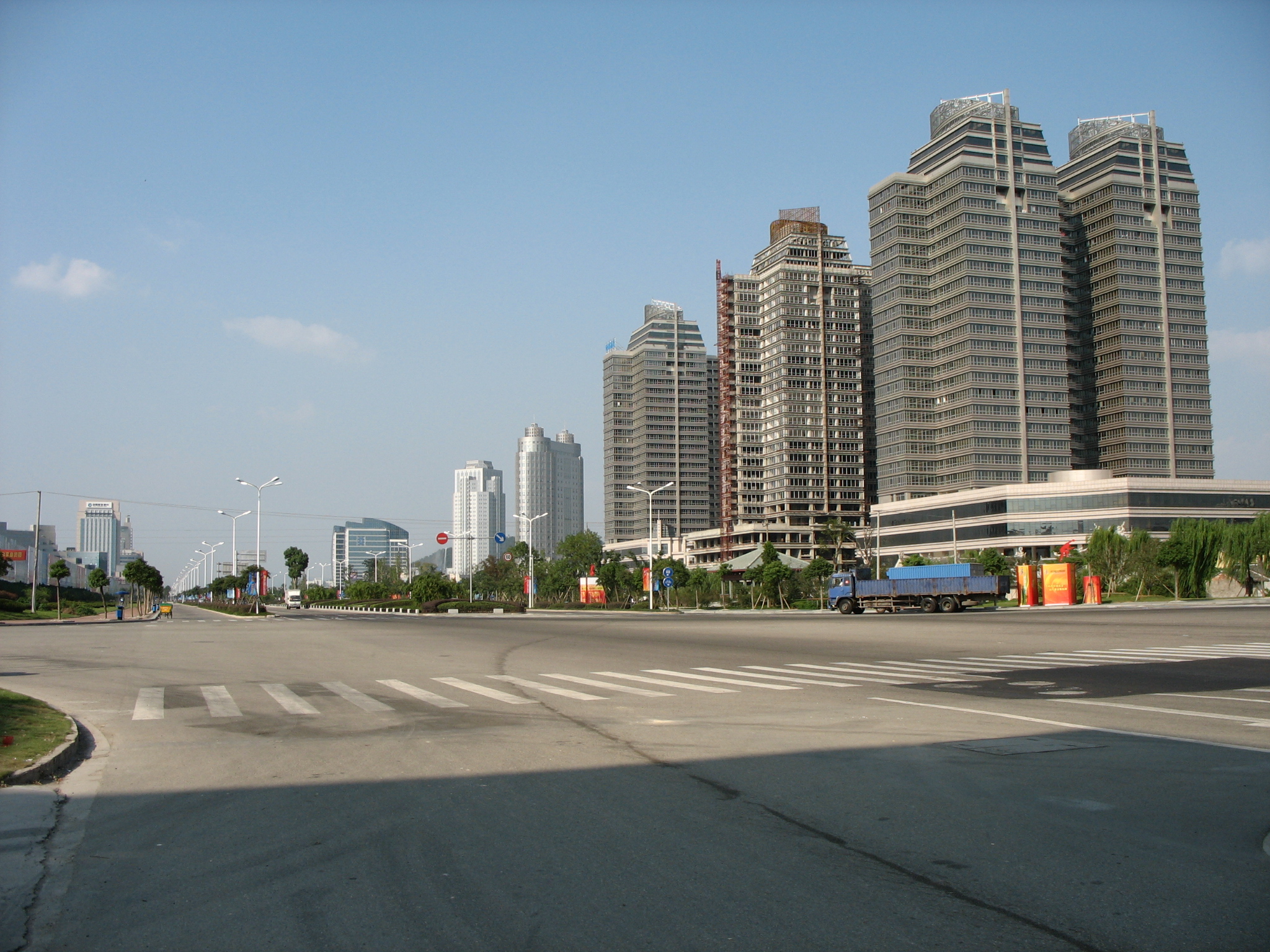
Taizhou is a prefecture-level city in the middle of the East China Sea coast of Zhejiang province, about 300 kilometres south of Shanghai and 230 kilometres south-east of Hangzhou, the provincial capital. It administers three districts, three county-level cities and three counties, and had 6,662,888 inhabitants at the 2020 census. Its coastline runs for 651 kilometres and is dotted with islands, while the north and west of the city's territory are mountainous.
Jiaojiang District, whose people's court heard the case, is the seat of the city and is named after the Jiao River. Its average temperature is about 6 degrees Celsius in January and 28 degrees in July, and its average annual rainfall is about 1,500 millimetres. The city's mean annual temperature ranges from 16.6 to 17.5 degrees Celsius, and its winters are cold and drier, with occasional snow: conditions in which an African ball python could not survive outdoors, and which helped persuade the police that the snake seen by the hill in March had come from someone's home.
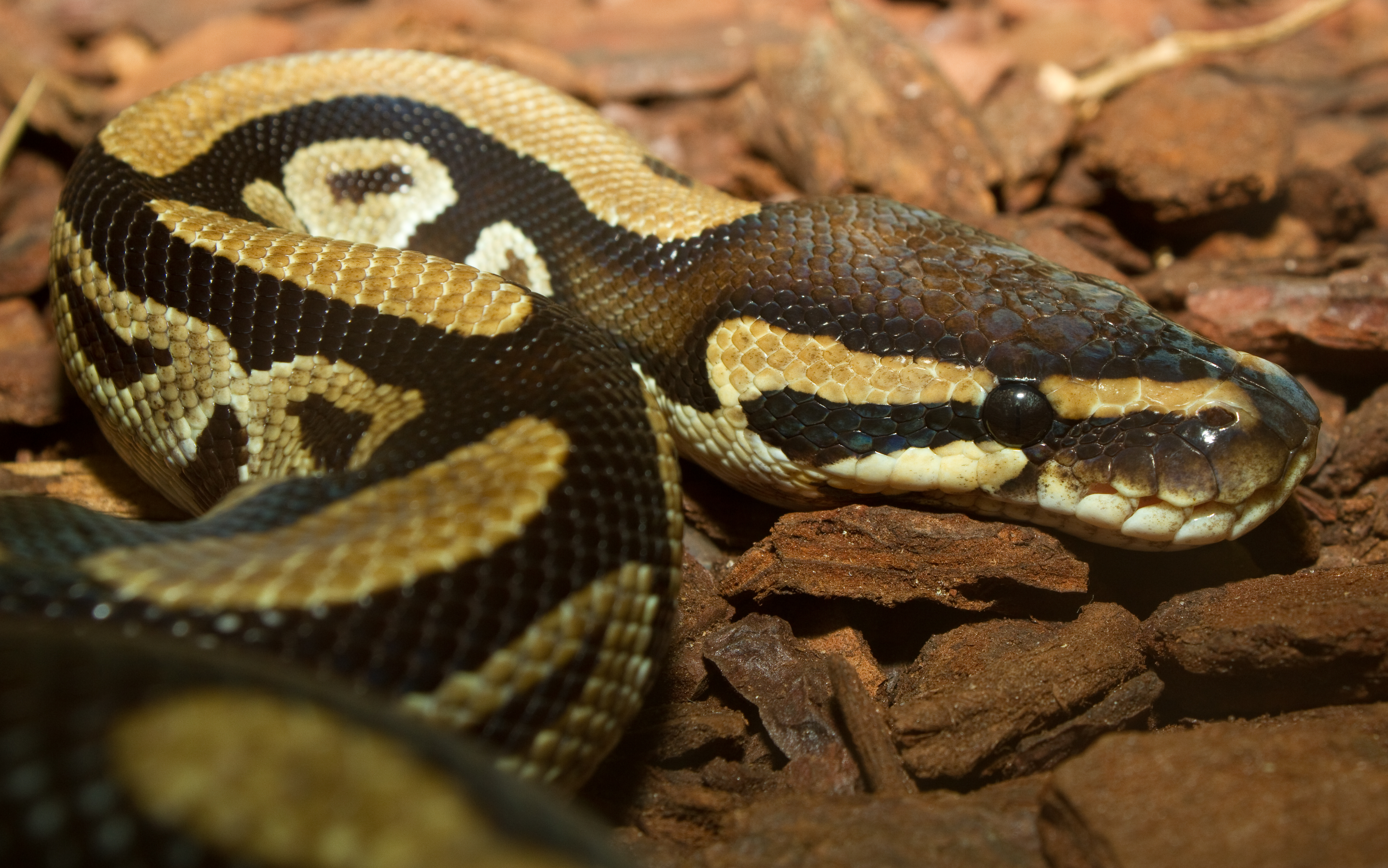
Photo: Brian Gratwicke / Wikimedia Commons (CC BY 2.0). The top picture shows a ball python (Python regius), the species at the centre of the case, as background; it is not one of the snakes seized in Taizhou.
Sources: Jagonews24; South China Morning Post ("Chinese man jailed after flat's high electricity usage exposes breeding of 300 snakes", 23 June 2026); CCTV "Today's Law" report as carried by Guangming Online (16 June 2026) and China.com (17 June 2026); Sixth Tone (5 February 2021); China Daily (3 January 2023); China Justice Observer; Animal Diversity Web, University of Michigan; Animals (2020, D'Cruze et al.; 2020, Green et al.); PLOS ONE (2021, Hollandt et al.); Wikipedia.

Comments
(0)