
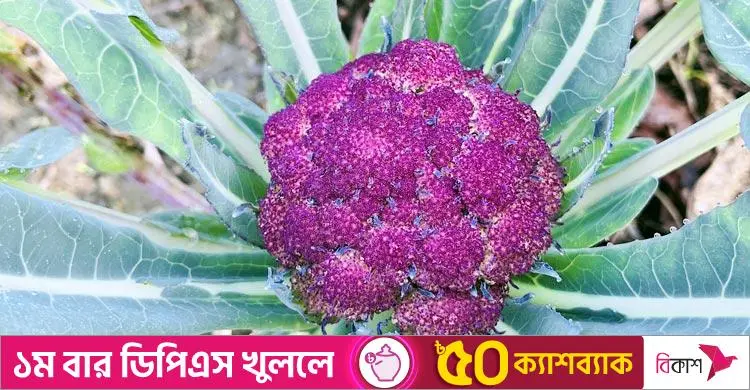
Research by Prof Dr Md Harun Or Rashid, head of the Horticulture Department at Bangladesh Agricultural University (BAU), has produced a yield of more than about 20 tonnes of purple cauliflower a hectare.
Prof Harun said: "For research purposes I brought purple cauliflower germplasm from America. We tried to see what kind of yield it gives in our country's soil and climate, and we have been able to grow it successfully."
Grown without chemicals
Describing the cultivation to Jago News, he said: "The purple cauliflower was grown using organic mulching. Pheromone traps were used to reduce insect attacks, which helps keep flies and other insects away."
On the yield, he said: "We tried to grow coloured cauliflower through organic mulching without any chemicals. Between 30,000 and 35,000 cauliflower seedlings were planted per hectare, and the yield was more than 20 tonnes a hectare, which is in no way lower than the yield of white cauliflower."
Nutritional claims
On its nutritional value, the researcher said: "Because of its colour, purple cauliflower contains plenty of anthocyanin and antioxidants. Anthocyanin lowers the risk of heart disease, and anticarcinogenic compounds also reduce the risk of cancer. Cauliflower leaves also contain two to three times more fibre than other vegetables. The leaves contain isothiocyanates, which reduce the risk of colon cancer. Eating about 1 kg of cauliflower leaves a week will cut the risk of colon cancer by half."
The professor claimed: "Ordinary cauliflower contains calcium. The amount of calcium in purple cauliflower leaves is five times higher than the calcium in cow's milk. If purple cauliflower leaves are eaten regularly, that calcium will help build bones and teeth and will largely resolve dental problems in children and older people."
Ordinary cauliflower becomes hard when mature, but purple cauliflower stays soft and is very tasty, the researcher said. We do not usually eat the leaves of white cauliflower, but purple cauliflower leaves are rich in nutrients and can be eaten as a leafy vegetable, and they taste good too, he said.
"More research on purple cauliflower is needed, though. In future I will try to produce seed of this cauliflower," Harun added.
Source: Jagonews24. First published in Bengali on The Agro News.

Comments
(0)