
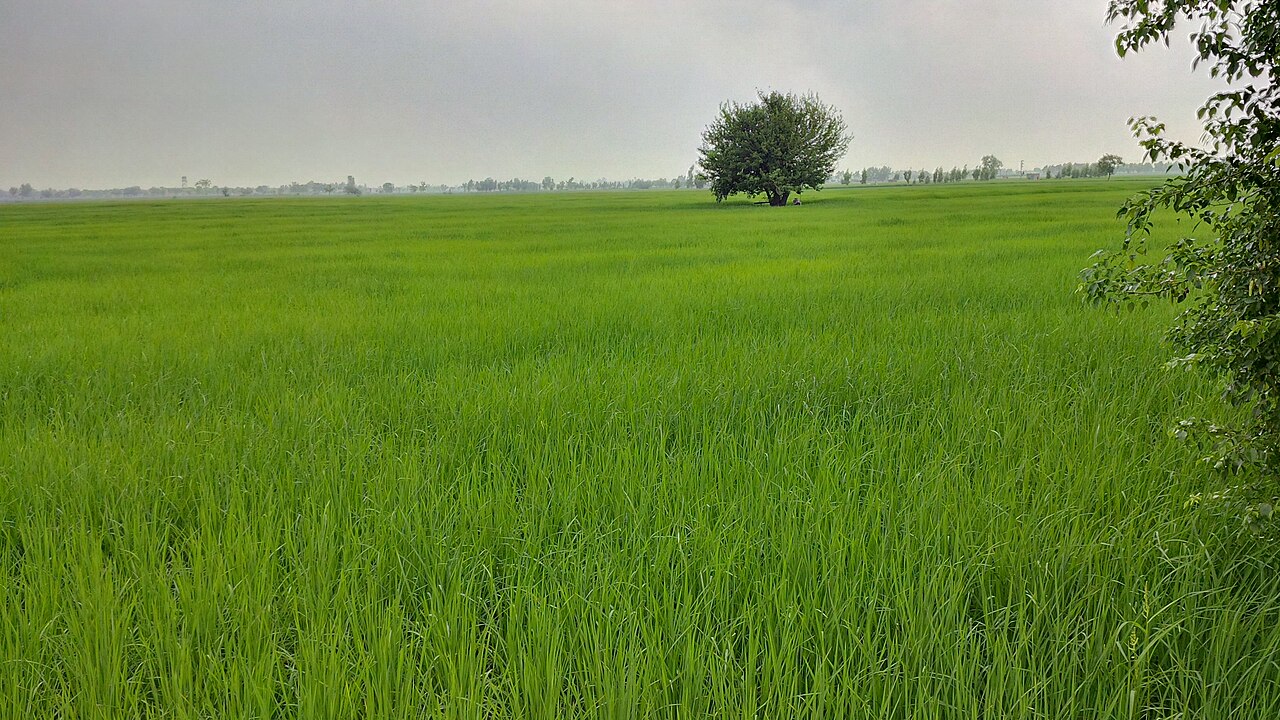
Low use of canal water alongside the extensive cultivation of water-hungry crops has driven Punjab into one of India's most severe groundwater crises, and the crisis is in turn widening social and economic inequality across the state, according to a study reported by The Hindu. 'Unequal Burden of Groundwater Depletion in Punjab', published recently in The Economic and Political Weekly, finds that 76.47 percent of the state's groundwater blocks are classified as over-exploited, the highest share of any Indian state, with only 13.07 percent in the 'safe' category.
In most of Punjab, groundwater is being pumped far faster than aquifers can recharge, the study says, because agriculture leans on it to grow wheat and rice; as levels fall, farmers dig deeper at considerable cost, and land subsidence, contaminant ingress and drying surface waters follow. Only a small proportion of farmers irrigate with canal water, said the paper's author, Sandeep Kaur, professor of economics at the Central University of Punjab in Bathinda.
Capital decides who copes. Larger farmers install more borewells with high-capacity pumps, reach deeper water, cut cultivation costs and earn more per unit of cost than smaller farmers, who have fewer pumps per unit area because much of their land is leased in. "Large farmers, who contribute the most to environmental degradation and threaten water sustainability, benefit the most in terms of income accrued, while small and marginal farmers, who bear the cost of environmental degradation and lack of water availability, contribute the least," Kaur said. "This makes it clear that the groundwater crisis in Punjab has deepened social and economic inequality in the State."
S.K. Saluja, former chief engineer of the Ranjit Sagar and Shahpurkandi dam projects, told The Hindu that Punjab's blanket free farm electricity "is economically crippling the vulnerable smallholders it was meant to protect": capital-rich farmers secure connections for additional tube-wells, keep deepening borewells and run high-powered submersibles that "siphon most of Punjab's groundwater, fuelling an unregulated shadow economy", while small farmers who cannot deepen their wells "are forced to informally buy water from large farmers in their neighbourhoods". The subsidy, he said, enriches wealthy landlords, drains the exchequer and accelerates small farmers' ruin.
Kaur said the government should reconsider free electricity, reward water-saving practices such as drip and sprinkler irrigation, push large farmers to diversify away from rice, and build a more equitable system of groundwater access so that marginal and small farmers are not disproportionately hit; existing schemes, she said, fall short of the problem's scale. The pattern will be familiar across the border in Bangladesh's boro belt, where shallow-tube-well owners likewise sell water to smaller neighbours as the dry-season table falls.
Photo: Jaspinder Singh Duhewala / Wikimedia Commons (CC BY-SA 4.0)
Source: The Hindu – Agriculture

Comments
(0)