
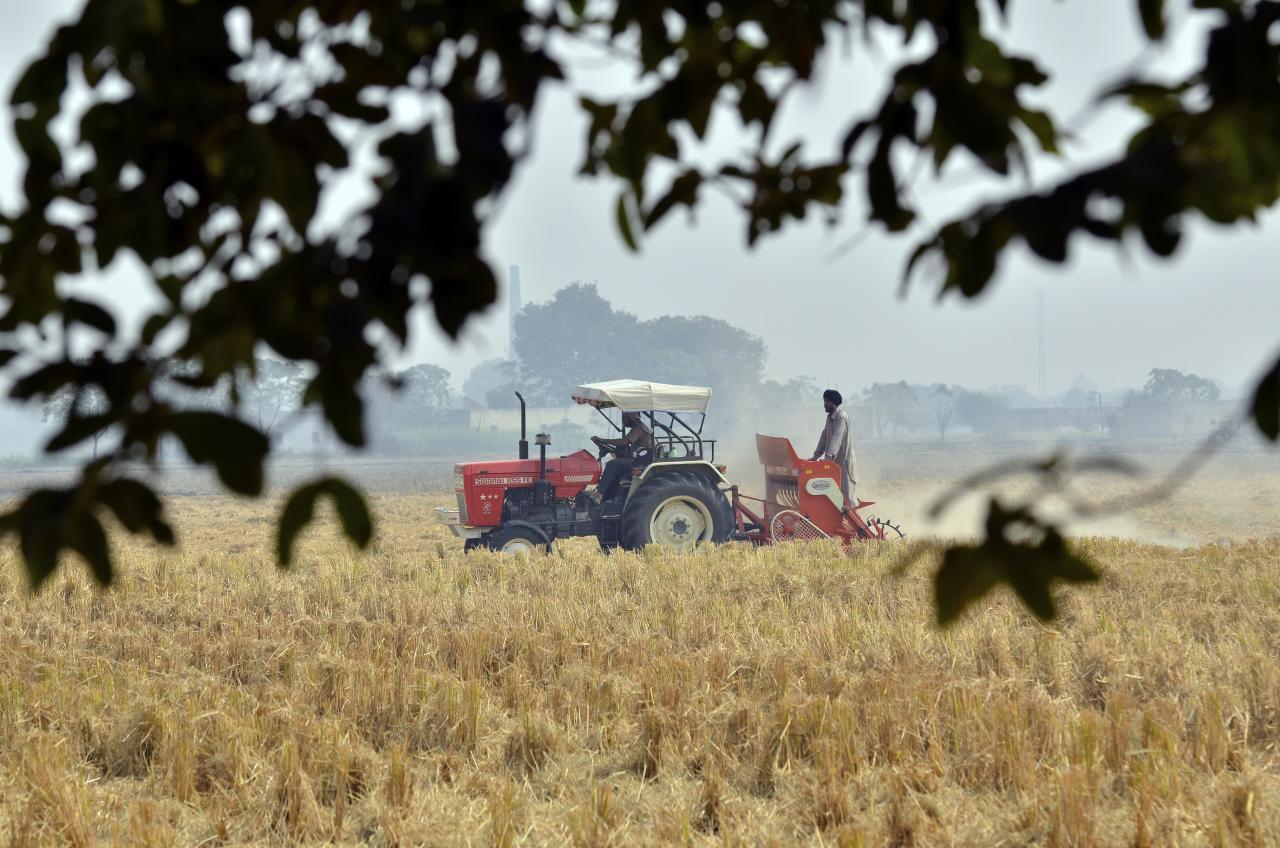
Policymakers, scientists, extension agencies, farmers, machinery makers, custom hiring centres and industry met at Punjab Agricultural University (PAU) in Ludhiana for a stakeholders' workshop on crop residue management organised by ICAR's Agricultural Technology Application Research Institute (ATARI), Ludhiana, the Indian Council of Agricultural Research reported on 30 September.
The workshop noted Punjab's significant progress in reducing crop-residue burning and said the next phase should focus on using existing residue machinery efficiently, matching machine capacity to actual demand district by district. With about 31.76 lakh hectares under paddy and nearly 20 million tonnes of straw generated, participants called for soil- and crop-specific machinery choices, digital mapping, better coordination among custom hiring centres and wider tracking of balers.
Discussions covered five themes: managing residue in the field through machinery and hiring centres; collecting biomass for value addition, energy and carbon markets; producing less residue through crop diversification; farmer adoption through awareness, incentives, community action and enforcement; and convergence through policy, partnerships and finance. Participants saw potential in paddy straw for bioenergy, compressed biogas and industry, but flagged problems of aggregation, transport, storage, economics and assured offtake, and the need to replace nutrients where straw is removed from fields.
Dr Parvender Sheoran, director of ICAR-ATARI Ludhiana, argued for moving from a machine-centric approach to a demand-driven, location-specific strategy built on coordination among Krishi Vigyan Kendras, farmers, hiring centres, manufacturers and industry. The workshop's main outcome was a proposal for CRM CONNECT, a platform for joint planning, shared field calendars, technology dissemination, data sharing and quick resolution of field problems.
PAU vice-chancellor Sukhjeet Pal Singh stressed field-validated, well-documented solutions, and Dr Ranjay Singh, ICAR's Assistant Director General for agricultural extension, called for closer convergence so that proven technologies reach farmers. The workshop ended with a commitment to put CRM CONNECT into operation to reduce burning further.
Photo: Neil Palmer (CIAT) / Wikimedia Commons (CC BY-SA 2.0)
Source: ICAR
Comments
(0)