
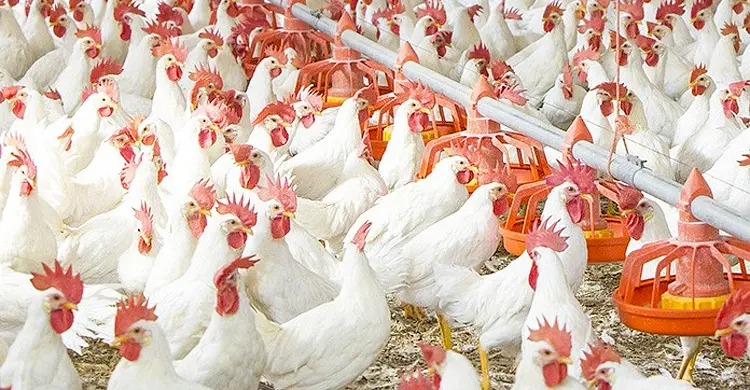
The poultry industry has carved out a distinct place for itself as one of the country's most promising sectors. Investment in it now stands at about Tk 30,000 crore, and it provides direct and indirect employment for half a crore people. It is a source of cheap animal protein. Proper waste management is the industry's big challenge, but those involved see poultry waste not as a problem but as an opportunity.
According to the Department of Livestock Services, there are 2,05,231 poultry farms across the country, of which 85,227 are registered and 1,20,004 unregistered.
According to 2019-20 figures, the country has 16 poultry grandparent farms, 206 layer and broiler breeder farms and 8,800 layer and broiler farms. There are also 217 feed mills, 15 meat processing plants, 2,015 Sonali chicken breeder farms and 534 animal health companies in operation. The article says 1 to 30 per cent of total GDP now comes from the poultry industry, and that poultry has established itself as the most promising sector after garments.
From problem to resource
Dr Nathu Ram Sarker, former director general of the Bangladesh Livestock Research Institute (BLRI), has long researched poultry waste. In his view, there was a time when the industry had not yet grown, there was no time to think about such things, and there was land, but the government policy framework was weak. Now land is shrinking and policy is getting stricter, and in future the scope to dump poultry waste anywhere will shrink sharply. The country's big poultry companies are already thinking about this and acting accordingly, seeing poultry waste as an opportunity rather than a problem.
Large countries such as the United States, Australia and Brazil have a great deal of farmland and use poultry litter (droppings) as compost to raise soil fertility. Using simple technology, poultry litter is recycled into organic fertiliser that is packaged and sold. This has begun in Bangladesh too, and litter is being used to make not only organic fertiliser but also biogas and electricity.
Commercial chicken rearing began in Bangladesh in the 1980s to meet the demand for animal protein. In the early 1990s, investors gave the industry momentum and it became popular as a cheap source of quality protein. By the mid-1990s poultry had become a promising industry, growing at 15-20 per cent a year. Many farms, feed mills and drug makers have grown up around it, and foreign investment has come in. With red meat prices rising in recent years, poultry has played an important role in meeting the need for cheap animal protein.
How much waste the industry produces
Poultry waste includes droppings, leftover feed, feathers, hatchery waste and dead birds. The country now produces 4.52 million tonnes of poultry waste a year, 3.1 million tonnes of it from commercial farms located in parts of the central, northern and eastern regions. Traditionally, droppings are piled beside the farm, where they ferment, give off gases and a foul smell, and pollute the air, water and soil, harming human health.
Farm data show that 20 per cent of farmers do not use poultry litter, 40 per cent sell it, 30 per cent use it on crop fields and 10 per cent use it for fish farming. Generally, a broiler that eats one kilogram of feed yields one kilogram of fresh litter, and a layer produces 20 kg of droppings a year.
Dr Nathu Ram Sarker told Jagonews that many farmers have no idea that waste is a resource. The number of small farmers is falling and they may gradually disappear. Large farmers can set up a complete system to recycle their waste, use the electricity themselves and also use it as fertiliser.
"A farm can earn 25 per cent of its income from its waste as well," he said. "Poultry waste is an important resource, but we cannot use it properly. If waste is not managed properly, the environment is harmed and we are deprived of a resource. Using fertiliser made from waste on the land would let us cut the use of urea and other fertilisers, and protect soil quality, which is declining. So poultry waste management is very urgent."
He said small farmers who lack the capacity can at least compost it by mixing poultry waste with other refuse. But many do not do even that. They dump it on other people's land, where it pollutes the environment, and they need to be made aware of this.
Uses of poultry waste abroad
Several power stations in the United States and the United Kingdom use poultry and turkey litter as their primary fuel. In Ireland, poultry litter is used as a source of biogas energy. Where fossil fuels or LPG gas were once used to heat broiler houses, poultry litter is now used. Large companies such as Advance Fibers and Powders use poultry litter as fuel in their electrical and heating applications, and also make activated carbon and fertiliser. Nothing from the poultry industry is thrown away any more: besides protein meal and fertiliser from chicken feather meal, a new type of biodiesel fuel is being produced.
Research data show that a farm producing 1,000 tonnes of waste a year can generate 38-70 kilowatts of electricity, 10,000 tonnes can generate 340-700 kilowatts and 50,000 tonnes can generate 1.70-3.50 megawatts.
Bangladeshi companies turn waste into fertiliser and power
Bangladeshi companies such as Paragon Poultry and Kazi Farms are using this method to meet the electricity needs of their own farms. By one estimate, a farm of 10,000 birds produces more than a tonne of waste a day. According to the Bangladesh Poultry Industries Central Council (BPICC), the country now produces about 4,000 tonnes of chicken meat and 2 crore 80 lakh eggs a day, so a great deal of waste is produced daily. Putting this resource to use in agricultural Bangladesh could bring a revolutionary change in fertiliser and fuel production.
Agriculturist Abu Taher, head of sales at Kazi Farms, told Jagonews: "After getting a licence in 2016 we moved fully into making organic fertiliser. We mix our chicken droppings with sawdust, maize meal and 15 decomposing micro-organisms, and after the bacteria break it down we sell it as organic fertiliser. The whole process runs on automatic machines, so it does not need exposure to sunlight. It produces a lot of methane gas. If someone dries it in sunlight they can create greenhouse gas, which is very harmful for the environment and is responsible for abnormal floods and storms. So we do it internally in the plant, using technology that does no harm to the environment."
He said they did not look at profit and loss when they started making organic fertiliser. Removing poultry waste properly was their challenge. At first they would even pay people nearby to take the raw litter away, and it still smelled when they took it, which was a big problem. Now they can produce it without odour. "Our investment is very high. At the end of the day we will make a profit, but since the investment is high we cannot show a profit yet," he said.
The potential and the policy
According to the Bangladesh Biogas Development Foundation (BBDP), poultry waste could produce 3.6 million cubic metres of biogas, 8,058.8 megawatt-hours and 3.81 million tonnes of bio-slurry a year. The poultry sector now has more than Tk 30,000-35,000 crore in investment, and those involved expect this to double by 2050. The industry is no longer limited to broiler meat and eggs: processing plants have grown up to bring processed meat and egg products to consumers' tables. Poultry waste is no longer just litter; it now includes waste from hatcheries, processing plants and other parts of the farm, which is being used or is on the way to being used. Examples:
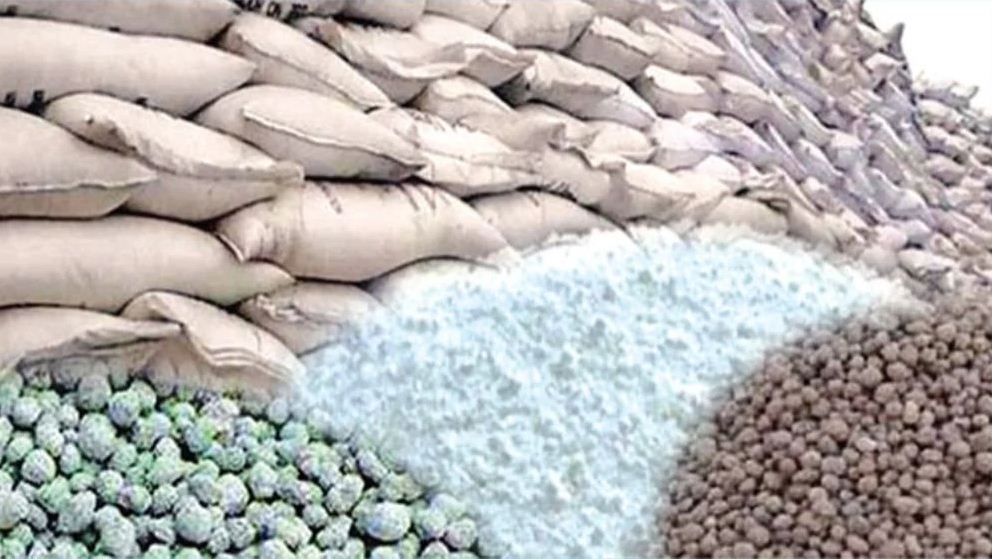
- Using modern technology, chicken droppings and other waste can be processed through composite plants with tunnel ventilation and drying into good-quality powdered or granular organic fertiliser.
- Using rendering technology, other farm waste and waste from processing plants can be turned into high-protein poultry meal, used in cattle and fish feed.
- There is potential for electricity generation.
- If waste management is implemented, methane production can be reduced along with storage.
- If a farm is infected with harmful germs, they are released through its waste, and unprocessed waste risks causing human disease. Anaerobic digestion of this waste reduces the risk of spreading pathogens.
Research shows that using organic fertiliser made from animal waste could cut chemical fertiliser imports by 40-50 per cent and improve soil quality at the same time.
Dr Md Sazedul Karim Sarker, director of the Poultry Research and Development Strengthening Project and chief scientific officer at BLRI, told Jagonews that they are working on poultry waste management, including a PhD project on the subject. They plan to set up a biogas plant using poultry waste, especially droppings, and are planning how to make value-added products from hatchery waste left after hatching and from slaughter waste.
"We have some small activities under our large project. One of our students has enrolled at an agricultural university and is working on this under my supervision. It is an ongoing process. We have to run trials to see which option is best, and at what stage it can be recommended to farmers," he said.
He said many people use it as organic fertiliser, but whether it contains harmful material when applied to land cannot be known immediately. The work will continue, and they may develop a technology that farmers can use.
The government approved the Bangladesh Climate Change Strategy and Action Plan (2008), giving importance to cutting methane emissions, reducing carbon output and increasing livestock's adaptation to climate change. The Climate and Clean Air Coalition (CCAC) was created in 2012 under the United Nations Environment Programme (UNEP) to boost knowledge, data and technology cooperation to reduce short-lived climate pollutants (SLCPs) in the air. Bangladesh is a founding member of the CCAC, and the government approved the National Action Plan for Reducing Short Lived Climate Pollutants (NAP 2013), which has since been updated and finalised as NAP 2018. Livestock manure is a major source of SLCPs. The CCAC identified ignorance, lack of awareness, lack of cooperation, lack of necessary policy and weak capacity as obstacles to reducing SLCPs.
In light of this, the Ministry of Fisheries and Livestock has drawn up the Livestock Manure Management Policy 2020, known as ILMM, covering the proper use, storage and technical support for all livestock waste, not just poultry waste. Its mission is to organise large, medium, small and landless farmers to produce and manage market-oriented, value-added animal manure products in place of traditional practices. Its vision is better management of the country's animal manure through public and private initiatives, making livestock production more sustainable and reducing air pollution.
The integrated livestock manure management policy needs to be implemented under the Ministry of Fisheries and Livestock through the efforts of the ministries of environment and forests, agriculture, power, energy and mineral resources, and rural development and cooperatives, along with related agencies, departments and organisations. The Bangladesh Livestock Research Institute (BLRI) has formed a National Consultative Committee of all the ministries and agencies concerned to implement it, and it will carry overall responsibility for the ILMM committee. The government will encourage any private entrepreneur interested in investing in producing biogas, electricity, compressed biogas, organic or field compost, vermicompost and organic pesticides from poultry waste, and will give necessary support like other government incentives.
Farmers and industry leaders
Shafiul Alam, owner of SD Poultry Farm in Bogura, told Jagonews: "I have 3,000 broilers on one farm and 5,000 on another, 8,000 in all. I have been in this business since 2008. We use poultry waste as organic fertiliser. Sometimes people take it as fish feed, but mostly it is used as fertiliser. Big companies are doing a lot with it, including electricity, but that is not possible for us because it needs a lot of investment. The poultry market is not good now. Feed prices are rising: in a year they have gone from Tk 2,250 to Tk 3,070, and they say they will rise further. It is hard even to run the business. How can I invest in doing something different with waste when there is no certainty?"
Masiur Rahman, president of the Bangladesh Poultry Industries Central Council (BPICC), told Jagonews that he recycles and reuses the waste of every one of his companies, and tells all members to do the same. Otherwise the environment will be polluted and the company itself will suffer, because its own farm can be affected by its waste.
"I set up a power plant from waste 17 years ago. Everyone should do it. In 17 years my company has not dumped any waste anywhere. We recycle it into fertiliser and power. We sell the fertiliser in the market and use the electricity ourselves. So there is no such thing as poultry farm waste; it is only a matter of thinking and investment," he said.
He said small farms can make biogas on a small scale. "Why should others suffer for his farm's waste? I don't need a government initiative to decide where I go to the toilet. However small a farmer is, if he does not manage waste at his scale he cannot be a good businessman. He should think about what to do with the waste before starting a business. Otherwise he will harm his own farm. Doing it would cut his costs a lot. We don't think about this, but we should."
Dr Monjur Mohammad Shahjada, director general of the Department of Livestock Services, told Jagonews they want to work on poultry waste. "We will have everything; we have to raise ducks, chickens and everything else. But we are keeping in mind that this should not cause suffering to the public." He said a good initiative will start under the Livestock and Dairy Development Project (LDDP). Besides biogas plants, organic fertiliser can be made from the waste, since it increases soil fertility, and they have taken some technologies for this. On government farms, waste and water are collected separately and applied directly to fields.
On small farms, he said the LDDP project is working to bring them into order and the whole matter will be brought under its control. People will not allow anything that causes them problems, so they are working to make waste management sound. "We have to reach the grassroots, because there are health concerns there. We have to keep ourselves right and keep the environment right. If we can ensure this, we will stay healthy. That is everyone's target."
Source: Jagonews24. First published in Bengali on The Agro News.
Comments
(0)