
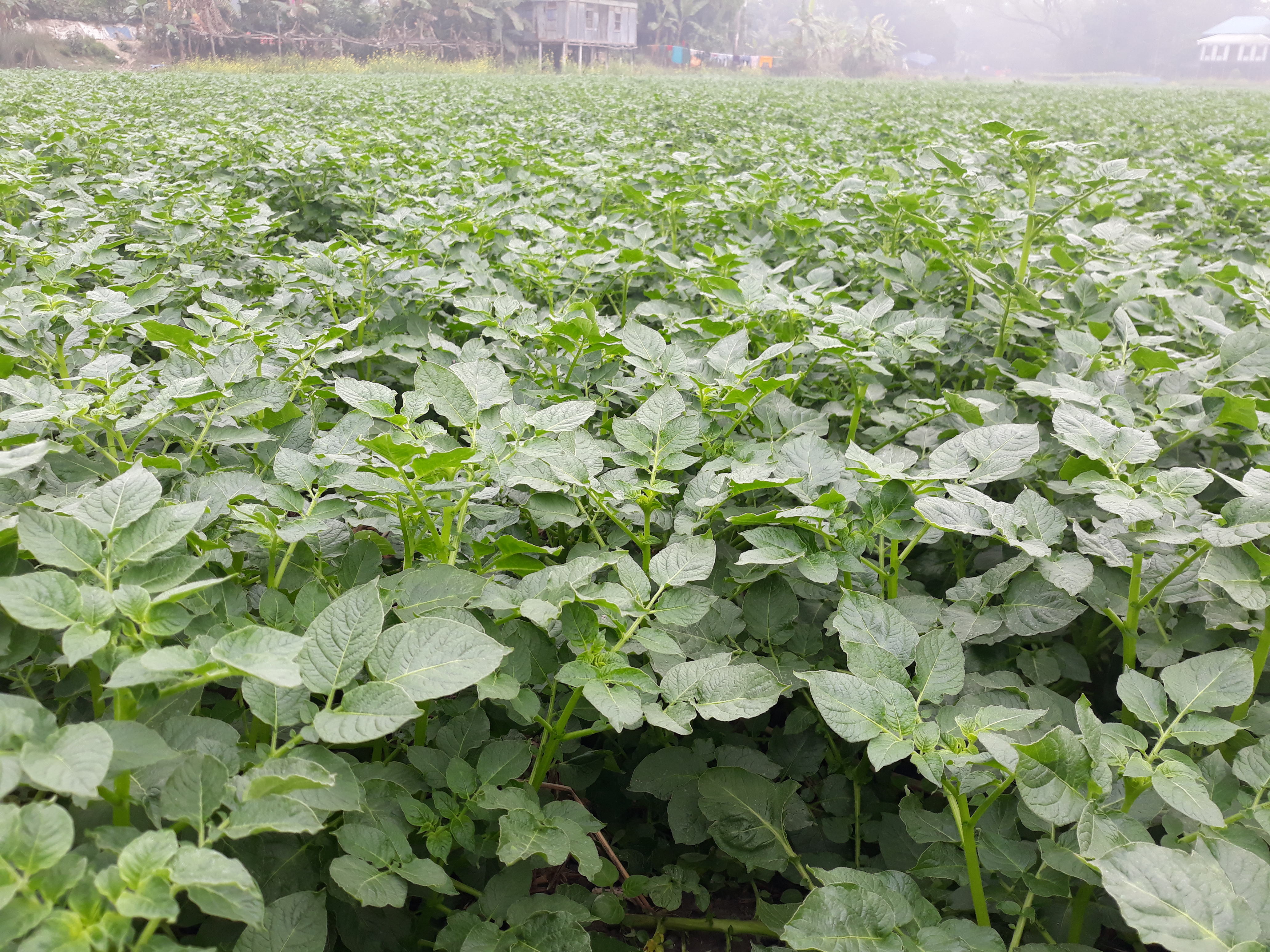
Md Mahbub Kabir Milon, a former additional secretary, wrote on his verified Facebook account at 9:50am on 6 March 2026 that potato growers in the village were in mourning, with potatoes fetching only Tk 7 to Tk 8 a kg in the field. He set that against Tk 10 to Tk 12 a season earlier and said the country had no plan, no coordination and no proper market system for the crop. The post appeared while the harvest was under way and while reports from several districts showed prices well below what farmers said it had cost them to grow a kilo.
What the former official wrote
Mahbub Kabir Milon wrote: "Potatoes are Tk 7/8 a kg in the field this time. Even a beggar would not happily accept Tk 8 as alms. Last time it was Tk 10/12 in the field. Farmers were ruined last time. This time the rest of them will be ruined too."
He explained why growers had gone back to the crop: "Because prices were so low last time, everyone thought prices would rise this time. So again everyone rushed into growing potatoes."
Lamenting the situation, he wrote: "With the drums of war beating, potatoes will be available in the market for the price of water. Buyers will survive. But who will save the farmer? Such an unfortunate country, where there is no plan or programme. No coordination. No proper market system."
He ended: "Everyone looks after their own interests. But there is no one for the farmer. In the village I saw potato farmers in mourning."
The post did not name the village or the war. Bangla Tribune had reported on 2 March that tension was spreading across the Middle East after a joint Israeli and US military operation against Iran, and that a long conflict could put pressure on energy prices, foreign reserves, inflation and remittances in Bangladesh. The post did not explain how the war would affect the price of potatoes.
Prices reported in the days around the post
Milon's figure was one man's account from the field, but it sat within the range other reports were giving. On 17 February, Dhaka Tribune had put newly harvested potatoes at Tk 15 to Tk 17 a kg in wholesale markets, going by farmers in Rajshahi, Bogra, Rangpur and Pabna, and one grower said the peak harvest was still about a month away. By the last week of February and the first days of March the reports were much lower:
- Joypurhat: Jagonews24 reported on 18 February that white and Stick (Asterix) potatoes were selling at Tk 220 to Tk 230 a maund and Granola at Tk 200 to Tk 210. One farmer said he had sold a maund for Tk 550 a few days earlier.
- Chattogram: Prothom Alo reported on 25 February that 6 kg of potatoes had sold for Tk 100 in Chandanaish that week.
- Bogura: Bonik Barta reported on 25 February that new potatoes were selling at Tk 9 to Tk 12 a kg wholesale.
- Naogaon: Dhaka Post reported on 26 February that potatoes were selling at Tk 5 to Tk 7 a kg in wholesale markets. A farmer in Patnitala put the price at Tk 200 to Tk 300 a maund.
- Rangpur: Prothom Alo reported on 28 February that growers in Taraganj were getting Tk 8 to Tk 9 a kg, in a place where a cup of tea cost Tk 10. One farmer there said a kilo of potatoes would not buy a cup of tea, and still there were no buyers.
- Rajshahi: Dhaka Tribune reported on 6 March that wholesale prices in Paba, Tanore and Godagari were between Tk 8 and Tk 9 a kg. A farmer from Paba said traders at the Nowhata market had offered him that price on 26 February.
- Cumilla: bdnews24.com reported on 6 March that traders were buying from farmers at Tk 9 to Tk 10 a kg and selling a 42 kg sack for Tk 480. The agriculture officer of Burichang put the local price at Tk 350 to Tk 400 a maund.
A Daily Star commentary on 4 March said farm-gate prices had hovered around Tk 8 to Tk 9 a kg over the previous month and that farmers were earning less than half of their production costs.
What a kilo cost to grow
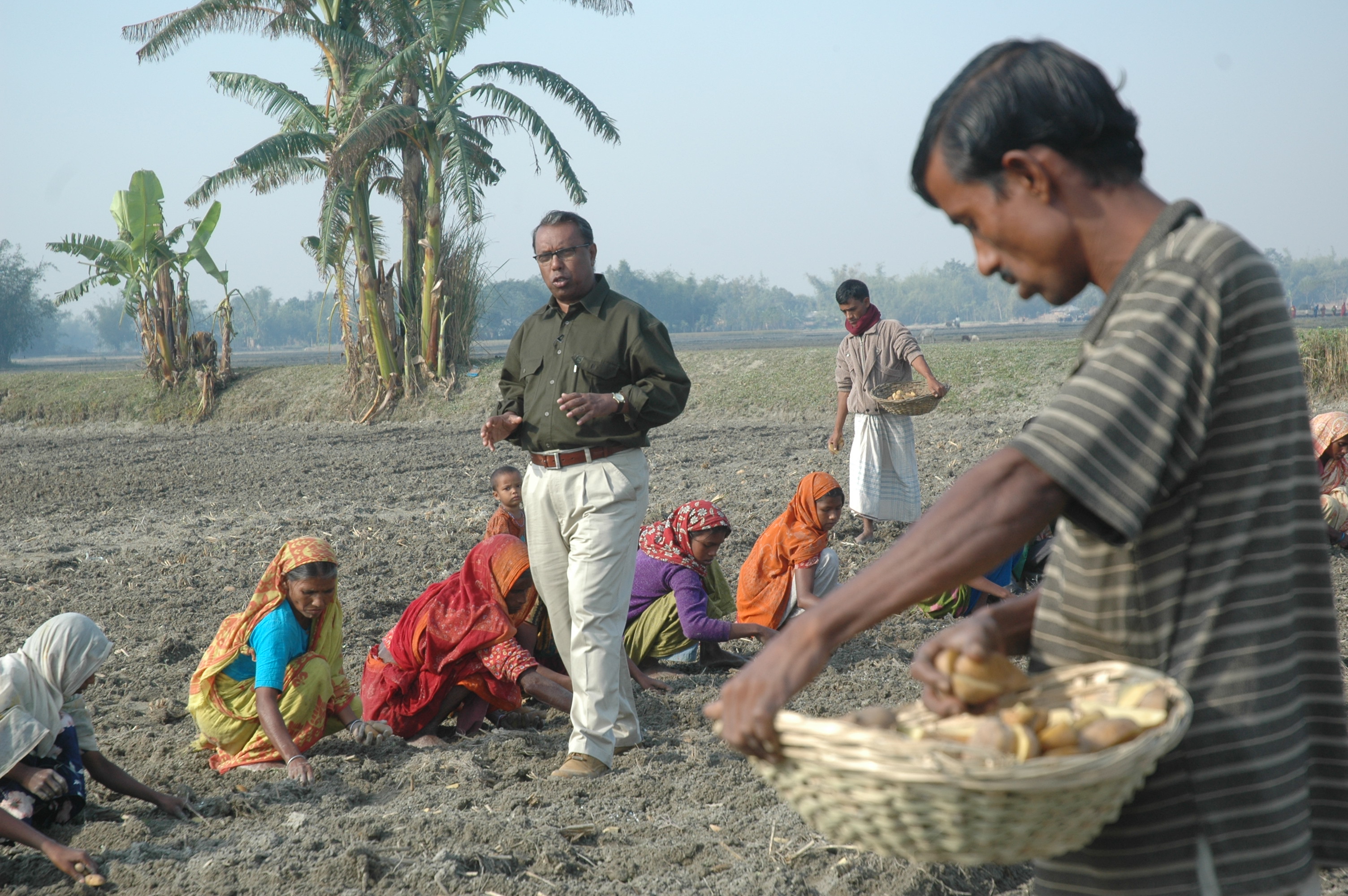
The cost of growing a kilo varied by district and by farmer, and many of the figures in these reports came from the growers themselves. Prothom Alo, working from Department of Agricultural Marketing and Trading Corporation of Bangladesh data, said in January that a kilo cost a farmer Tk 15 to Tk 20 to produce, and that cold-storage rent added another Tk 6.75.
The agriculture office in Taraganj put the average at Tk 16 to Tk 17, counting fertiliser, seed, irrigation and labour. A farmer in the upazila gave Prothom Alo his account for one acre this season: Tk 32,000 to lease the land, Tk 50,000 for seed, Tk 13,600 for chemical fertiliser, Tk 16,000 for spraying with labour, Tk 9,600 for lifting the crop and smaller sums for ploughing, planting, irrigation and other work. It came to Tk 147,600 for about 9,000 kg. He said the same acre had cost him Tk 210,000 the year before, and that cheaper seed and land lease had brought the bill down this time.
In Rajshahi, a farmer from Paba told Dhaka Tribune that one bigha had cost him about Tk 65,000, including Tk 17,000 for the lease and Tk 12,000 for seed, and that it gave him about 3,575 kg. That put his cost at nearly Tk 18 a kg, the report said. Farmers across Paba, Tanore and Godagari gave a range of Tk 16 to Tk 18.
Elsewhere, Naogaon farmers said Tk 12 to Tk 15. Agriculture officials in Bogura put early-season potatoes at about Tk 14 to Tk 16, and the Daily Star commentary said the production cost in Bogura had risen from Tk 14.50 last year to Tk 16.64 this year. In Chattogram, an additional deputy director of the Department of Agricultural Extension (DAE) said costs ran from Tk 20 to Tk 25 depending on the variety, and that the market price was not covering them. In Joypurhat, farmers told Jagonews24 they had spent about Tk 30,000 a bigha and were getting Tk 15,000 to Tk 20,000 for the crop.
From a record crop to a second bad season
The story behind the post began two years earlier. The Bangladesh Cold Storage Association said potatoes had mostly sold at Tk 60 to Tk 80 a kg in 2024. The Financial Express reported that retail prices reached Tk 75 to Tk 85 in October and November 2024, and that the private sector imported 0.2 million tonnes that year for the first time. The high prices drew farmers in. Prothom Alo reported in August 2025 that growers had raised output because of the good prices of the year before.
The result was the largest crop on record. The Bangladesh Bureau of Statistics put 2024-25 production at 11.57 million tonnes, up from 10.60 million tonnes. Figures from the DAE and the cold-storage owners were higher, at about 13 million tonnes. Annual demand was given as about 9 million tonnes by the association, while the agriculture ministry put demand, including chips and other potato foods, at 10.4 million tonnes.
Records of what farmers received in that season also differ from Milon's memory of Tk 10 to Tk 12. The Daily Star reported in March 2025 that farmers in northern districts were getting Tk 11 to Tk 15 a kg. The Department of Agricultural Marketing said prices fell to a record low of Tk 7 to Tk 8 a kg during the 2025 harvest. By July and August, potatoes were selling for Tk 13 to Tk 14 a kg, the Business Standard (TBS) reported, against total production and storage costs of Tk 20 to Tk 25.
Milon's remark that everyone had rushed back into potatoes needs one qualification. The national acreage fell. DAE figures quoted by Prothom Alo showed 494,000 hectares last season and 467,000 hectares by the first week of January this season, and the production target was cut to 11.365 million tonnes. The drop showed up in the districts: Thakurgaon went from 34,725 to 28,285 hectares, Naogaon from 25,940 to 21,970, Bogura from 60,435 to 54,465 and Taraganj from 4,530 to 3,463.
Yet the crop was still large. The Daily Star commentary said the target remained about 3 million tonnes above demand and that planting had passed the reduced target by 2,477 hectares. The deputy director of the DAE in Naogaon said farmers had been advised to plant less after last year's losses, but many had carried on, and that good production and higher supply had brought prices down. Her counterpart in Thakurgaon said that whenever farmers saw a profit they all turned to potatoes, and that this was why they did not see the profit. The commentary also cited the DAE's field wing as saying that nearly 2 million tonnes had been harvested in just ten days in February.
Losses were not new. Farmers and an adviser to a growers' association told Prothom Alo that Thakurgaon's growers had lost money in nine of the past 15 seasons. Speaking at the country's first international potato exhibition in Dhaka on 12 December 2025, the agriculture adviser said production had exceeded demand in 2010, 2014, 2015 and 2017, bringing heavy losses to farmers and storage owners, and had then fallen short in 2023 and 2024.
Cold stores full of last year's crop
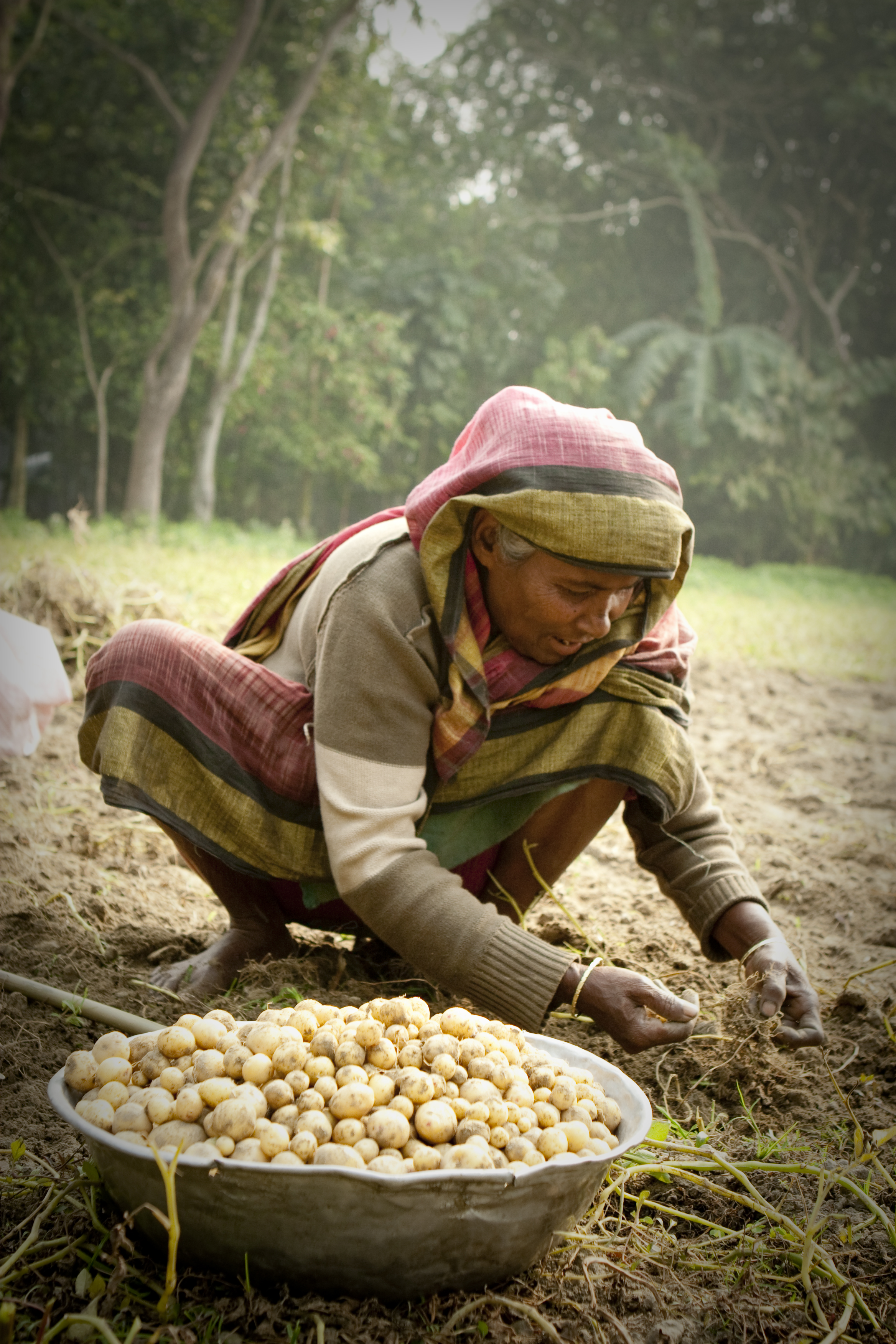
New potatoes reached a market that had not cleared the old ones. Last season 3.161 million tonnes were kept in 384 cold stores and 539 "model houses", Prothom Alo reported, and about 187,000 tonnes were still unsold in the first week of January, when wholesale potatoes at cold-storage level sold for only Tk 5 to Tk 8 a kg. The Bangladesh Cold Storage Association said cooling machines were normally shut down on 15 November each year, but they ran for about another month because the stores had not emptied.
Storage was far smaller than the crop. Thakurgaon's 17 cold stores could hold 145,532 tonnes against last season's 868,125 tonnes. Taraganj's three stores held 16,000 tonnes against 142,095 tonnes, and the rest went into houses, yards and temporary sheds, where much of it rotted. Bogura had about 42 cold stores with a capacity of roughly 450,000 tonnes, and officials there said nearly 40 percent of last year's potatoes were still in storage when the report appeared in late February. The Daily Star commentary concluded that Bangladesh could store less than a quarter of its potatoes.
Some farmers said the rent itself had become the problem. In Naogaon and Rajshahi, growers claimed storage rent had nearly doubled, which made holding potatoes for a better price a risk. Others left their stock behind. Prothom Alo reported that many farmers abandoned their potatoes in the stores because the sale would not cover the rent. One farmer in Gazaria, Munshiganj, said he had spent about Tk 350,000 on two acres, rent included, and sold the whole crop of 21,230 kg for Tk 27,000, or Tk 1.27 a kg. He did not plant this season.
The government had tried one cheaper answer. Under its Potato Preservation, Processing and Marketing Programme, the Department of Agricultural Marketing was building 703 model storage units in 40 upazilas of 16 districts, TBS reported in May 2025. These raised, ventilated sheds of bamboo, wood and tin cost Tk 2.5 lakh each and served up to 10 farmers. Even so, Prothom Alo reported in January that 15 to 20 percent of the potatoes produced were wasted for lack of proper storage and processing.
What the government announced, and what followed
On 27 August 2025 the agriculture ministry said the market price was below the cost of production. It set a minimum price of Tk 22 a kg at the cold-storage gate, announced that 50,000 tonnes would be bought, stored and sold in October and November, and promised incentives for the next season. Two months later, Samakal reported on 2 November, no potatoes had been bought and farmers had not received Tk 22. A farmer in Bogura told TBS he had held back his crop expecting the government to buy.
At a meeting on 6 November the purchase was cancelled. The chairman of the Trading Corporation of Bangladesh said it was hard to identify which stocks in which stores belonged to real farmers, and proposed giving the money directly to them. The ministry then decided to add Tk 110 crore in cash to the Tk 150 crore already in the budget, making Tk 260 crore, for about 2.03 million farmers listed by the DAE.
The money was slow to move. The Daily Star reported on 25 January 2026 that farmers said they had received nothing and that no date had been set for payment. A Daily Star article on 6 February said the money had still not reached them although early varieties were already being harvested.
Milon's complaint about coordination was one analysts had made too. TBS reported in December that the price swings were linked to weak forecasting and poor coordination among the DAE, the Department of Agricultural Marketing and the Food Planning and Monitoring Unit. At the December exhibition the agriculture adviser said ensuring fair prices for farmers remained a priority and admitted, "We could not achieve that this year." The agriculture secretary said a 25-year strategic plan for the crop sector, including potatoes, was being prepared.
By early March the government had also announced a waiver of up to Tk 10,000 in farm loans for about 1.2 million farmers. The Daily Star commentary called it commendable but said it covered only bank loans and left out the many farmers who borrow from private lenders and local businessmen.
Cheap for some buyers, but not cheap in the field
Milon wrote that buyers would survive. The reports show that shoppers were paying well above the field price. Prothom Alo reported in January that retail buyers were paying Tk 30 a kg, while farmers had not received even half of that. Bonik Barta quoted a Bogura trader in late February as saying potatoes were retailing at Tk 20 to Tk 25, while Dhaka Tribune said retail prices were comparatively stable in urban markets as wholesale traders cut their rates. A grower in Cumilla told bdnews24.com that he had sold part of his crop at a loss last year and then had to buy potatoes for his own family at Tk 28 to Tk 30 a kg.
A wholesaler at Nimsar market in Cumilla described how he saw the season working. Traders buy at a reasonable price early on and store, he said, then stop selling when the market falls. Farmers, afraid of rot, sell cheaply, and when a shortage appears the stockists release potatoes at higher prices. A Cumilla farmer said small growers whose crops were not sold early found no room in the cold stores and got no price from traders either. Market observers quoted by Dhaka Tribune in February also named limited exports, high storage costs and the dominance of trading syndicates among the causes of the fall.
The crop and where it grows
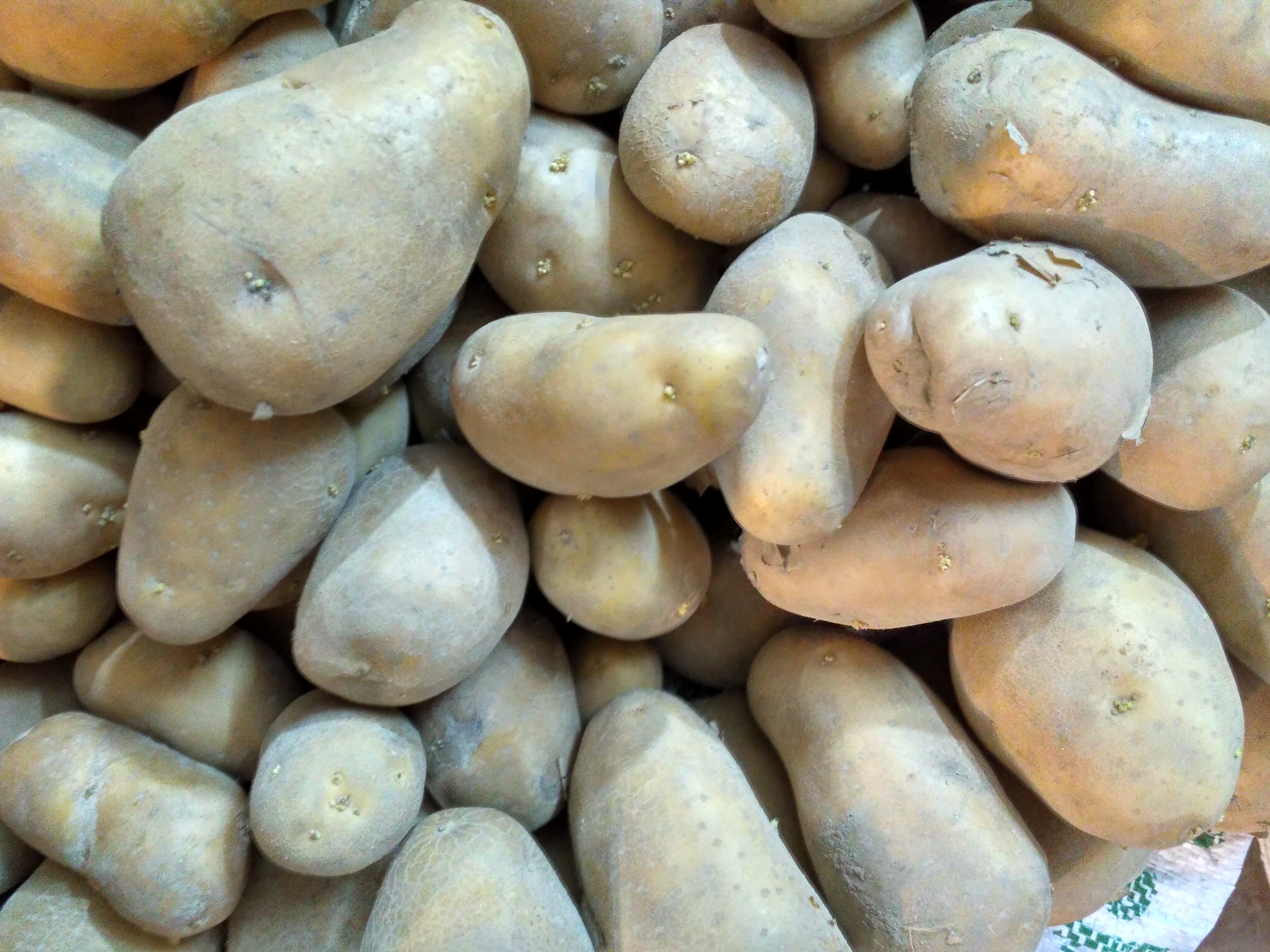
The potato, Solanum tuberosum, is an edible tuber of the family Solanaceae. Banglapedia describes it as one of the staple foods of Bangladesh, grown in every district in winter. The first fortnight of November is the right time to plant, it says, although in parts of the north-west farmers plant in October for an early crop. Almost all planting is done by hand, and growers often mulch the rows with water hyacinth or straw to hold moisture. Most varieties are lifted in February and March. Prothom Alo reported that in Chattogram the crop can be lifted 90 to 95 days after planting.
The largest producers are Munshiganj, Rangpur, Bogura, Rajshahi, Naogaon and Joypurhat, according to Prothom Alo. The north grows 65 to 70 percent of the national crop, the Daily Star commentary said, and DAE figures quoted by Dhaka Tribune credit the Rajshahi and Rangpur divisions with 8.7 million tonnes of the 2024-25 harvest.
Growers choose between high-yielding varieties and older local ones. Banglapedia names Cardinal and Diamant, both from Holland, among the popular high-yielding types, and Sheel Bilatee of Rangpur and Lal Pakri of Dinajpur, Bogra and Sirajganj among the local ones. In Bogura, 48 local and high-yielding varieties are grown, and Asterix was the most planted this season, Bonik Barta reported. Burichang in Cumilla grew Valencia and BARI-90 for export, along with Cardinal, Diamond and Sunshine, its agriculture officer said. Most small farmers keep potatoes at home, Banglapedia notes, and the losses from drying, pests and disease are substantial.
What growers and economists asked for
Growers in Taraganj told Prothom Alo that unless a minimum support price was set, government buying began and cold-storage capacity grew, they would fall into the same cycle of losses every year. The upazila agriculture officer said the market and storage problems had been reported to senior officials.
An agricultural economist told Prothom Alo in January that unplanned production and weak market management lay at the root of the crisis. He said both farmers and consumers would gain if the government bought at least 10 percent of the crop and stored it directly, and that half of the cold-storage rent should be paid as a subsidy. He also said many countries exported up to 10 percent of their potatoes, while Bangladesh could not export even half of one percent.
Exports and processing were small next to the surplus. The Daily Star commentary said exports had not passed 62,000 tonnes in any of the last five years. Experts at the December exhibition pointed to markets in Malaysia, Sri Lanka and the Middle East. FreshPlaza, citing Bonik Barta, reported in November 2025 that only 3 to 4 percent of national output was processed into products such as chips and biscuits, against more than 60 percent in the United States, Canada and Belgium. The deputy director of the DAE in Joypurhat said potato-based industries in the district would create jobs and help farmers get a fair price.
Other proposals came from the storage trade and the commentators. The general secretary of the Thakurgaon cold-storage association called for more processing plants, an export drive and the inclusion of potatoes in relief programmes. The Daily Star commentary proposed direct government buying, as with rice and paddy, with the stock sold through Trading Corporation of Bangladesh trucks or released when prices rose.
In Cumilla, officials were already hearing the same demand. The deputy director of the DAE there called it useful and said he would inform the ministry through the deputy commissioner, and the deputy commissioner said the agriculture and food ministries would be told of the idea of buying potatoes and keeping them in cold storage.
Photo: কুউ পুলক / Wikimedia Commons (CC BY-SA 4.0). The top picture shows a potato field in Munshiganj, as background.
Sources: Jagonews24 (7 March 2026; 18 February 2026), bdnews24.com (6 March 2026), Dhaka Tribune (6 March, 25 February and 17 February 2026; 27 August 2025), The Daily Star (4 March, 6 February and 25 January 2026; 22 March 2025), Bangla Tribune (2 March 2026), Prothom Alo (28 February, 25 February and 19 January 2026; 9 August and 23 July 2025), Dhaka Post (26 February 2026; 27 August 2025), Bonik Barta (25 February 2026), The Business Standard (13 December, 7 December and 15 October 2025; 5 May 2025), FreshPlaza (11 November 2025), Samakal (2 November 2025), The Financial Express (15 August 2025), Banglapedia (Potato).
Comments
(0)