
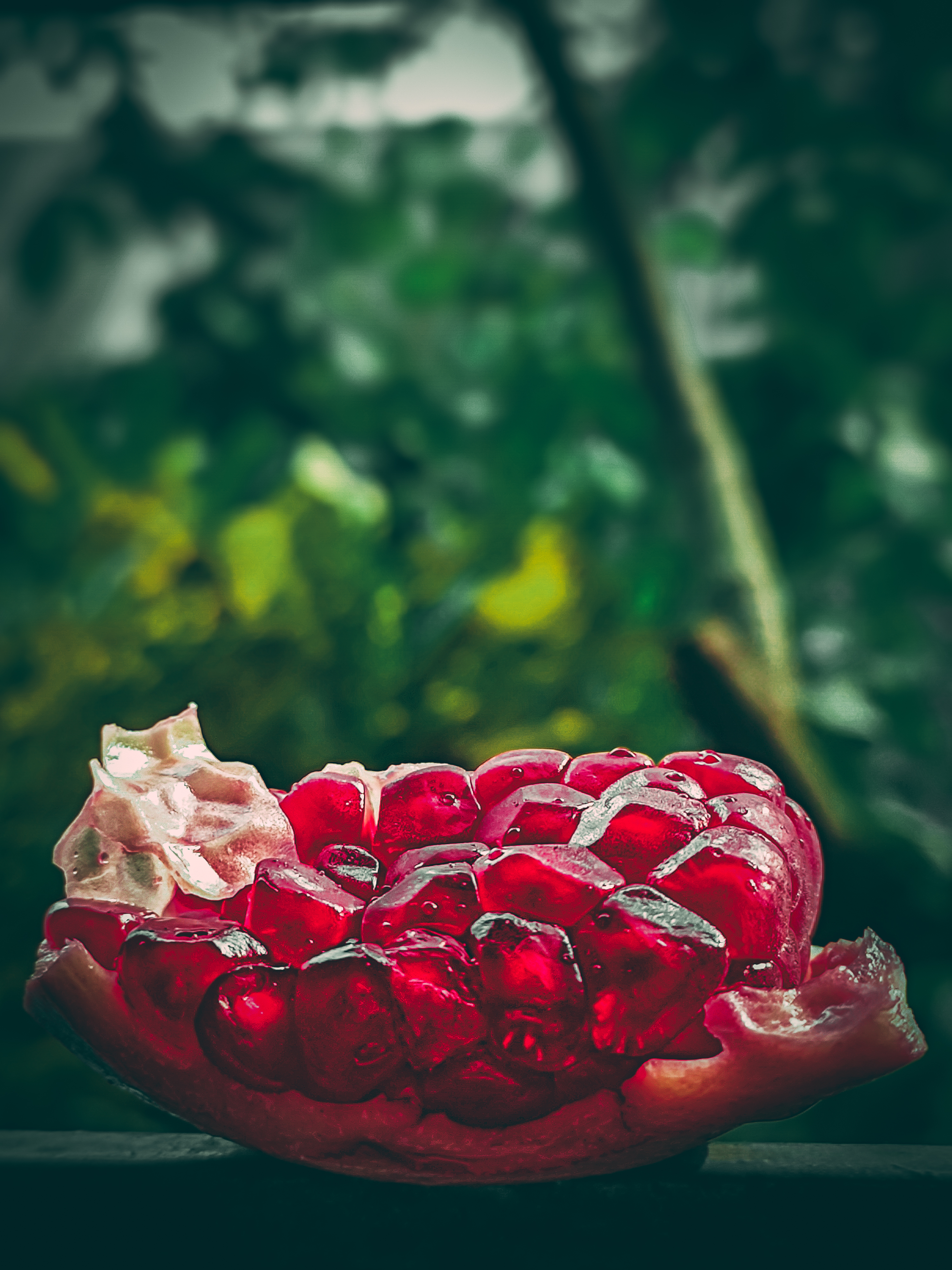
The first sign is easy to miss: small white tufts, like cotton wool, on the leaves and branches of a pomegranate tree. Soon the patches reach the young fruit, and ants are seen on the same spots. This is the mealybug, called chhatra poka in Bengali, and on 23 October 2021 The Agro News set out for growers how it harms the tree and how to stop it.
Mealybugs suck the sap from leaves and branches, so the tree grows weak; in a heavy attack the leaves drop and branches die. This guide explains what the pest is, which species attack pomegranate, what a Department of Agricultural Extension (DAE) survey found about mealybugs in Bangladesh, and the order in which to use the control methods: pruning, barriers and hand removal first, then natural enemies and neem-based products, and chemicals only as a last resort.
Pomegranate in Bangladesh: a fruit grown and imported
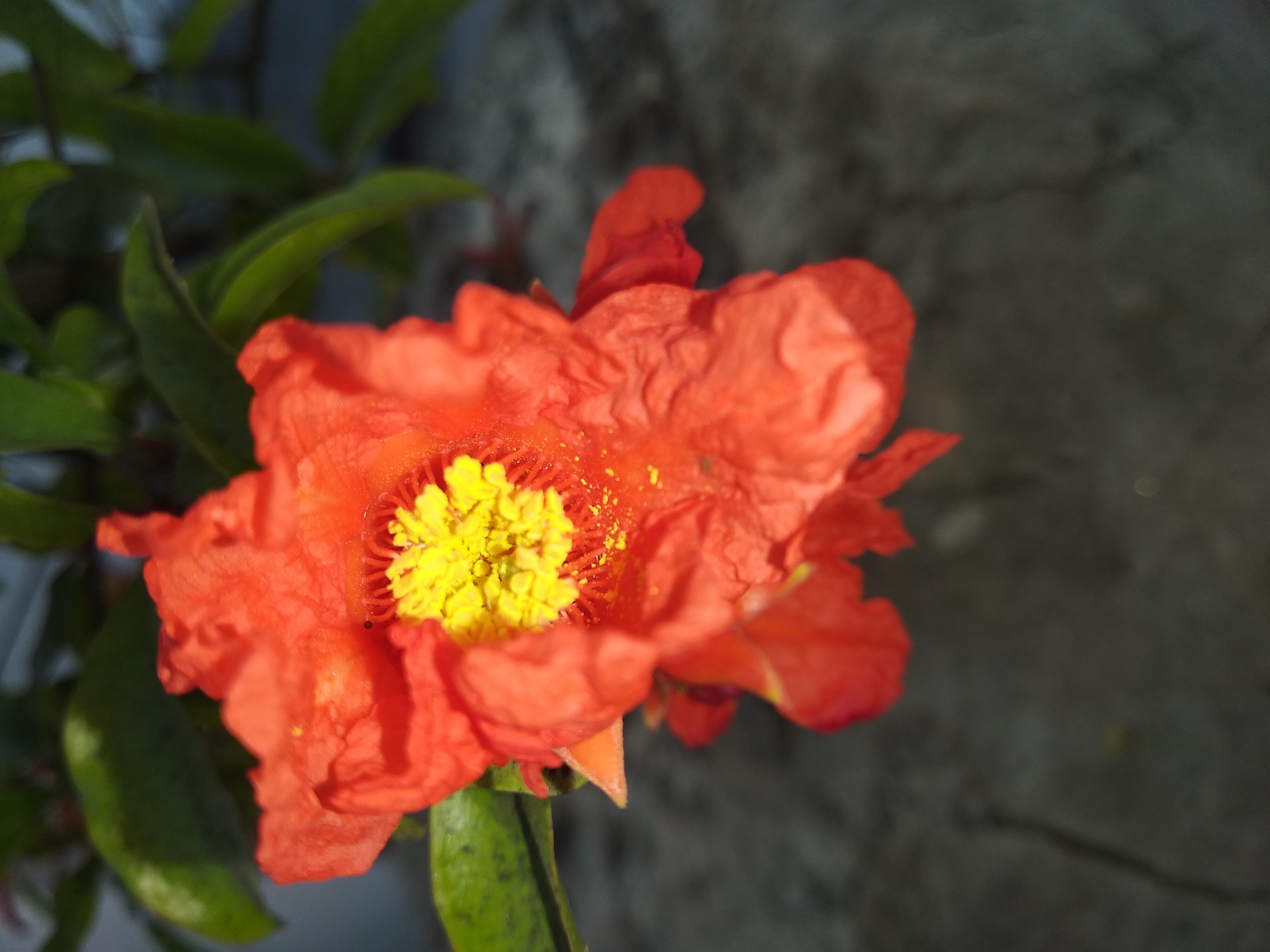
Pomegranate (Punica granatum), known as dalim or anar, is a shrub or small tree that can reach 6 to 10 metres. According to Julia Morton's Fruits of Warm Climates (1987), published online by Purdue University, it is native to the region from Iran to the Himalayas, has been grown since ancient times, and reached central and southern India from Iran about the first century AD. Its flowers are about 3 cm wide, with a thick red calyx and three to seven crinkled petals. The fruit is 6.25 to 12.5 cm wide, and the seeds make up about 52 per cent of its weight.
Morton describes the plant as suited to a semi-arid climate and extremely drought-tolerant, growing on soils from calcareous and alkaline to deep acidic loam. Selected types are propagated from hardwood cuttings 25 to 50 cm long. Plants may bear one year after planting, though two and a half to three years is more common, and the fruit matures six to seven months after flowering.
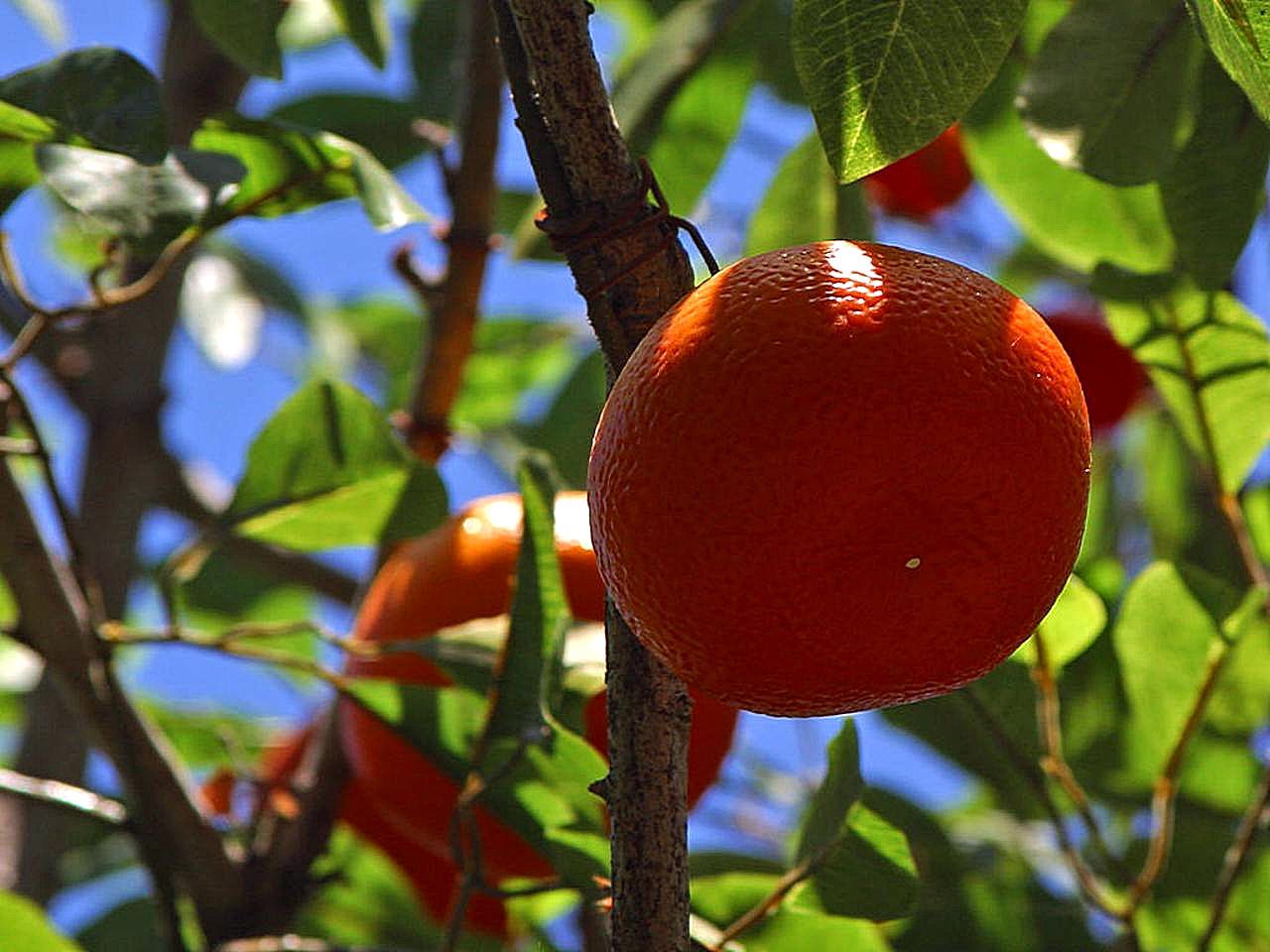
Banglapedia, the national encyclopedia, in its June 2021 revision lists pomegranate among the widely cultivated fruits of Bangladesh, and also among the common imported fruits, with orange, apple, grape, date and mandarin. It is one of the fruits harvested outside the summer months known as Modhu Mash. A 2018 study in the International Food Research Journal by K. Sumaiya, Md Jahurul Haque Akanda and W. Zzaman analysed three cultivars available in Bangladesh: a local Bangladeshi pomegranate, the Indian variety Mridula and an Egyptian pomegranate. It found the peel richer in antioxidant compounds than the edible arils.
India is the world's largest pomegranate producer. A 2020 paper in the Bangladesh Journal of Botany put Indian output at 2,795 thousand tonnes in 2017-18 and placed India third in global export share.
What a mealybug is and how to recognise it
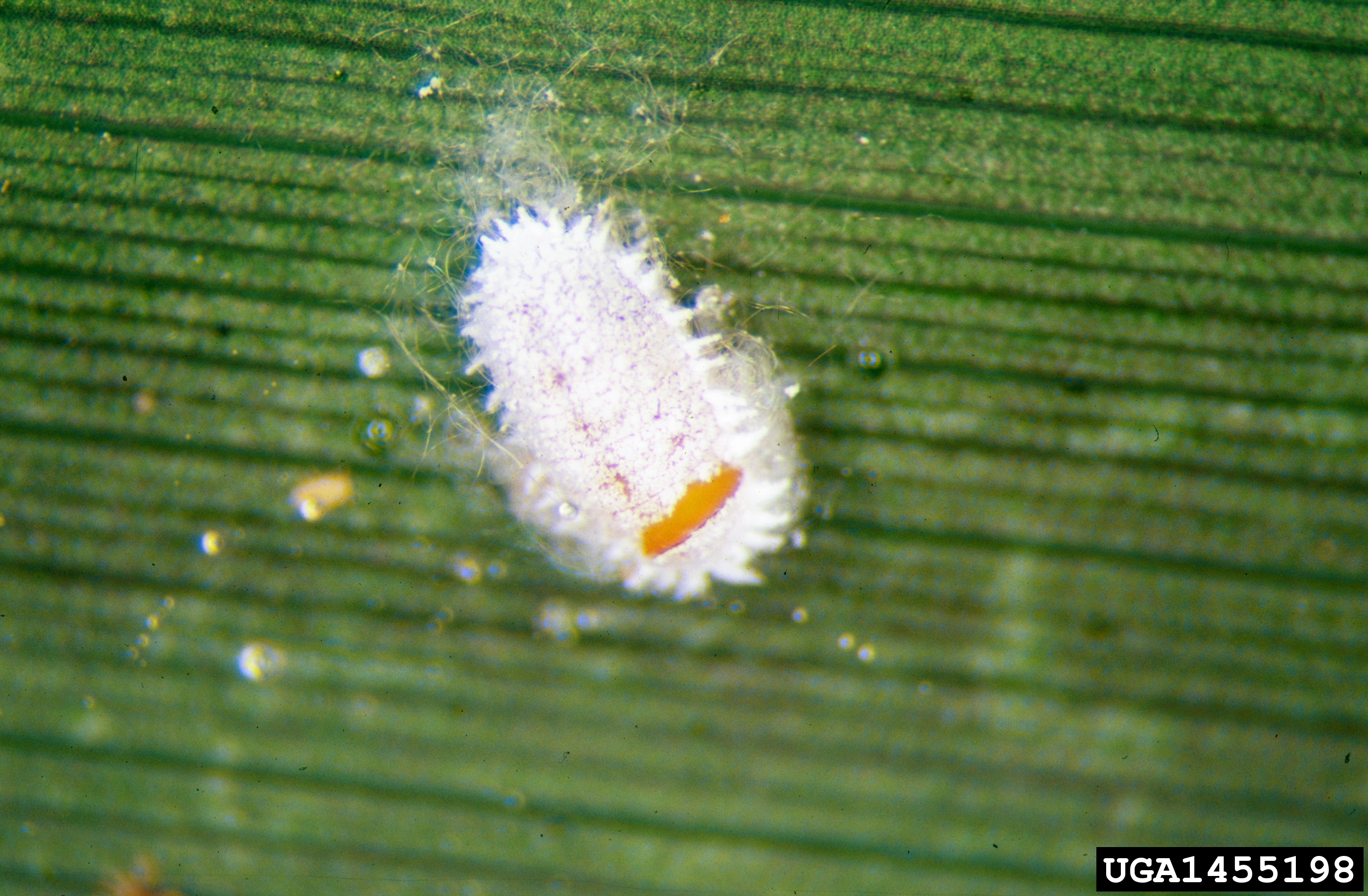
Mealybugs are small, oval, soft-bodied sucking insects of the family Pseudococcidae. A pest risk analysis prepared in 2017 for the DAE's Plant Quarantine Wing describes them as cottony in appearance and covered with white mealy wax, which makes them difficult to eradicate. They form colonies on stems and leaves that grow into dense, waxy white masses, and they suck large amounts of sap through piercing and sucking mouthparts.
The signs on a pomegranate match what The Agro News described: white, cotton-like patches on leaves, fruit and branches, often with ants. The DAE report lists the damage on infested plants. Growing points become stunted, leaves wither and turn yellow, and fruit may drop early or stay on the tree dried and shrivelled. A heavy infestation can strip the leaves and even kill the plant, and fruit covered with the white waxy coating is unfit for market.
Mealybug species look alike, but the same report gives simple field marks. The striped mealybug (Ferrisia virgata) has a grey body with very long waxy filaments, long tails and two dark stripes on the back. The citrus mealybug (Planococcus citri) is yellow to pink, with one stripe down the middle and short tail filaments. The pink hibiscus mealybug (Maconellicoccus hirsutus) gives out a pink to red fluid when it is squashed.
Which mealybugs attack pomegranate
All three species were recorded in Bangladesh by the DAE study, and all three are known on pomegranate. A 2011 review in the Journal of Horticultural Sciences by M. Mani, A. Krishnamoorthy and C. Shivaraju of the Indian Institute of Horticultural Research in Bangalore calls the citrus mealybug probably the most cosmopolitan and destructive species of its family. It is a major pest of citrus, grape, pomegranate, ber, custard apple and hibiscus. Its adult female lays about 300 amber eggs, which hatch in five to eight days.
The same review notes that the pink hibiscus mealybug was first recorded as a serious pest of pomegranate in India in a 1991 study, and that the oriental mealybug, Planococcus lilacinus, is also a serious pest of the crop. Tamil Nadu Agricultural University's crop protection pages list the tailed mealybug, Ferrisia virgata, among pomegranate pests and give premature fruit drop as its symptom.
Pomegranate has other insect enemies that cause different damage. Banglapedia names the pomegranate butterfly, Virachola isocrates, as an important member of the Lycaenidae family in Bangladesh. Morton notes that it lays eggs on flower buds and on the calyx of developing fruit, and the caterpillars then bore into the fruit. Its sign is a hole in the fruit, not a white waxy colony.
What the DAE survey found in Bangladesh
The pest risk analysis was carried out under the Strengthening Phytosanitary Capacity in Bangladesh project of the DAE's Plant Quarantine Wing, by a joint venture of House of Consultants Limited and CRDP Consulting Services. Work began on 20 January 2017, and the report is dated May 2017. The team covered 61 upazilas in 26 major crop-growing districts, interviewed 6,100 farmers, held 26 focus group discussions and 35 key informant interviews, and inspected crop fields.
It recorded 14 damaging mealybug species in Bangladesh and 103 host plants: 14 field crops, 10 weeds, 24 vegetables, 21 fruit plants, 9 woody plants, 5 medicinal plants, 16 ornamentals and 4 hedge plants. Nine fruit plants were major hosts: jujube, mango, jackfruit, guava, citrus, coconut, banana, grape and strawberry. Pomegranate was among the twelve minor fruit hosts.
Minor does not mean harmless. For pomegranate, the survey found that seedlings, growing plants and fruiting trees were all vulnerable, that leaves, stems, flowers and fruit were attacked, and that infestation was of medium severity with partial damage. The report also identified 13 mealybug species of quarantine importance that could enter Bangladesh with imported plants and plant parts.
Farmers told the surveyors how they dealt with the pest. They sprayed insecticides, pruned infested branches and burned them, picked colonies off by hand, weeded around their fields and sprayed soap water. In gardens and orchards some blasted infested plants such as papaya and guava with a strong jet of water from a hose pipe, and some followed integrated pest management (IPM).
How mealybugs multiply and spread
According to the DAE report, mealybugs reproduce mostly without mating, although some species, such as the pink hibiscus mealybug, need both sexes. The mature female lays eggs in a sac of white wax, usually in clusters on twigs, branches or bark and sometimes on leaves. One egg sac may hold as many as 600 eggs, most of which become females, which explains sudden outbreaks. The eggs are only 0.3 to 0.4 mm long and develop in three to nine days.
The eggs hatch into very mobile nymphs called crawlers. Females pass through three nymphal stages and males through four, over 22 to 25 days, and an individual can take up to 30 days to grow up. There may be as many as 15 generations a year, and in warm climates the insects stay active and breed all year round. The University of California's Integrated Pest Management programme, in its 2016 guide, gives 100 to 200 or more eggs per female for most species.
Crawlers are the stage that spreads. The DAE report says wind can carry them from a few metres to several kilometres, that their waxy coat lets them cling to animals and to people's clothes, and that infested planting material and farm equipment take them to new places. This is why The Agro News advised collecting and destroying the clusters of eggs and young: removing one egg sac removes hundreds of future insects.
Ants and sooty mould: a partnership that protects the pest
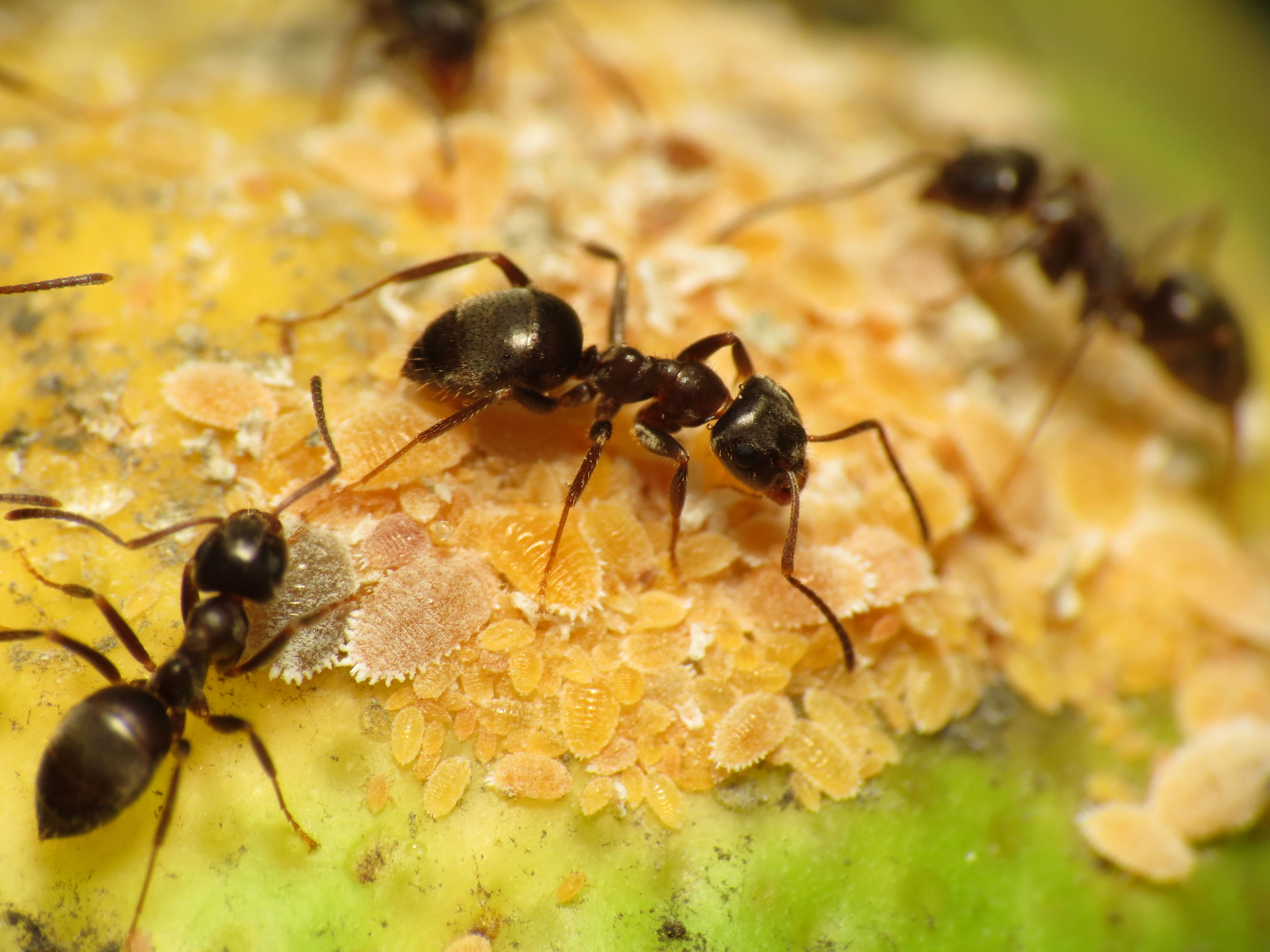
The ants seen on infested trees are part of the problem. Mealybugs excrete large amounts of sugary honeydew. The DAE report explains that ants collect it to feed their young, and in return keep the colony clean and protect the mealybugs from ladybird beetles, parasitic wasps and other natural enemies. They also help carry crawlers to clean plants. The UC IPM guide likewise notes that ants protect mealybugs from their natural enemies.
Honeydew that falls on the lower leaves grows a black sooty mould, which, the DAE report says, reduces the plant's ability to make food. A pomegranate with ants running up the trunk and a black film on its leaves is therefore likely to have a mealybug colony somewhere above.
Controlling ants is part of controlling mealybugs. The DAE report notes that without ants, mealybug populations stay small and slow to spread. It lists sticky bands, polythene (alkathene) sheet or a band of insecticide on the main stem to stop crawlers and ants climbing, and for the mango mealybug it describes fastening a 400-gauge polythene sheet 25 cm wide around the trunk.
First steps: prune, band and pick by hand
The first steps The Agro News advised use no chemical at all, and the DAE review lists the same kind of measures:
- Cut off infested leaves and shoot tips and destroy them; the DAE report advises burning pruned infested branches.
- Wrap the trunk near its base with clear polythene so that mealybugs cannot climb the tree; the DAE report lists sticky bands or polythene sheet on the main stem for this purpose.
- Where possible, collect the clusters of eggs and young by hand and destroy them; the DAE report recommends hand-picking on lightly infested plants in small gardens, or a strong jet of water that does not damage the plant.
- Keep the ground around the tree free of weeds and of other host plants the DAE report names, such as hibiscus, okra, custard apple, guava and parthenium.
- Do not bring planting material from infested areas, and clean tools before moving to an uninfested tree.
- Check the trees regularly, so that a colony is found while it is still small.
The DAE report explains why these steps come first: plant protection products have limited effect on mealybugs because the insects hide in crevices and their bodies are covered with wax. The Bangalore review calls mealybugs "hard to kill pests" and says several insecticides have been found ineffective against them.
Natural enemies and neem
Biological control is the most effective long-term answer, according to the DAE report, because parasites and predators persist and keep attacking even when mealybug numbers are low. Ladybird beetles such as Cheilomenes sexmaculata, Rodolia fumida, Scymnus coccivora and Nephus regularis are important predators of mealybug nymphs.
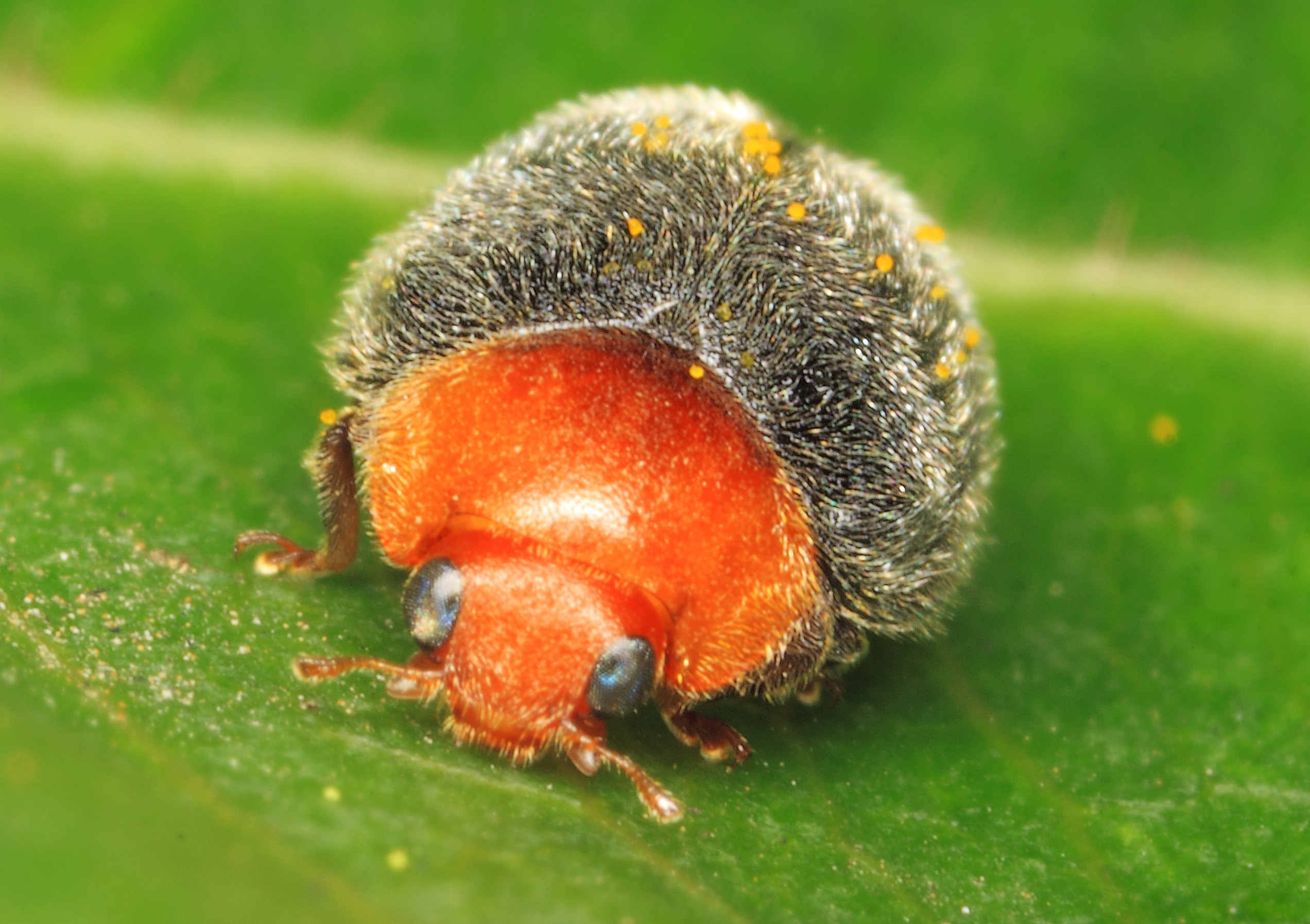
The best known predator is the Australian ladybird beetle, Cryptolaemus montrouzieri, called the mealybug destroyer. The DAE report says it lives about two months, lays up to 400 eggs and can eat 3,000 to 5,000 mealybugs. Its larvae grow up to 1.3 cm long and are covered with woolly wax, so they look like mealybugs themselves. Where it is released, the rate given is 10 beetles per tree or 5,000 per hectare. The UC IPM guide calls it the most important mealybug predator in many areas.
The evidence from pomegranate itself is strong. The Bangalore review reports that releases of C. montrouzieri were very effective against pink hibiscus mealybug on pomegranate. The parasitic wasp Leptomastix dactylopii, with a second parasitoid, cut citrus mealybug numbers on pomegranate from 180.3 per plant in June to 4.5 per plant in August, within 30 days of parasitoid activity. When insecticide sprays were withdrawn from pomegranate, predators such as Spalgis epeus and C. montrouzieri appeared in large numbers and brought the oriental mealybug down.
This is why spraying a broad-spectrum insecticide at the first white spot can backfire: UC IPM warns that such pesticides reduce the natural enemies that control mealybugs. The DAE report advises that where natural enemies are not active, botanical products should be the first choice: neem oil at 1 to 2 per cent, neem seed kernel extract at 5 per cent, or fish oil rosin soap at 25 g per litre of water. The Agro News named Nimbicidin, a neem-based biopesticide; for its dose, follow the label and the local agriculture office.
Chemicals only as a last resort
For a severe attack, The Agro News listed dimethoate products such as Rogor and Tafgor, as well as Sumithion and Mipcin. Tafgor, made by Rallis India, is dimethoate 30% EC, which the maker describes as having systemic, contact and stomach action against pests including aphids, thrips and scale insects. Sumithion is a trade name for fenitrothion.
The DAE review lists dimethoate 30 EC at 2 ml per litre of water among the insecticides to be used against mealybugs only as a last resort, the same rate The Agro News gave. The original also gave rates for Sumithion and Mipcin, but no Bangladeshi authority we could find confirms them, so they are left out here.
The DAE report adds several cautions. Chemical control is only partly effective and needs repeated applications. Insecticide should be applied as a spot treatment as soon as mealybugs are noticed on a few plants. The same insecticide should not be used again and again, because the pest can develop resistance, and resistance and harm to natural enemies make chemical control a less desirable option.
In Bangladesh, the Pesticides Act 2018 (Act No. 24 of 2018, dated 29 July 2018) bars anyone from importing, producing, selling, stocking or advertising a pesticide whose brand is not registered under the Act. The registering authority is the Director of the DAE's Plant Protection Wing. Before buying any spray, ask the Sub-Assistant Agriculture Officer or the Upazila Agriculture Office which registered product suits pomegranate, at what dose, and how long to wait before picking the fruit.
Photo: Tanvir Rahat / Wikimedia Commons (CC BY-SA 4.0)
Sources: The Agro News, Department of Agricultural Extension (Plant Quarantine Wing, Pest Risk Analysis of Mealybug Spp. in Bangladesh, 2017), Journal of Horticultural Sciences (Mani, Krishnamoorthy and Shivaraju, 2011), University of California Statewide IPM Program, Tamil Nadu Agricultural University, Purdue University (Morton, Fruits of Warm Climates), Banglapedia, International Food Research Journal, Bangladesh Journal of Botany, Pesticides Act 2018 (FAOLEX), Rallis India
Comments
(0)