
Banana and plantain breeders from nine African national programmes have agreed to work to common standards and test their material across several countries, after a network meeting in Arusha, Tanzania, organised by IITA, the CGIAR centre for tropical agriculture, and the Tanzania Agricultural Research Institute (TARI), CGIAR reports.
The crops matter to millions of smallholders, who grow them both to eat and to sell. The East African Highland Banana, the cooking banana known as matooke, accounts for 17% of all Musa grown worldwide and plantain for another 19%. Demand for both is rising, said IITA banana crop lead Prof. Rony Swennen, who opened the meeting, held from 28 September to 2 October at the Nelson Mandela African Institution of Science and Technology.
"With our network now set up, we must consider how to work together more efficiently, and the key word is standardization across all programs," Swennen said. Participants were trained on MusaBase, a breeding database, on crop ontologies and on the Field Book data app, as well as on field layout, so that every programme collects and shares data the same way. They then used the tools in the field.
The group visited TARI-Tengeru and farmers' fields to see evaluation trials and how local conditions change the way varieties perform, watched a demonstration of a sensory evaluation tool that measures what consumers like in a banana, and toured the Maua Mazuri tissue culture laboratory and nursery, which multiplies cooking banana varieties released earlier. Dr Victor Amankwaah of Ghana's CSIR-Crops Research Institute said the visit showed the value of testing breeding material in many places.
The next step is shared trials. The network plans multi-environment trials in all member countries, starting with Uganda, Tanzania and the Democratic Republic of Congo, with some in Nigeria later this year, said IITA banana breeder Dr Michael Batte, adding that several partners, including TARI, have begun sharing data. The aim is to widen pre-breeding work across Burundi, the Democratic Republic of Congo, Ghana, Kenya, Nigeria, Rwanda, Tanzania, Uganda and Côte d'Ivoire. The report was written by Hadi Rashid, Rony Swennen and Michael Batte of IITA.
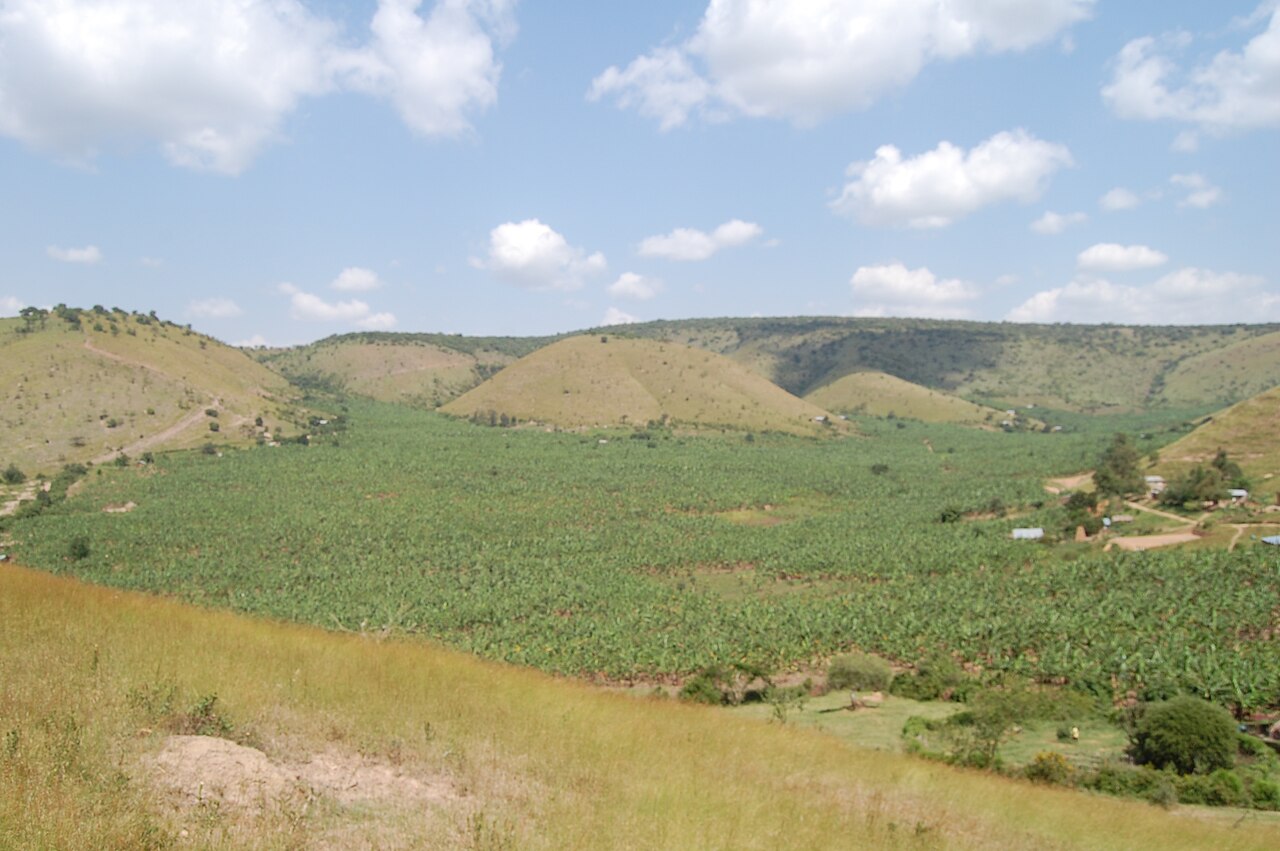
Photo: Kyaligonza JohnBosco / Wikimedia Commons (CC BY-SA 4.0), a matooke plantation in Kiruhura District, Uganda
Source: CGIAR

Comments
(0)