
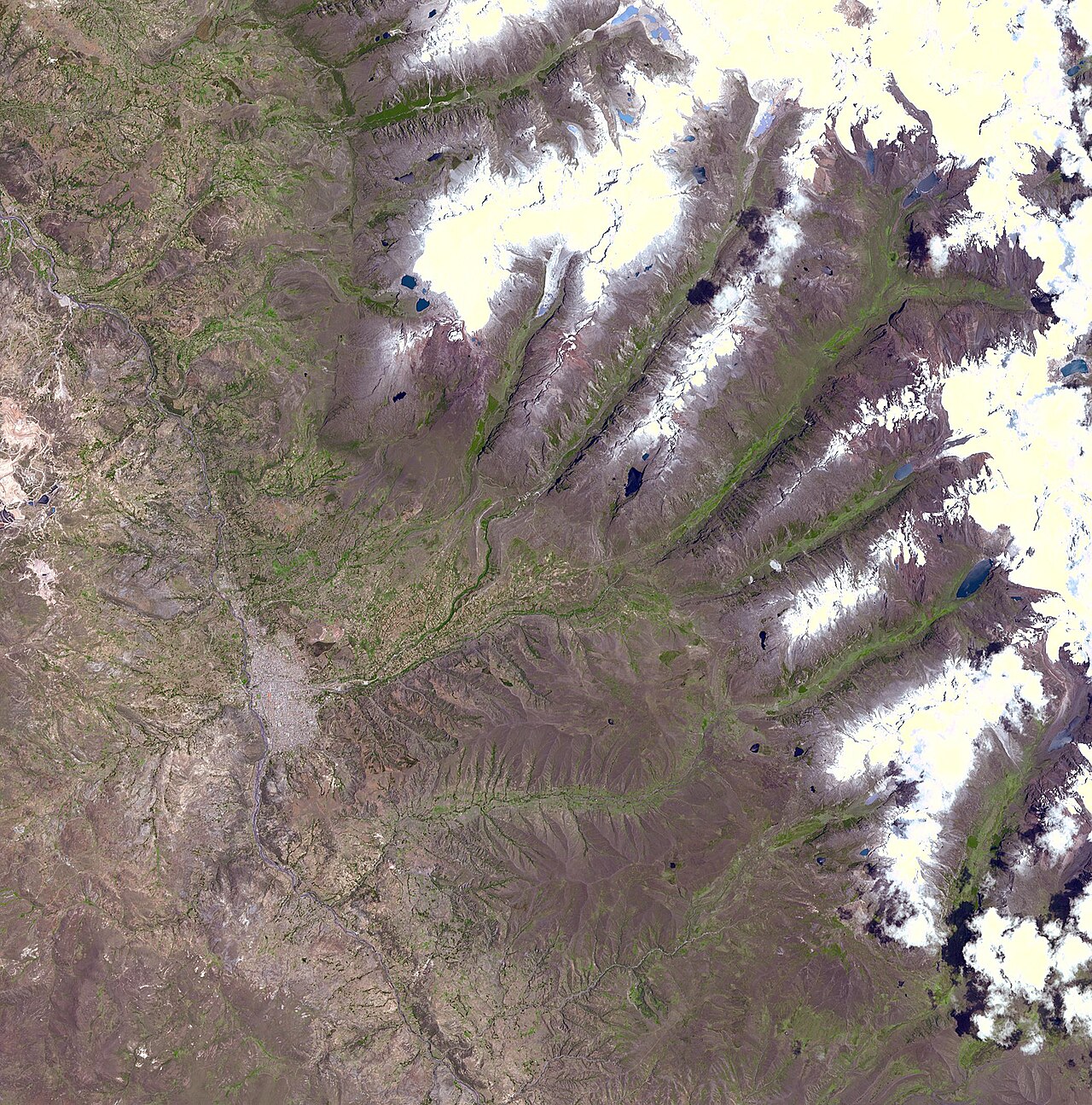
Peru once led the world in protecting towns from floods caused by bursting glacial lakes, but after decades of budget cuts and decentralisation its defences are crumbling, Dialogue Earth reports, as the deadly glacier collapse in the Himalayas last month revived old fears in the Andes.
The collapse on the Nepal-Tibet border swept through the Trishuli and Bhotekoshi valleys and killed more than 1,300 people. In Peru, the geologist Benjamin Morales survived as a child the 1941 burst of Lake Palcacocha, which killed thousands in Huaraz, and later saw the 1970 avalanche on Huascaran that killed 25,000 people in Yungay and Ranrahirca in under ten minutes.
After 1941 Peru built a state-led prevention programme. Between the 1960s and 1990s engineers lowered lake levels, dug drainage tunnels, reinforced dams and built overflow channels; Morales says they stabilised 35 glacial lakes in the Cordillera Blanca. In 2000, amid budget cuts, the government closed its Glaciology and Lake Safety Programme.
Today, of more than 8,000 glacial lakes assessed, the National Glaciers and Mountain Ecosystems Research Institute (Inaigem) counts 528 at risk of overflowing, 169 of them in the Ancash region. Palcacocha's volume had grown about 34 times since 1972 by 2016, and its half-century-old dam is considered potentially dangerous for Huaraz's roughly 120,000 people. World Bank consultant Alonso Brenes estimates that barely 35% of Peru's regional and local governments can manage disaster risk, and says people live near rivers because they need the water for trade and farming.
Early warning can give communities six to 25 minutes to escape, said Paola Moschella of Inaigem, which runs three real-time monitoring stations in Huaraz, Cusco and Huanuco. The slower crisis is water: Peru has lost 56% of its glacier cover in six decades, 60-65% of its people depend on water from glacier-fed river basins, and 58% live in water-scarce areas.
The experts say the lesson reaches Himalayan countries too: as glaciers retreat, governments need to keep the technical skills, institutions and funding that protect people living downstream.
The report was written by Jack Lo Lau for Dialogue Earth.
Photo: NASA / Wikimedia Commons (public domain)
Source: Dialogue Earth

Comments
(0)