
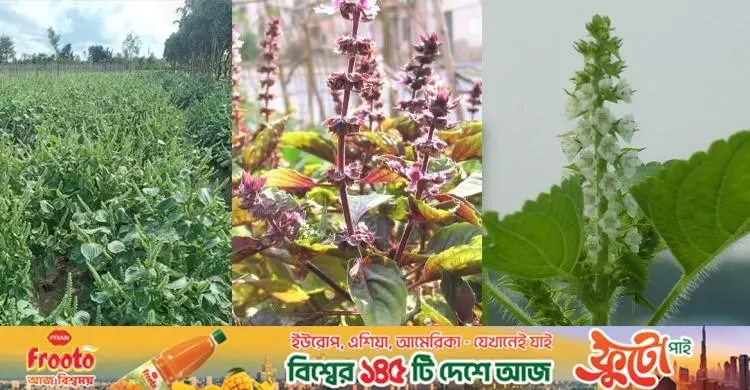
Demand for edible oil is rising in Bangladesh every day, and with production falling short of need, the import bill keeps growing. A new oil crop, perilla, holds promise for reducing import dependence and increasing the output of quality edible oil. Growing perilla could meet much of the demand, and if it can be exported, it would also earn foreign currency.
According to the Agriculture Information Service, Bangladesh's total edible oil demand is 51.27 lakh tonnes, of which 46.21 lakh tonnes must be imported, at a cost of $3.20 billion, or Tk 27,138 crore. The country's oil crops include mustard, groundnut, sesame, linseed, soybean and sunflower, of which mustard, sesame and sunflower are generally used for oil. Only 4 per cent of cultivable land is now under oil crops. Mustard is grown on 4.44 lakh hectares, producing 6.5 lakh tonnes of mustard and 2.50 lakh tonnes of oil.
Amid this demand and shortfall, perilla offers a promising opportunity with good scope for profit. If its cultivation can be spread across the country, perilla oil could be marketed at a much lower price.
A Korean crop adapted for Bangladesh
Perilla is a new edible oil crop adapted to Bangladesh. Like mustard it has small grain-like seeds, which are pressed for oil; pressing yields 40 per cent oil, compared with 40 to 42 per cent from mustard.
Perilla is originally a South Korean variety, known as Korean perilla. Its scientific name is Perilla frutescens (L.) Britton, and it belongs to the Lamiaceae (mint) family.
Scientific analysis has found 51 per cent omega-3 among perilla's nutrients. Its medicinal compounds are very good for the heart. Of its fat, 91 per cent is unsaturated, which helps boost immunity and control high blood pressure and diabetes, and it is also good for the brain and skin.
Besides oil, Golden Perilla is also used as a vegetable. Perilla leaves are in separate demand as a vegetable in many countries, and being aromatic, it can add flavour to cooking. It is also used in various fast foods.
Perilla oil imported from Korea is reportedly selling in Bangladesh for Tk 2,200 a litre, and because of its added nutritional value, it is in particular demand among wealthy consumers.
Farmers can grow it in the rainy season on field ridges, in their yards or on any raised land, easily getting the oil their families need and selling the rest in the market. The seed contains more than 25 per cent protein, so the oilcake left after extraction is rich in protein and makes good cattle feed.
Research and registration
A team of researchers at Sher-e-Bangla Agricultural University (SAU) carried out long research on perilla cultivation and succeeded in adapting it to the country's climate. According to the team, SAU Perilla has been adapted as a high-yielding, nutritious crop for Bangladesh's conditions.
Continuous research began in 2007 under the supervision of Professor Dr H M M Tariq Hossain of the agronomy department. In January 2020, the National Seed Board registered the South Korean variety as SAU Perilla-1 (Golden Perilla BD) and released it for local farmers.
On 12 January 2020, the National Seed Board under the Ministry of Agriculture registered SAU Perilla-1 (Golden Perilla BD) in favour of Sher-e-Bangla Agricultural University, the first perilla variety registered in Bangladesh. The variety is now being grown in the field.
According to the university, commercial cultivation of perilla, a high-value oil crop more nutritious than ordinary edible oils, has begun in Bangladesh, and anyone can now grow it.
Soon after its release, the crop was grown on a trial basis in 14 upazilas, one bigha in each. In 2020 it was initially grown on 17 hectares in 45 upazilas. Several private companies have shown interest in commercial cultivation, and seed has already been distributed to the private company Lal Teer.
The government's agriculture department hopes cultivation of SAU Perilla is possible in the country and will bring remarkable change to the economy.
How to grow SAU Perilla-1
Several points need attention before growing perilla, and farmers should learn about the production technology of SAU Perilla-1 (Golden Perilla BD). The crop suits almost any soil that does not waterlog, but sandy loam or loam is best.
It is a Kharif-2 crop, and the right time to sow is 10 to 25 July. Perilla is highly photosensitive and usually starts to flower from the last week of September to the first week of October.
So seeds must be sown within the set period to get enough vegetative growth and the desired yield. One to one and a half kilograms of seed is needed per hectare. Seedbeds should be one to one and a half metres wide, with length to suit the land. Organic fertiliser in the seedbed gives healthy seedlings.
Keep a drain between two beds so that excess water does not collect after rain. Because the seed is small, the soil should be made as fine as possible. Guard against ant attack. As rain is likely in the Kharif-2 season, polythene can be raised on stakes around the seedbed for the first 15 days after sowing.
Sowing in lines 1 to 4 inches deep improves germination; alternatively, broadcast the seed and cover it with fine soil. Water the seedbed lightly after sowing and do not let it dry out completely.
Prepare the land with four to five cross ploughings and laddering to make the soil fine. Drains around the field help drainage. Transplant seedlings 30 to 40 cm apart, with 30 to 40 cm between rows.
Seedlings are ready to transplant 25 to 30 days after sowing, when each has five or six leaves. They should be transplanted as soon as they are lifted, and keeping soil on the roots when bundling them helps quick growth after transplanting. In the main field, beds 2 metres wide are usually made for good drainage.
Keep a drain 20 to 30 cm wide between two beds. Seedlings can also be transplanted without beds, but drainage must then be provided. Irrigate lightly right after transplanting.
As perilla is grown in the rainy Kharif-2 season, irrigation is usually unnecessary, but light supplementary irrigation may be needed if there is no rain for 15 to 20 days in a row at flowering. Make sure water does not stand in the field.
Weed first 10 to 15 days after transplanting and again after 25 to 30 days. Disease and pest attacks are usually very low, but cutworm, hawk moth and hairy caterpillar may appear; integrated pest management should be used according to the damage.
Harvest and storage
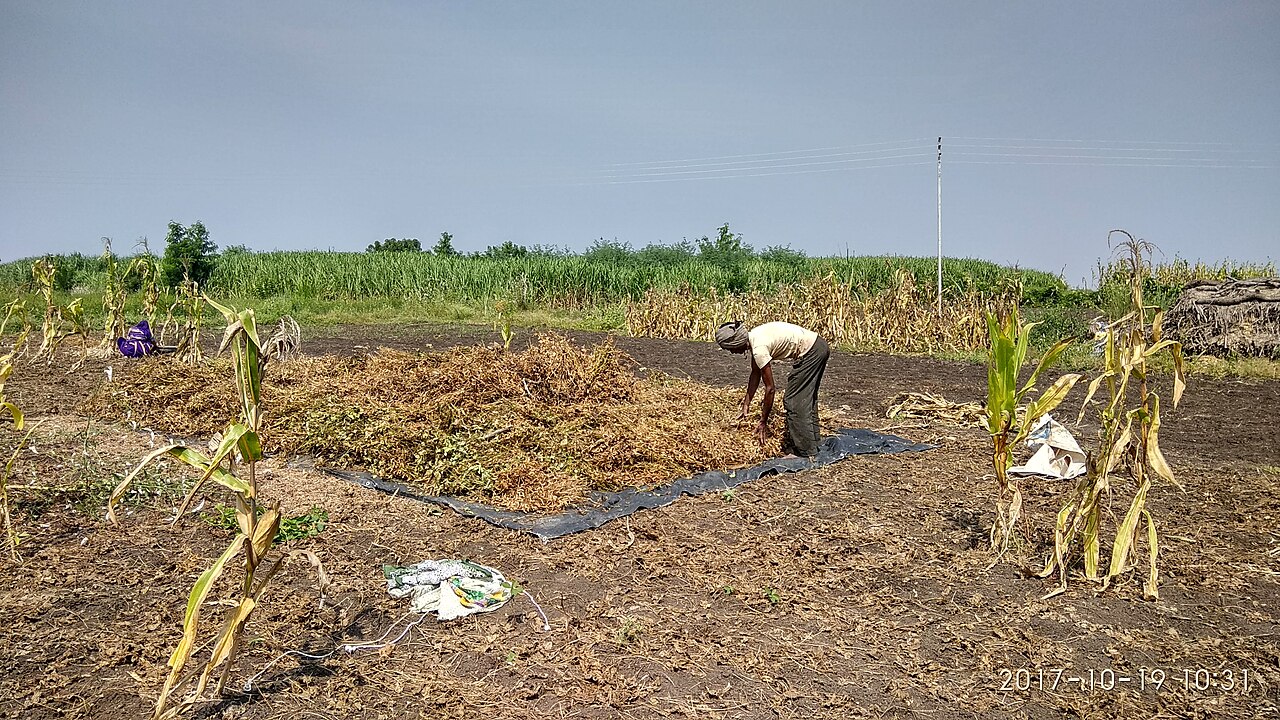
Perilla can be harvested within 70 to 75 days of transplanting. The leaves usually fall when the seed matures; when 80 per cent of the leaves have turned yellow, the seed turns grey and is ready to collect. As the seed is visible from outside, maturity is easy to judge.
Once the seed is mature, cut the plants at the base or pull them up whole, then beat them lightly on a strong jute sack, sturdy polythene or tarpaulin to collect the seed. The yield is 1.3 to 1.5 tonnes a hectare.
Dry the seed well in the sun. When its moisture is 7 to 8 per cent, store it in tin or plastic containers that are airtight, in a cool place that is as dry as possible. It is advisable to keep the containers in contact with the ground.
Researchers hope commercial production of perilla can reduce the country's dependence on edible oil imports. Eating perilla oil would lower health risks, and if cultivation can be expanded through awareness, oil output could rise enough for export.
Source: Jagonews24. First published in Bengali on The Agro News.
Comments
(0)