
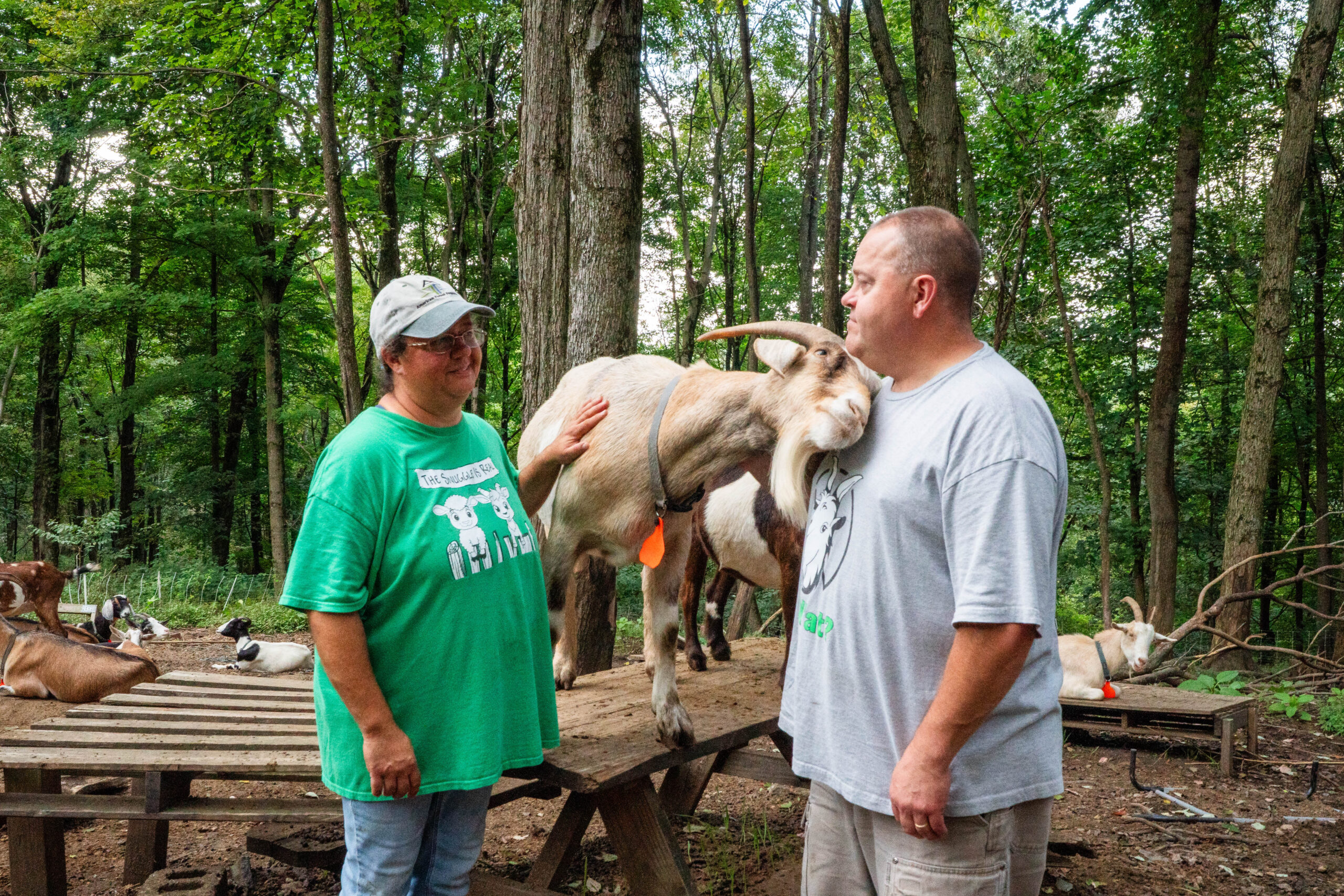
Monica Shields calls it an "accidental business". Her goat farm, Capricious LLC in Clinton, Beaver County, Pennsylvania, now sends eight groups of goats — 115 animals in all — to clear overgrown brush on residential and municipal properties, and its schedule is fully booked until next summer, Farm and Dairy reports.
Shields inherited her family's roughly 62-acre property, in the family since 1908, in 2018 after a car crash and brain injury ended her 15 years of teaching at Duquesne University. A forester advised clearing the brush so that red maple would not replace oak and hickory, and in 2020 she brought in goats, which eat woody brush, weeds and vines. Neighbours soon wanted them too. "If I have a need for goats, maybe others do too," she said.
Most of the goats are rescues or former pets and 4-H projects, across 13 breeds; Shields says dairy crosses clear brush better than meat breeds, which carry more muscle, overheat faster and eat more slowly. The goats are trained on hikes to answer commands and to their names.
From May to October they work across western Pennsylvania and neighbouring Ohio counties, eating invasive species such as Japanese knotweed and multiflora rose, and poison ivy. Each site is fenced with four rolls of solar-powered electric fencing, and the goats get water, hay and a mineral mix because local vegetation is low in selenium and copper. After two goats were killed in accidents at municipal sites, Shields began using cameras.
Kid goats earn extra money at parties, library story hours, nursing-home visits and goat yoga. Shields has also enrolled her woods in the Family Forest Carbon Program for 20 years, receiving payments for promising not to clear-cut, with the trees assessed every five years.
The report was written by Liz Partsch for Farm and Dairy.
Source: Farm and Dairy

Comments
(0)