
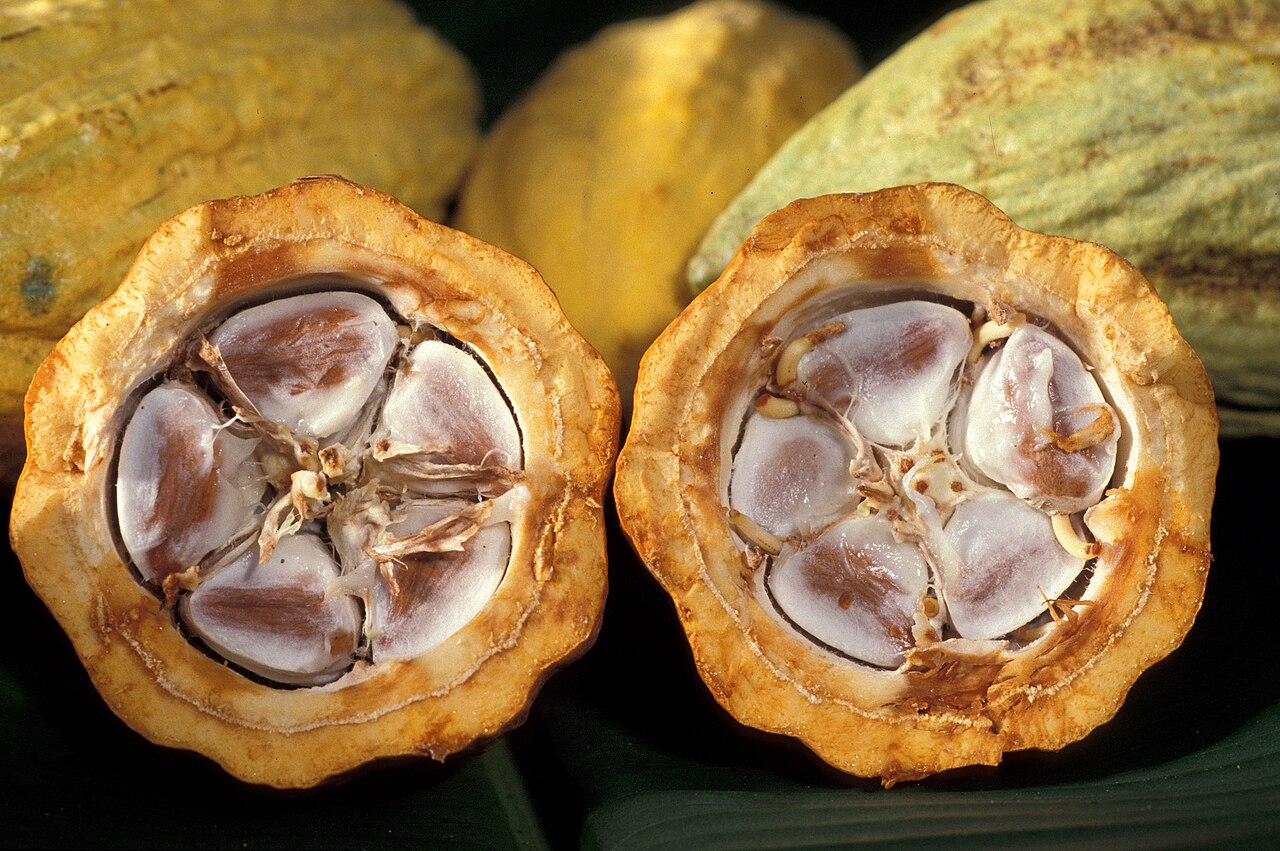
Researchers at Penn State's College of Agricultural Sciences, working with Colombia's agricultural research corporation AGROSAVIA, have identified genetic differences that explain why some cacao trees keep cadmium out of their beans while others let it through. The study is published in the journal Plant and Soil.
Cadmium is a naturally occurring toxic metal in many soils, including parts of Latin America and the Caribbean where cocoa underpins rural economies. Strict import standards have made high-cadmium beans hard to sell, so the question of which trees accumulate less has become a market question as much as a health one.
The team, led by Francisco Menendez-Burns, Paola Delgadillo-Duran, Siela Maximova, Roxana Yockteng, Mark Guiltinan and Albert Istvan, grew two genetically distinct varieties, one known to accumulate little cadmium and one known to take up a lot, in greenhouse conditions with low doses of the metal, tracking growth, stress, water use, photosynthesis and gene activity over months.
Both varieties absorbed cadmium, but the low-accumulating one restricted its movement through the plant and activated genes linked to detoxification and stress management, while the high-accumulating variety showed gene activity that appears to move the metal more freely. The differences clustered in genes for metal transport, hormone signalling, stress response and detoxification.
"By identifying the genes and pathways involved, we can provide breeders with new tools to develop cacao varieties that accumulate less cadmium while preserving the traits growers and consumers value," Maximova said. Follow-up work will look at breeding and biotechnology routes to cut uptake without losing yield, disease resistance or bean quality.
Photo: Keith Weller, USDA ARS / Wikimedia Commons (Public domain)
Source: Farms.com
Comments
(0)