
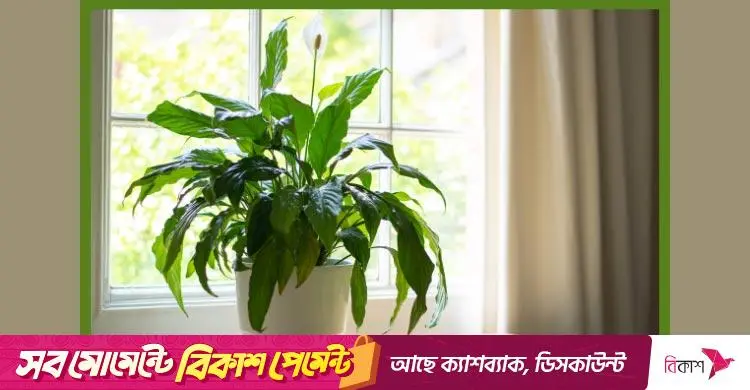
Things whose beauty lies in silence have a language of their own, wordless yet deep. The peace lily is a symbol of just such beauty, and its very name carries a gentle touch of peace. The soft white flowers among its green leaves seem to say that peace never comes by force; it blossoms slowly, deep in the heart.
The peace lily is not only pleasing to the eye; it purifies the air in the home and brings a sense of calm. If you want to decorate your home or find some peace of mind, this plant can be a unique companion. Perhaps that is why its popularity as an indoor plant keeps growing. Here are its features and how to care for it.
Features
The peace lily's scientific name is Spathiphyllum. Despite "lily" in its name, it does not really belong to the lily family. There are about 36 species, with white flowers and long green leaves.
Many people see the white flower as a symbol of peace. The leaves are usually 12-65 cm long and 3-25 cm wide. The peace lily is one of the plants that grow freely in the dim light of a room, and it can grow under artificial light too.
It quietly purifies the air, absorbing harmful substances such as formaldehyde, benzene, xylene and trichloroethane to keep the home healthy. It is also ideal for people who are a little lazy about plant care, as it flowers all year with little attention. Easy as it is, it still needs care.
Light
Like other flowering plants, the peace lily needs sunlight. Indoors, the number of leaves may increase without a matching increase in flowers, so it is better to keep it near a sunny window. If it is kept inside, it should be moved at least one day a week to a place with enough sunlight. It looks good in a corner, beside a divan, next to the stairs or on a plant stand. When it flowers, your home will always have a pleasant scent.
Soil, water and feeding
When preparing the soil, mix garden soil with peat moss, perlite, neem cake and a little sand. This makes the soil light and well drained, lets the roots spread easily and gives the plant enough nutrients to grow. It will also flower sooner.
Unlike many plants, it does not need water every day. Water only when the soil at the base dries out. If dust settles on the plant, spray it with water now and then to keep it fresh and glossy.
The peace lily prefers natural care to chemical fertiliser. Use compost, eggshells, used tea leaves or cow dung manure every 15 days or once a month to keep the plant strong and lively. Growth naturally slows in winter, but there is nothing to worry about.
With sunlight, moderate watering and regular care, the plant will grow normally. There is no need to prune the peace lily, but it is best to cut the stem after the flower dries, because each stem bears only one flower, and it looks poor once withered.
Problems and pests
If the leaves turn brown or begin to dry, the plant is short of water. If it does not grow well or flower regularly, that may be a sign of too little sunlight; move it somewhere with enough light.
If bacterial disease appears, cut off the affected part with scissors so that it does not spread and the rest of the plant is saved. If fungus or insects attack, use organic fertiliser, which strengthens the plant's resistance to disease.
If scale insects, mealybugs or aphids attack, separate the plant from other plants at once. Clean the affected area with water and wipe it thoroughly with neem oil or isopropyl alcohol.
If the plant is in a pot, the pot and soil should be changed at regular intervals so that it keeps growing healthily.
A caution: the leaves and stems of the peace lily contain calcium oxalate, which can cause burning in the mouth and throat if eaten. If there are small children at home, keep the plant out of their reach.
Source: Jagonews24. First published in Bengali on The Agro News.
Comments
(0)