
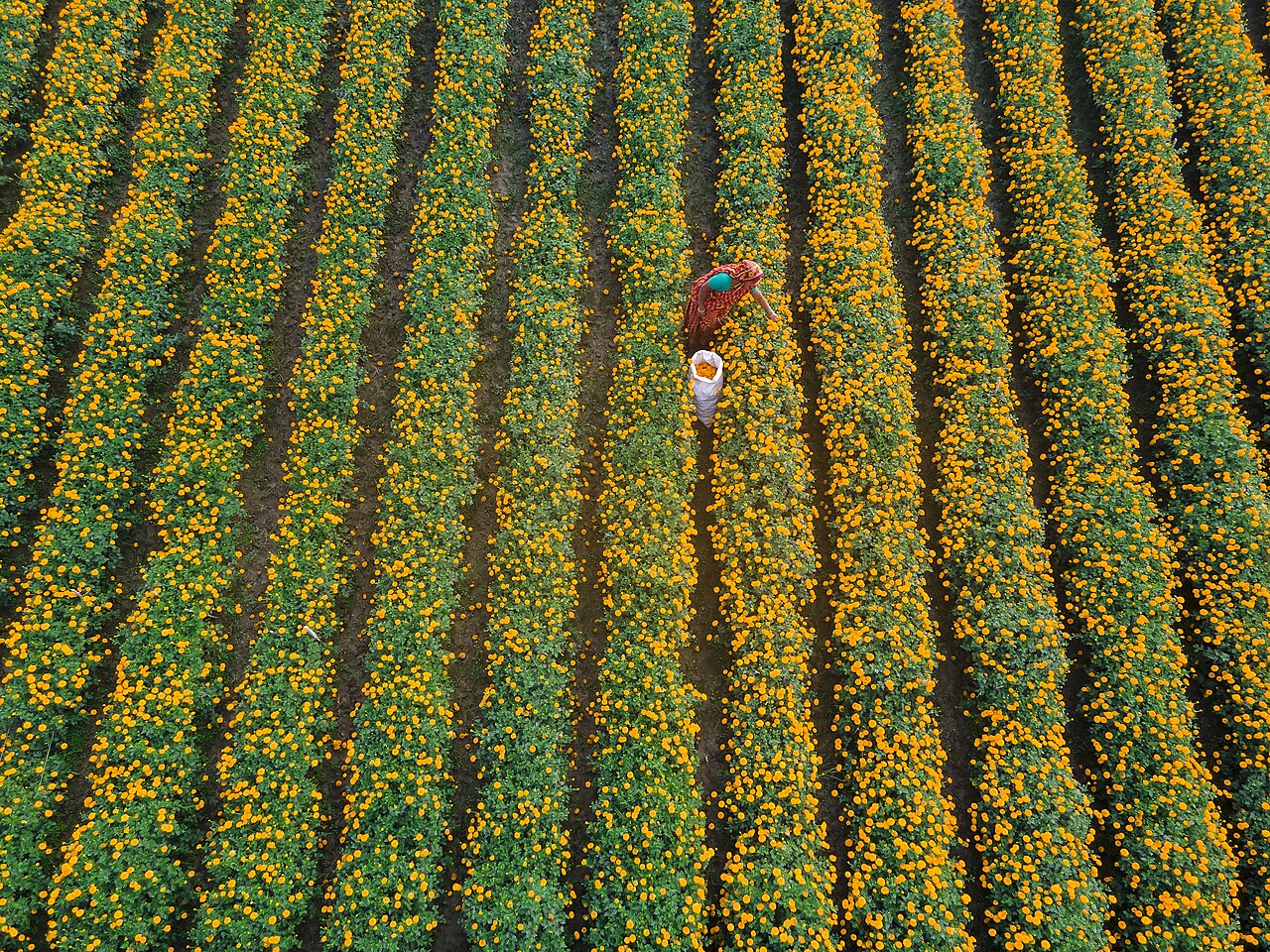
Ahead of winter, the fields of Godkhali and Panisara unions in Jashore's Jhikargachha upazila are turning colourful with roses, gerbera, marigold, gladiolus and tuberose. Growers and the agriculture department hope the area will sell Tk 100 crore worth of flowers this season.
Flowers are grown on about 6,000 hectares in 75 villages of Jhikargachha and Sharsha, involving about 7,500 farmers. Jhikargachha upazila agriculture officer Masum Hossain Palash said about 6,500 hectares in Jashore carry 15 kinds of flowers. As in recent years, growers have planted tulips and lilium again this season.
Commercial flower farming in Bangladesh began here. In 1983 the late farmer Sher Ali Sardar planted tuberose on 30 decimals of land in Godkhali. Today wholesale buyers from across the country come to the Godkhali market, so growers do not have to travel far to sell.
Growers say a single rose fetches Tk 5 to 8 at the wholesale market, gladiolus Tk 10 to 15, gerbera Tk 8 to 10 and tuberose Tk 6 to 8. A hundred chrysanthemums sell for Tk 150 to 200 and a thousand marigolds for the same. Prices move with demand and output. Growers plan their extra sales around Victory Day, the English new year, 21 February and Valentine's Day.
Costs have climbed, however. Ramjan Ali of Saidpara village said wages, seedlings, fertiliser and pesticide all cost more this year. By the reckoning of another grower, Abdur Rahman, an acre of gerbera costs Tk 38 lakh, roses Tk 5 lakh, gladiolus Tk 4.5 lakh, tuberose about Tk 3 lakh and marigold about Tk 2.5 lakh. He alleged that a syndicate of the flower market's leaseholders sometimes unsettles prices, and asked the administration to step in.
Growers and traders say the climate suits flowers, but the blooms stay fresh for less time than those of other countries. They want farm loans on special terms, like those for spice farming, and subsidies for growing technology. According to the report, nearly all the flowers Bangladesh needed were imported before the 1990s; home-grown flowers now meet about 70 percent of demand.
Photo: Muhammad Amdad Hossain / Wikimedia Commons (CC BY-SA 4.0)
Source: Krishi Shomoy

Comments
(0)