
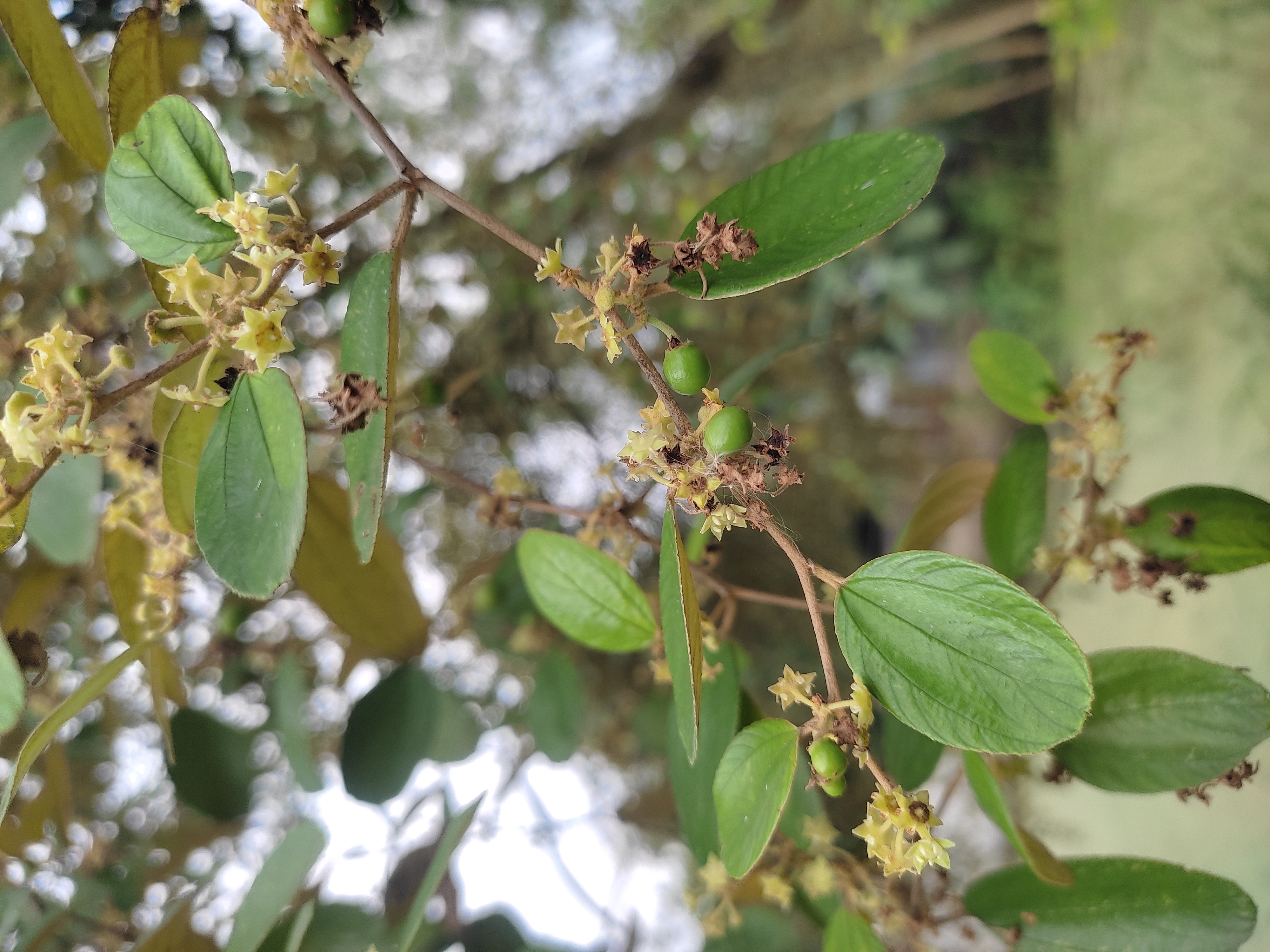
A woman in Guabaria village of Marichbunia union, Patuakhali Sadar upazila, built a jujube orchard on fallow land beside the river in front of her house and became self-reliant through it, the Bengali news site Jagonews24 reported on 15 January 2026. Taslima Begum, as the report names her, was inspired to start after she went to buy jujubes (boroi, also called kul) at an orchard in a neighbouring village. By the time of the report her orchard was in its third fruiting season, the trees were laden with fruit, and the local agriculture office said the area under jujube in the upazila had grown from 36 to 40 hectares in a year.
From buying fruit to planting an orchard
According to the report, about three years earlier Taslima Begum had gone to buy fruit at a jujube orchard in Peyarpur, the village next to hers, and was taken with how good the orchard looked and how heavily it bore. She later went back with her husband to walk round it, and came away wanting to grow jujubes herself. In front of her house, on the bank of the river, lay a piece of her own land that had been left unused. She decided to put it to work and planted an orchard on 20 decimals of that fallow land.
She brought about 200 jujube grafts from Jashore, of several varieties including Thai apple kul, Kashmiri apple kul and Ball Sundari, and planted them. With regular care the orchard began to bear fruit within a single year, the report said. Recovering the cost took a while in the first year, but from the second year she began to make a profit, and in the third season, current at the time of the report, she expected that once all the fruit was sold the whole sum would be profit.
The Jagonews24 correspondent who visited the orchard described rows of medium-sized trees with clusters of jujubes of different varieties hanging from them. Because the orchard stands beside the road, it catches the eye of passers-by. Its boundary was fenced with bamboo and netting so that birds and other animals could not damage the fruit.
Taslima Begum's husband works in Dhaka and her son is a migrant worker in Saudi Arabia, the report said. She too used to live in Dhaka for work, but now lives in the village and looks after the orchard herself. According to the report, her success had made many people nearby keen to grow jujubes as well.
Costs and earnings, in her own words
The figures on the orchard's costs and income are Taslima Begum's own, as she gave them to Jagonews24. "At first I brought in saplings for the equivalent of one bigha and planted them," she told the site. "With fertiliser, pesticides and care, the trees grew big within a few months. The profit was low in the first year, but in the second year I made a profit of about one lakh taka. I hope to sell about one and a half lakh taka worth of jujubes this year. This season the cost has been only Tk 20,000; the rest will all be profit."
She explained why she found the crop worth growing. "Jujube farming costs a bit more in the first year, but afterwards there is not much cost," she said. "Once the saplings are planted you don't have to plant again, and the same tree gives fruit again and again. Jujubes are now selling at Tk 200 a kg. I expect an average of 20 to 25 kg of fruit from each tree."
Her neighbour Nasrin Begum told the site that she had watched the orchard from the start. "Since the trees were planted two years ago, I have seen her take great care of them," she said. "The jujubes from her orchard are very sweet. We see the orchard with our own eyes and then buy the fruit. Now, following her example, many in our area have started growing jujubes."
Her account of a heavy first-year outlay followed by low running costs matches what horticultural references say about the crop. Banglapedia, the national encyclopedia of Bangladesh, notes in its article on jujube that improved trees are propagated by budding and grafting, and that pruning, not replanting, renews the bearing wood each year: the fruit is borne on newly emerged branches, so the trees are cut back after the harvest and grow fresh shoots for the next season.
Jujube in Patuakhali Sadar: the official figures
The Patuakhali Sadar upazila agriculture office told Jagonews24 that Patuakhali district is known for rice and mung bean, but that alongside rice, cash crops such as watermelon, jujube and mung bean were becoming steadily more popular in the upazila. In the previous fiscal year the office had set a target of 36 hectares of jujube for Patuakhali Sadar; in the fiscal year current in January 2026 the area had risen by 4 hectares to 40 hectares. According to the office, the average yield was more than 11.33 tonnes per hectare, bringing total production in the upazila to about 453 tonnes.
Upazila agriculture officer Md Nazmul Islam Mazumder told the site: "Last year jujubes were grown on 36 hectares in the upazila, and this year that has risen to 40 hectares. Various improved varieties are being grown, including apple kul, BAU kul and Ball Sundari. We have made plans to expand jujube farming further by encouraging farmers."
The office's yield figure sits at the upper end of the range given in reference works. Banglapedia's jujube article, written by M A Rahim, puts the yield of a jujube orchard at 8 to 12 tonnes per hectare. The rise from 36 to 40 hectares in Patuakhali Sadar was small beside the areas recorded in older jujube districts: in 2019 the Department of Agricultural Extension (DAE) in Satkhira said jujube was grown on around 620 hectares in that district's seven upazilas, and in 2021 the DAE in Rangamati put the district's jujube area at 760 hectares.
Patuakhali Sadar and Marichbunia
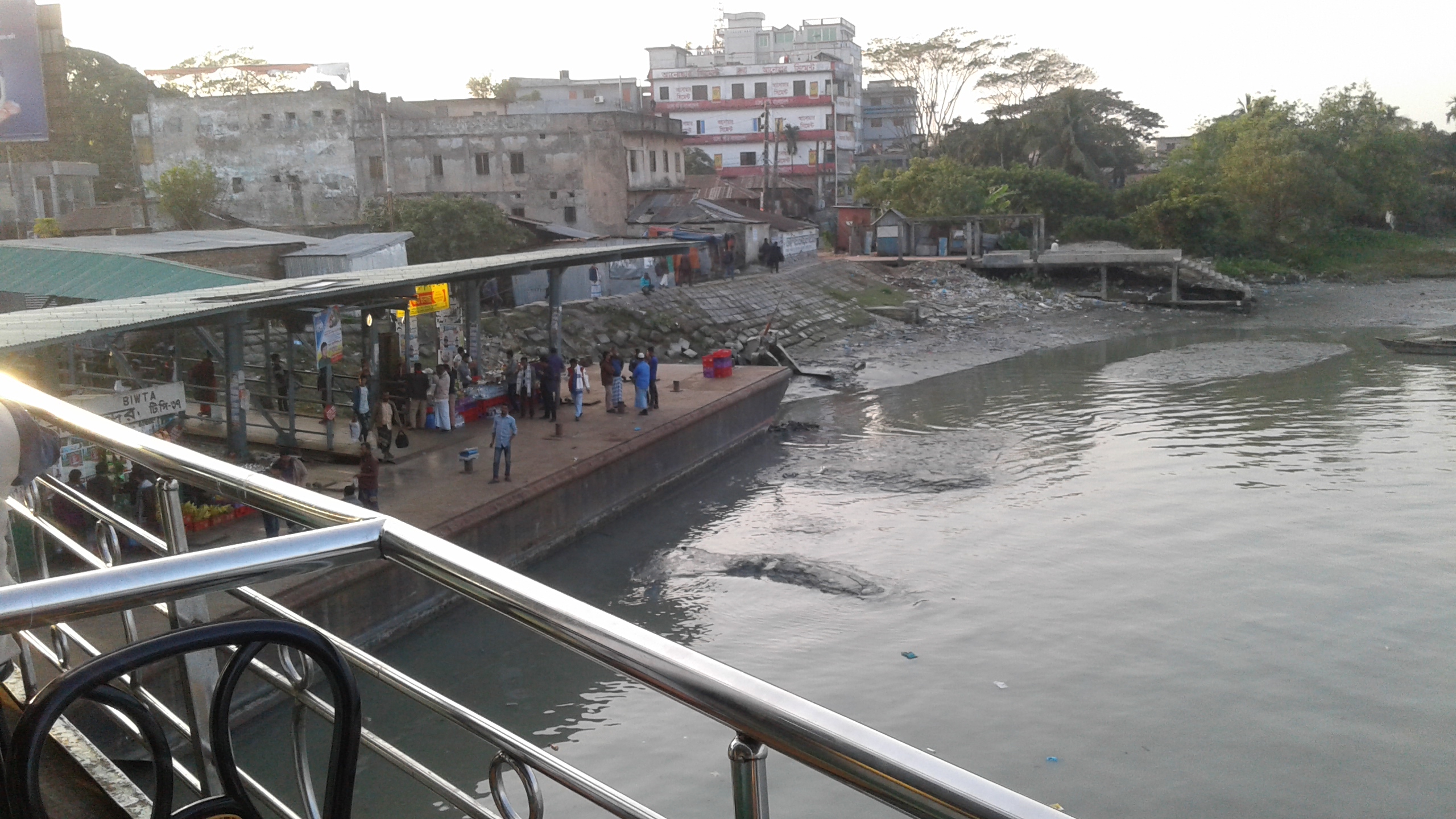
Patuakhali Sadar is the headquarters upazila of Patuakhali, a coastal district in Barishal division. Banglapedia gives the upazila an area of 362.46 square kilometres, bounded by Dumki upazila to the north, by Galachipa, Amtali and Barguna Sadar upazilas to the south, by Bauphal and Galachipa to the east and by Mirzaganj to the west. Its main rivers are the Burishwar, the Galachipa, the Rajganj and the Patuakhali. Patuakhali thana was formed in 1871 and became an upazila in 1983; the upazila has one municipality and 12 unions, one of which is Marichbunia, the union in which Guabaria village lies.
Farming is the main living in the upazila. Banglapedia, drawing on census data, records agriculture as the main source of income for 45.44 per cent of households, with commerce at 16 per cent and service at 13.55 per cent, and it lists the main crops as paddy, varieties of pulse and vegetables, and the main fruits as coconut and palm. Jujube does not appear in that older list, which is why the agriculture office's account of a crop spreading across the upazila was news. For the district as a whole, Banglapedia records agriculture as the main source of income for 57.05 per cent of households.
The district itself, with an area of 3,221.31 square kilometres, is bounded by Barishal district to the north, the Bay of Bengal to the south, Bhola to the east and Barguna to the west. Its land, Banglapedia says, is made up of alluvial soil of the Meghna basin and a number of small char lands. Patuakhali, once a sub-division of Bakerganj district, became a district in 1969. The district is home to Patuakhali Science and Technology University, founded in 2001, and to Kuakata, the sea beach on the southern tip of Kalapara upazila.
What the jujube is
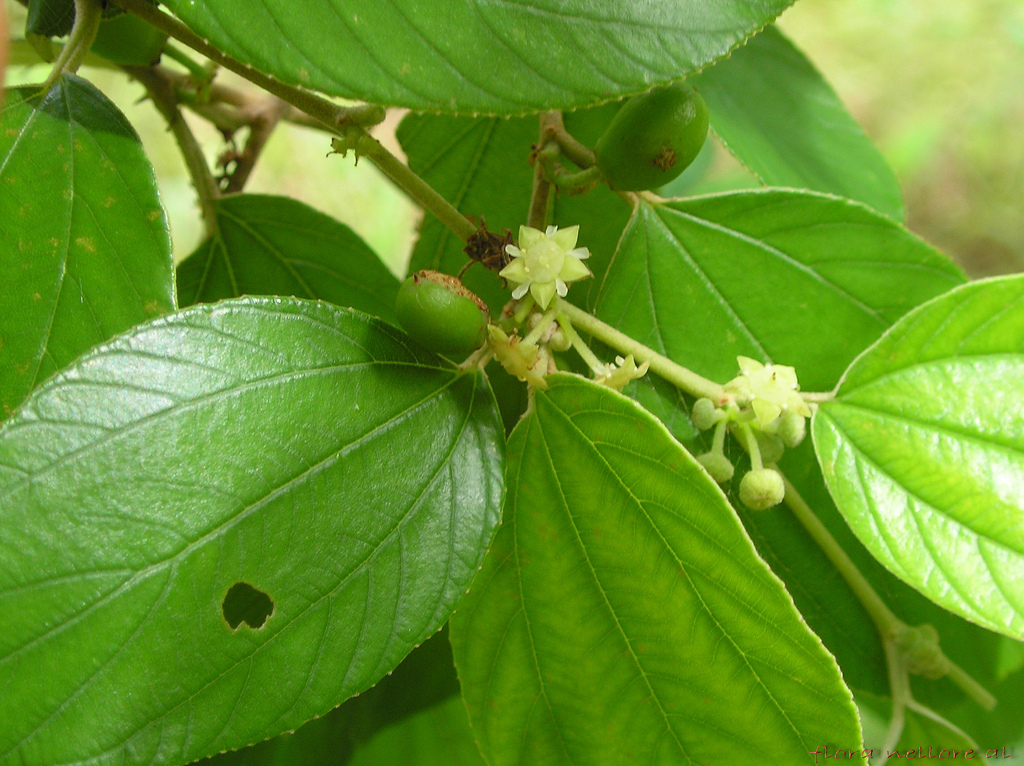
The jujube grown in Bangladesh is Ziziphus mauritiana, known in English as the Indian jujube or Indian plum and in Bengali as boroi or kul. It belongs to the buckthorn family, Rhamnaceae. Banglapedia explains that the genus Ziziphus has about 40 species, of which two are cultivated: Z. mauritiana, the Indian jujube, and Z. jujuba, the Chinese jujube. The Indian species is the one suited to tropical and subtropical climates, while the Chinese species prefers temperate ones.
Banglapedia traces the jujube's origin to northern India, south-western China and the interior of Malaysia, and notes that it is also grown in the dry regions of Africa and the Americas. It describes the jujube as a hardy plant that grows in a wide range of environments, tolerates drought and is grown up to 1,000 metres above sea level. Dry, hot weather suits it, and while it can grow on almost any soil, heavy and slightly alkaline soils are best. Botanical references add that the tree develops a fast-growing taproot, an adaptation to drought, and that it can stand both rather dry and waterlogged conditions; deep sandy loam to loamy soils with a neutral or slightly alkaline reaction are considered best for growth.
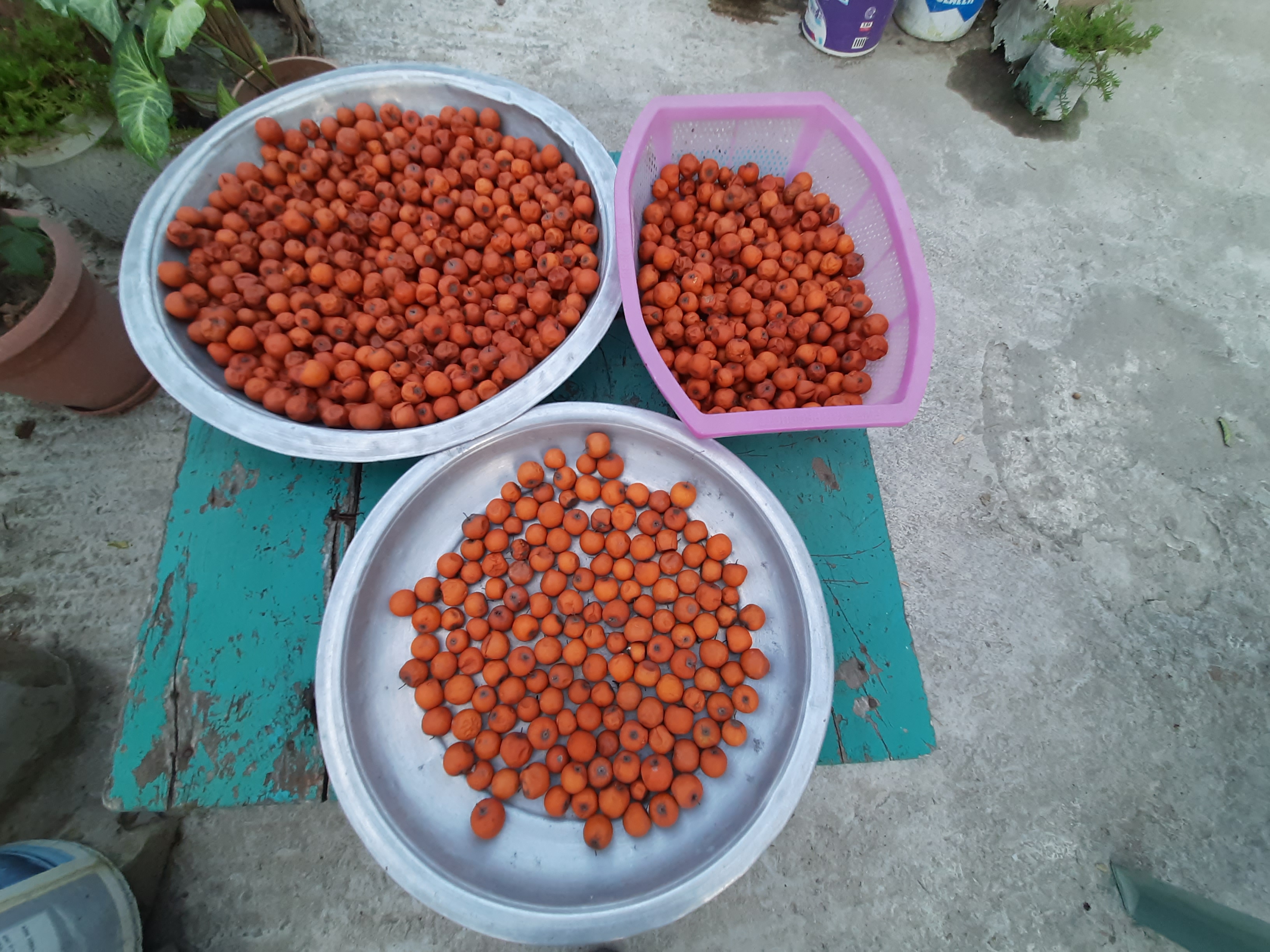
The flowers are tiny and yellowish, with five petals, and sit in the axils of the leaves. They depend on insects, such as honeybees, wasps and houseflies, for cross-pollination; because the flowers are protandrous, with the male parts maturing first, a tree cannot reliably pollinate itself. The fruit is a drupe with a single stone. Unripe fruit has light green skin and crisp white flesh; as it ripens the skin turns yellow and then reddish brown. Banglapedia notes that yellowing is the sign of ripening.
The varieties in the orchard
Bangladesh has its own improved jujube varieties, and growers also plant varieties brought from India. Banglapedia lists BAU Kul 1 and 2, BARI Kul 1 and 2, Narkeli, Sabzi and Apple among the popular varieties. Narkeli kul has elongated, spindle-shaped fruit with a small seed and sweet flesh, and is grown mainly around Satkhira and Rajshahi. Comilla kul, grown around Kachua, Barura and Chandina in Cumilla, is known locally as dab kul because its shape recalls a green coconut.
BAU Kul 1 was developed by the Germplasm Centre of Bangladesh Agricultural University (BAU-GPC), and Banglapedia describes it as the most popular variety. It is grown all over the country, including the saline areas of Bagerhat and Satkhira, the sandy areas of Saint Martin's Island, Sonadia Island and Cox's Bazar, and the hill districts of Khagrachhari and Rangamati. Its fruit weighs 90 to 250 grams, its sweetness measures 18 to 21 on the total soluble solids (TSS) scale, and the seed takes up only 3 to 4 per cent of the edible portion. The plants are spineless and quick-growing, and bear fruit within four to five months of planting. BAU Kul 2, also called Shah Kul and also from the BAU Germplasm Centre, is a dwarf variety with fruit of 100 to 200 grams and sweetness of 19 to 25 TSS. Apple kul, Banglapedia says, has attractive apple-like fruit that is crisp and sweet, grows fast, and drops less fruit.
Two of the varieties Taslima Begum planted came to Bangladesh from India more recently. When a farmer in Faridpur Sadar first grew Kashmiri apple kul in 2019, The Daily Star reported in February 2020 that the variety had a reddish blush over light yellow or green skin, and quoted the DAE's deputy director in Faridpur as saying it was larger and tasted better than other large varieties available in the country, such as BAU kul and Thai kul. That farmer had brought his saplings from India and began multiplying them by budding as other farmers asked for plants. Ball Sundari, the third variety in her orchard, was by then grown in several districts: The Daily Star listed it among the varieties cultivated in Rangamati in 2021, and on 13 January 2026, two days before the Patuakhali report, the news agency UNB described Shikarpur village in Barura upazila of Cumilla as a hub for Ball Sundari, Bari Sundari and Kashmiri jujube.
Jashore, where her grafts came from, has a long record with the crop. The Daily Star reported in 2017 that jujube cultivation was on the rise in Sharsha upazila of Jashore, beside the Indian border, where the upazila agriculture office counted around 500 orchardists and around 120 hectares under different types of jujube, and where truckloads of the fruit left for Satkhira, Barishal and the wholesale markets of Dhaka.
How the crop is grown and protected
Banglapedia's article sets out the main steps of jujube cultivation as practised in Bangladesh. Jujube can be raised from seed, but the hard seed coat has to be kept in hot sand for about two months before the seed will germinate, in four to eight weeks. Budding and grafting are now the widely used methods, and cleft grafting has become the most popular. A grafted plant of this kind, called kolom in Bengali, is what Taslima Begum bought.
- Planting: jujube can be planted all year round, but March to May is the best time; deep loamy or fertile soil suits it best, and each plant goes into a pit 75 to 100 centimetres wide and deep, prepared in advance with well-rotted cow dung, oil cake and fertiliser. The amounts for a given field are best taken from the upazila agriculture office.
- Water: irrigation is needed after fertiliser is applied; the orchard must drain well in the rainy season, and light irrigation is needed in a drought.
- Pruning: the fruit is borne on newly emerged branches, so pruning is essential. Shoots arising below the graft union are removed, and after the harvest, generally at the end of March, the branches are cut back to a height of 3 to 5 feet, with the cut surfaces sealed with coal tar.
- Hygiene: no wild jujube plants should be allowed near the orchard, because they harbour diseases and pests such as powdery mildew and fruit fly.
- Intercrops: potato, sweet potato, chilli, leafy vegetables, garlic, ginger and turmeric can be grown between the trees.
- Harvest: yellowing shows that a fruit is ripe, and picking is done in rounds so that each fruit is taken at the right stage.
The same article lists the pests and diseases growers face. Fruit fly damages ripe fruit, and the fruit borer eats the flesh and sometimes the seed. Lac insects feed on young leaves, and whitefly can become a serious problem. Powdery mildew and fruit rot attack the crop, and sooty mould, which blackens the leaves and hampers photosynthesis, had become a serious problem in the orchards. Control measures and doses vary with the product and the stage of the crop, and growers are advised to follow the upazila agriculture officer's recommendation.
Taslima Begum's bamboo and net fence answers another hazard: birds and animals that take the fruit as it ripens. Growers elsewhere have reported a further loss. In Jashore's Sharsha upazila, The Daily Star reported in 2017, orchardists said a considerable amount of fruit was lost by falling from the tree early, and that they lacked good advice on how to prevent it.
Nutrition and uses
The Food Composition Table for Bangladesh, published in 2013 by the Institute of Nutrition and Food Science of the University of Dhaka with the support of the National Food Policy Capacity Strengthening Programme, gives the nutrient content of raw jujube (boroi). Per 100 grams of the edible portion it lists:
- energy: 60 kilocalories
- water: 84.3 grams
- protein: 1.9 grams
- fat: 0.2 grams
- carbohydrate: 12.6 grams
- potassium: 354 milligrams
- calcium: 14 milligrams
- iron: 0.8 milligrams
- vitamin C: 66.1 milligrams
The same table puts the edible portion of the fruit at 0.85, meaning that 85 per cent of a jujube's weight as bought is eaten and the rest is stone. Banglapedia notes that the fruit is eaten fresh and is also made into jam, jelly, chutney, pickles and juice, and that lac is produced on jujube trees with the help of the lac insect.
Banglapedia notes that the harvest generally ends by the end of March, after which the trees are pruned for the next season. In mid-January 2026, Taslima Begum said her fruit was selling at Tk 200 a kilogram, well above the prices growers in other districts had reported in earlier years.
Earlier jujube stories from other districts
Patuakhali was a newcomer to a crop that had been spreading through Bangladesh for years. Newspaper reports from other districts, published before the Patuakhali story, show the same pattern of small plots, quick returns and neighbours following the first grower.
- Jashore, March 2017: The Daily Star reported that jujube orchards in Sharsha upazila were expanding, with the first harvest coming as soon as four months after an orchard was set up. One orchardist said the fruit was selling at about Tk 50 a kilogram and that growing it cost around Tk 30,000 a bigha.
- Satkhira, February 2019: Prothom Alo reported that the district's DAE counted around 620 hectares of jujube in seven upazilas, with Baukul, Apelkul and Narkelkul among the popular varieties; jujube was selling in the district town at Tk 100 to 150 a kilogram, and DAE officials said talks were under way with exporters to send the fruit to Denmark and the Middle East.
- Faridpur, February 2020: The Daily Star reported a farmer's first crop of Kashmiri apple kul on seven bighas in Hat Gobindapur village of Faridpur Sadar, sold at Tk 80 a kilogram to buyers who collected it from the orchard.
- Rangamati, February 2021: The Daily Star reported that jujube sold at Tk 120 to 150 a kilogram in local markets, and that the DAE had brought 760 hectares in the district under the crop with a production target of 7,600 tonnes.
- Cumilla, January 2026: UNB reported that jujube farming in Shikarpur village of Barura upazila had begun four years earlier with one pioneering grower, and that a DAE deputy assistant agriculture officer said the crop then covered 20 acres in the village and was spreading to neighbouring villages.
As in Shikarpur, where the DAE officer said other farmers took up the crop after seeing the first grower's success, the Patuakhali report described neighbours planting jujubes after watching Taslima Begum's orchard, and the upazila agriculture officer said the office planned to expand the crop further by encouraging farmers.
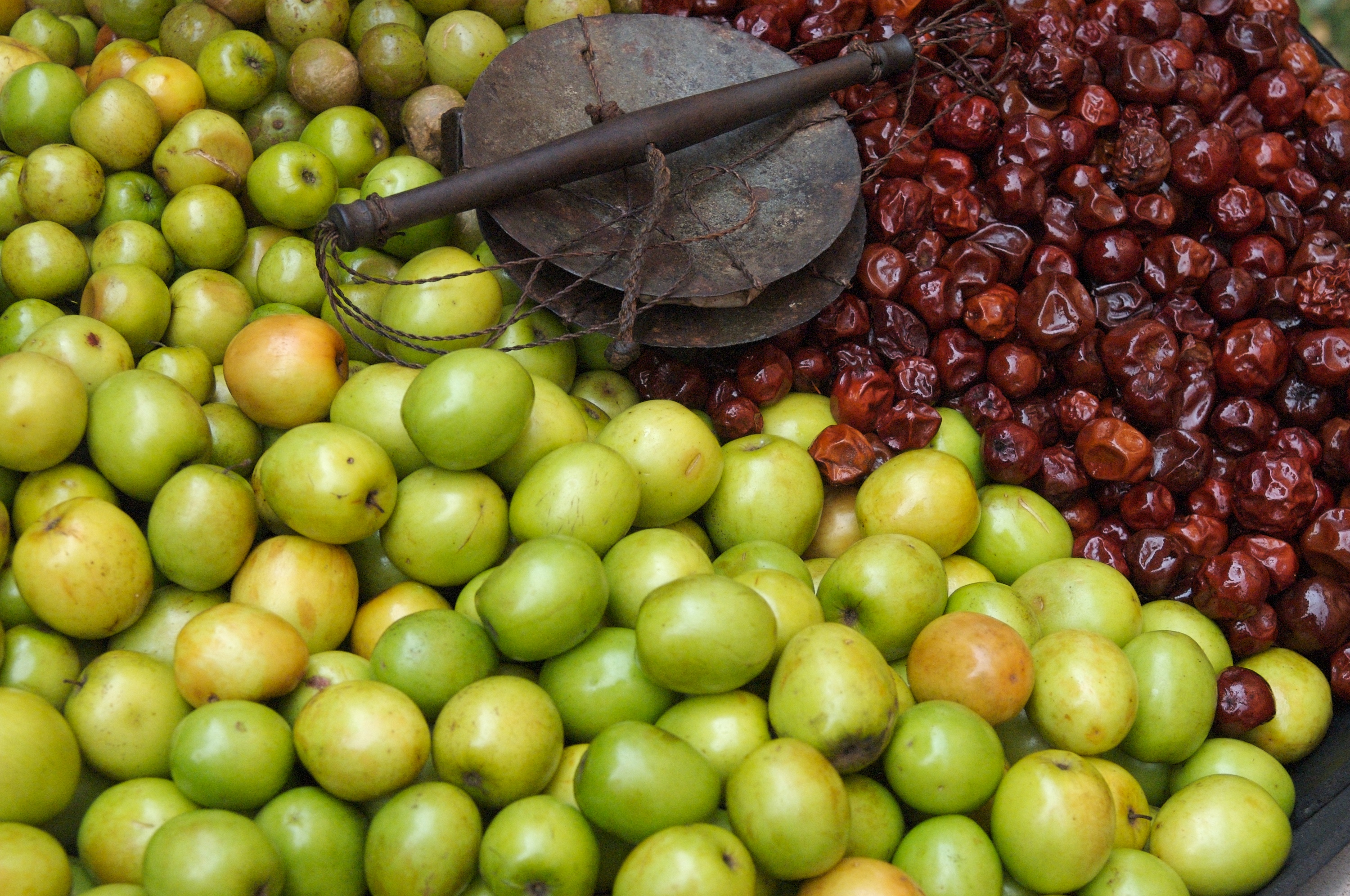
Photo: Tanvir Rahat / Wikimedia Commons (CC BY-SA 4.0)
Sources: Jagonews24, Banglapedia (Jujube; Patuakhali District; Patuakhali Sadar Upazila), Food Composition Table for Bangladesh (Institute of Nutrition and Food Science, University of Dhaka, 2013), The Daily Star, Prothom Alo, UNB
Comments
(0)