
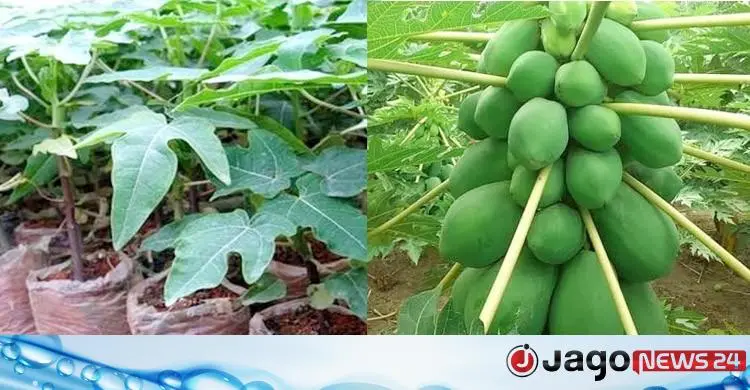
Papaya is a highly nutritious and profitable crop that starts to bear fruit within just 8 to 10 months. The best time to plant papaya seedlings is spring, though seedlings can also be planted at the start of the monsoon (Asar–Srabon, or June–July). Here are the rules for planting papaya seedlings.
Raising seedlings
Seedlings raised in polythene bags grow quickly after transplanting. Fill 15-10 cm bags with an equal mix of sand, soil and rotted cow dung, and make 2–3 holes in the bottom of each bag. Sow one seed per bag if the seed is freshly collected, or 2–3 if it is old. Do not keep more than one seedling in a bag. Spraying 1–2% urea on seedlings 20–25 days old makes them grow faster.
High and medium land is best for papaya. With proper care, papaya can be grown in almost any type of soil.
When and how to plant
The best time to plant is spring or the pre-monsoon period (Falgun–Chaitra, or February–April). Seedlings can also be planted at the start of the monsoon, in Asar–Srabon or June–July, but care must be taken that water does not collect at the base of the plants during heavy rain.
With seedlings planted 2 metres apart in each row, 7,500 seedlings are needed for 2,500 plants on one hectare. With fresh seed, 140–160 grams is enough to raise the required seedlings. Seedlings are planted at one and a half to two months old. Dig pits of 60 x 60 x 60 cm, 2 metres apart, and mix fertiliser into the pit soil 15 days before planting. Keep a 50 cm drain between every two rows for drainage.
Fertiliser per plant
Each papaya plant needs, in grams:
- urea 450–550, TSP 450–550 and MoP 450–550
- gypsum 245–250, borax 20–30 and zinc sulphate 15–20
- organic fertiliser 12–16
Care after planting
Three seedlings can be planted in each pit. When they flower, keep one female plant and remove the rest. Ten per cent male plants are kept in the orchard for pollination. Once fruit set looks certain, keep one fruit per stalk and pick off the rest. Tie the plants to bamboo stakes so storms do not break them, and make sure water drains through the channel between rows. Controlled pollination keeps the variety pure.
Source: Jagonews24. First published in Bengali on The Agro News.
Comments
(0)