
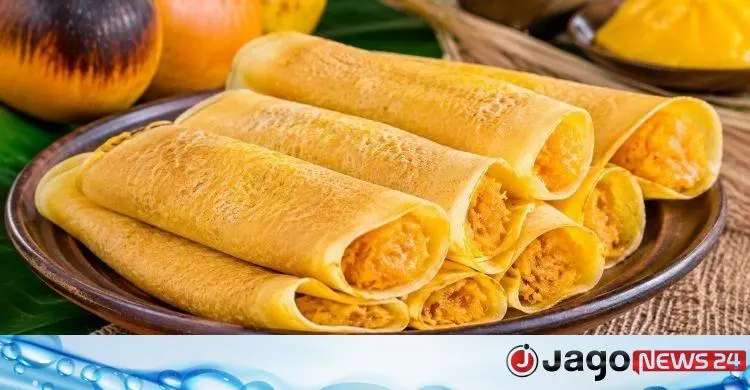
Ripe palmyra palm fruit (tal) starts to appear in markets at the end of the monsoon. It is used for everything from tal fritters to many kinds of sweets, but tal patishapta can be something a little different. The soft crepe, the light sweetness of palm and the coconut filling together make a delicious pitha. Here is the full recipe for making it easily at home.
The filling
Put grated coconut and date jaggery in a pan and stir over a medium heat. When the jaggery melts and blends well with the coconut, add a little milk. Then add cardamom powder and cook a while longer. When the filling turns sticky, turn off the heat and let it cool. If you like, the filling can also be made with palm: simply cook palm pulp with the jaggery and coconut.
The batter
In a large bowl, mix rice flour, plain flour and semolina. Add the strained palm pulp and milk and mix well. Add water little by little as needed to make a thin batter.
If the batter is too thick the patishapta will not be thin, and if it is too runny it may be hard to roll. Keep it at a consistency that spreads easily when poured on the pan. Cover the batter and leave it for 15 to 20 minutes.
Cooking and serving
Heat a non-stick or flat pan over a medium heat and grease it with a little oil or ghee. Pour a ladle of batter into the middle and quickly spread it thin in a circle. When the top dries and the underside is lightly cooked, place a spoonful of coconut filling along the middle, fold in both sides and roll it up.
Make the rest of the patishapta the same way with the remaining batter and filling. Tal patishapta tastes best served hot, and you can drizzle a little date jaggery on top. It goes well with milk or as an afternoon snack.
Strain the palm pulp thoroughly so that no fibres stay in the pitha and the batter is smooth. Too much palm in the batter can make the patishapta break, so watch the quantity the first time you make it.
Source: Jagonews24. First published in Bengali on The Agro News.



Comments
(0)