
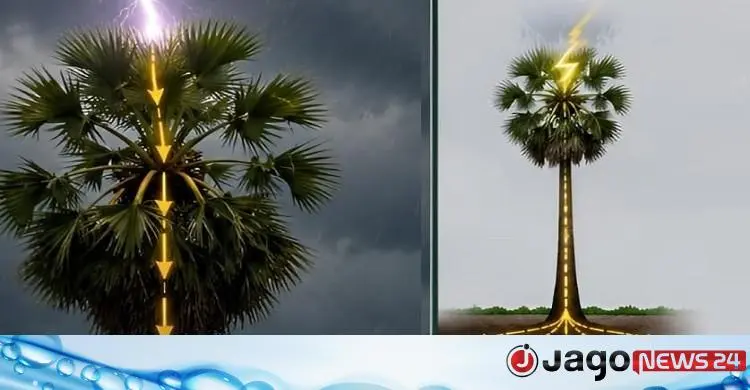
Every year lightning kills many people in Bangladesh. Farmers working in the fields, fishermen, day labourers and people moving through open spaces in rural areas are most at risk. Experts believe the intensity and frequency of lightning have increased in recent years because of climate change, so protection from lightning is now not just a matter of awareness but an important part of saving lives.
Against this background, the palm tree is a unique gift of nature. Researchers and environmentalists believe the palm not only maintains environmental balance but also plays an important role in reducing the risk from lightning. This familiar tree of rural Bengal is once again being discussed as a "natural lightning conductor".
How palm trees draw lightning
Palm trees usually grow very tall, often taller than the trees or structures around them. Lightning generally strikes tall objects, and a palm tree can carry the lightning current through its body deep into the ground, so people and smaller plants nearby may be comparatively safer.
Scientifically, when lightning occurs, the electric charge built up in the sky quickly seeks a path to the ground. Tall, straight trees create an easy route for that charge, and the palm's structure helps carry the electricity into the soil. Palm trees were once plentiful along roadsides, in open fields and in villages across the country, but their numbers have fallen over time. Many believe this has increased the risk from lightning as well as upsetting the natural balance.
Besides palms, some other tall trees such as coconut, betel nut and banyan can also give partial protection. The banyan's widespread roots reach deep into the soil, which can help conduct electricity. But the height and structure of the palm make it particularly effective.
Coconut and betel nut trees are more common in coastal areas. They also grow very tall and can take lightning into their bodies. But these are not a "guaranteed safety system"; they are part of nature's own resistance.
Never shelter under a tree
Many people wrongly think they will be safe sheltering under a large tree during lightning. In reality this is extremely dangerous: if lightning strikes the tree directly, the current spreads out and people beneath it can be seriously injured or killed.
Experts say you should never stand under a palm, coconut, banyan or any other tall tree during lightning. The heat of a strike often splits the tree, brings down branches or starts a fire, so moving to a safe shelter is the best course.
Some important rules help keep you safe from lightning:
- Get to safe shelter quickly. As soon as lightning starts, go inside a brick house or safe building as fast as possible, and avoid open fields, rivers, haors and high ground.
- Stay away from mobile phones and electrical connections. It is best not to use electrical appliances during lightning; keep away from televisions, fridges, computers and corded phones.
- Do not shelter under trees. This is the most important precaution, as large trees can attract lightning, so standing or sitting under them is dangerous.
- Stay out of the water. Bathing or fishing in rivers, ponds or canals during lightning is extremely risky.
- Crouch low if you are in a field. If you are caught in an open field, crouch down with both feet together, but do not lie flat on the ground.
Culture, food and the environment
The palm is not only about lightning protection; it is also an important part of rural culture. It appears many times in Bengali poetry, songs and folk tradition, and rows of palms along village roads were once a very familiar sight. Palm fruit is popular as a nutritious food, used to make pitha, payesh, bora and various other dishes. Palm leaves were used to make hand fans, roofing and many household items. In other words, the palm matters for the environment, the economy and culture alike.
Palm trees are also very good for the environment. They absorb carbon dioxide from the air and supply oxygen. Planting trees is one of the most effective ways to fight climate change, and because palms are long-lived they help maintain environmental balance for many years. Palms also prevent soil erosion, help reduce wind speed during storms and play an important role in protecting rural biodiversity.
Although villages once had plenty of palm trees, their numbers have fallen sharply. Among the reasons are unplanned urbanisation, road widening, changes in farmland, people's preference for fast-fruiting trees and a long-standing reluctance to plant palms. Palms take a long time to grow, so many prefer to plant other trees for quick profit. But in the long term, the palm's environmental and safety value is far greater.
What needs to be done
To reduce the risk from lightning, the government, local administrations and ordinary people must work together. Large-scale palm-planting programmes could be taken up, especially in rural areas. Planting palms in a planned way at schools and colleges, along roadsides, in open fields and around farmland will bring benefits in future. Public awareness of lightning must also be raised. If local government bodies, the agriculture department and environmental organisations work together, a "green protective belt" can be created.
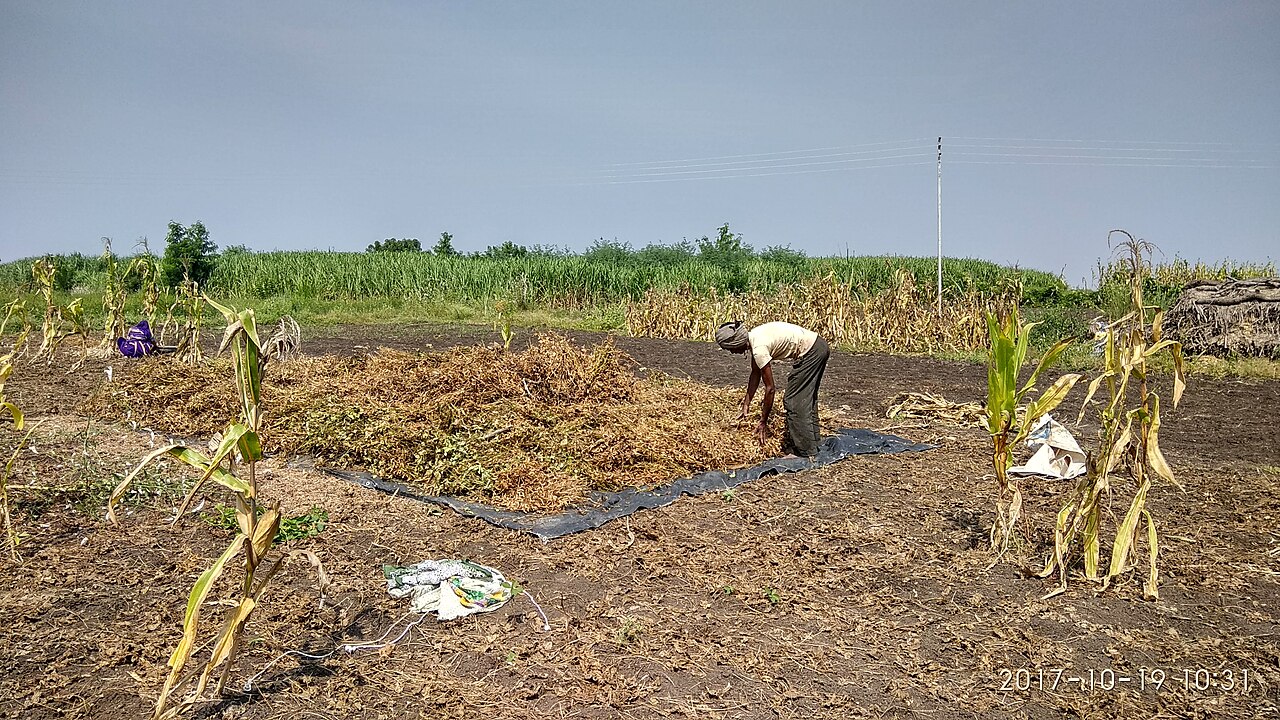
Farmers make up a large share of those killed by lightning in Bangladesh because they work in open fields. Some special precautions are therefore essential for them:
- Leave the field as soon as you see dark clouds or hear thunder.
- Keep metal farm tools away.
- Do not stand alone on high ground.
- Check the weather forecast regularly.
- Plant more palm trees around the village.
Planting palm trees is now a need of the times. Lightning today is not just a natural disaster but a major public safety challenge. Alongside modern technology, nature-based solutions matter in tackling this risk, and the palm is one of the symbols of such a solution. A palm tree does not grow tall in a day, but it protects people and nature for many years. Planting a palm today means building a safer environment for future generations.
Although complete safety from lightning cannot be guaranteed, the risk can be greatly reduced through awareness and environment-friendly initiatives, and the palm is an effective part of that. Just as it can take lightning into its body and give partial protection to its surroundings, it also plays an important role in protecting the environment, conserving biodiversity and enriching rural culture. But remember: it is never safe to shelter under any tree during lightning. Staying inside a safe building is the best way.
What is needed today is not only awareness but practical action. So, for our own safety, the balance of the environment and the sake of future generations, let us plant more palm trees around our homes, along roadsides and in open spaces. A single tree can be a silent guardian that saves lives.
Source: Jagonews24. First published in Bengali on The Agro News.
Comments
(0)