
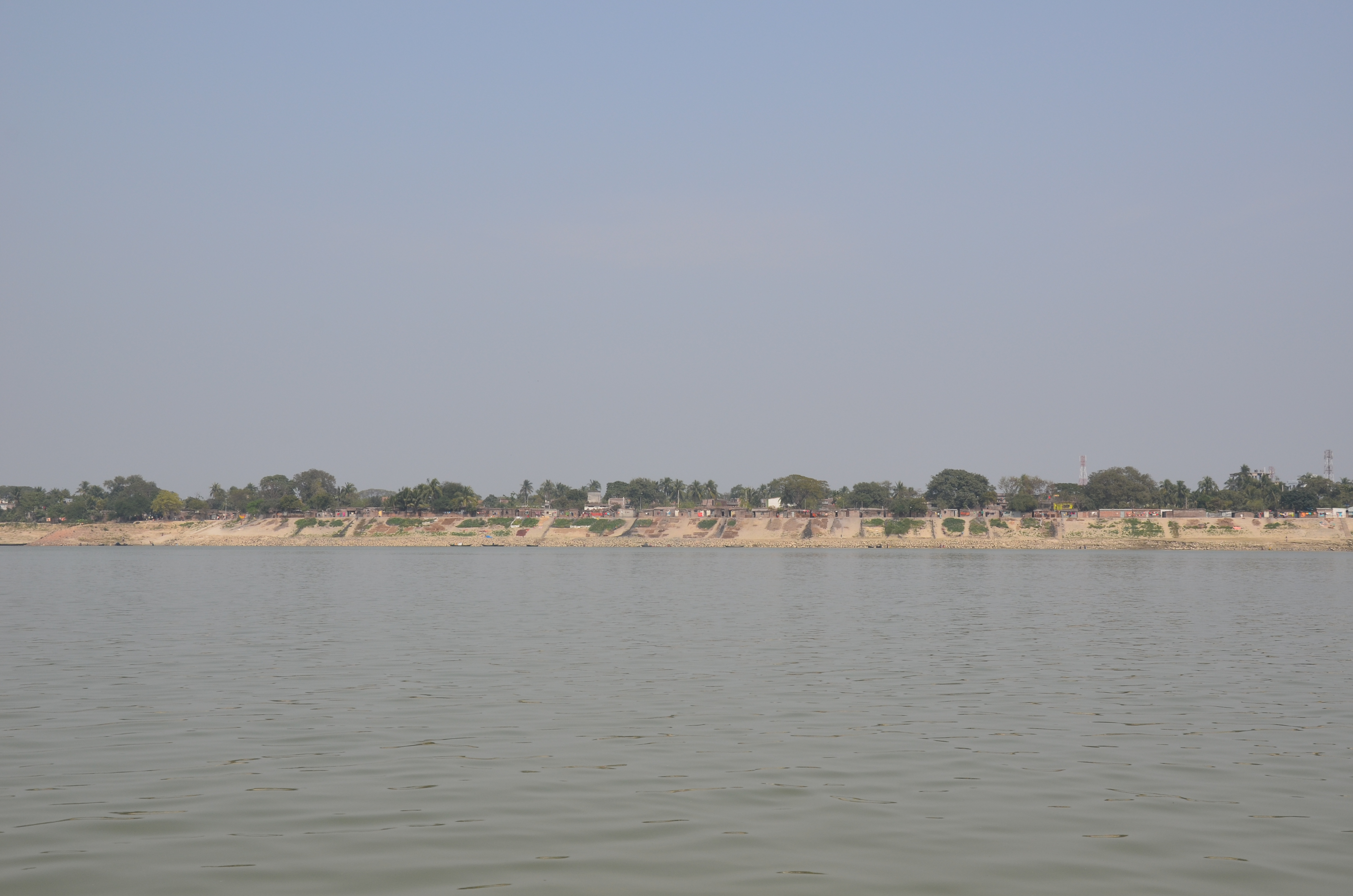
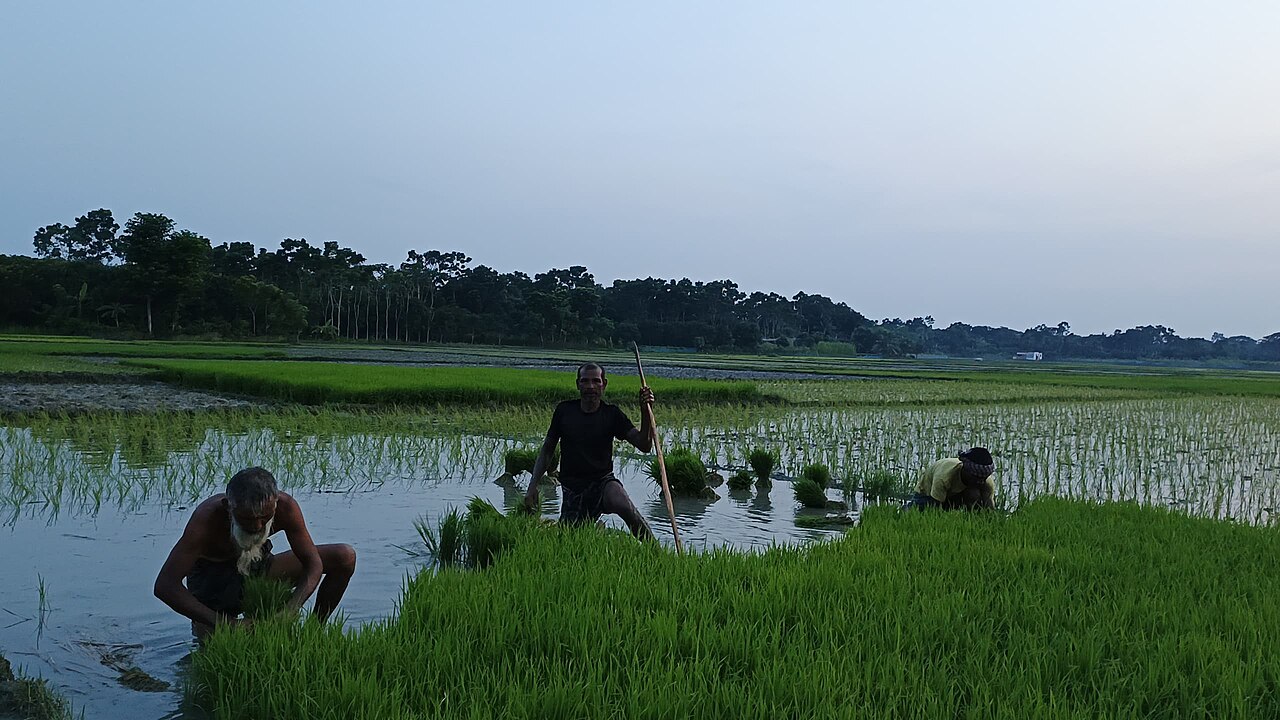
In mid-August 2025 the upstream flow of the Padma flooded low-lying parts of Chapainawabganj in northwestern Bangladesh. By the count of the district office of the Department of Agricultural Extension (DAE), 2,252 hectares of cropland in several unions went under water and hundreds of bighas of Aus paddy were ruined. When Jagonews24 visited Alatuli and Narayanpur unions in Sadar upazila and Durlabhpur and Paka unions in Shibganj upazila on the afternoon of Sunday 17 August, the rice had only just come into ear, yet farmers were cutting the drowned plants to feed their cattle. Far from recovering their costs, they were left carrying losses.
Paddy in ear ends up as cattle feed
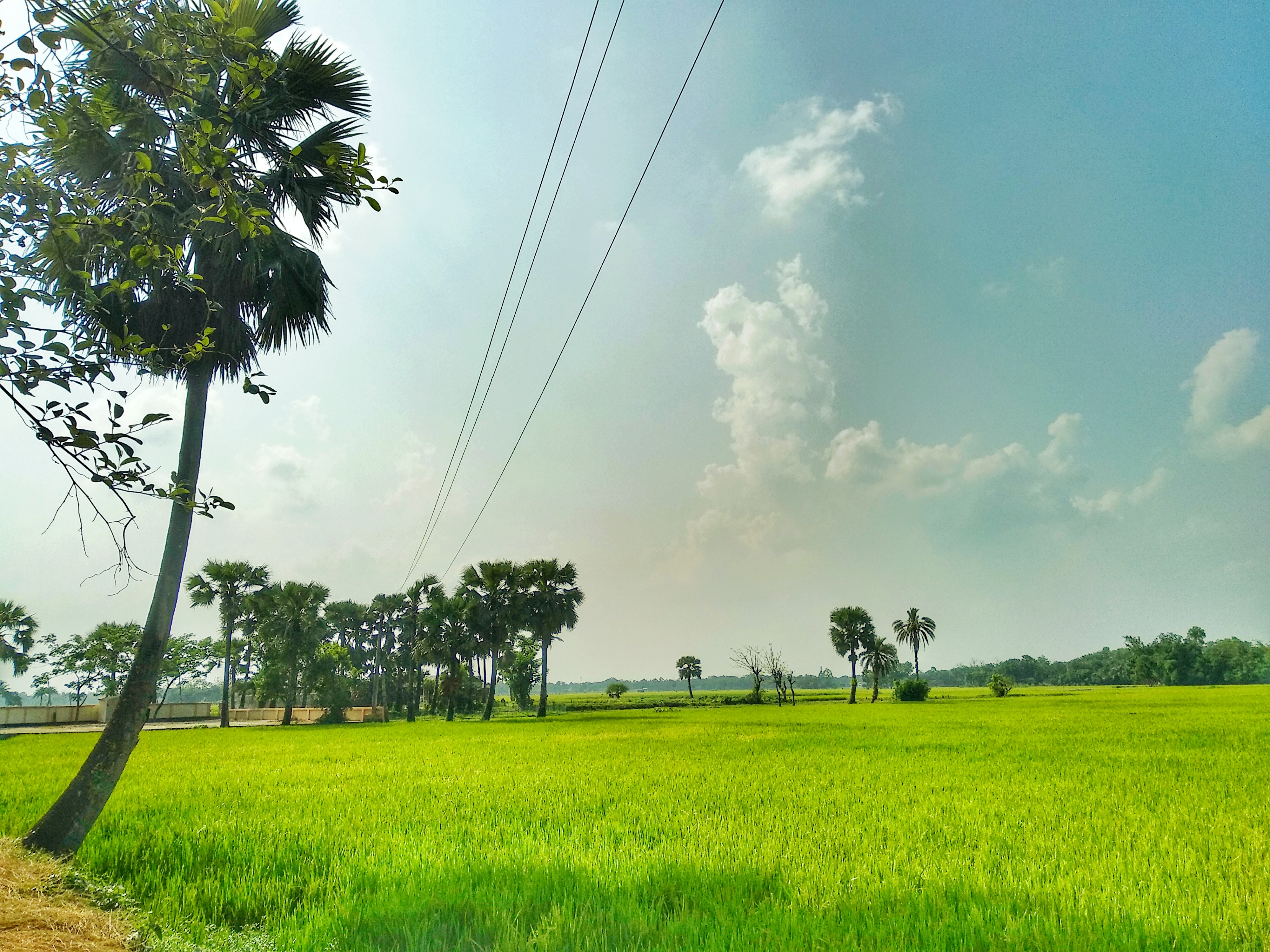
Abdul Malek, a farmer in Paka union of Shibganj, told Jagonews24 that he had grown Aus paddy on three bighas. The ears had just appeared when the Padma rose and flooded all of it. He was cutting the crop for his cattle before it rotted, though he said there was no gain in that. He had spent nearly one lakh taka on the three bighas and asked where that money would now come from.
Another farmer, Shamsul Alam, said he had spent Tk 20,000 to 30,000 on each bigha. A ripe harvest would have covered the cost, but with everything lost the crop was going to the cattle. He had borrowed Tk 40,000 from a local NGO and could not see how he would repay it.
A farmer named Ali Hasan said the paddy had been his family's mainstay and this year it was all gone. He would have to borrow to keep the household going. His home was surrounded by water too, and he said they did not know where they would go or what they would eat.
Which areas were under water
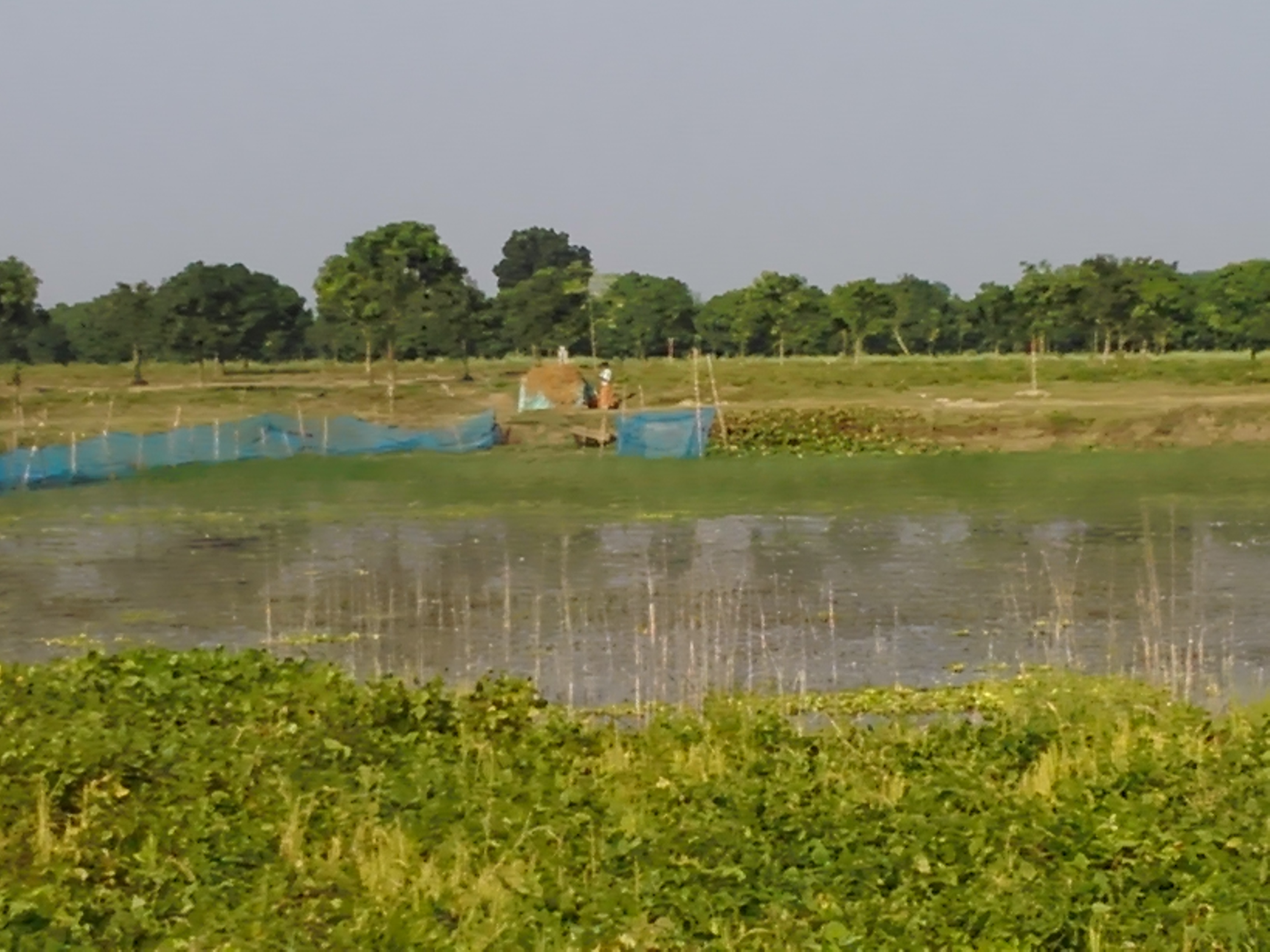
Local people said the Padma's upstream flow floods cropland in the area every year, but this time the water rose before the paddy ripened, so the damage was far greater. In their account the chars of Sundarpur and Shahjahanpur unions in Sadar upazila were hit hardest.
A UNB report of 15 August said floodwater from upstream had for days inundated low-lying parts of Alatuli and Narayanpur unions in Sadar upazila and Paka, Ujirpur, Durlovpur and Monaksha unions in Shibganj upazila. Many houses remained waterlogged and submerged roads disrupted movement. Large areas of Aus and Aman rice, maize and vegetables were still under water. Ahsan Habib, an engineer at the local Water Development Board, said the Padma had dropped by 1 cm in the previous 24 hours, and at 9 am that day the water at the Pankha point was flowing 33 cm below the danger mark.
The Ganges, which comes down from the Himalayas through northern India, enters Bangladesh at Shibganj in Chapainawabganj and takes the name Padma. The river forms the southern edge of Sadar upazila, with Murshidabad district of India's West Bengal on the other bank. The Padma basin here is known locally as the diyar; its soil is fertile and farmers raise several crops a year, though river erosion has shifted parts of some unions to the far bank.
The official count and the Aus season
Yasin Ali, deputy director of the DAE in Chapainawabganj, told Jagonews24 that the upstream flow had submerged 2,252 hectares of cropland in several unions and damaged hundreds of bighas of Aus paddy. A list of affected farmers was being prepared, and he said steps would be taken to give them government support.
Bangladesh grows rice in three seasons: Aus, Aman and Boro. Aus and Aman are rainy-season crops and Boro is the dry-season crop. Aus is usually sown in March or April, grows with the April and May rains and matures during the summer rains. Boro leads in output, followed by Aman and Aus. A field of Aus lost just as the ears appear leaves the farmer with nothing from that season.
Photo: Nahid Sultan / Wikimedia Commons (CC BY-SA 4.0)
Sources: Jagonews24, UNB (as published by Dhaka Tribune and The Business Standard), Wikipedia (Chapai Nawabganj District, Chapai Nawabganj Sadar Upazila, Rice production in Bangladesh)
Comments
(0)