
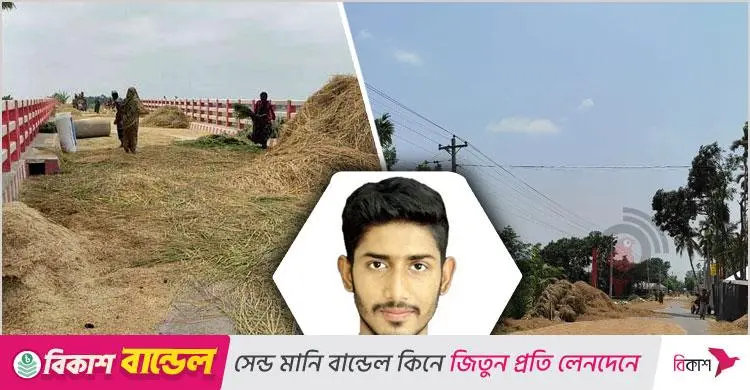
Drying paddy on roads and piling straw beside them has become a growing problem on rural routes, writes Md Saidur Rahman Sadi, executive editor of Dainik Satyer Sandhane Protidin, Jamalpur. The picture becomes starker every harvest season. Day after day paddy is spread across roads, and maize or rice straw occupies both sides, endangering pedestrians, cyclists and motorcyclists and increasing accidents. Yet the local administration still pays too little attention to this public nuisance.
Roads are for travel
Drying paddy is necessary work, but there is no justification for doing it on the road, he says; roads are for people to travel, not for farming. In many villages paddy is spread across dirt tracks or paved roads from morning to afternoon to dry in the sun. When a pedestrian or vehicle comes, the paddy is swept aside, then spread out again. This wastes time and raises the risk of vehicles losing control. On rainy days vehicles skidding and overturning, or people slipping on the grain, have become common.
Heaping rice or maize straw anywhere after the harvest has also become an unwritten rule. Straw is piled so that half the road is often blocked; on narrow roads two vehicles cannot pass and even walking becomes difficult. At night or on foggy mornings these heaps are causing serious accidents, and many people fear snakes or insects hiding in the straw.
In some areas straw has caught fire. Though these problems are growing, no effective effort to solve them is visible. Everyone says the road is no one's private property, but in practice no one seems to feel the need to respect that. In most cases the local administration takes a "tolerant" role, which the writer calls another name for neglect.
Rules and alternatives
The situation must change. A clear policy on road use is needed, stating that roads may not be used for drying paddy and that straw or farm waste may not be piled beside them. At the same time local alternatives should be encouraged, such as designated paddy-drying grounds, special places to store straw, or units to turn straw into organic fertiliser.
To raise awareness, regular messages should go out from local mosques, madrasas, schools and agriculture offices, so that everyone understands the importance of roads and no farmer thinks a human life is worth less than his straw or paddy.
Drying paddy and storing straw are both important farm tasks, the writer concludes, but they lose their justification if they endanger other people's lives. Private interests cannot be imposed on public roads, and if this mismanagement is not controlled now, it could lead to a greater disaster in future.
Source: Jagonews24. First published in Bengali on The Agro News.
Comments
(0)