
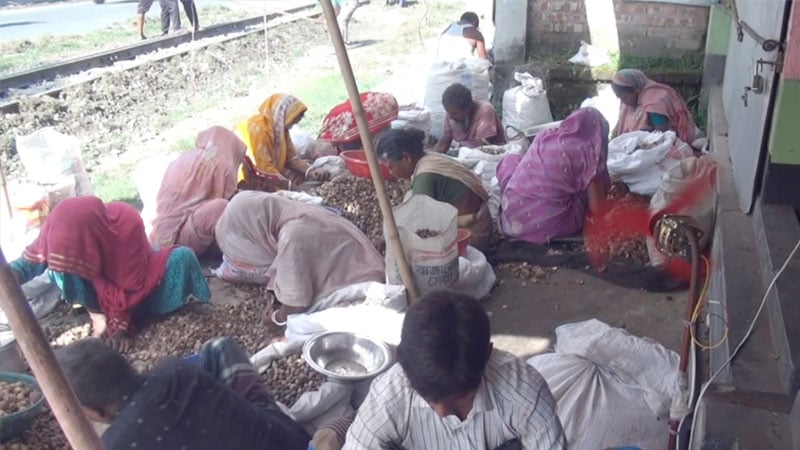
Betel nuts that fall from the tree and rot on the ground were once worthless to farmers. In Rajarhat upazila of Kurigram they have become an industrial raw material. Hawkers gather the rotten nuts from homesteads and orchards, dry them in the sun and bring them to a wholesale market at Dinobazar, where they are sorted, cleaned and trucked to industrial areas around the country.
According to Samakal's Rajarhat correspondent Asaduzzaman Asad, 11 traders deal regularly in these nuts at Dinobazar alone. Together they collect about 50 tonnes a month from hawkers, paying Tk 60-100 a kilogram depending on quality. Traders say the processed nuts are used mainly as raw material by commercial paint manufacturers and other chemical industries.
Department of Agricultural Extension figures put Kurigram's betel nut orchards at about 1,265 hectares. Commercial use of the fallen nuts reduces waste and creates another source of income. More than a hundred workers, most of them women, dry, sort and process the nuts at Dinobazar, and around fifty more people do the same work elsewhere in the upazila.
Trader Rafiqul Islam said he sends an average of 50 tonnes a month to different places and makes a net profit of Tk 30,000-40,000 a month. Another trader, Suja Mia, said the business runs for about six months of the year, and trader Lovelu Mia said his business supports about 100 workers from the area.
Worker Sagarika said she used to wander in search of work and now has six months of steady work a year, earning Tk 200-300 a day. Renubala of Chhatbandha said she earns a daily wage of Tk 500-600 sorting and drying the nuts.
People involved say the trade needs processing centres and credit to become modern and more profitable, and that government loans and modern dryers could open export prospects. Additional upazila agriculture officer Haimanti Rani welcomed the trade, saying farmers, traders and workers all benefit, but said there is "no new plan or project in our hands for now" to modernise or expand it.
Source: Samakal


Comments
(0)