
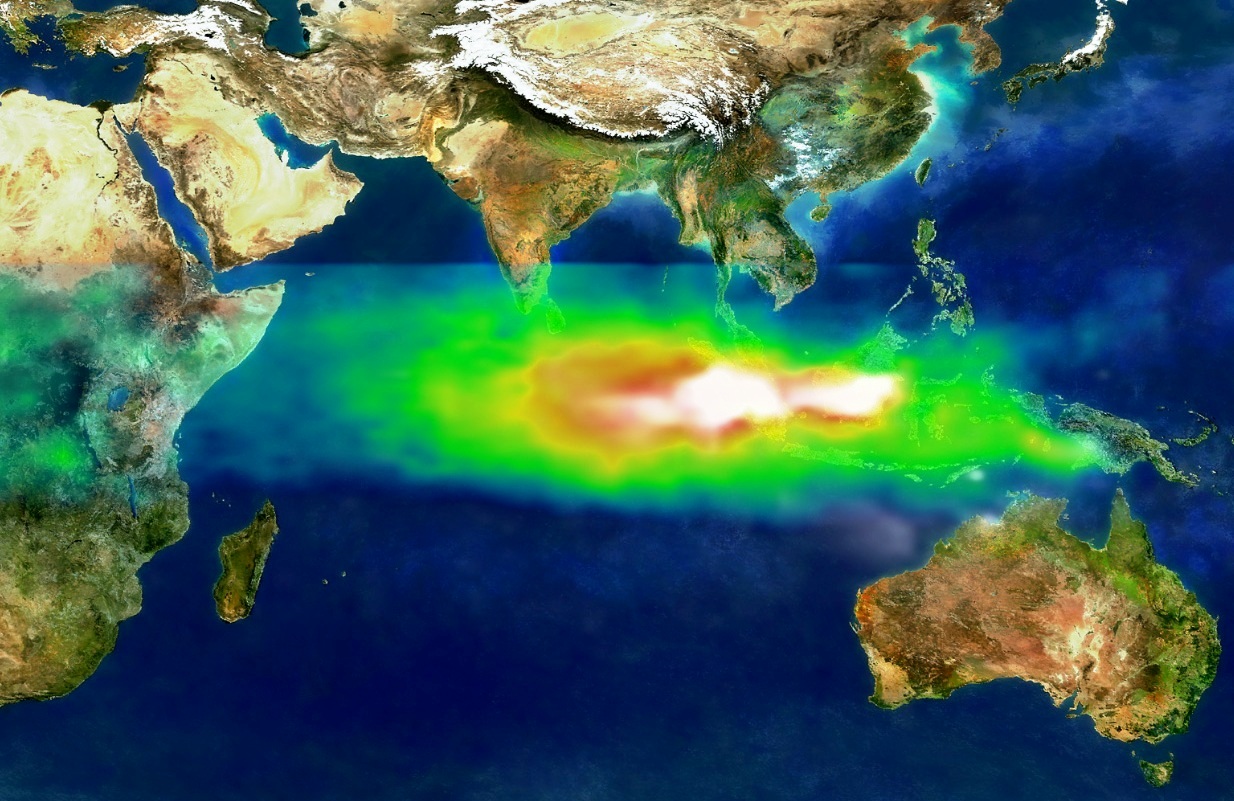
Heatwaves, wildfires and human emissions combined this year to expose a third of the world's population to extremely high levels of ground-level ozone, the EU's Copernicus Atmosphere Monitoring Service (CAMS) reported, in a story BSS carried from AFP. Its analysis of 1 January to 15 September found 34 percent of people breathing 'extremely poor' air, with ozone well above World Health Organization guidance.
Ground-level ozone forms when heat and sunlight react with emissions from wildfires, vehicles and industry, and it can damage lung tissue, cause breathing problems and trigger asthma attacks. The WHO guideline sets 100 micrograms per cubic metre, averaged over eight hours, as the maximum recommended exposure. CAMS tracks air pollution and fires with satellite data and computer models.
A further 17 percent of the world breathed 'very poor' air and only 5 percent 'good'. Asia fared worst, with 53 percent of its population in 'extremely poor' and 22 percent in 'very poor' ozone, driven by industrialisation, transport, wildfires and the burning of crop residue. New Delhi, Dhaka, Chongqing in China and Lahore in Pakistan were among the cities with 'extremely poor' ozone levels.
Record heatwaves and wildfires in Europe and North America sent smoke across borders; two thirds of North Americans and 45 percent of Europeans were exposed to 'poor' or 'very poor' air. Indonesia has had major wildfires, and the El Nino that began in June and is due to peak later this year could drive more fires in South-East Asia, the analysis said.
"Air pollution does not stop at borders," CAMS director Laurence Rouil said. Ian Marnane of the European Environment Agency said ozone is linked to 60,000 premature deaths a year in Europe. Eight percent of Africans endured 'extremely poor' air, while in Oceania 66 percent of people enjoyed 'good' ozone levels.
Photo: NASA / Wikimedia Commons (public domain)
Source: BSS



Comments
(0)