
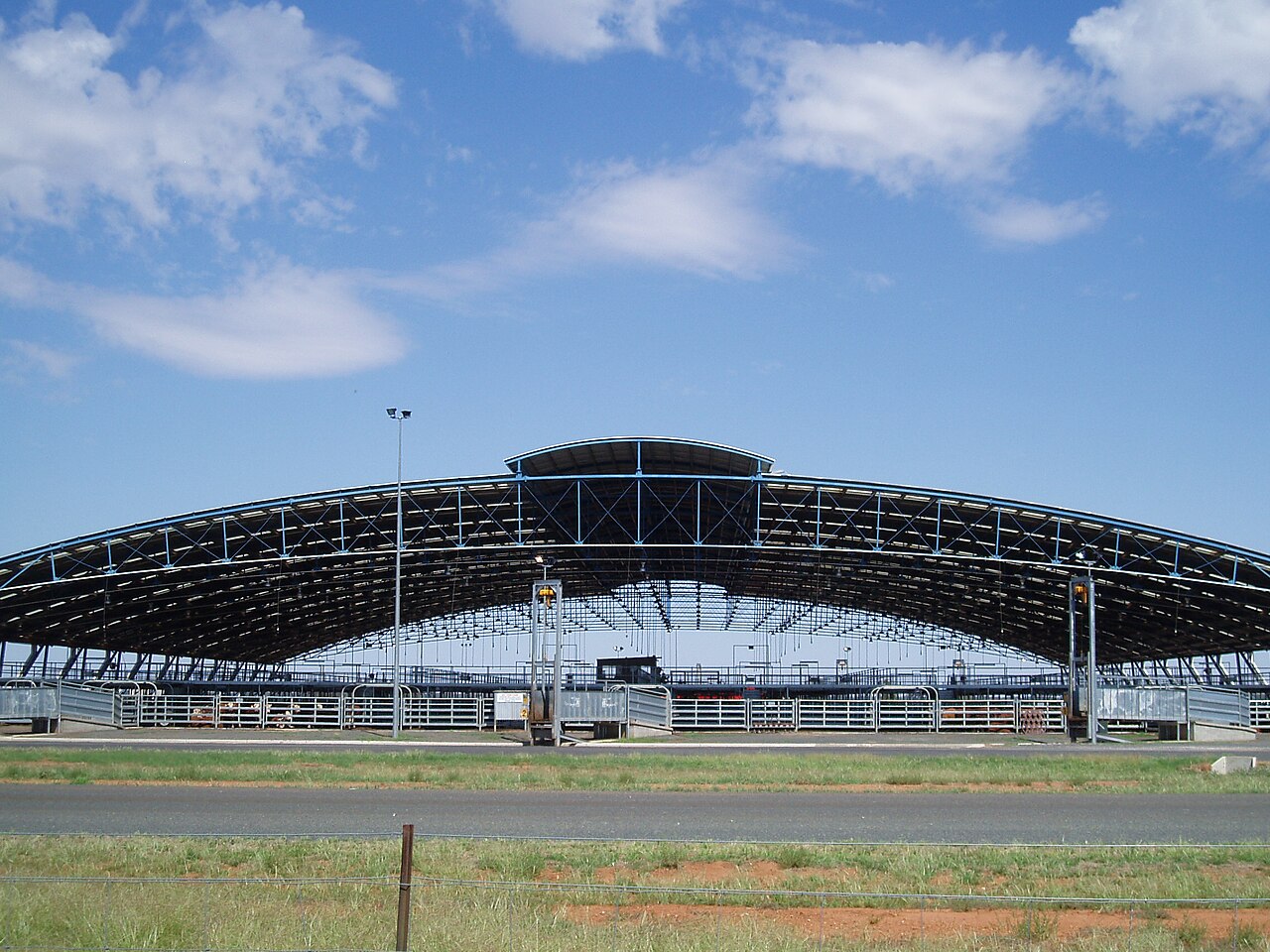
Selling through auction, even once in a while, gives producers locked into closed supply chains a way to test what their stock is really worth, livestock markets columnist Chris Howie argues in his November column for Beef Central. The views are the writer's own.
Howie points to the recent AuctionsPlus sale of 4,000 mixed-sex cattle from Killarney station in the Northern Territory, offered in a parcel suited to live export. Closed loops such as live export, breed or brand-aligned processor programs and intensive operations often lose price discovery, he writes, and while auction may not suit everyone's business model, "every now and then testing the demand is smart". For big lines of bullocks, lambs or cows, he suggests auctioning a sample run, with the winning bidder getting first right to negotiate on the rest.
He describes a strong market. At Dubbo, quality cows made over $4.20, feeders $5.60 to $5.80 and 200 to 250 kg weaners around $6.50, and he reports Dalby feeders at $5.80 to $6.10. He notes some spot-price cattle with no contract coming off feed, and says feedlot growth has mainly come from processors integrating vertically and from feeders expanding on long-term forward contracts. With southern barley at $250 to $260, he asks whether it is cheaper to move feed north to the cattle or the cattle south to the feed.
On sheep, Howie sets out the timeline of the US International Trade Commission's safeguard investigation into lamb imports, in which Sheep Producers Australia chief executive Bonnie Skinner gave evidence on 16 October. An injury determination is expected on 13 November, a remedy hearing would follow on 1 December if required, and the commission must report to the US President by 11 January 2027. He says lamb traders he has spoken to plan to cut back or stop trading this year because of store lamb prices.
First-cross ewe sales were strong: the Bendigo Blue Ribbon sale yarded 22,000 and averaged $462, with a top ewe lamb price of $595 and 9,668 ewe lambs averaging $391. Howie also warns farmers about grass seed contamination in lambs, with spear grass and corkscrew harder to fix than barley grass.
His main warning is about money. Each B-double load of stock now represents $220,000 to $240,000, against $140,000 to $160,000 last year, he writes, and working capital pressure is already showing. He advises adequate insurance, early talks with the bank and dealing with del credere agents, who pay the vendor whether or not the buyer has paid them yet. Howie is a regular Beef Central and Sheep Central livestock markets columnist.
Photo: Amanda Slater / Wikimedia Commons (CC BY-SA 2.0)
Source: Beef Central
Comments
(0)