
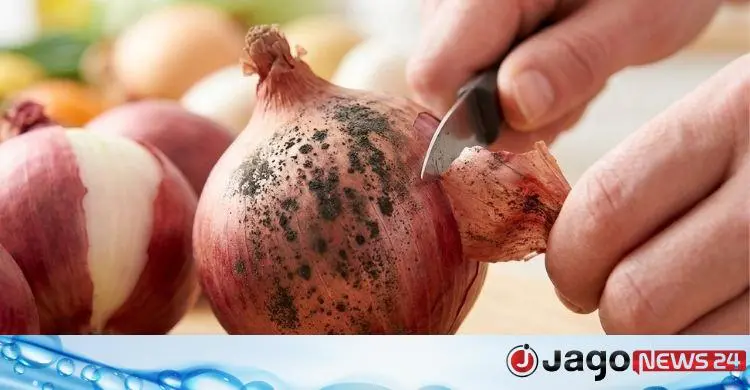
Onions are used in the kitchen almost every day, so after they have been kept for a few days, black spots or a dark powder may appear on the skin. Many people just cut off the affected part and cook the rest. But the question remains whether such onions are safe to eat.
Why black spots appear
One of the main causes of black spots on onions is fungal infection. Fungus can grow quickly, especially if onions are kept where humidity is high and air circulation is poor. At first the infection may be visible only on the skin, but it can later spread to the inner layers.
When to throw it away
A slight dark mark on the dry outer skin does not always mean the inside is spoiled. But if black spots, powder or a mould-like coating are still visible after peeling, it is better not to risk eating it.
That is because the infection may have spread further than the visible fungus. There is no guarantee that cutting away only the black part makes the rest completely safe. Especially if the onion has gone soft, smells rotten or has spots on the inner layers, throwing away the whole onion is the safe decision.
Do not hold an onion with black mould to your nose to smell it. Fungal powder on the onion can become airborne and enter the nose or airways, causing discomfort, so avoid handling such onions unnecessarily when checking them. The powder can also spread to other vegetables or food nearby, putting other stored food at risk of contamination from one spoiled onion.
Storing onions safely
The most important thing for keeping onions fresh longer is storing them in a dry, well-ventilated place. Keeping them in damp or very humid places can speed up fungus and rot. When buying onions, check for black spots on the skin, unusual moisture, softness or signs of rot. If you find fungus on one onion after bringing them home, separate it from the others.
Most importantly, a slight dark mark on the skin and fungus that has spread inside should not be treated as the same thing. But if black powder or mould is clearly present even after peeling, it is safer not to cook with that onion. With food, even slight doubt makes it better to throw the spoiled onion away than to take a risk.
Source: Jagonews24. First published in Bengali on The Agro News.
Comments
(0)