
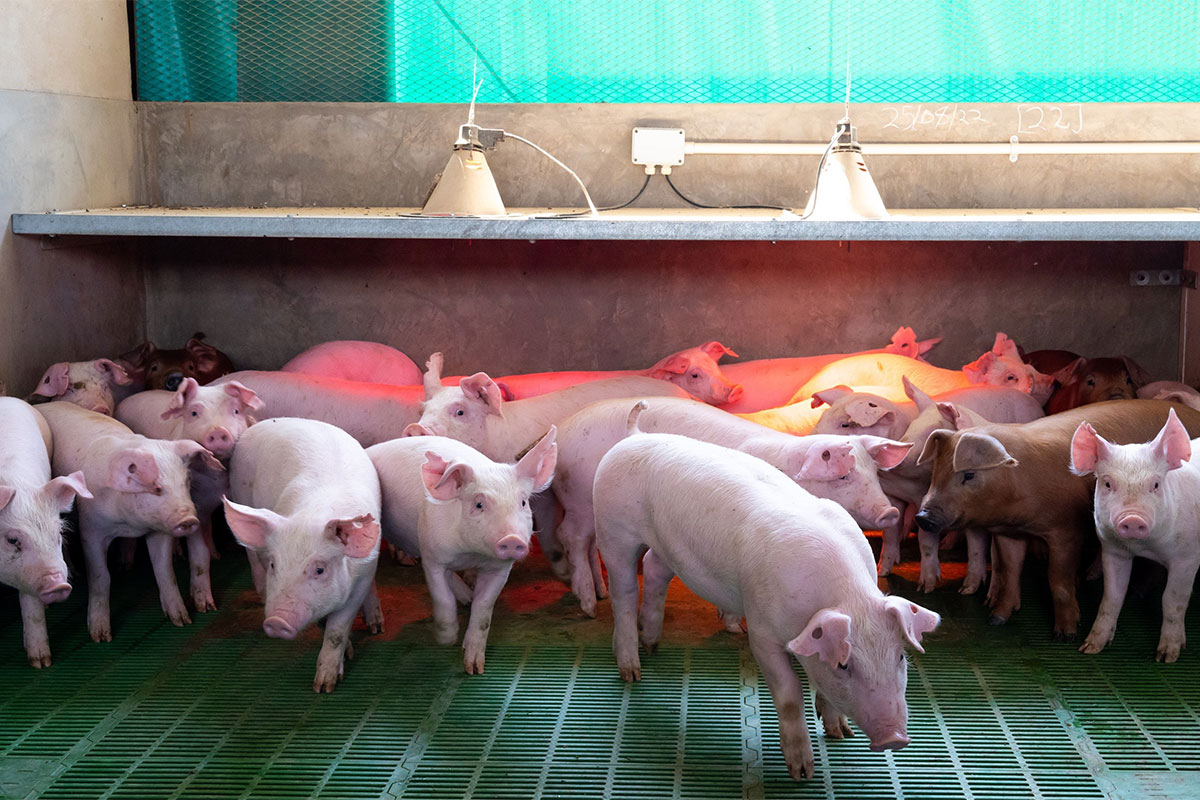
Animal welfare inspectors and pig farmers in South Africa found more common ground than either expected during a training day inside a commercial piggery, though they still disagree on farrowing crates and tail docking, Farmers Weekly South Africa reported.
Earlier this year the NSPCA, the South African Pork Producers' Organisation (SAPPO) and CS Vet held a practical welfare training day at Taaibosch Piggery in North West province, to give NSPCA inspectors first-hand experience of commercial pig production. Owner CP Kriek said opening the farm was daunting, but that inspectors who understand production should mean less conflict with farmers. "They are not necessarily against livestock farming or meat consumption. They are against the abuse of animals in farming," he said after the visit.
Inspectors saw feed use, employment and the farm's Pork360 welfare standards, and discussed reproduction, feeding, euthanasia, treatment of sick animals and staff training. The farm has moved sows from gestation crates to group housing, a major investment that changed how workers manage body condition and grouping; replaced ear notching of piglets with batch traceability; added enrichment such as chains, hay and sawdust; given sows nesting material before farrowing; trained staff to move pigs with herding boards; and put more weight on vaccination and preventive health.
Kriek said some of the changes cost money but production has benefited: sows in groups are more active and fitter, with slightly better farrowing performance, and piglets perform better without the pain of ear notching.
The lines that remain are farrowing crates, which farmers say protect piglets from being crushed, and tail docking, which farmers see as preventing tail biting and cannibalism and the NSPCA regards as maiming. "We are at a deadlock. We need more information," Kriek said. Dr Thandi Chiappero, SAPPO's head of consumer assurance, said the industry should not simply adopt EU standards because South Africa needs affordable protein and farms without subsidies; SAPPO has nevertheless set 2032 as the deadline for moving away from gestation crates and runs a Social Sows initiative for group housing.
Kriek said the industry should also stop chasing ever-larger litters at the expense of welfare, focusing on viable piglets weaned rather than piglets born alive, and pointed to closer individual-animal monitoring and new building designs that protect piglets while giving sows more freedom. The report was written by Lindi Botha.
Photo: Farmers Weekly South Africa
Source: Farmers Weekly South Africa


Comments
(0)