
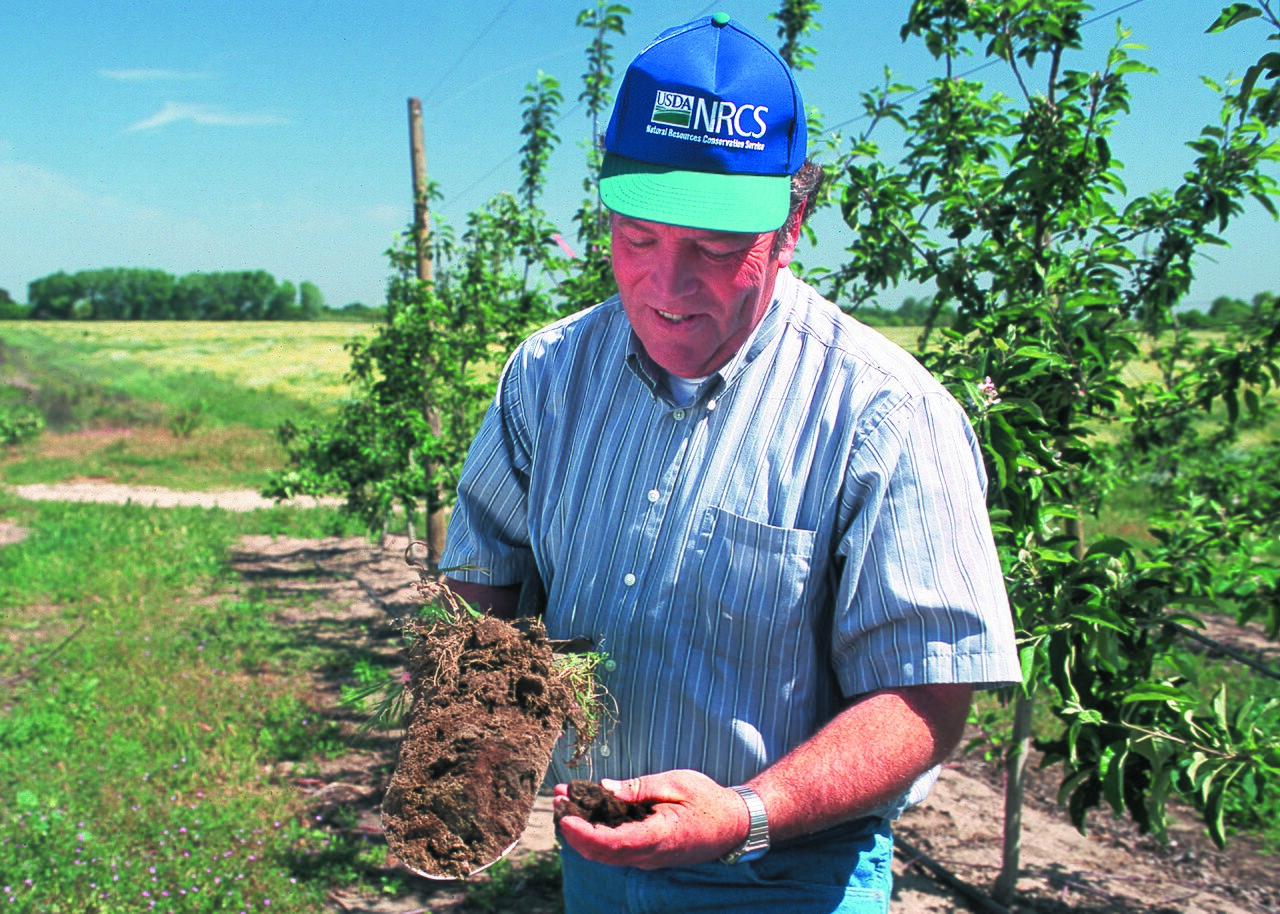
A new cost-share from the US Natural Resources Conservation Service (NRCS) pays farmers to have their soil health tested, and a University of Missouri soil specialist is urging growers to take it up, Farm Progress reports. "Take advantage of this initiative; it's free money," said Muhammad Rasel Parvej at a university field day this summer.
The programme, CEMA 216 (Conservation Evaluation Monitoring Activity), gives producers data on the biological, chemical and physical characteristics of their soil rather than a single measurement. NRCS offers two incentives: $520 for a basic test of three samples and $770 for an advanced test of three samples.
The basic test covers total organic carbon, reactive carbon (POXC), wet aggregate stability, soil respiration, ACE protein, pH and texture; the advanced test adds either PLFA analysis or selected soil enzyme analyses. Parvej noted that soil health tests cost more than $100 a sample, which is why he recommends combining several cores from a uniform area into one composite sample.
Missouri farmers can have their results read against a state database: over the past ten years the university has analysed more than 17,000 soil health data points, and its reports rank each indicator from very low to very high against comparable Missouri soils. Most county scores sit in the medium range. "That local interpretation is what turns a laboratory number into information a farmer can actually use," Parvej said.
He advised keeping the sampling depth at 0-6 inches, taking many cores, avoiding field entrances, spills, manure piles, wet spots and fence lines, returning to the same area at a similar time of year, and recording management and locations. A first sample before a change such as cover crops lets farmers track the effect over time.
Farmers can apply through their local NRCS office; approved samples can then be sent to the University of Missouri Soil Health Assessment Center. The report was written by Chris Six.
Photo: Lynn Betts, USDA NRCS / Wikimedia Commons (public domain)
Source: Farm Progress

Comments
(0)