
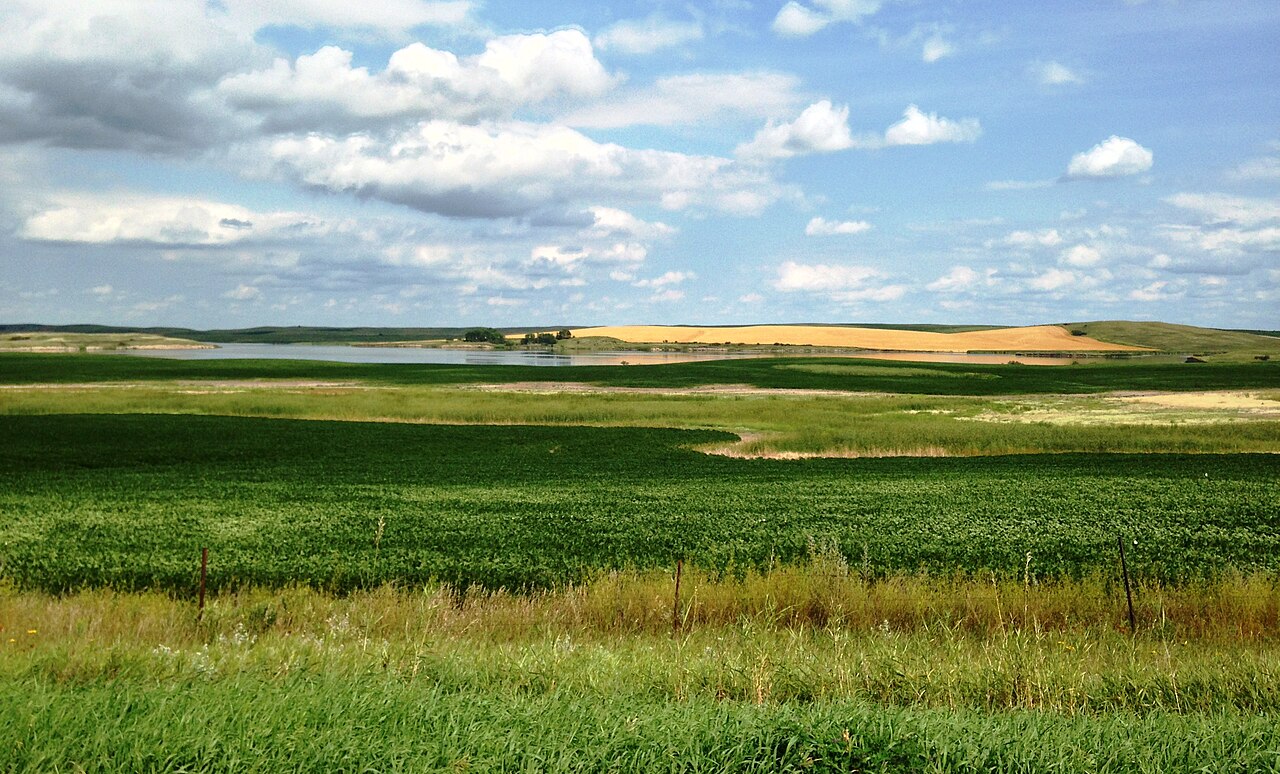
North Dakota's corn yield is forecast to fall by 28 bushels an acre this year after a dry summer, and the rain that finally arrived in September has come too late to help and is now slowing harvest, Successful Farming reported from the latest USDA reports and a field agronomist in the region.
The USDA Crop Production report of 11 September puts the state's corn yield at 130 bushels an acre, down from 158 in 2025, and its soybean yield at 30 bushels, down from 34.5. Farmers are expected to harvest 578.5 million bushels of corn from 4.45 million acres, against 711 million bushels from 4.5 million acres last year, and 203.7 million bushels of soybeans from 6.79 million acres, against 223.905 million bushels from 6.49 million acres.
Crop ratings reflect the drought. The Crop Progress report of 21 September rated 27% of North Dakota's corn good to excellent (14% very poor, 24% poor, 35% fair) and 33% of its soybeans. Range and pasture were rated 18% very poor and 25% poor, with none excellent. The U.S. Drought Monitor of 24 September showed 31.5% of the state in severe drought and 13.7% in extreme drought, with only 12.5% free of any dryness category.
"Finally, we are getting the rain we hoped for all summer," said Susan McBrady, a field agronomist for Stine Seed covering North Dakota, western Minnesota and northern South Dakota. "Unfortunately, it is too late to have an impact on this growing season and is just causing a delay in harvest." She said that after the dry summer corn is starting to cannibalise its stalks, raising standability concerns, and that the sooner growers harvest, the better.
The crop is ahead of normal on development. By the week ending 20 September, 92% of corn had dented and 46% was mature, against five-year averages of 80% and 28%, and 4% had been harvested. Soybeans were 76% dropping leaves and 13% harvested, against a five-year average of 6%, but McBrady said the rain had caused many beans to green-stem, pushing growers into corn first.
Among the small grains and sugar crops, barley harvest was complete, spring wheat was 95% harvested and 20% of the sugarbeet crop had been lifted, ahead of the five-year average of 13%. The report was written by Kacey Birchmier.
Photo: USFWS Mountain-Prairie / Wikimedia Commons (CC BY 2.0)
Source: Successful Farming
Comments
(0)