
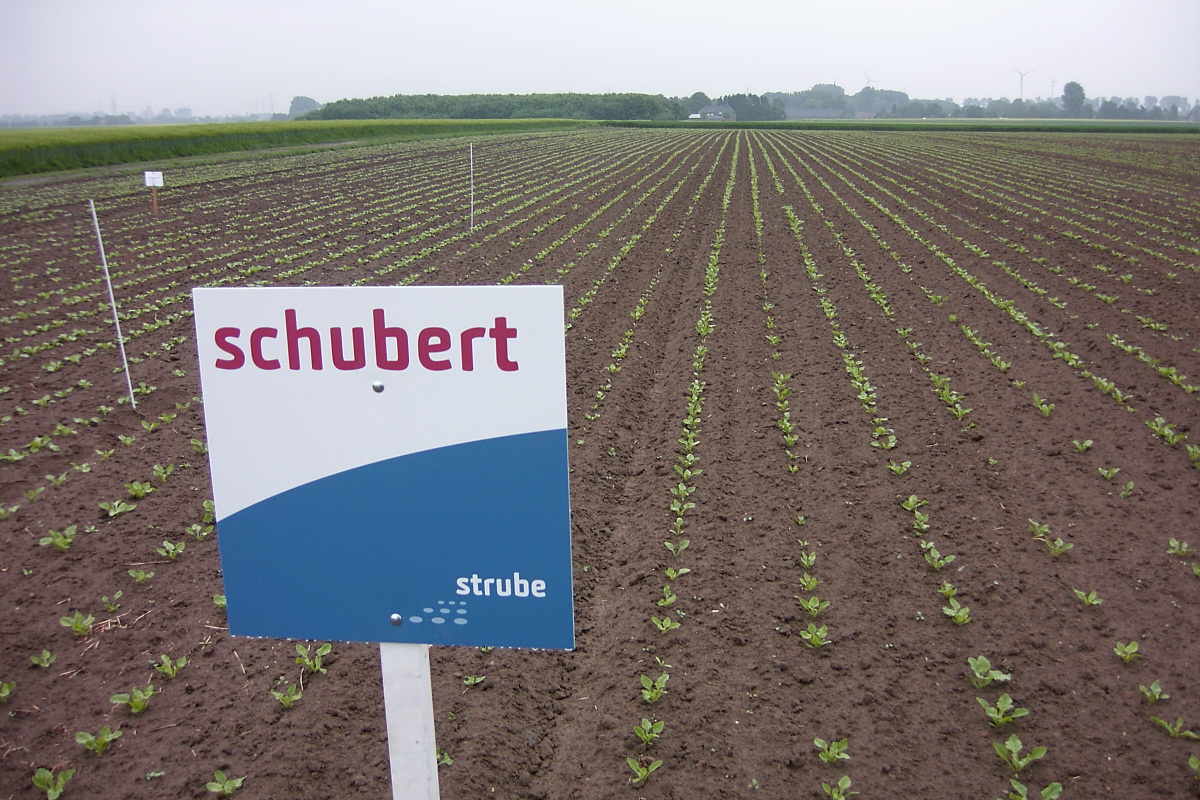
Engineers at North Dakota State University (NDSU) have built and field-tested an autonomous mechanical weeding robot that removed weeds in row crops with 96.5 percent efficacy while nearly halving unnecessary soil disturbance, offering a non-chemical option for growers facing herbicide resistance and labour costs, Global Agriculture reports.
The system was developed by Shafi Md. Istiak, Mohammad Aftabi Talami, James Y. Kim and Dr Sulaymon Eshkabilov of NDSU's Department of Agricultural and Biosystems Engineering in Fargo and described in the journal Precision Agriculture in early September. It targets sugar beet and similar row crops, where mechanical cultivation has long struggled to work close to the row without damaging plants.
The robot puts a three-row cultivator on a commercial Amiga robotic base. Each cultivator unit has its own electric linear actuator that pushes a sweep blade into the soil or lifts it clear, and a four-bar parallelogram linkage lets each sweep follow the ground contour. RTK-GPS gives centimetre-level positioning, while load cells measuring the force on each sweep and laser distance sensors on each actuator tell the control system in real time whether a blade is cutting as intended.
In field trials the sweeps covered 355.6 mm within 558.8 mm rows, typical for sugar beet. The robot reached 96.5 percent weeding efficacy by tillage length and achieved 50 percent weed coverage while cutting overall soil disturbance by 48.7 percent, which matters because excessive tillage dries soil, breaks its structure and exposes it to erosion. Depth stayed within about 2 mm of the 30 mm target on average.
The main limit is speed: about 0.5 metres per second, set by how fast the RTK-GPS updates and the actuators respond, far slower than a tractor-mounted cultivator or sprayer. The authors present it as a proof of concept suited for now to research plots, seed blocks or high-value fields, with faster actuators, quicker position updates and several units working together as the next steps.
Photo: Blonder1984 / Wikimedia Commons (public domain)
Source: Global Agriculture



Comments
(0)