
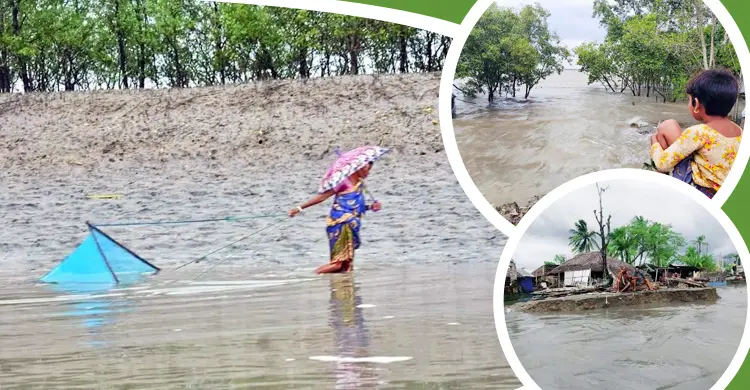
Nature is changing. Some people are cutting hills, some are grabbing rivers, some are polluting water, some are felling trees. It is as if the weight of such human feet has left wounds on nature. The trees' weeping cannot be heard, but it can be felt. Forests, trees, water, aquatic life, farming, soil, people and living things are today wholly caught up in plastic pollution, and people are busy protecting themselves and the generations to come.
If we are to survive, we must come forward to protect nature. World Environment Day is observed every year on 5 June to raise awareness of conservation. Unchecked use of natural resources for economic prosperity around the world has been identified as one of the main causes of environmental disaster.
From survival to conflict
The fight between nature and people began when people cut trees for houses, cut hills for roads or dammed rivers to start new civilisations. But that was a fight to hold on, a fight to survive, and so perhaps the pure earth accepted it without reaction.
It became a clash when people stripped the forests and burned coal in the name of industry and power stations, building an invisible roof of carbon in the atmosphere. That traps the sun's heat and has made the earth hotter and hotter. Scientists first noticed this fight between nature and people in 1950. Biodiversity and the environment worldwide are now more threatened than at any time in the past.
The scale of loss
According to the United Nations, if the present destruction of nature continues, nearly 10 lakh species worldwide could go extinct within the next 10 years. If climate change continues as it is, one in three species of animals and plants could be lost by 2070. Wildlife has declined by more than 60 per cent on average in the past 50 years. On that basis, the current average rate of extinction is 10 to 100 times higher than over the past 10 million years.
Biosphere reserves around the world have been abnormally damaged by human activity. People have changed land use on 75 per cent of the earth's land, and two-thirds of the world's marine ecosystems face environmental threats.
"Give me back the forests and trees, the rivers, wetlands, water and aquatic life, the soil and farming, and people," the writer pleads. Living beings and people, created by nature, are ungenerous to nature in what they consume, and ungenerous even to their own future generations. Had people been just a little tolerant of nature, today's world would not be so bleak for living things. People have changed. Nature is changing too.
Written by Rubel Mia Nahid.
Source: Jagonews24. First published in Bengali on The Agro News.
Comments
(0)