
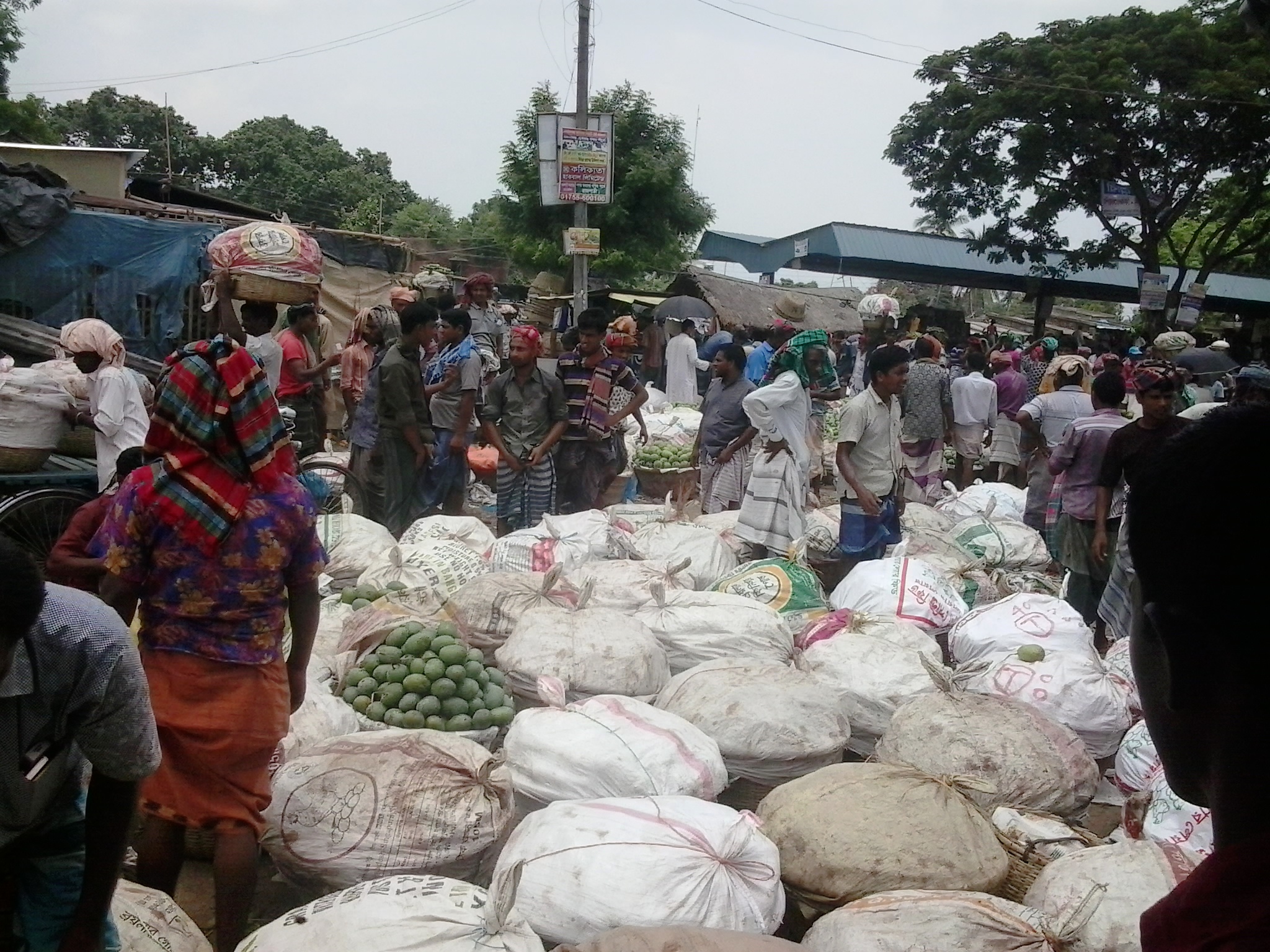
Favourable weather gave Natore a good mango crop in the 2026 season, but low prices in the middle of June left many growers, and many traders who had bought orchards before the harvest, well short of the returns they had hoped for, Jagonews24 reported from the district on 17 June 2026. Growers told the paper that Khirsapat and Langra were selling at Tk 40 to Tk 50 a kilogram in local markets, and complained that wholesale buyers were also demanding extra mangoes on every maund, a practice known in the region as dhalon.
The report came at the height of the harvest in north-western Bangladesh. In the same week, other newspapers reported that growers in the neighbouring mango districts of Chapainawabganj and Naogaon were also unhappy with prices, while the Department of Agricultural Extension (DAE) in Natore still expected the district's crop to bring a profit to those in the trade if no natural disaster struck.
Area, production target and expected value
According to the DAE office in Natore, mangoes were grown on 5,693 hectares in the district in 2026, with a production target of 68,316 tonnes. Md Habibul Islam Khan, the DAE's deputy director in Natore, told Jagonews24 that the district's yield was good this season and that, if there was no natural disaster, orchard owners, farmers and everyone else involved in the trade would profit.
The same area and target had been announced a month earlier, when hopes were high. On 13 May 2026 The Daily Star reported from Natore that officials projected a mango economy worth over Tk 400 crore that season, up from Tk 350 crore the year before, and that the deputy director believed the target might even be exceeded. He told the paper that Natore had become a leading hub, the fourth-highest mango-producing district in the North, and that cultivation had grown rapidly over the last two decades. The Daily Observer, reporting on 14 May from the planning meeting held at the deputy commissioner's office, gave a different breakdown: of fruit worth Tk 450 crore expected that season, 68,673 tonnes of mangoes worth Tk 350 crore and 7,540 tonnes of litchis worth Tk 100 crore.
The good crop followed a smooth flowering season. Bangladesh Sangbad Sangstha (BSS) reported on 26 February 2026 that the DAE's Rajshahi region counted 5,069 hectares of mango orchards in Natore at that time, with 1,486,187 trees, 53 percent of which had blossomed. The chief scientific officer of the Rajshahi Fruit Research Center told the agency that winter had ended smoothly that year, with no late fog or rainfall, and that temperatures had risen gradually without sudden swings, so the trees had kept up their flowering.
The year before had been weaker. In May 2026 The Daily Star described the previous season in Natore as disappointing and quoted a college teacher turned mango farmer from Lalpur upazila who said half of his trees had yielded nothing the year before, while more than 70 percent were full of fruit in 2026. Two years earlier, in May 2024, the Dhaka Tribune had reported that Natore had 5,718 hectares under mango with a production target of 80,000 tonnes, but that drought had led the DAE to expect a reduced output of 74,000 tonnes.
Prices in Natore's markets in mid-June
Jagonews24 found Natore's markets full of different varieties. Among the guti mangoes, the local types raised from seed, Atir Kalua had sold at Tk 40 and Tk 50 a kilogram and other varieties at Tk 30 to Tk 40. By mid-June Kalua was coming to the end of its run and Khirsapat had arrived, and Khirsapat and Langra were selling at Tk 40 to Tk 50 a kilogram.
For shoppers the low prices were welcome. A buyer, Rintu, told the paper he had bought Khirsapat at Tk 50 a kilogram, that the mangoes tasted good and were not small, and that he thought the harvest was good this year and the price somewhat lower.
The prices fell well short of what growers had expected when the season opened. The Daily Star's May report quoted the Lalpur grower as saying that bringing a mango crop to the fruiting stage required fertiliser and pesticide management costing around Tk 27,000 to Tk 30,000 per bigha, and that with healthy fruit across his orchard he expected at least Tk 1 lakh in profit per bigha. A grower in Mominpur village of Lalpur told the paper that a bigha of mango orchard had sold for Tk 1.5 to 1.8 lakh the year before and that expectations had risen to Tk 2.5 to 2.8 lakh that season. He had already sold the fruit of four trees to a trader for Tk 30,000, each tree yielding more than five maunds.
Growers' complaints: no fair price and extra kilograms on every maund
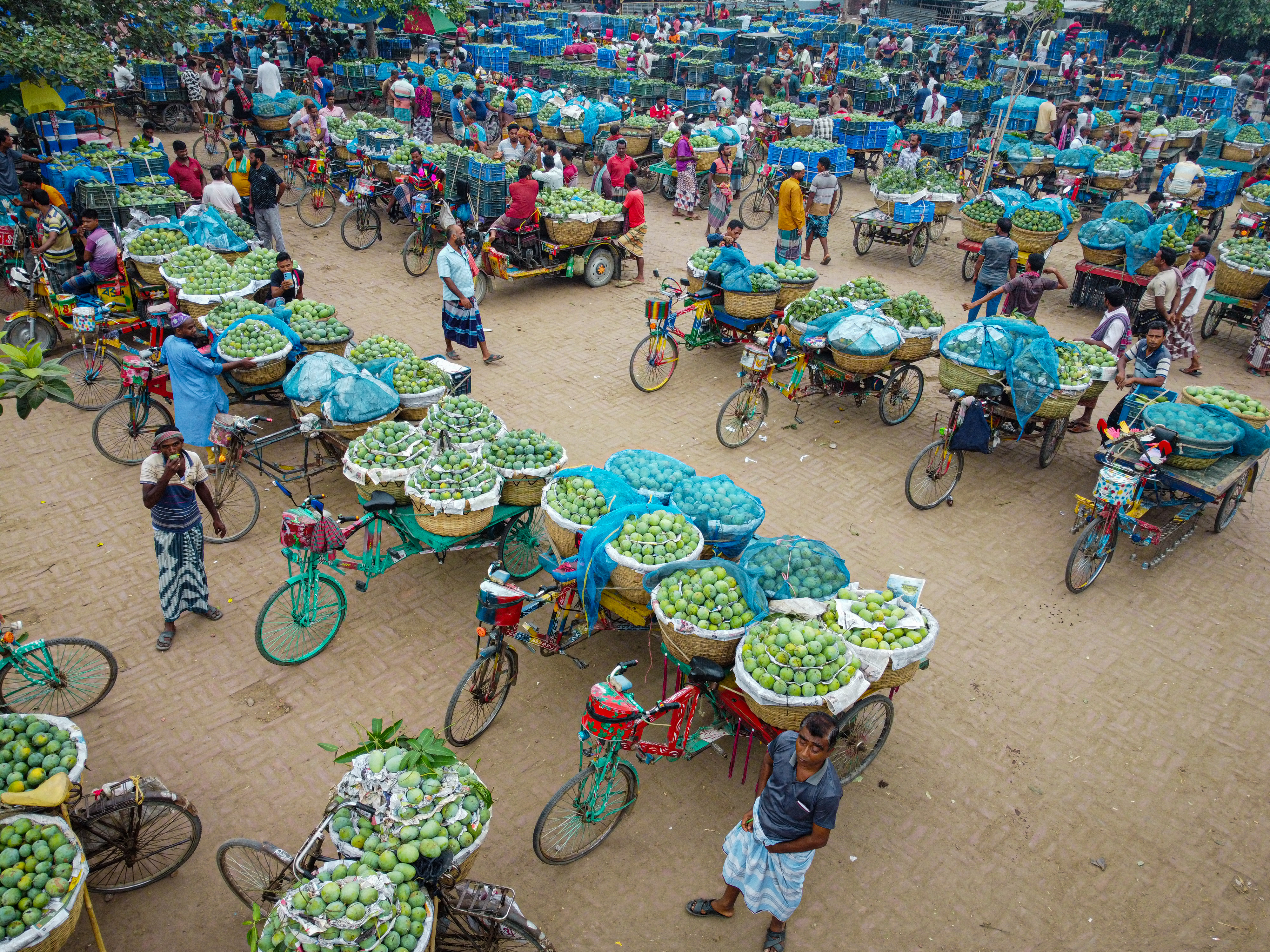
Palash Khan, a mango farmer in Natore, told Jagonews24 that his orchard had all kinds of mango trees and the good weather had brought a good yield, but that he was not getting a fair price. On top of that, he said, growers had to give 5 kg of dhalon on every maund. Retail buyers did not receive that extra, he said, but farmers had to give it, because otherwise the traders would not buy, and the wholesale depots, the arats, were the same. As a result, he said, people in the mango business were losing out.
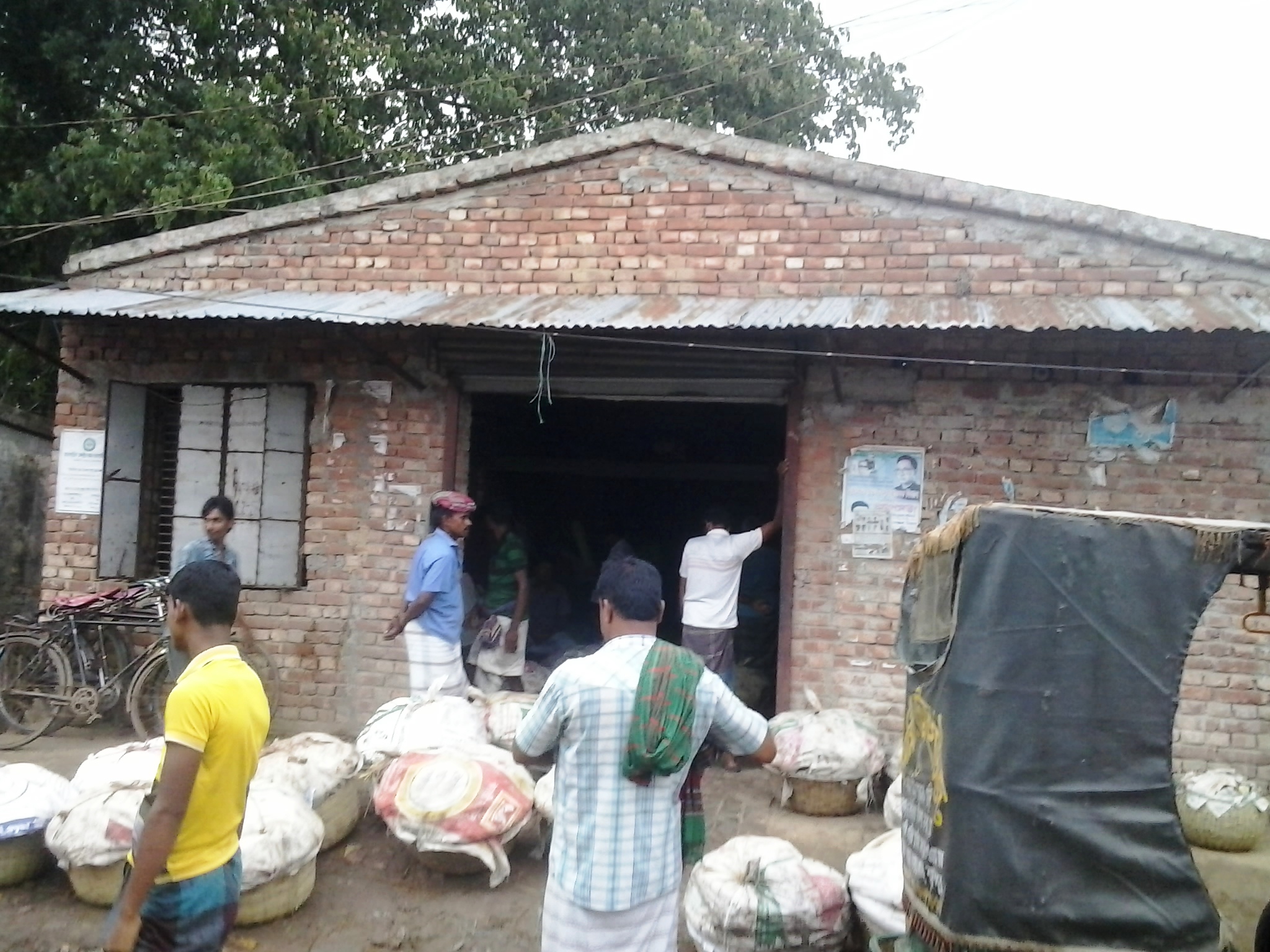
Faridul Islam, a grower in the Moukhara area, said he had bought a five-bigha mango orchard and had hoped to make a profit of Tk 2 lakh from it, but with low prices in the market that was not happening. Jagonews24 reported that many people who had bought orchards were facing losses. Moukhara is in Baraigram upazila of the district; Banglapedia lists the Moukhara Mahila Degree College among the upazila's noted educational institutions.
What dhalon is, and how it played out across the mango belt
Mangoes are sold wholesale in Bangladesh by the maund (mon), which is normally 40 kg. Under the dhalon or dhalta custom, wholesale buyers count more than 40 kg as one maund. Prothom Alo reported from Sapahar in Naogaon on 17 June 2026 that mangoes there were being sold at 50 to 52 kg to the maund, a rule that had been in place for several years, and that traders called this practice of taking 10 to 12 kg of extra weight the dhalta system. The paper reported that growers were losing out because of it.
The custom was harsher still in Chapainawabganj. Prothom Alo reported on 14 June 2026 from Kansat, one of the country's largest mango markets, that growers had to sell at 54 to 56 kg to the maund, and that after giving mangoes to porters, weighers and depot workers they ended up selling 60 kg for the price of one maund, in the paper's words receiving the price of one maund for one and a half.
Some markets tried to set a limit. At Rahanpur in Gomastapur upazila, the second largest mango market in Chapainawabganj, a meeting of growers, traders and depot owners organised by the upazila administration decided on 2 June 2026 that mangoes would be bought from growers at 52 kg to the maund, Jugantor reported. Those in the mango trade at the meeting pledged to follow any new decision on weight that might come from the divisional commissioner's office.
The president of the Sapahar mango growers' association told Prothom Alo that production costs had risen by 25 to 30 percent with higher prices of fertiliser, pesticide and fungicide and the cost of irrigation and labour, and that higher fuel prices had raised transport costs. Mangoes that growers sold at Tk 60 a kilogram in Sapahar were being sold at Tk 80 to Tk 100 a kilogram in Naogaon, Rajshahi or Dhaka, he said, and most of the margin went to middlemen. He said the depot owners' dhalta system made matters worse, and that the administration had not been able to stop it despite repeated complaints.
Low prices across the north-west in the same week
Prothom Alo's report from Chapainawabganj on 14 June found growers unhappy at the peak of the season, when the district's famous Khirsapat and Langra are in the market alongside Amrapali, BARI-4 and Banana Mango. Growers at Kansat said Khirsapat was selling at Tk 1,800 to Tk 4,000 a maund and Langra at Tk 1,200 to Tk 3,000, with Amrapali at the same price as Langra. Sellers said Langra, no less tasty than Khirsapat, was going for next to nothing, and that Lakshmanbhog hardly had a price at all.
In Naogaon, Prothom Alo reported on 17 June that intense heat had ripened almost every variety before the dates set by the administration. Amrapali, due from 15 June, had been on sale for about a week before that, and Banana Mango and BARI-4, due from 25 June and 5 July, were already ripening. Growers at Sapahar said prices had been good at first, but as large quantities reached the market at once, the price had fallen by Tk 300 to Tk 800 a maund within two or three days. Buyers and sellers there quoted Amrapali at Tk 3,100 to Tk 3,800 a maund, Nak Fazli at Tk 2,400 to Tk 2,600, Langra at Tk 1,800 to Tk 2,200, Banana Mango at Tk 3,800 to Tk 4,200 and BARI-4 at Tk 2,200 to Tk 2,400.
The DAE's deputy director in Naogaon told the paper the district's yield was good, but that because the weather had ripened mangoes early and almost all of them had reached the market together, growers were getting somewhat lower prices; even so, the deputy director said, the value of Naogaon's crop would not be below Tk 3,000 crore. According to the DAE in Naogaon, mangoes were grown on 30,500 hectares there in 2026, with a production target of 341,250 tonnes.
In its February report on the flowering season, BSS noted that the DAE's Rajshahi region, made up of Rajshahi, Naogaon, Natore and Chapainawabganj, had 92,552 hectares of mango orchards with 34,960,554 trees, and that although production had been good the year before, excessive rainfall had damaged a large quantity of mangoes, causing prices to drop and leaving farmers at a loss. An associate professor of economics at the University of Rajshahi told the agency that mangoes from the Rajshahi, Naogaon and Rangpur regions are mostly late varieties, which leads to a simultaneous supply and then a fall in prices. Because mangoes are perishable, he said, farmers cannot store them like potatoes, and without storage facilities low prices discourage them from carrying on with mango the following year.
The scale of the trade had grown quickly. The Daily Star reported in August 2025 that Naogaon's orchards had grown to 30,300 hectares from just 6,000 in 2015, and that the district had produced around 390,000 tonnes of mangoes that year, worth an estimated Tk 2,500 crore according to DAE officials. The same report said Bangladesh had exported 1,290 tonnes of mangoes in 2024, and that about 30 percent of the crop still went to waste. BSS reported on 15 February 2026 that Naogaon had become the highest mango-producing district the year before, overtaking Chapainawabganj, and that in Rajshahi district mangoes had been grown on 19,603 hectares in 2024-25, producing 249,952 tonnes.
Natore's 2026 mango calendar
As in the other mango districts, Natore's administration fixes dates before which each variety may not be picked, to keep immature and chemically ripened fruit off the market. The 2026 calendar was announced at a meeting chaired by the deputy commissioner on 11 May 2026, attended by the DAE deputy director, orchard owners and traders, UNB reported; strict instructions were issued at the meeting against the artificial ripening of mangoes.
Local guti mangoes could be picked from 15 May, the date on which Natore's growers began harvesting this season. The dates for the main varieties, as reported from the meeting by The Daily Star and the Daily Observer, were:
- Gopalbhog: from 25 May
- Rani Pasand and Khirsapat: from 30 May
- Lakshmanbhog: from 5 June
- Langra and Amrapali: from 15 June
- Mohanbhog and Haribhanga: from 25 June
- Fazli: from 30 June
- Mallika: from 5 July
- BARI Aam-4: from 15 July
- Ashwina: from 20 July
- Gourmati: from 10 August
For litchis, the Mozaffar variety could be picked from 17 May and the Bombay and China-3 varieties from 25 May. The deputy commissioner told the Daily Observer that every upazila administration would monitor the harvest from time to time and stay in touch with growers, traders and transport operators, and that anyone who broke the decisions would be punished. The Daily Star reported that the administration was also coordinating transport and market access at upazila level so that fruit could move from orchard to table without bottlenecks.
Neighbouring Rajshahi had announced its own calendar a day earlier. Bangla Tribune reported on 10 May 2026 that Rajshahi's guti mangoes could be picked from 15 May, Gopalbhog from 22 May, Rani Pasand and Lakshmanbhog from 25 May, Himsagar or Khirsapat from 30 May, Langra and Banana Mango from 10 June, Amrapali and Fazli from 15 June, BARI Aam-4 from 5 July, Ashwina from 10 July and Gourmati from 15 July, while Katimon and BARI Aam-11 could be picked all year. Some guti mangoes that ripen early could be picked before the set date with the approval of the upazila agriculture officer, and the Rajshahi deputy commissioner warned that legal action would be taken against anyone who brought mangoes down from the trees and to market before the set time.
Natore district and its mango belt
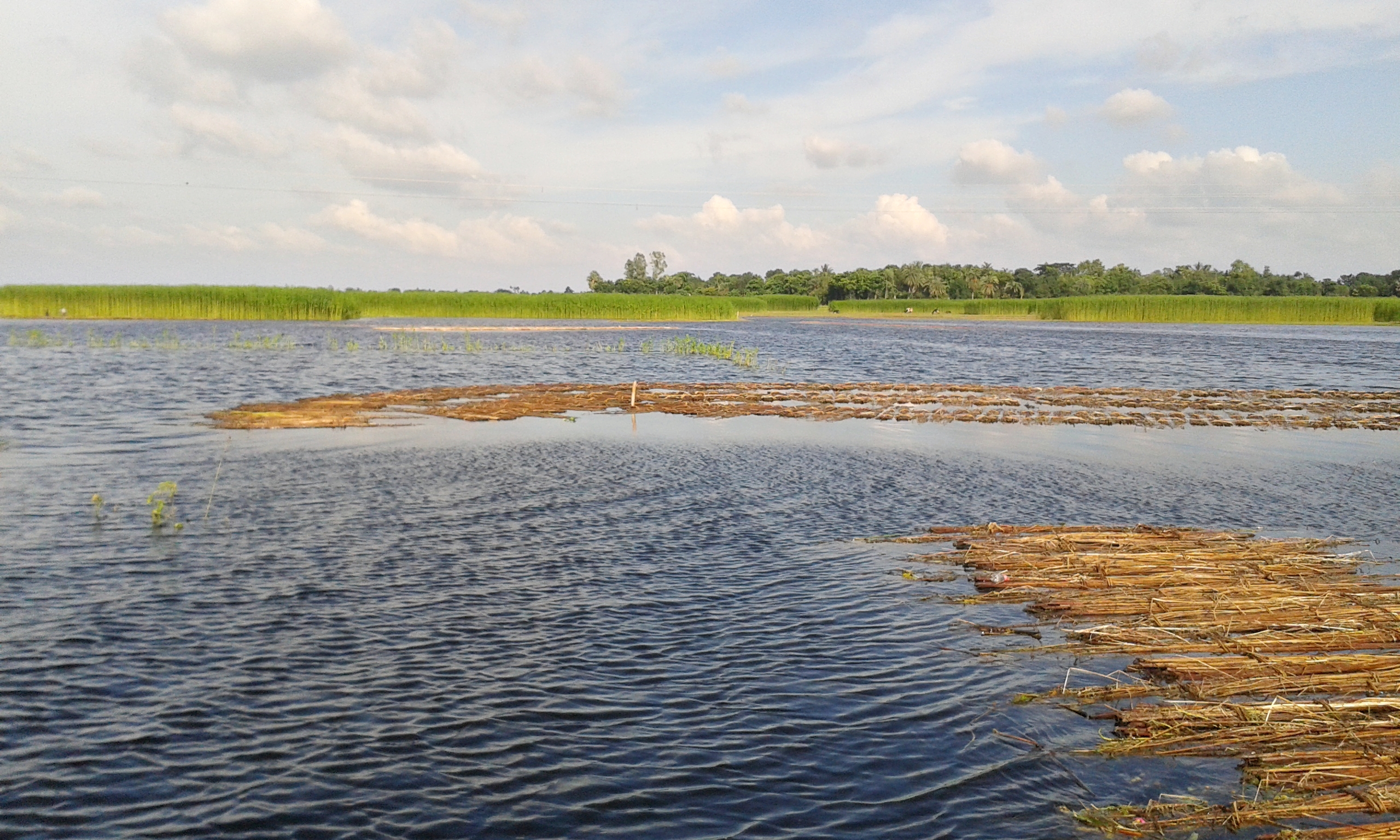
Natore is a district of Rajshahi division covering 1,721.84 square kilometres, bounded by Naogaon and Bogura districts to the north, Pabna and Kushtia to the south, Pabna and Sirajganj to the east and Rajshahi to the west, according to Banglapedia. Its main rivers include the Padma, the Baral and the Mara Baral, and the Chalan Beel wetland is its best-known natural feature. Natore became a subdivision of Rajshahi district in 1845 and a district in 1984. The 2011 census counted 1,577,369 people, and Banglapedia records agriculture as the main source of income for 70.59 percent of them.
Lalpur upazila is one of the district's main mango areas. The Daily Star reported in May 2026 that mango growers in four upazilas of Natore were heading into the harvest with renewed hope, and that in Lalpur villages such as Gouripur, Gopalpur and Mominpur the trees were so heavy with Gopalbhog, Langra, Khirsapat and the early local Aati variety that branches drooped close to the ground. Lalpur, which borders Rajshahi's Bagha upazila to the west, covers 327.92 square kilometres; Baraigram, where Moukhara lies, covers 299.60 square kilometres and borders Lalpur, Bagatipara, Gurudaspur and Natore Sadar upazilas, Banglapedia records.
The mango, its varieties and the risks to the crop
The mango, Mangifera indica, belongs to the family Anacardiaceae and is considered indigenous to the eastern part of the Indian subcontinent, including Bangladesh, Assam and Myanmar, Banglapedia notes. The country's mangoes fall into two groups: superior or elite varieties propagated by grafting and other vegetative means, and local varieties raised from seed, popularly called deshi or guti am, which have no recognised varietal names and whose taste is not assured. Jagonews24's prices from Natore in June showed the difference: guti varieties other than Atir Kalua at Tk 30 to Tk 40 a kilogram, against Tk 40 to Tk 50 for Khirsapat and Langra.
Among the elite varieties Banglapedia lists Fazli, Langra, Gopalbhog, Himsagar, Khirsapat, Ashwina, Lakshmanbhog and Mohanbhog, and it counts nearly 100 cultivars in the country. The DAE produces and distributes grafts of elite cultivars from its orchards, horticultural bases and nurseries, and the Bangladesh Agricultural Research Institute (BARI) runs research centres at Rajshahi, Chapainawabganj and Joydebpur on propagation, production and post-harvest technology. Grafted trees begin to bear fruit in the fourth year after planting and remain productive up to about their 45th year.
Khirsapat, popularly known as Himsagar, became in January 2019 the third product of Bangladesh to receive a Geographical Indication (GI), as a mango of Chapainawabganj, after hilsa and jamdani, The Daily Star reported at the time; BARI had applied for it on behalf of the district's growers in 2017. Newer varieties are spreading fast: BSS reported in February 2026 that new orchards of Amrapali and BARI Mango-3 and 4 were increasing rapidly in the region every year.
Weather decides much of each year's crop. According to Banglapedia, fruit setting is harmed by fog, rain or cloudy weather from January to March when the trees flower; mild showers help the fruit grow, but storms, and hailstorms in particular, cause immature fruit to drop. Of about a thousand flowers, only one or two may become a mature fruit. In 2026, BSS reported, winter ended without late fog or rain and the trees flowered well, and by June Jagonews24 found that favourable weather had given Natore a good yield, even as prices fell.
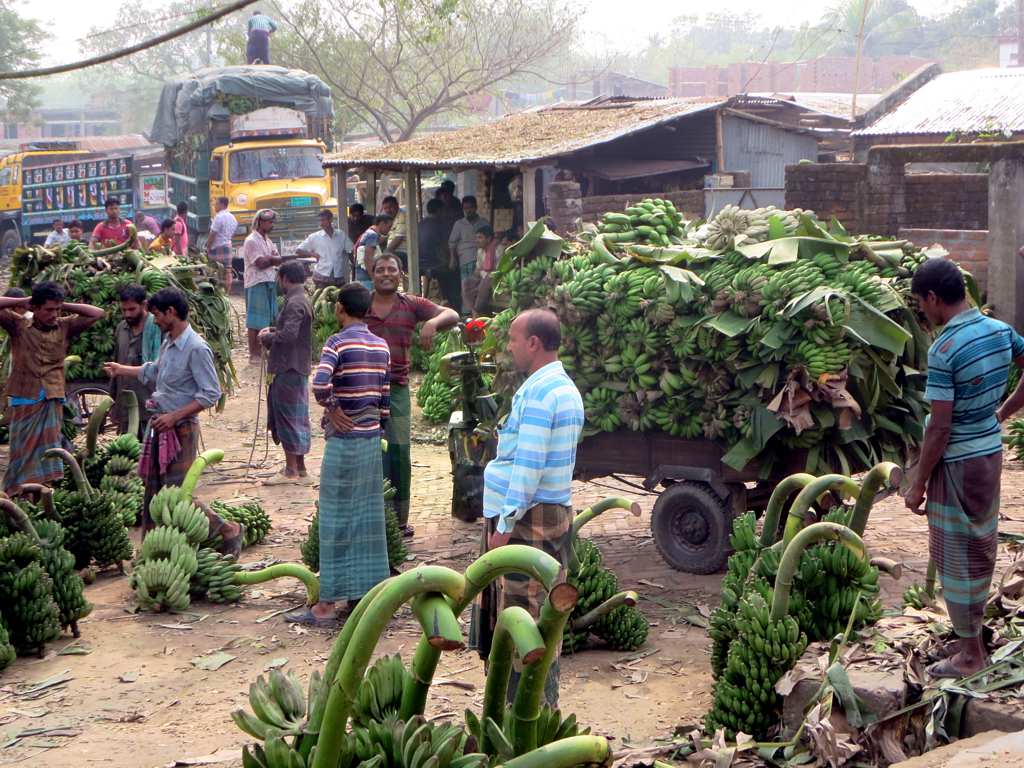
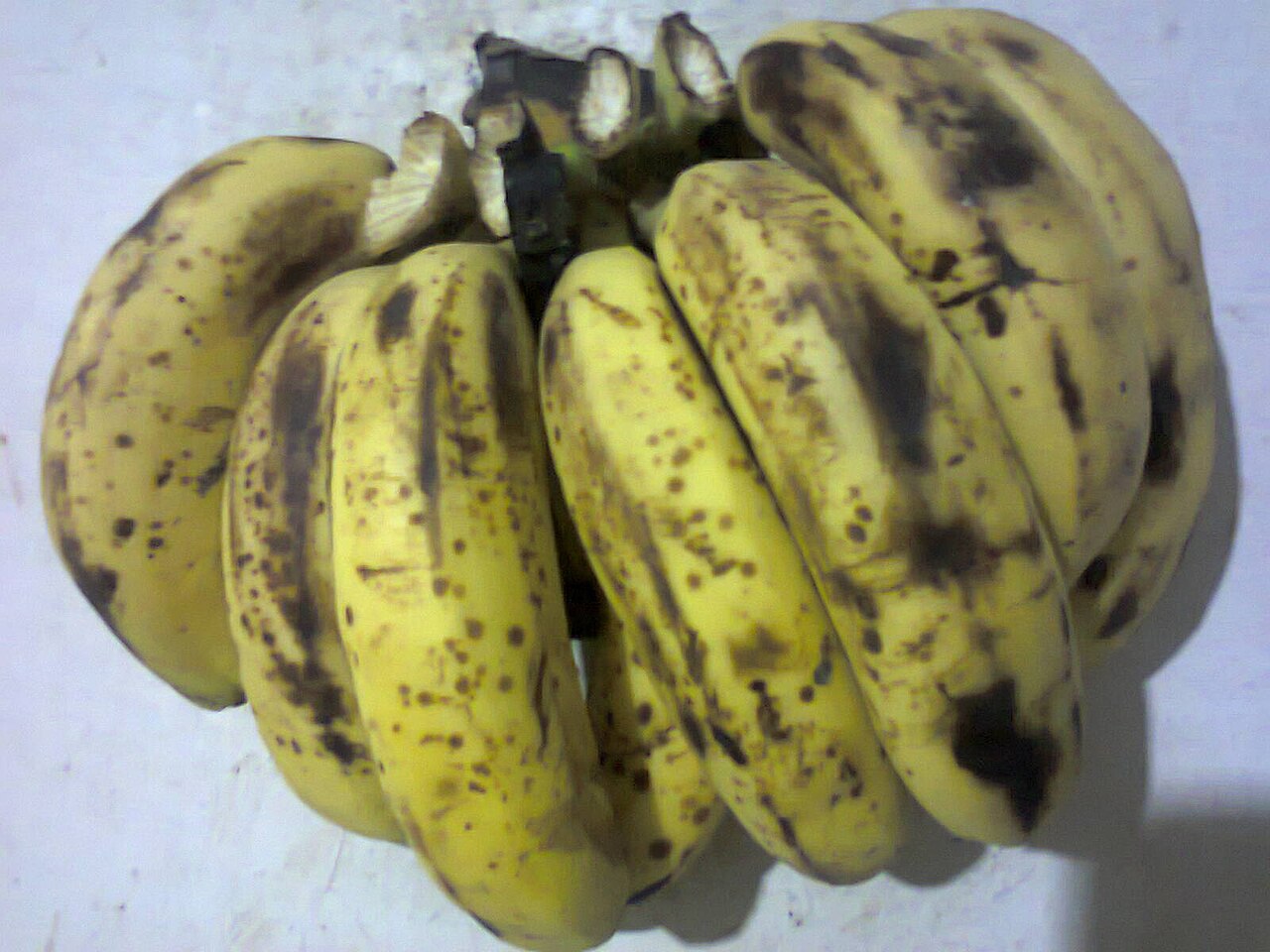
Photo: Ferdous / Wikimedia Commons (CC BY-SA 4.0). The top picture shows a basket of mangoes at Rohanpur market in Chapainawabganj, Bangladesh, as background.
Sources: Jagonews24 (17 June 2026), The Daily Star (13 May 2026; 29 August 2025; 27 January 2019), The Daily Observer (14 May 2026), UNB via The Financial Express (11 May 2026), Prothom Alo (14 and 17 June 2026), Jugantor (2 June 2026), Bangla Tribune (10 May 2026), Bangladesh Sangbad Sangstha (15 and 26 February 2026), Dhaka Tribune (25 May 2024), Banglapedia (Natore District, Lalpur Upazila, Baraigram Upazila, Mango)
Comments
(0)