
Each of Bengal's six seasons brings a different face and flavour of nature. When Sharat, the early autumn, arrives after the wet monsoon, rafts of white cloud float across the sky, kash flowers sway in the fields and a festive mood spreads along village paths. Alongside its beauty, the season gives us a range of native fruits. Some come at the start of Sharat and others appear in rural markets throughout it. These fruits do not only please the palate; they are woven into Bengal's agriculture, culture and village life.
Palm and guava
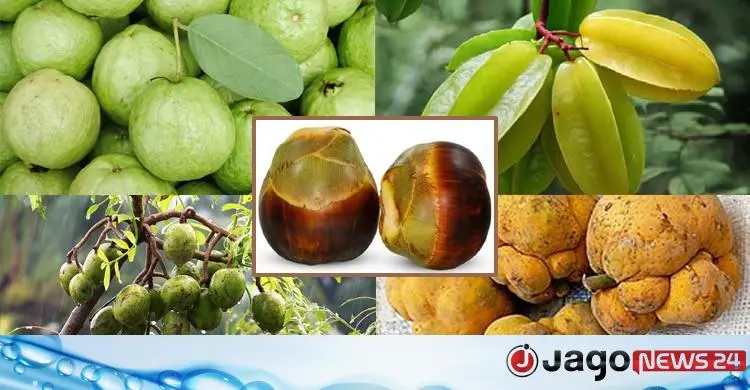
Talk of Sharat fruit brings palm fruit to mind first. In the months of Bhadra and Ashwin, the sweet smell of ripe palm fruit fills the countryside. It is used to make taler bora, pitha, payesh and many other treats. The juice and pulp of ripe palm fruit are delicious, and the palm tree itself is a familiar sight in rural Bengal. For many families, gathering palm fruit and cooking with it is part of the season's tradition.
Guava is another familiar fruit of the season, available in many areas from the end of the monsoon into Sharat. Crunchy guava eaten with salt and chilli has a taste of its own. Baskets of guava in village markets and guava trees in courtyards are both familiar autumn sights. Guava contains vitamin C and fibre, which makes it popular as a nutritious fruit too.
Hog plum, star fruit and monkey jack
Hog plum (amra) is plentiful at this time. Its sweet-sour taste is enjoyed raw with salt and chilli, and many people love amra bharta, pickle and chutney. Amra in the hands of children coming home from school or in small village shops makes the days of Sharat livelier.
Star fruit (kamranga) is another attractive fruit of the season. The five-sided fruit is as pretty to look at as it is varied in taste, and many people love the sourness of the raw fruit. Slicing it and sprinkling it with salt and chilli makes an autumn afternoon all the more enjoyable.
Monkey jack (deua) is a familiar native fruit of Sharat with the taste of Bengal's soil. Ripe deua is usually yellowish, with a soft, sweet and tasty inside. Deua trees were once common in village homesteads and gardens, and the fruit carries childhood memories and the heritage of native fruit.
Over time, many native fruit trees are disappearing. As homesteads and farmland expand, old fruit trees are being lost, and future generations may be deprived of the taste and smell of many native fruits. Planting native fruit trees, protecting old ones and increasing the cultivation of local fruit are therefore urgent.
The writer, Niamur Rashid Shihab, is a student at Global University Bangladesh.
Source: Jagonews24. First published in Bengali on The Agro News.

Comments
(0)