
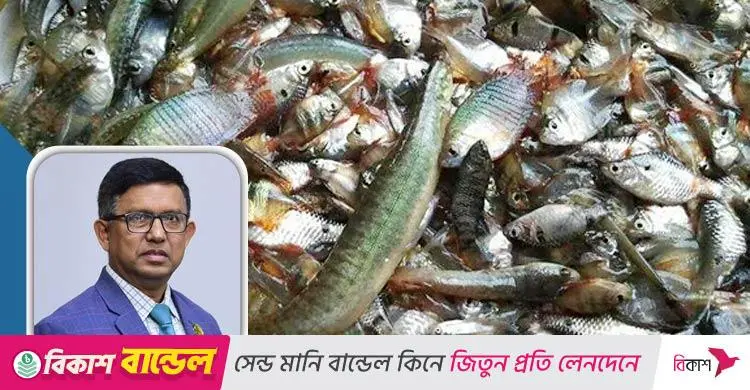
Fish makes up a large part of the daily diet of Bengalis, the people of "fish and rice". Native fish not only meet our food needs but are closely linked with nutrition, livelihoods and the country's economy. Yet many native fish are disappearing over time.
The monsoon is an important time for Bangladesh's fisheries, as native fish breed then. But this natural process is being disrupted, and the survival of native fish could be threatened in future. Various native species were once seen in village markets; now these tasty fish are rarely caught even in fishermen's nets.
There are more than 50 varieties of native fish. Some fishers and ordinary people catch fry indiscriminately, so the fish never get the chance to grow. Killing fry has become one of the main causes of the disappearance of native fish.
Prof Dr Mrityunjoy Kundu, former dean of the Faculty of Fisheries at Sylhet Agricultural University, spoke to Jago News about fish breeding in the monsoon, the harm done by killing fry, and what steps should be taken to keep native fish alive.
Why is the monsoon important for fish breeding?
Most of Bangladesh's native fish breed during the monsoon, so this period is extremely important. Without breeding, fish will not multiply, and these fish will eventually vanish from the country. Native fish breed mainly between May and July, though the timing can vary by place. Breeding starts earlier in the Sylhet region than elsewhere in Bangladesh, one to one and a half months earlier, because rain starts earlier there. As a result, native fish in the Sylhet region sometimes start breeding before the monsoon arrives.
Which native fish spawn in the monsoon?
Most fish generally spawn in the monsoon, which is called the breeding season for fish. There are mainly two kinds: large fish such as carps, and small native species. The large carps spawn in the full monsoon season, from May to August, though in the Sylhet region it is from May to July. The large fish include carps, carnivorous fish and snakeheads such as rui, catla, mrigel, gajar, air and boal.
In the Sylhet region, small fish begin breeding between April and May, when the first rains start; elsewhere in the country it happens much later. The small fish include many different kinds.
How much is fry catching to blame?
Killing or catching fry is certainly one of the main reasons native fish are disappearing. Fish caught as fry cannot grow, and if they do not grow they cannot breed in later years. On the other hand, small-scale leaseholders who take ponds or small beels mainly for three or five years pump them dry at the end of the lease and catch all the fish, even the small fry. They also use poison to catch the species that live mixed in the mud, and then no fish remain.
What will we lose if native fish disappear?
Catching fry is damaging the country's fish resources: if fish are caught or not allowed to grow properly after the mother fish spawn, native species will gradually disappear. Many native species are already under threat, and if this goes on a little longer they will no longer be seen. Small native fish are very good for our health.
Mola, dhela, chanda, puti, tengra, kachki and batashi contain plenty of vitamin A, calcium, zinc, iron, phosphorus, protein and vitamin D, which help keep the eyes healthy. If these fish disappear, we will face a major threat.
What should be done to stop fry catching?
To stop it, the killing or catching of fry must first be halted. Two kinds of measures can help: raising public awareness, and arranging food assistance for fishermen through union parishad chairmen or members. The government should also take the necessary steps, such as banning the catching of undersized fish, banning illegal nets (fash jal) and stopping fishing entirely in the peak breeding season. Just as fishermen receive various kinds of support during the hilsa ban, the same should be done for native species. Finally, to conserve the country's fish species, people must stop catching fry.
What is needed to make people aware?
Announcements by loudspeaker and various campaigns against killing fry can raise awareness, involving local administration officials, local people and, where possible, agricultural university teachers or fisheries researchers. They would discuss the harm of catching fry and the benefits of native fish in these campaigns. This must continue every year.
Source: Jagonews24. First published in Bengali on The Agro News.
Comments
(0)