
Bilkis Nahar Mitu
The native khejur (date) is a familiar fruit of rural Bengal and one of the village fruits that children grow up eating. In childhood, "khejur" meant two kinds of dates: the native one was simply khejur, while bought dates were called Saudi dates, or in some regions "khurma khejur".
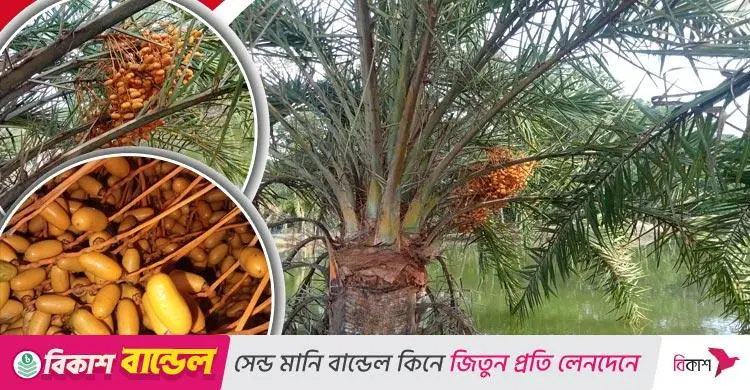
The date palm usually flowers after its sap has been collected. The fruit starts green, turns a light yellowish colour and then deep orange as it ripens. It begins ripening in the Bengali months of Baishakh-Jyoishtho and drops beneath the tree, where people collect the first fruit. Birds also start visiting and eat large quantities of dates.
How the fruit is gathered
A date palm bears five to seven bunches or more, though sometimes fewer. Some dates start ripening around the month of Asharh and can be found until Srabon. Besides gathering them from under the tree, people cut the bunches, wrap them in banana leaves and soak them in water or a pond for a day, a practice known locally as "jag dewa".
Bunches cut from the tree and kept at home also ripen within two to three days. Ripe, the fruit is very sweet and turns maroon. It has a thin, polythene-like skin and soft, grainy flesh inside, with a fairly long seed. In the Barishal region, dates are made into moa with puffed rice at home.
While the fruit is still green, village children play a game called guti with the seeds on squares drawn in the earth. Some also chew the raw fruit, which tastes astringent; the seeds are soft then and crunch when chewed.
Nutrition and decline
According to various sources, dates contain vitamins A, C and K, iron, beta-carotene, calcium and other nutrients. They are very good for heart disease and help the body make blood. Dates also aid digestion, help strengthen the stomach and liver, and are quite effective for the body's disease resistance.
The tree's mati or mathi (heart) is very tasty. The tree is not seen in urban areas. It is planted in coastal areas to prevent soil erosion, although most trees grow without planting, spread by birds. Sadly, the tree is now rarely seen. Planting has declined, and the decline of birds in nature has also pushed the date palm towards extinction.
Native date palms yield a great deal of sap, which is made into molasses, and in season there is the fruit as well. The decline of the tree is causing shortages of dates, sap and molasses, and village children today hardly know the fruit. Date palm planting should be increased through national and personal initiatives. That way we will get back our native fruit and village memories, and the country's economy will also get a boost.
The writer is a student at Government BL College, Khulna.
Source: Jagonews24. First published in Bengali on The Agro News.
Comments
(0)