
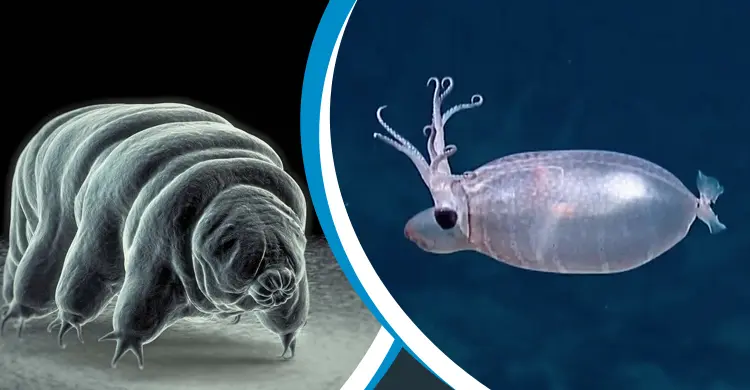
The US space agency NASA will send animals from Earth into space. It has taken the initiative to send 5,000 tardigrades (water bears) and 128 baby squid.
Through this experiment scientists are trying to answer questions about life in space. NASA said the test would reveal a good deal about how far living things are able to survive in space.
The tardigrades and baby squid will board a Falcon 9 rocket on Thursday (June 3). The mission will lift off from the Kennedy Space Center in Florida at 1:29pm local time.
The animals will then be sent into space from the International Space Station during SpaceX's 22nd cargo mission.
Tough water bears
The tardigrade is a tiny animal, only one millimetre long. It can adapt to and survive extremely harsh conditions, even high pressure and radioactive fields.
Most animals cannot survive such conditions. Because of this remarkable power of survival, scientists have chosen these animals for space research. Through them they will try to understand the specific genes that allow living things to survive extreme natural environments.
Glowing squid
Scientists are sending baby squid of the bobtail species to the International Space Station. They have a special feature: they can light themselves up in the dark. They are only three millimetres long. An organ is responsible for their glow in the dark, emitting light from inside the animal.
In the absence of light, they take help from bioluminescent bacteria to light up. This ability is not built in, however: over many years the bacteria collect in the squid's body from the ocean. Before the journey into space, researchers introduced these bacteria into the baby squid's bodies.
Source: Jagonews24. First published in Bengali on The Agro News.

Comments
(0)