
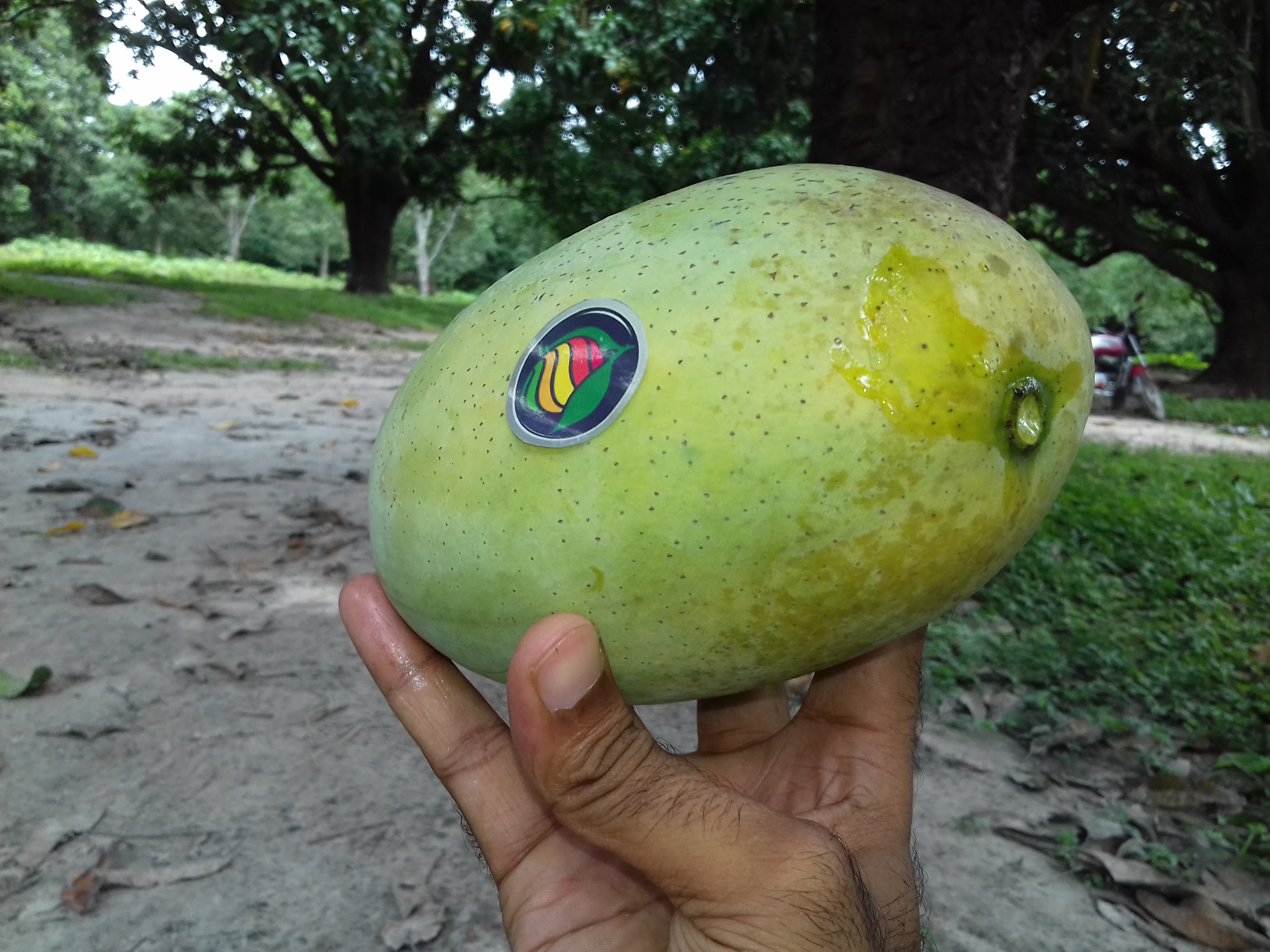
In June 2026 buyers of Nak Fazli, a late-season mango from Naogaon that had been recognised as a geographical indication (GI) product of Bangladesh the year before, complained that the fruit they had bought was immature. Jagonews24 reported on 24 June 2026 that some traders and growers were accused of picking the mango before its proper time and putting it on the market early, to cash in on the nationwide interest the GI status had created. According to the buyers quoted, some of the mangoes were mushy, sour and foul-smelling inside, while others never ripened at all, dried out and spoiled.
Experts quoted in the report said the situation had been caused by harvesting immature fruit and applying chemicals in the hope of bigger profits. They warned that if it went on, both the reputation and the market of the GI-recognised Nak Fazli could be put at risk.
What buyers said
Arif Raihan, an engineer at a private company in Dhaka, told Jagonews24 that on 13 June 2026 he had bought 45 kg of Nak Fazli mangoes from Badalgachhi upazila in Naogaon for Tk 2,400. He was pleased that the fruit reached him quickly, but two days later, when he went to eat it, he was disappointed.
"After they ripened a little I cut them properly. But inside they were mushy, sour and slightly foul-smelling. It looked as if they had been ripened with some chemical before they matured. In the end I had to throw all the mangoes away," he told Jagonews24.
He was not alone. An agriculture officer working in Naogaon, who spoke on condition of anonymity, told the paper that because he was posted in the district he had sent the traditional local mango as a gift to a senior official. Several days passed and the mangoes did not ripen; they dried out and went flat. When the recipient sent him photographs of the spoiled fruit, he said, he felt embarrassed and ashamed.
Local sources told Jagonews24 that as demand and prices rose after the GI recognition, some growers had picked the fruit while it was still immature in the hope of greater profit, and then ripened it quickly with chemicals before selling it. Buyers, the report said, were being denied the taste and quality they expected.
What officials and scientists said
Monjur Rahman, named in the report as deputy director of the Department of Agricultural Extension (DAE) in Naogaon, pointed first to the trees themselves. "Many Nak Fazli trees in the Badalgachhi area are old, and some problems can also arise because of their age. But we will seek the help of the mango research centre to find the real cause. They can study the matter and give a precise explanation," he told Jagonews24.
Dr Md Sharaf Uddin, chief scientific officer of the Regional Horticulture Research Station in Chapainawabganj, described how the ripeners work. "Various ethylene-based ripeners are available on the market. When these chemicals are applied, mangoes look ready to eat within 24 to 48 hours, but in reality they are still not mature," he said.
"Most of the mangoes were taken down from the orchards before Nak Fazli was due to mature. So when buyers eat them they can tell they are immature. In many cases they are rotting inside and out, and the taste is also spoiled," he added.
There had been hardly any complaints about Nak Fazli over the previous two decades, the report noted. Sharaf Uddin said this was because the mangoes used to be harvested at the proper time. "Demand has risen since GI recognition. Hoping for more profit, some growers harvested mangoes before the right time, and the negative impact is now being felt in the market. If this continues, buyers' confidence in Nak Fazli will fall, and in time this traditional mango will be at risk of losing its market," he said.
Nak Fazli, a late mango from Badalgachhi
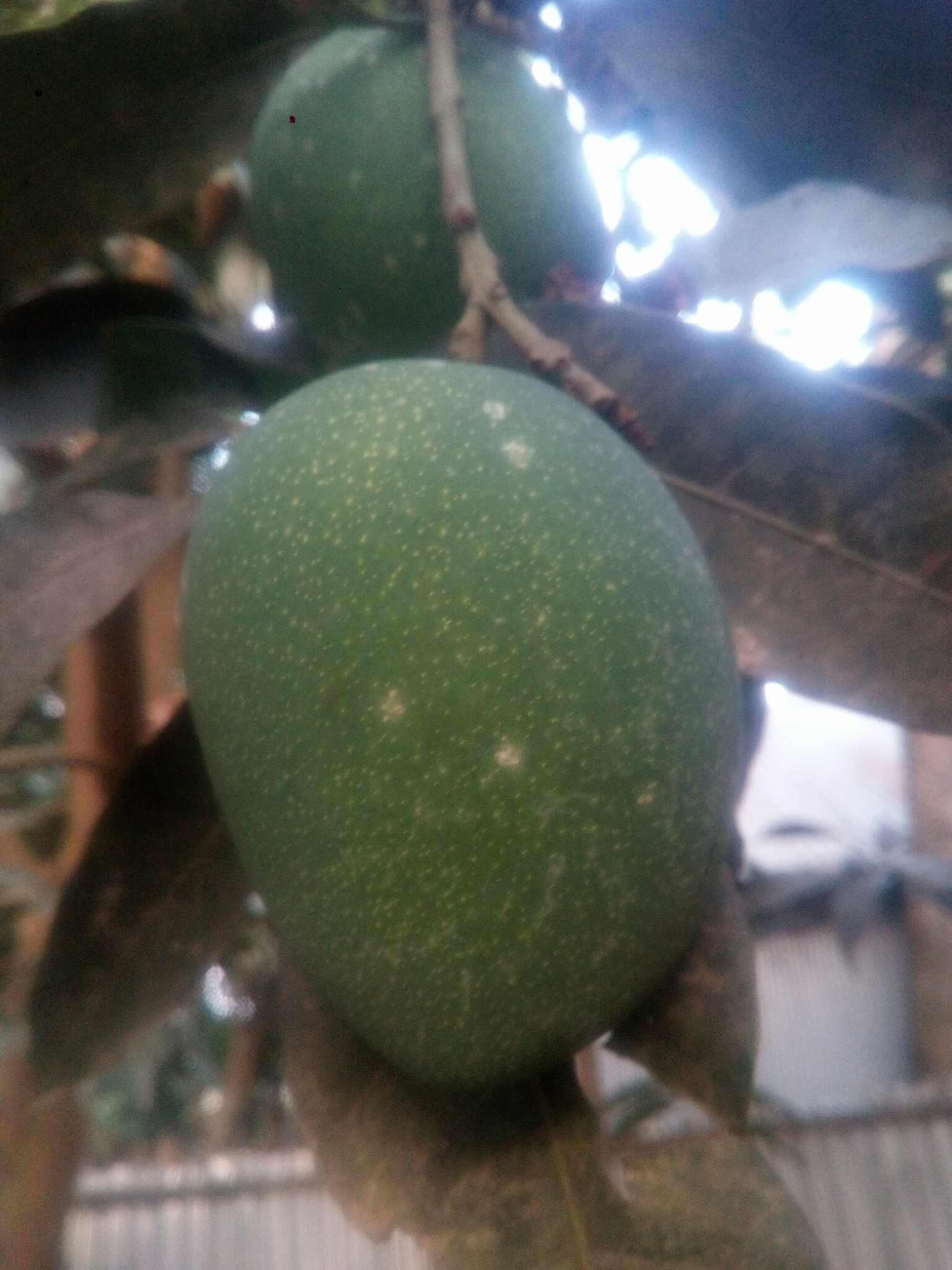
Nak Fazli belongs to the late-season (nabi) group of mangoes. When Prothom Alo reported its GI recognition on 6 May 2025, agriculture officials described it as a variety that ripens from the last week of June, with a harvest period lasting until the first week of August. Jagonews24 gave the same season in its June 2026 report: the mango usually matures in the last week of June and can be picked until the first week of August, but in 2026 large quantities had reached the market before that normal time.
The officials' description, as Prothom Alo reported it, is of a large fruit, long and flattened in shape, on average 10.5 cm long and 4.4 cm thick and weighing about 300 grams. The skin of the ripe fruit stays almost green or turns a light yellowish colour, and the flesh is yellow. The fruit is sweet and well flavoured, with a thin skin and a long, flat, thin stone. Jagonews24 added that the variety is known for its large size, thin skin, sweet taste and distinctive aroma.
The mango was first grown in Badalgachhi upazila of Naogaon, and Badalgachhi is still where most of it is cultivated. Sabab Farhan, the Badalgachhi upazila agriculture officer, told Prothom Alo in May 2025 that with the GI recognition Naogaon's Nak Fazli had become an asset of the whole country. According to figures the DAE district office gave Bangladesh Sangbad Sangstha (BSS) on 6 June 2026, Nak Fazli orchards covered 900 hectares in Naogaon that season.
Nak Fazli is distinct from the better-known Fazli of Rajshahi, which is later still. When that variety's GI notice was published in October 2021, the Rajshahi Fruit Research Centre's chief scientific officer, Alim Uddin, told UNB, as carried by The Financial Express, that the Rajshahi Fazli ripens from the second week of July to the second week of August, takes about five and a half months from flowering to reach maturity, and takes seven to eight days to ripen after picking.
The GI recognition and the law behind it
According to Prothom Alo's report of May 2025, the application for GI registration of Naogaon's Nak Fazli was filed in February 2017 with the Department of Patents, Designs and Trademarks (DPDT) under the Ministry of Industries. It was made by a growers' body, the Badalgachhi Nak Fazli mango growers' association, with the help of the Naogaon agriculture department. After the statutory wait of two months, with no notice of opposition from any party, the name "Naogaon's Nak Fazli mango" was granted as a geographical indication and the certificate issued.
The certificate was handed over on 1 May 2025, at a discussion meeting marking World Intellectual Property Day, to Mozaffar Hossain, president of the Nak Fazli Mango Growers' Cooperative Society Limited. Abul Kalam Azad, then deputy director of the DAE in Naogaon, confirmed the award to Prothom Alo, and said the recognition was expected to raise the mango's profile and demand in national and international markets.
Bangladesh registers geographical indications under the Geographical Indications of Goods (Registration and Protection) Act, 2013 (Act No. LIV of 2013), which received assent on 10 November 2013. According to the summary in WIPO Lex, the database of the World Intellectual Property Organization, the Act set up a Geographical Indication Unit within the DPDT; allowed associations and government bodies that represent producers to apply; required each application to be published, with a two-month period for objections; protected registered names against marks that falsely suggest a different origin; and provided for civil remedies and for criminal penalties of up to three years' imprisonment and fines of up to Tk 200,000.
The World Intellectual Property Organization describes a GI, as The Financial Express put it in 2021, as a sign used on products that have a specific geographical origin and possess qualities or a reputation that are due to that origin. The Rajshahi Fazli went through the same process: the DPDT published a general notice on 6 October 2021 on an application by the Rajshahi Fruit Research Centre, and the variety was to be certified if no objection was raised within two months. In that report the centre's chief scientific officer said the mango had been sold in Indian markets as "Bagha Fazli" as far back as 200 years earlier.
The harvest calendar and the early arrival
Naogaon's district administration sets a harvest calendar each year to keep immature mangoes off the market. At a meeting on 10 May 2026 chaired by the deputy commissioner, Mohammad Saiful Islam, it announced the 2026 dates, Bangladesh Pratidin reported: local guti mangoes from 22 May, Gopalbhog from 30 May, Khirsapat or Himsagar from 2 June, Nak Fazli from 5 June, Langra and Haribhanga from 10 June, Amrapali from 15 June, Fazli and Banana Mango from 25 June, and Ashwina, BARI Aam-4, Gourmoti and Katimon from 5 July. Growers could pick earlier only with the permission of the upazila administration, in case of bad weather, heat or another special reason.
At that meeting the deputy commissioner said the schedule was meant to ensure that mature mangoes were picked, that immature mangoes must not be harvested or brought to market in pursuit of extra profit, and that a district-wide campaign would be run so that growers followed the dates. On 6 June 2026 he told BSS that upazila administrations had been instructed to stop immature mangoes reaching the market, and that action would be taken against anyone if proof was found that chemicals had been applied to mangoes.
The 5 June date for Nak Fazli was not new. In 2024 the district administration had fixed the same day for the variety, Desh Rupantor reported on 7 May 2024, and had set out how early picking could be allowed: an orchard owner had to apply, and the upazila nirbahi officer and the upazila agriculture officer would inspect the orchard before granting permission. The official calendar therefore opened the Nak Fazli harvest on 5 June, while the agriculture officials quoted by Prothom Alo in 2025 and the Jagonews24 report of 2026 both gave the last week of June as the time the variety usually ripens.
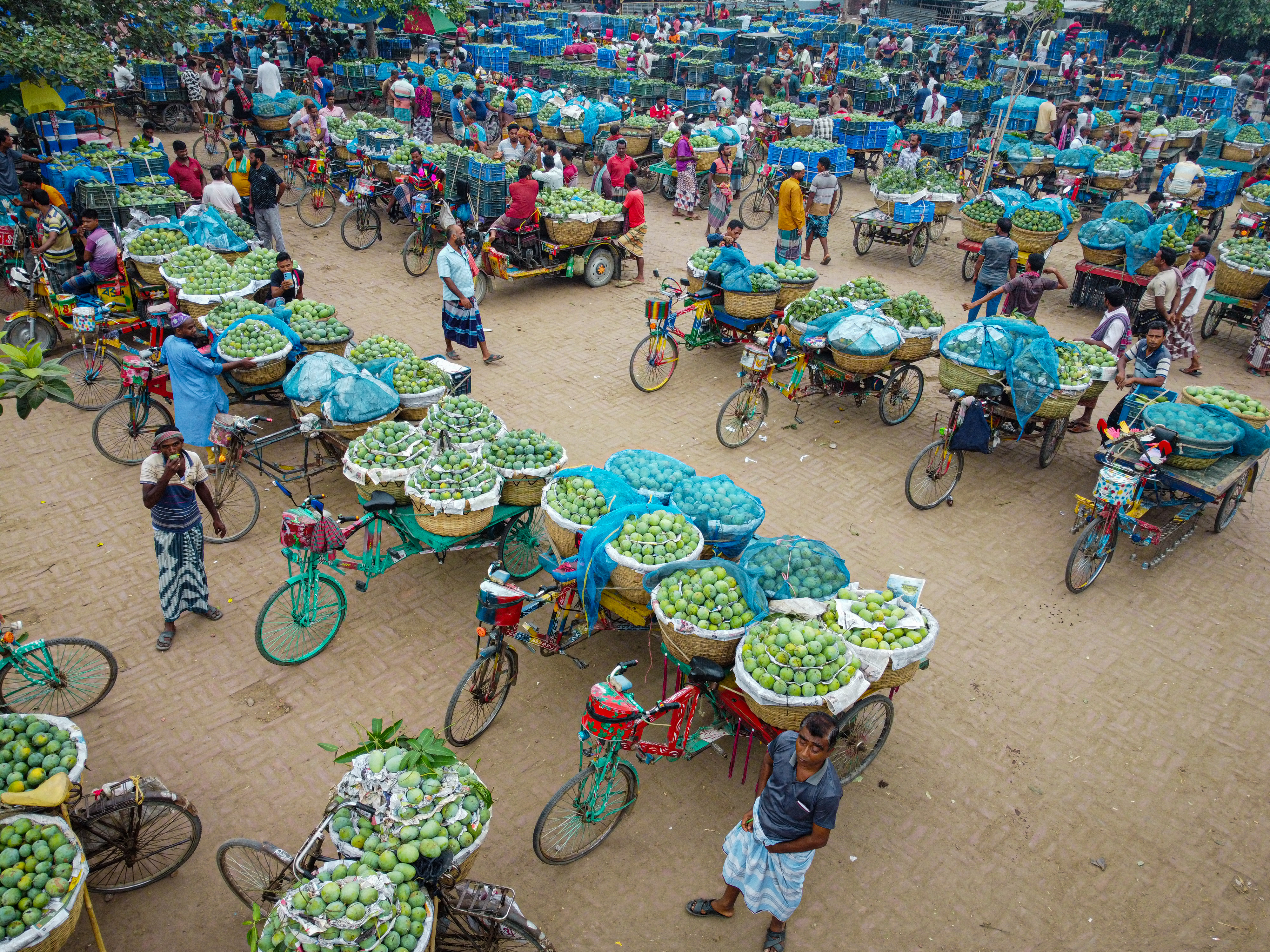
In line with the 2026 schedule, Nak Fazli reached the market at Sapahar, Naogaon's largest mango market, on Friday 5 June, Prothom Alo reported the next day. A grower from Dibar village in Patnitala upazila, Sohel Hossain, had brought eight maunds of Nak Fazli on two vans; the best offer he had received was Tk 1,600 a maund, against the Tk 1,900 a maund the variety had fetched at the same time the year before. Growers complained that prices were lower than in 2025 and that, under an agreement mediated by the administration, 48 kg were being counted as one maund. Kartik Saha, president of the market's commission agents' association, said 230 agents' stalls had opened and that 400 to 500 maunds of mangoes were arriving each day. Romana Riaz, the Sapahar upazila nirbahi officer, said a circular had recently been issued for farm produce to be traded at 40 kg to the maund, and that no complaint of overweighing had yet been received.
Naogaon's mango economy
Over two decades mango orchards had spread steadily across Naogaon, and in 2024 the district produced more mangoes than any other in Bangladesh, Prothom Alo reported in May 2025. For the 2026 season the DAE district office told BSS that mangoes were growing on 30,500 hectares, up from 30,300 hectares the previous year, with a production target of about 422,000 tonnes. Prothom Alo, citing the agriculture department on 6 June 2026, gave a slightly different set of figures: 30,310 hectares of orchards, an average yield of 12.78 tonnes a hectare, a production target of 387,361 tonnes and a target of exporting 200 tonnes.
Amrapali dominated the district's orchards in 2026, with 18,522 hectares, according to BSS. BARI Aam-4 covered 2,470 hectares, Ashwina 2,323, Langra 1,560, Khirsapat 1,476 and Nak Fazli 900, alongside some foreign varieties. About 16 varieties were grown, and more than 70 per cent of the orchards lay in Sapahar, Porsha and Niamatpur upazilas and part of Patnitala. The three largest mango markets in the district were Sapahar, Nochnahar and Minabazar. Homayra Mondol, the DAE deputy director in Naogaon, told BSS that mango flowering had begun in late January and that the district could see mango trade worth about Tk 3,000 crore that year.
A grower from Porsha upazila, Kamal Uddin Mia, told BSS that leasing a bigha of land for 12 years cost the owner Tk 25,000 to Tk 30,000 a bigha, that growing mangoes on a bigha cost about Tk 40,000, and that after costs a bigha could return a profit of up to Tk 120,000.
Nationally, Jagonews24 reported on 4 June 2026, citing the agriculture department, that Bangladesh had produced 2.662 million tonnes of mangoes on 207,000 hectares in 2025, and that the domestic mango market was worth an estimated Tk 13,000 crore. Exports were small by comparison: 2,194 tonnes in 2025. Mangoes were grown commercially in 14 districts, and the main varieties reached the market in phases between 5 May and 15 August.
How a mature mango is recognised
The Food and Agriculture Organization of the United Nations (FAO), in its post-harvest compendium on mango, notes that mangoes normally reach maturity four to five months after flowering, and that they are generally harvested at the physiologically mature stage and then ripened for the best quality.
The compendium gives a simple field sign: when a mango is fully grown and ready for picking, its stem snaps easily with a slight pull; if a strong pull is needed, the fruit is still somewhat immature and should not be harvested. In red-skinned types a purplish-red blush at the base of the fruit is a further sign. It advises harvesting in the morning, keeping picked fruit in the shade, not letting it fall to the ground, and leaving a short stalk on the fruit, which reduces sap burn and stem-end rot. It puts post-harvest losses of mangoes, from harvest to consumption, at 25 to 40 per cent.
The same FAO text records the practice at the centre of the Naogaon complaints. It is a general practice, it says, to harvest fruit early in the season, at a premature stage, to capture the early market, and such fruit does not ripen uniformly without a ripening aid. On controlled ripening with ethylene gas it adds that 24 hours of exposure is generally sufficient if fruit has been picked at the proper stage, and that mangoes which need more than 48 hours of ethylene treatment have been picked prematurely and are not fit for market.
Ethylene, ethephon and carbide: what the rules and research say
Ethylene is the natural hormone that drives ripening in fruits such as mango. A peer-reviewed review of food adulteration by Mysha Momtaz, Saniya Yesmin Bubli and Mohidus Samad Khan, published in the journal Foods in January 2023, explains why chemicals are used: to avoid losses from spoilage during harvest and transport, sellers pick fruits well before they reach proper maturity and ripen them artificially just before retail, and artificial ripening is also used when sellers want to sell fruit before its due season for extra profit. The review lists ethylene, ethanol, methanol, propylene, methyl jasmonate, ethylene glycol, ethephon and calcium carbide among the agents used.
Calcium carbide releases acetylene when it reacts with moisture, and acetylene starts ripening in mangoes. The review notes that industrial-grade calcium carbide can carry impurities including calcium phosphide, arsenic sulphide and phosphine. It also reports that fruits treated with ethephon, a compound that releases ethylene, keep longer than fruits treated with calcium carbide.
In Bangladesh the Bangladesh Food Safety Authority (BFSA) set out its position at a workshop in Dhaka on 23 May 2018, The Daily Star reported. Criticising law enforcers' drives that had destroyed mangoes found with traces of ethephon and carbide, BFSA said these were not harmful if used in limited quantities. Speakers said ethephon was used to ripen fruit in many countries and was not banned there; fruit ripened with ethephon before the right time might have lower nutritional value but was edible and harmless. Mangoes ripened with carbide, they said, could harm a person directly, which is why carbide ripening was banned under the Safe Food Act, 2013.
At the same workshop a BFSA member, Prof Iqbal Rouf Mamun, said ethylene gas was used in confined ripening chambers in other countries but not in Bangladesh, and many participants urged ethylene gas as a safer method. The BFSA chairman at the time, Mohammad Mahfuzul Hoque, said that if drives found fruit ripened before its due time, the sellers should be punished, but that destroying fruit that was not harmful would be unfortunate. The FAO compendium likewise describes ethylene treatment as a common practice in Israel for ripening fruit for the local market and one some growers in Florida depend on, with the gas injected into the air around the fruit and temperature and humidity controlled.
Badalgachhi and Naogaon
Badalgachhi, home of Nak Fazli, is an upazila of Naogaon district in Rajshahi Division, covering 213.97 square kilometres. The 2022 census counted 59,358 households and 206,557 people there. Formed as a thana in 1807 and made an upazila in 1983, it has eight unions: Adhaipur, Badalgachhi, Balubhara, Bilasbari, Kola, Mathurapur, Mithapur and Paharpur.
Paharpur gives the upazila its best-known landmark: Somapura Mahavihara, also called the Paharpur Buddhist Vihara, one of the most important archaeological sites in Bangladesh, designated a UNESCO World Heritage Site in 1985.
Naogaon district lies in the historical Varendra (Barind) region of north-western Bangladesh and covers about 3,435.67 square kilometres, about 80 per cent of it under cultivation. The 2022 census counted 2,784,599 people in the district. It is a leading rice district, and its crops also include mango, jute, wheat, maize, sugar cane, potato, pulses and oilseeds; for two decades, Prothom Alo noted in 2025, the area under mango orchards had kept growing.
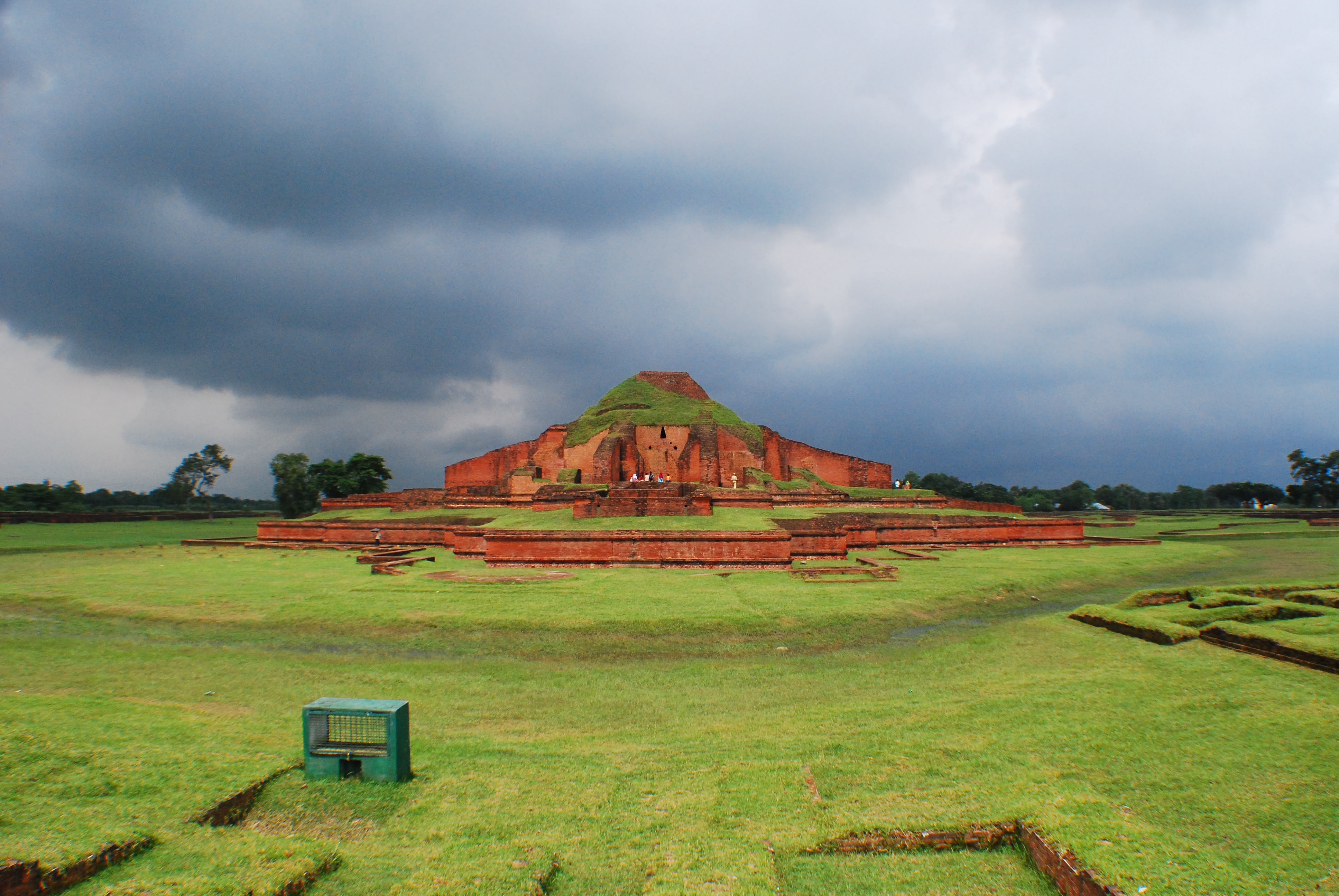
Photo: Fozli.com / Wikimedia Commons (CC BY-SA 4.0)
Sources: Jagonews24, Prothom Alo, Bangladesh Sangbad Sangstha (BSS), Bangladesh Pratidin, Desh Rupantor, The Financial Express, The Daily Star, WIPO Lex, Food and Agriculture Organization of the United Nations (FAO), Foods (MDPI), Wikipedia
Comments
(0)