
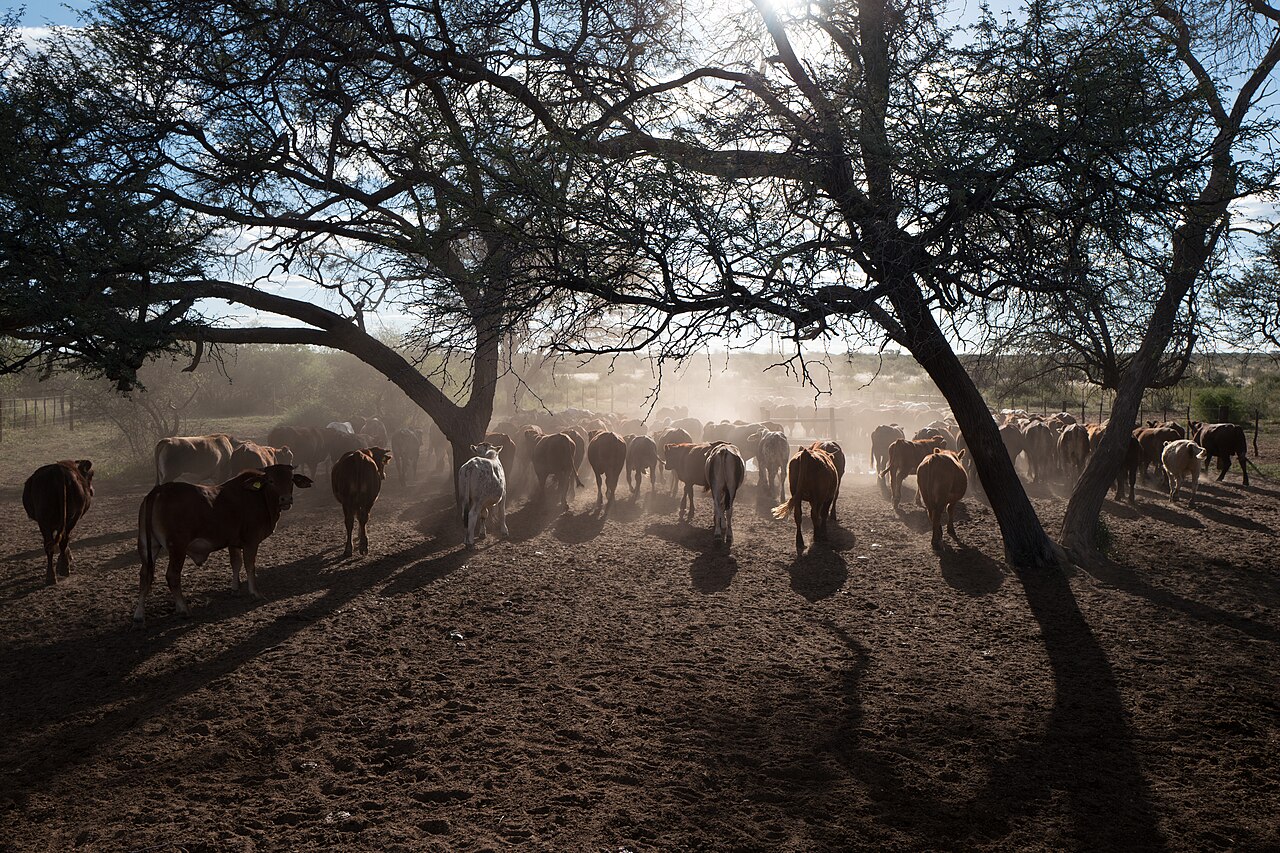
Namibia has suspended all movement of cloven-hoofed animals and their products, and all imports and exports of them, after foot-and-mouth disease (FMD) was confirmed inside its internationally recognised FMD-free zone, Farmer's Weekly South Africa reports.
Acting agriculture minister Charles Mubita told Parliament on 23 September that samples were taken on 22 September from 11 cattle showing clinical signs on a commercial farm in the Karasburg State Veterinary District, found during routine surveillance, and that ten tested positive at the Central Veterinary Laboratory in Windhoek. "This state [thus] confirms an active FMD outbreak in Namibia's World Organisation for Animal Health-recognised FMD-free zone," he said.
The ban covers cattle, sheep, goats, pigs and game and products such as hides, dairy and meat until further notice. It immediately stops the red meat export industry, one of the country's most important foreign-exchange earners, six days before the Windhoek Show Livestock Expo. Mubita acknowledged the serious impact on the economy and livelihoods and promised to contain the disease as quickly as possible.
Namibia Agricultural Union president Thinus Pretorius backed the veterinary services and urged farmers to stop all movement, follow official instructions, report suspected cases, apply strict biosecurity and avoid spreading unverified information. "This disease does not respect fences, boundaries or good intentions," he said. "One unauthorised load, one unreported case or one careless visitor can undo the efforts of everyone else."
The union called on the government to declare a state of emergency so that the full resources of the state can be used to contain the outbreak.
Photo: Jean Bucher & Hp.Baumeler / Wikimedia Commons (CC BY-SA 4.0)
Source: Farmers Weekly South Africa

Comments
(0)