
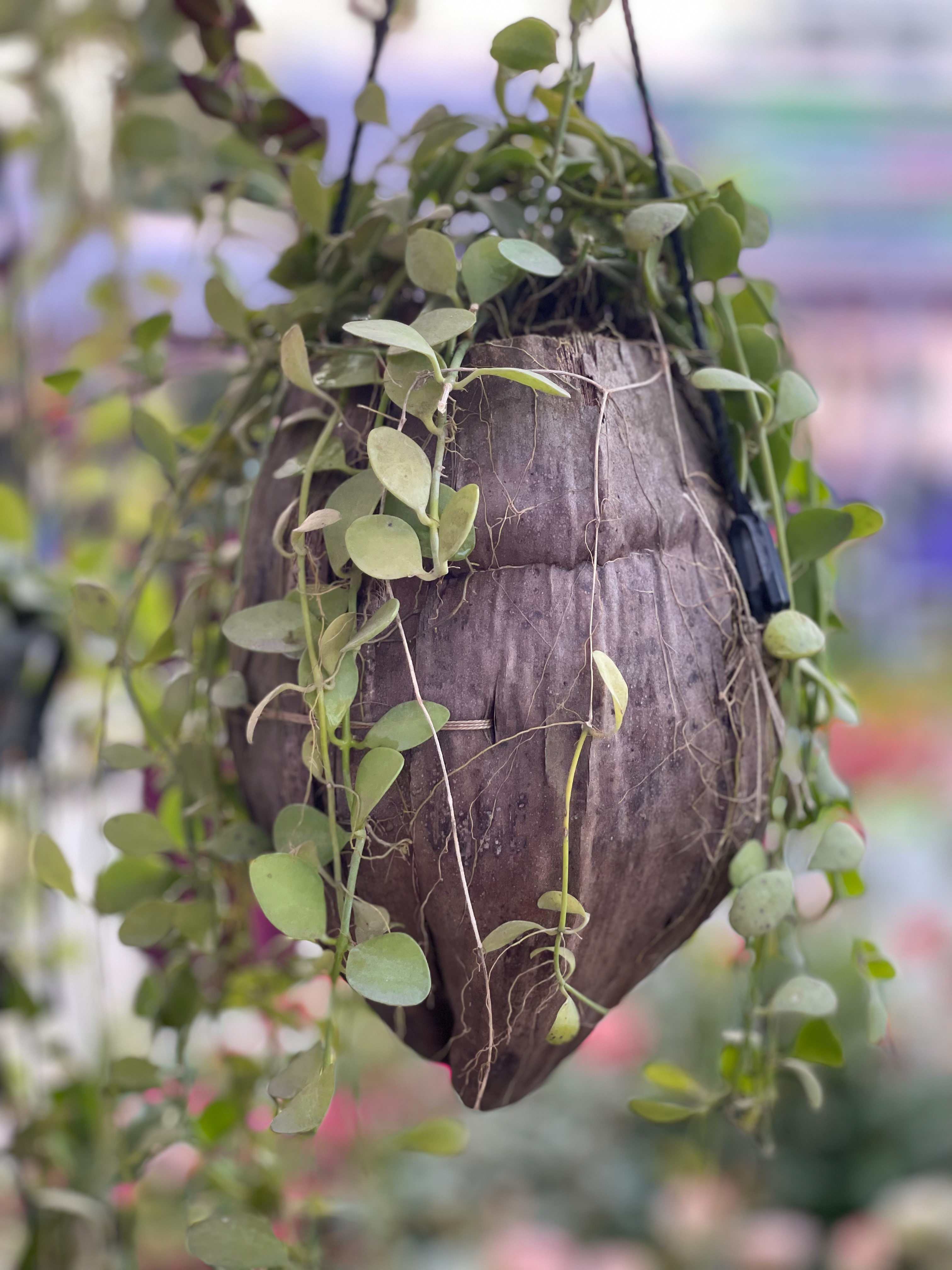
Special emphasis must be given to producing and planting saplings of valuable trees, M Iqbal Hossain, State Minister for Disaster Management and Relief, said in Mymensingh on Saturday, 18 July 2026. He was opening the Mymensingh Divisional Tree Fair 2026, organised by the district administration and the Forest Department on the premises of the Mymensingh Circuit House. If quality, valuable saplings are produced and planted in a planned way, he said, people will benefit economically in future, and everyone should come forward to this work.
The fair was one of the divisional tree fairs held across Bangladesh in July 2026 under the national tree plantation campaign, which that year was tied to a government target of planting 25 crore (250 million) trees over five years. The state minister asked nursery owners in particular to start raising high-quality saplings at once, so that the saplings the target needs would be available.
What the state minister said at the opening
According to Jagonews24's report of the event, M Iqbal Hossain stressed large-scale tree planting for three reasons: to protect the balance of the environment, to increase the supply of oxygen and to achieve economic prosperity. Tree planting harms no one, he said; rather, the people, the government and the country all benefit from it. NewsNow24, which also reported the opening on 18 July, summed up his speech the same way: there is no alternative to large-scale tree planting for economic prosperity, environmental balance and an adequate supply of oxygen, and individuals, the government and the country all gain from it.
He told the gathering that the government had decided to plant 25 crore trees over the next five years. To meet this target, he said, nursery owners must begin producing high-quality saplings now, so that the necessary supply is assured. This would expand their business on the one hand and benefit the country on the other.
The state minister also said that environmental pollution and oxygen shortages are reported in various cities of the country. If more trees are planted, he said, the environmental balance will be protected and people will get enough oxygen. He expressed the hope that a prosperous Bangladesh could be built by planting five crore (50 million) trees every year.
The opening ceremony, the rally and the stalls
The opening ceremony was chaired by Mymensingh's additional deputy commissioner, Reza Md Golam Masum Prodhan. Abu Wahab Akanda Wahid, member of parliament for the Mymensingh-4 constituency, Md Rukunozzaman Rokon, administrator of Mymensingh City Corporation, and superintendent of police Mohammad Kamrul Hasan also spoke.
Officials of various government offices, elected representatives, political leaders, officials of the Forest Department, representatives of environmental organisations, journalists, students and people of different professions attended.
Before the ceremony, a colourful rally organised by the district administration and the Mymensingh Forest Department went round several roads of the city and ended at the Circuit House premises. After the opening, the chief guest visited the stalls of the fair and took part in tree planting.
The 25 crore tree programme
The target the state minister referred to had been announced earlier in 2026 and repeated at the national launch of the tree plantation campaign in Dhaka. On 4 March 2026, according to the state news agency BSS, a meeting at the Cabinet Division conference room of a cell formed for planting 25 crore trees over the next five years was told that, in addition to government nurseries, saplings would be collected from various private nurseries. The trees were to be planted on khas (government) land, in char areas, along riverbanks, on both sides of roads and highways, in forest areas with no trees and on the premises of government institutions across the country.
The nationwide programme was formally launched on 13 June 2026 with the planting of a garjan sapling in the Malumghat reserved forest at Chakaria in Cox's Bazar, Bonik Barta reported. On 9 July the Environment Fair 2026 and the National Tree Plantation Campaign and Tree Fair 2026 were opened at the Bangladesh-China Friendship Conference Centre in Dhaka. The Daily Star reported from that event that priority would go to local and environment-friendly species, including medicinal, fruit-bearing, bamboo, forest and endangered trees, and that research was called for into the environmental suitability of fast-growing species such as eucalyptus and akashmoni.
Details given by the Ministry of Environment, Forest and Climate Change and the Forest Department, as reported by the Dhaka Tribune on 9 July 2026, show how the target was to be met:
- The actual target was to plant 320 million saplings, on the expectation that around 70 million might not survive.
- The programme was divided into six components: coastal afforestation, forest restoration, urban forestry, community forestry, homestead and agroforestry, and production forestry.
- Satellites, geographic information systems (GIS), remote sensing, drones and a national tree database were to be used to record the location and survival of every planted tree, under what the ministry called a Smart Forestry framework.
- The programme was expected to create around 350,000 green jobs and to develop 10,000 nursery entrepreneurs over five years.
- The Forest Department had already planted 8.33 million saplings and planned to plant 15 million indigenous saplings in the fiscal year in treeless areas, along roads, canals and embankments and in coastal zones.
- New afforestation was planned on 4,800 hectares of forest land recovered from illegal occupation.
- Nearly 900 organisations had applied for government support such as land, saplings and funding, and the applications were under review.
The Chief Conservator of Forests told the Dhaka Tribune that the government would not provide financial assistance, saplings or land for tree planting by others; the Forest Department would keep planting on government land, while the programme would support individuals and organisations that plant voluntarily. A former chairman of the botany department of Dhaka University told the paper that planting alone was not enough: "Trees must be cared for like children. They should be planted in a way that ensures at least three survive out of every five planted."
The economic side the state minister spoke of had also been set out in a government document. On 23 June 2026, BSS reported that the government's Climate Financing Budget Report, citing World Bank estimates, said successful implementation of the programme could let Bangladesh earn nearly US$1 billion a year from the sale of carbon credits from tree planting alone. The same report said Bangladesh was not yet equipped to take full part in international carbon markets, pointing to limited technical knowledge, an underdeveloped legal framework and weak capacity for monitoring, reporting and verification.
Tree fairs across the country in July 2026
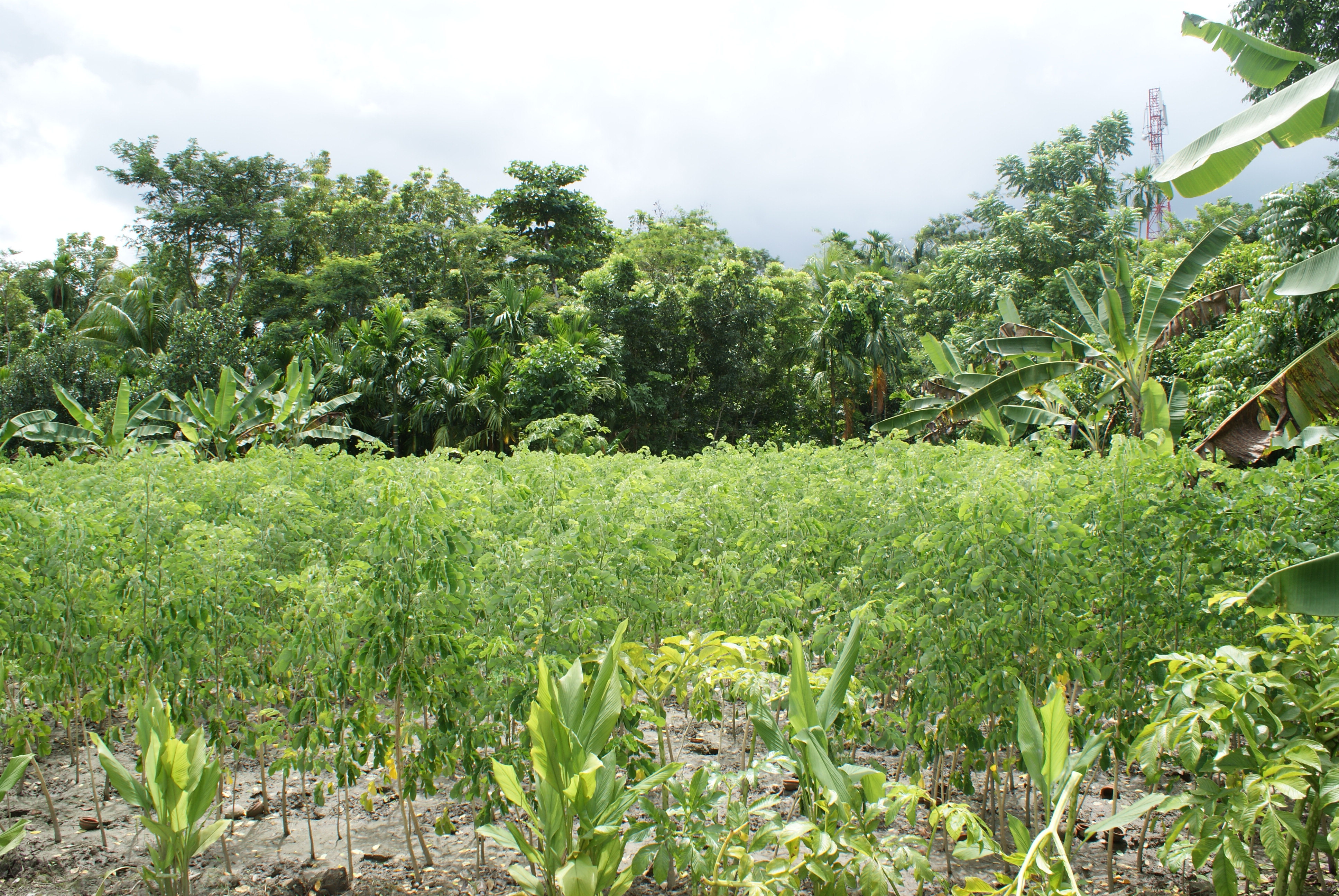
The 2026 campaign and its fairs ran under the theme "Let's decorate the country through tree plantation, Bangladesh first". Alongside the Environment Fair and the month-long National Tree Fair in the capital, 15-day tree fairs were organised in seven divisional cities, seven-day fairs in 56 district headquarters and three-day fairs in 29 upazilas, Bonik Barta reported on 9 July. The Mymensingh fair was one of the divisional fairs.
At the national fair, held on the old trade fair ground at Agargaon in Dhaka, 120 stalls took part. Prothom Alo reported on 14 July that the fair would run from 9 July to 9 August, open daily from 9am to 8pm with no entry fee, and that it offered fruit, forest, medicinal and ornamental saplings along with compost, cocopeat, vermicompost, pots and garden tools, and free advice on gardening. A seven-day Environment Fair with 60 stalls ran beside it until 15 July. At the 9 July opening, the national environment award, the national award for wildlife conservation and the national award for tree planting were presented, and dividend cheques were handed to beneficiaries of social forestry.
Planting campaigns of this kind have a long history in the country. Banglapedia records that during 1962-63 two forest extension divisions were created, at Rajshahi and Dhaka, and a tree planting day on 1 June was introduced. The campaign, first held for a single day, was later extended to a week, then a month and then a three-month period.
Which trees the Forest Department counted as valuable
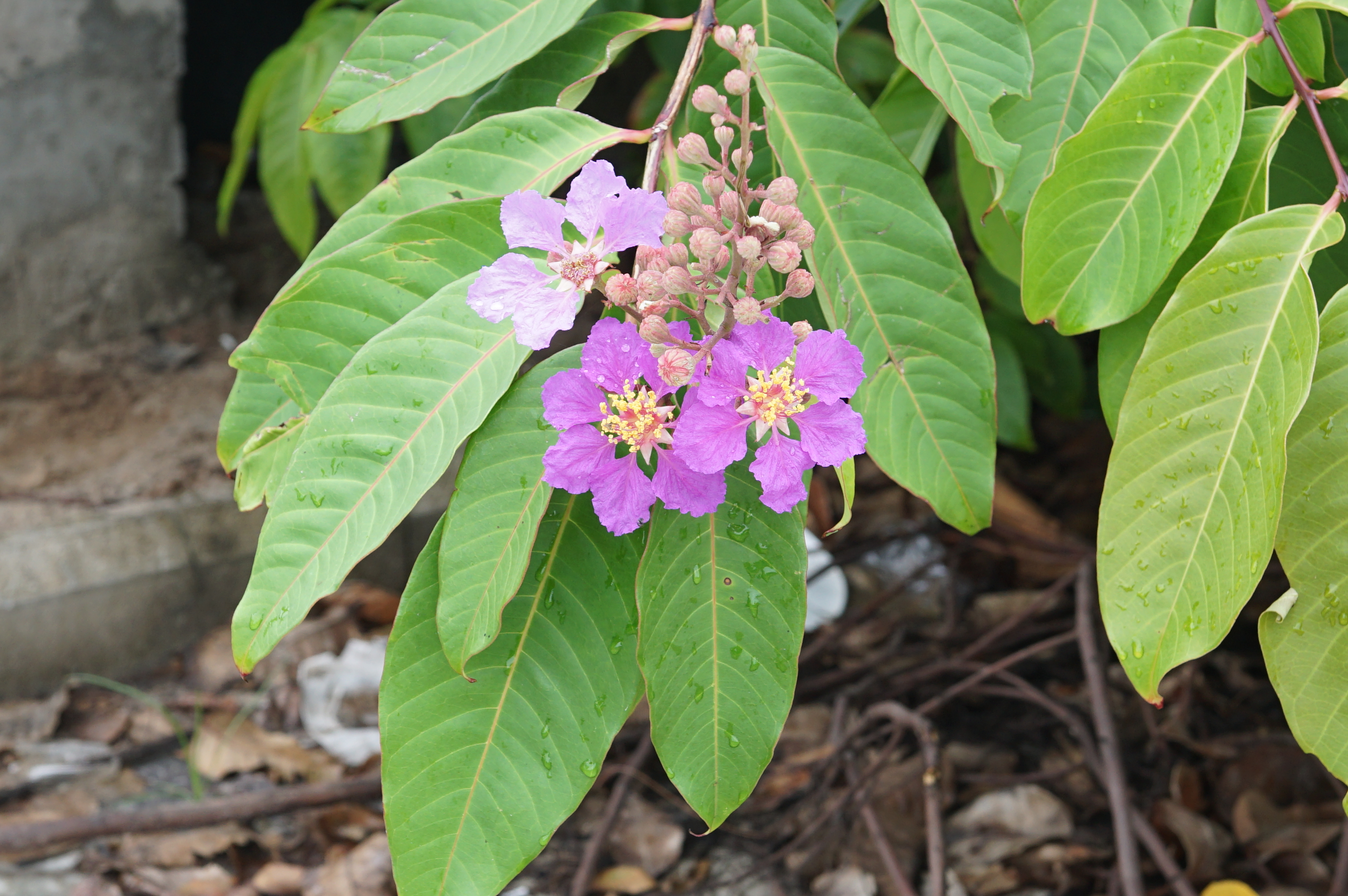
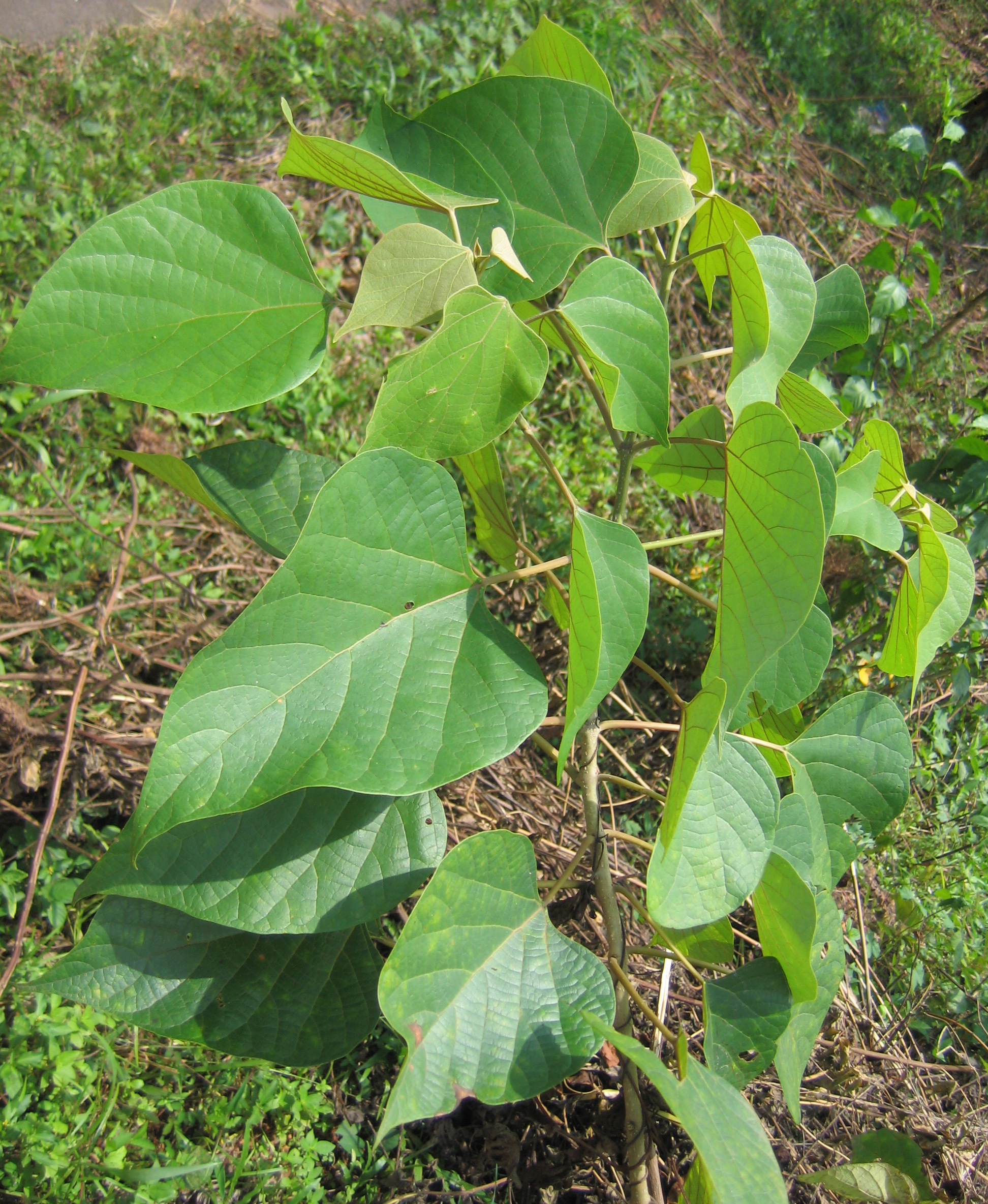
The Jagonews24 report of the Mymensingh fair did not name particular species. For the five-year programme, however, the Forest Department had published its priority list, as reported by the Dhaka Tribune on 9 July 2026: mahogany, gamar, jarul, kadam, agar, bamboo, shil koroi, black plum (jam), mahua, bohera, arjun, neem, haritaki, jackfruit and elephant apple (chalta). Casuarina was to be planted in coastal areas, and sundari, gewa, bain and goran were to be favoured in the Sundarbans. The government planned to prefer fast-growing indigenous species to exotic trees, to reduce pressure on natural forests.
Several of these are long-established trees of Bangladesh. Banglapedia describes neem (Azadirachta indica) as an indigenous, deep-rooted, medium-sized and usually evergreen tree that normally reaches 15 to 20 metres. It is abundant in the Barind Tract and planted all over the country, especially in the drier parts. Banglapedia calls it one of the most valuable multi-purpose species: its red, hard and durable heartwood is used for house building, furniture, carts, boats, boxes and farm tools, and its bark, gum, leaves and flowers are used in herbal medicine.
Jackfruit, the national fruit of Bangladesh, ranks third in area and second in production among the country's fruits, according to Banglapedia, which gives BBS figures for 2000-2007 of 25,110 hectares and an annual production of 469,500 tonnes. Besides the fruit, its yellow heartwood is a valuable timber and yields a yellow dye, and its rind and leaves are fed to livestock.
Gamar, kadam, jarul and mahogany are also old nursery and plantation trees. Banglapedia notes that plantation forests after teak were raised mainly with gamar, chapalish, garjan, mahogany, jarul, toon, painkado and jam, and that from 1974 the Forest Department planted fast-growing species such as gamar, kadam, acacia, eucalyptus and pine on a large scale to produce fuelwood. Banglapedia also lists jarul among the trees that grow along streams in the hill regions.
Why quality saplings and nurseries matter
The appeal to nursery owners touched on a long story. According to Banglapedia, the term nursery originally meant a place where seedlings of valuable forest trees and fruit trees were produced. In Bangladesh the Forest Department first developed nurseries for forest trees in the middle of the 19th century; private nurseries for horticultural plants appeared in the middle of the 20th century, and nursery practice gained momentum in the early 1980s with the demand for economic trees. Mahogany, sissoo, koroi, raintree, neem, akashmoni, teak, gamar, kadam, champa, pitraj and jarul are the timber species mostly raised in nurseries, alongside fruit trees such as mango, sapodilla, jackfruit, litchi, guava and coconut.
Banglapedia also records how earlier programmes leaned on nurseries. The Asian Development Bank-financed Upazila Afforestation and Nursery Development project set out to raise and distribute 40 to 48 million seedlings, to set up 345 nurseries in upazila complexes and to help establish 100 private nurseries by giving entrepreneurs training and financial help.
Quality at the nursery stage decides what grows later. For jackfruit, Banglapedia notes that seed-grown plants are not always true to the mother tree, so selected types are multiplied by grafting; contact and epicotyl grafting each gave more than 80 percent success at Bangladesh Agricultural University in Mymensingh. Seed for nurseries must also be fresh: fresh jackfruit seed germinates up to 90 percent, falling to 78 percent after 15 days of storage and 30 percent after 30 days, and seedlings should be potted at the four- or five-leaf stage because older ones are hard to move without damaging the long tap root.
Forests and tree cover in Bangladesh
The call for more trees came against a small forest base. In the Global Forest Resources Assessment 2020, the country report Bangladesh submitted to the Food and Agriculture Organization of the United Nations (FAO) gave a forest area of 1,883,400 hectares for 2015 to 2020, out of a total land area of 13,017,000 hectares. It recorded 1,920,330 hectares of forest in 1990 and 158,070 hectares of planted forest in 2015.
Banglapedia divides the country's forests into tropical wet evergreen, tropical semi-evergreen, tropical moist deciduous (sal), tidal and planted forests. It puts the total forest area including unclassed state forest land at about 2.25 million hectares, but notes that a large part of that area has no tree cover. Village groves, which are not forest by definition, cover an estimated 0.27 million hectares and provide a large share of the country's wood and firewood.
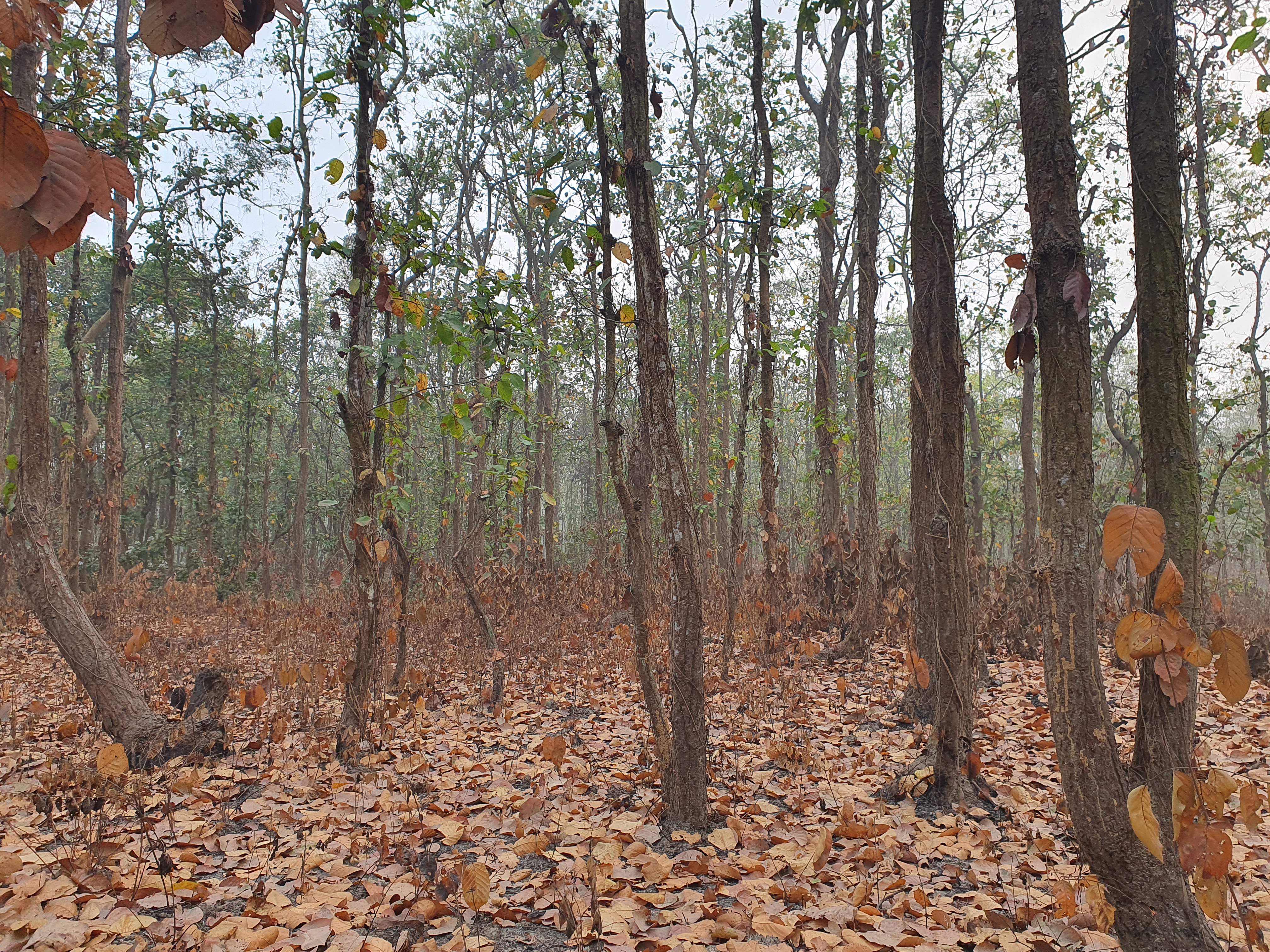
Greater Mymensingh is part of the country's main sal belt. Banglapedia says sal forests cover about 121,000 hectares in Bangladesh, about 32 percent of the total forest land, and that the largest belt, known as the Madhupur Garh, lies in greater Mymensingh and Tangail between the Brahmaputra and the Jamuna. A second, smaller belt runs along the foothills of the Garo Hills in Sherpur district. Sal is a strong, durable timber used for house building, poles, boats and furniture, but Banglapedia warns that the sal forests have been shrinking through over-exploitation, deforestation, encroachment and other human interference. Although sal makes up most of the stand, about five hundred undergrowth species have been reported with it, and the forests are a habitat of the threatened hoolock gibbon.
The best-known protected part of the belt is the Madhupur National Park, on the Mymensingh-Tangail highway in Tangail district, about 125 kilometres from Dhaka. Banglapedia says it was established in 1962, covers 20,837 acres and is run by the Forest Department; of its 176 recorded plant species, 73 are trees and 45 are medicinal plants, and it holds about 190 kinds of animals, including 21 mammals, 140 birds and 29 snakes.
Mymensingh and the campaign in the division
Mymensingh district covers 4,080.18 square kilometres, according to Banglapedia. It is bounded by the Garo Hills and the Indian state of Meghalaya on the north, Gazipur district on the south, Netrokona and Kishoreganj on the east, and Sherpur, Jamalpur and Tangail on the west. Its main rivers are the Old Brahmaputra, Bhogai, Bajua and Kangsa. The district was formed in 1787, and the town was earlier called Nasirabad. Mymensingh Sadar upazila, where the Circuit House stands, covers 380.72 square kilometres and is home to Bangladesh Agricultural University, founded in 1960.
The programme had reached the division weeks before the fair. On 13 June 2026, the day of the national launch, the district administration in Sherpur began planting at the Circuit House premises and along about four and a half kilometres of road from Khoarpar crossing to Sheri Bridge, Dhaka Post reported. Saplings of shimul, palash, krishnachura and other species were planted there, and the district administration said 8,000 saplings were planted in the district's five upazilas on the first day: 2,600 in Sherpur Sadar, 3,000 in Sreebardi, 400 in Nakla, 1,000 in Jhenaigati and 1,000 in Nalitabari.
Photo: Nafiz6167 / Wikimedia Commons (CC BY-SA 4.0). The top picture shows a tree fair in Rajshahi in 2025, as background.
Sources: Jagonews24 (18 July 2026), NewsNow24 (18 July 2026), BSS (4 March 2026; 23 June 2026), Dhaka Post (13 June 2026), The Daily Star (9 July 2026), Dhaka Tribune (9 July 2026), Bonik Barta (9 July 2026), Prothom Alo (14 July 2026), FAO Global Forest Resources Assessment 2020 (Bangladesh), Banglapedia (Nursery; Social Forestry; Forest and Forestry; Madhupur National Park; Sal Forest; Neem; Jackfruit; Mymensingh District; Mymensingh Sadar Upazila)
Comments
(0)