
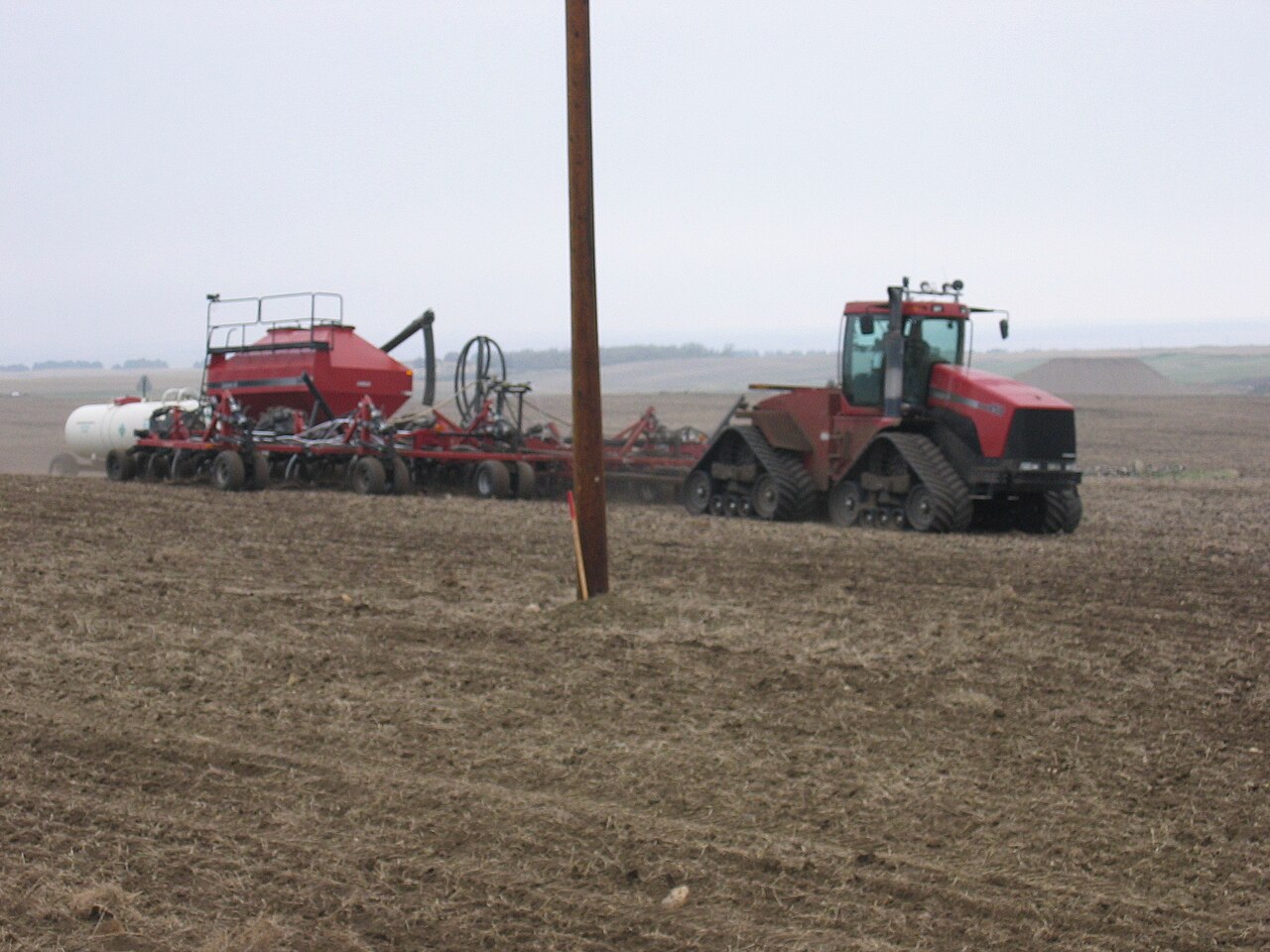
Winter wheat planted late loses yield that a higher seeding rate cannot fully recover, according to three growing seasons of trials by Michigan State University researchers at the MSU Research Farm in Mason, Michigan Farm News reports. The work matters in years like this one, when a delayed soybean harvest, wet fields and competing field work push wheat planting later than planned.
The study tested five planting periods from mid-September to mid-November and five seeding rates from 0.8 to 2.4 million seeds an acre. In all three years yield declined as planting was delayed. The main reason was fewer grain-bearing heads: compared with wheat sown in the optimal window, head density fell by roughly a third to nearly a half. Wheat sown on time grows more roots and autumn tillers, survives winter better and carries more heads, while late-sown plants have poor root systems and may not survive the winter well.
Raising the seeding rate helped keep stands dense and reduced the late-planting penalty, but it did not bring yields back to the level of timely wheat. "If given the choice between planting on time at a moderate seeding rate or planting late at a higher seeding rate, planting on time is the better strategy," the researchers conclude. Their results also suggest that wheat sown in the optimal window may need fewer seeds than many growers now use, while rates should rise as planting slips into October and November, although the maximum rates traditionally recommended can be lowered.
The Hessian fly-safe date, though the fly is no longer a pest concern in Michigan, remains a useful guide: wheat sown seven to 10 days after it usually has time to establish and tiller in autumn without excessive growth. Sowing before the fly-free date is discouraged, because too much autumn growth raises the risk of autumn disease, insects and lodging the next summer.
Because most Michigan wheat follows soybeans, the researchers point to steps in the soybean crop that help. Harvest aids (desiccants) can speed a soybean harvest delayed by uneven maturity, green stems or late weeds, but applied before physiological maturity (R7) they can cut soybean seed weight and yield. Growers of dry beans, usually harvested 10 to 14 days before soybeans, can sow wheat on those fields for a wider window. The research is published by J.P. Copeland, D. Pennington and M.P. Singh in Crop, Forage and Turfgrass Management.
Photo: Elcajonfarms / Wikimedia Commons (CC BY-SA 3.0)
Source: Michigan Farm News


Comments
(0)