
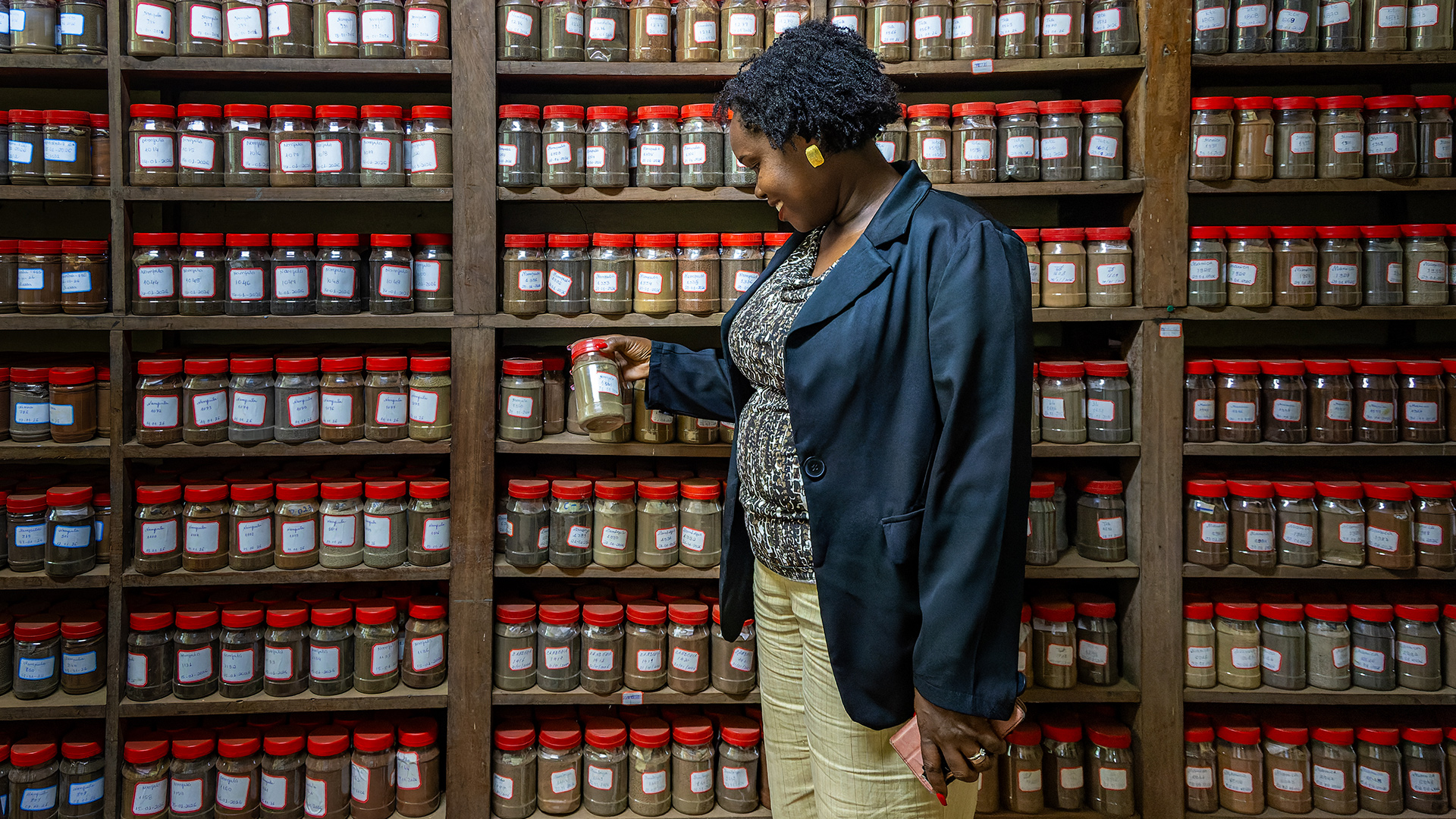
Every morning at 7:30, Stília Vilanculos puts on her lab coat, gloves, protective glasses and mask at the chemistry laboratory of the Agricultural Research Institute of Mozambique (IIAM). She and her colleagues process nearly 100 soil samples a day, measuring texture, pH, electrical conductivity, organic matter, nutrients and heavy metals — the properties that tell a farmer what the soil can grow and what it lacks.
The laboratory's seven permanent technicians — four women and three men — reflect the growing number of women in Mozambican agricultural science, the Food and Agriculture Organization of the United Nations (FAO) said in a feature story published on 4 September. Stília joined IIAM straight from school, trained first in chemistry, then took a degree in agro-livestock sciences and is now finishing a master's in plant production focused on cassava.
For years the lab was held back by ageing equipment and few chances for training. That is changing under SoilFER — Soil Mapping for Resilient Agrifood Systems — a global programme running in Ghana, Guatemala, Honduras, Kenya, Mozambique, Tunisia and Zambia with financial support from the Governments of the United States of America and Japan. In Mozambique it is implemented by the government through IIAM in partnership with FAO.
The programme goes beyond soil maps. It supports the whole chain from sampling and laboratory analysis to mapping, interpretation and farm-level recommendations, so that soil evidence turns into decisions on crops, fertilizer use and soil management. Through it, the IIAM laboratory is receiving nearly 100 new pieces of equipment, including water distillers, nitrogen analysers and spectrometers, along with training and extra staff. "This programme is allowing us to grow professionally," Stília says. "We better understand the whole process, from soil collection and analysis to interpretation of results." Laboratory technicians, who rarely used to leave the bench, now join sample collection and field monitoring.
Once the data leave the lab they pass to specialists such as Janete Americano, a soil fertility specialist in IIAM's Soil Fertility Department since 2013 who is finalizing a PhD in agriculture. Her work focuses increasingly on central and northern Mozambique, where shifting rainfall and weather variability make rainfed farming harder. Through soil surveys, field trials and crop suitability assessments, SoilFER is generating the information needed to advise on crops, soil fertility management and inputs in those conditions.
Janete is also a farmer, managing 13 hectares in Moamba and Boane that produce maize, cassava, sweet potato and seasonal vegetables, alongside her research and consultancy. "I wake up between four and five in the morning," she says. "You need organization. You need commitment."
FAO's argument is that resilient food systems depend on people as much as on technology: by widening access to training, modern equipment, soil data and information systems, SoilFER is building the capacity of scientists, technicians and farmers to make better decisions in the face of land degradation, drought and weather variability. Better soil information, it says, leads to healthier soils, higher productivity, more efficient use of inputs and stronger food security.
Source: FAO Newsroom. Photo: ©FAO/María Legaristi Royo
Comments
(0)