
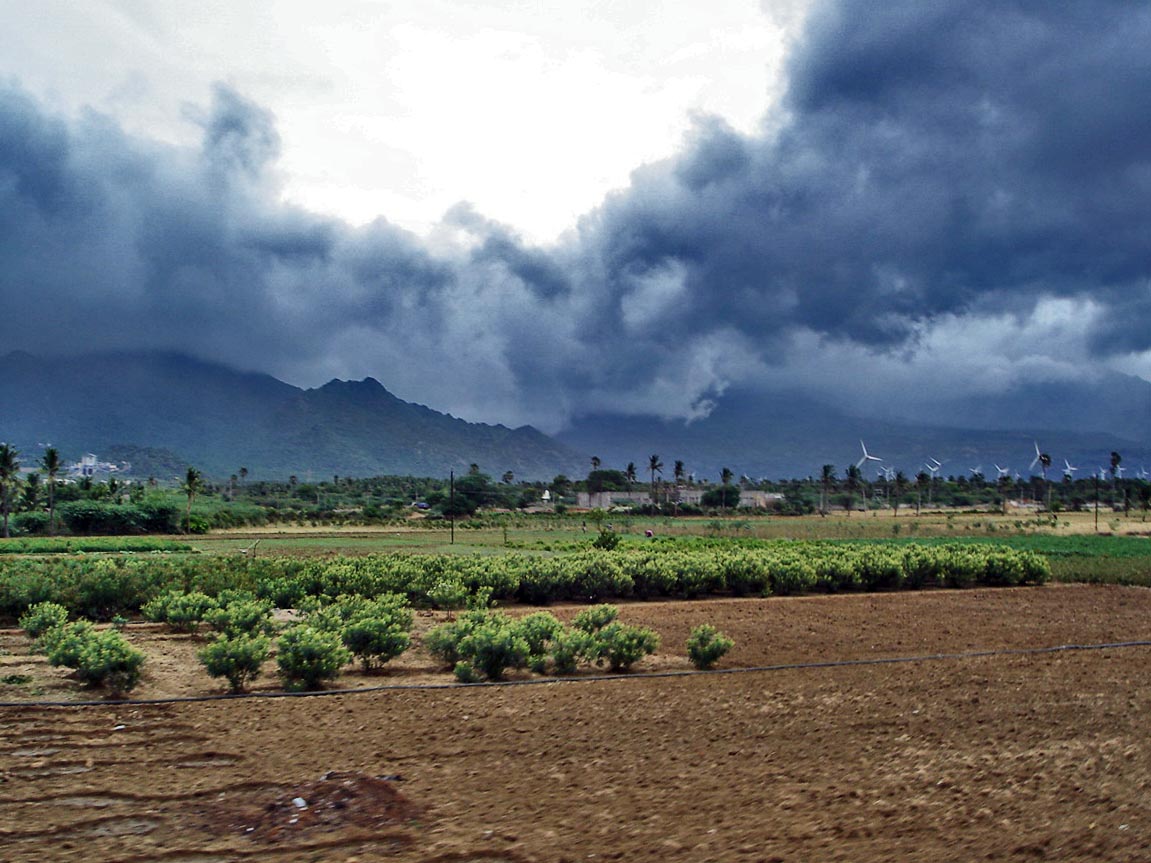
The large-scale Indian monsoon first takes shape over Northeast India around 15 May, nearly three weeks before it becomes established over the Indian peninsula, according to a study by researchers at the Indian Institute of Technology (IIT) Madras and Gauhati University, Down To Earth reports.
The study, published in the Journal of Climate last month, analysed 84 years of daily rainfall data, from 1940 to 2023. Using a climate-network approach, the researchers show that small clusters of rainfall onsets form independently across the country and then merge. In April clusters begin over Northeast India, partly from thunderstorms; around 15 May this cluster joins a rain system moving north from the southeastern Bay of Bengal and starts spreading west. A separate cluster forms over the peninsula, particularly Kerala, and around 9 June the two merge, marking the establishment of the monsoon.
"The key insight from our research is that the monsoon's arrival at a location is not necessarily the first rainfall experienced there," said co-author R I Sujith, Institute Professor in IIT Madras's Department of Aerospace Engineering. Onset, in the study's definition, comes when a place's rainfall becomes part of the largest connected cluster, rather than a passing local weather event.
By that measure, the large-scale rainy season in Northeast India and the southwestern peninsula is 20-30 days shorter than the locally defined season. The researchers also trace the withdrawal, which they say starts over Northwest India around 22 September and retreats across most of the country by 22 October, continuing at the southeastern tip of the peninsula into December. Applied to 2026, the method put large-scale onset over the peninsula on 22 June; Mumbai had heavy rain on 24 June and Delhi by 1 July.
The researchers say the approach could stop isolated showers being mistaken for the monsoon's arrival in farm planning. "By avoiding false onsets, our new perspective of defining large-scale onset of monsoon at every location will allow farmers time for sowing and help the policymakers to plan for food security and water resource management," Sujith said. Co-author B N Goswami of Gauhati University's ST Radar Centre said the method is meant to complement, not replace, conventional operational definitions of onset.
Photo: PlaneMad / Wikimedia Commons (CC BY-SA 3.0)
Source: Down To Earth

Comments
(0)